EU flagship defense R&D in 2026 covers hypersonic defense, future tank欧盟2026年的旗舰国防研发项目涵盖高超音速防御和未来坦克
The bloc's research strategy, backed by €1 billion, includes a secret project aimed at testing a hypersonic glide vehicle demonstrator.
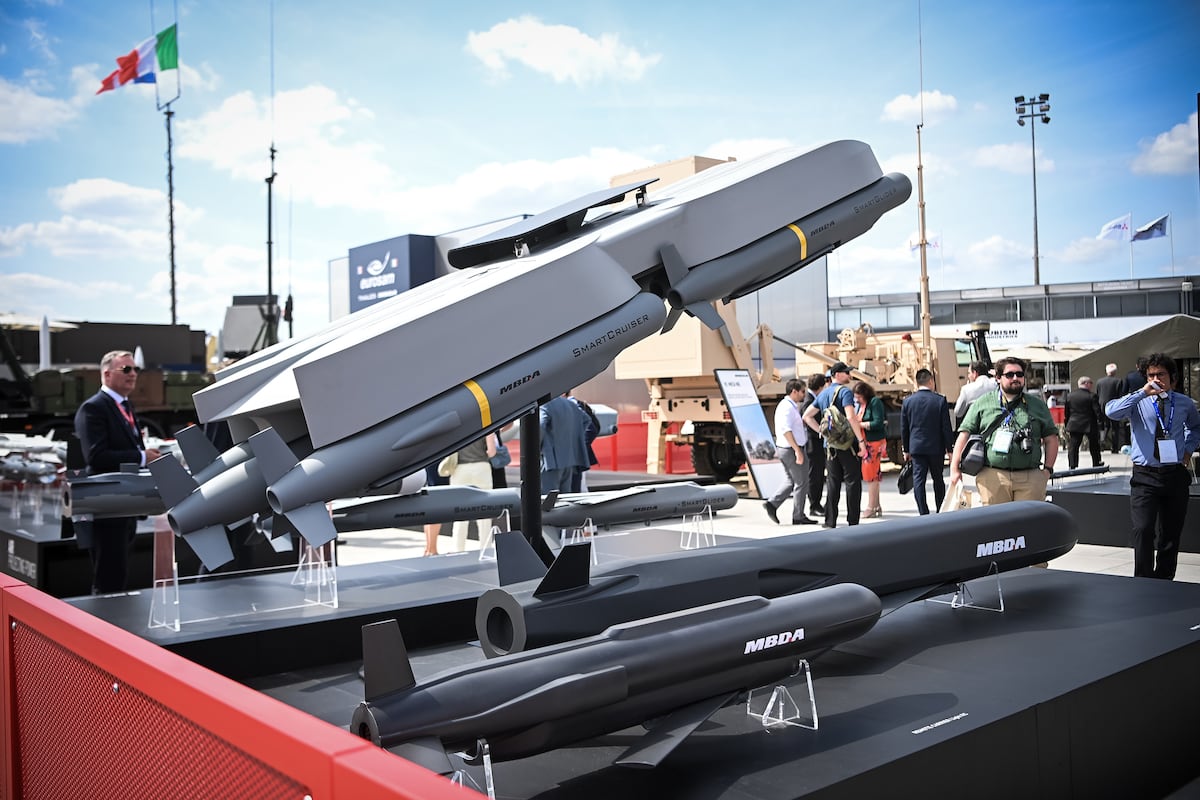
PARIS — The European Defence Fund plans to allocate €1 billion ($1.2 billion) in funding for defense research and development in 2026, with the biggest chunk of money budgeted for work on air and missile defense, including countering hypersonic glide vehicles.
The EDF annual work program includes €168 million for hypersonic counters and high-end endo-atmospheric interception, the European Commission wrote in a call for proposals published Wednesday. The other big-ticket item is ground combat, with €150 million for work on future main battle tank platforms and a multiple rocket launcher.
The fund was set up in 2021 to back collaborative defense R&D by European Union members and has so far invested around €4 billion in more than 200 projects. Some EDF-backed projects address critical capability gaps, such as Odin’s Eye II to build a satellite-based early warning system, or work that would be challenging for a single country to manage, such as hypersonic defense.
“Europe must strengthen collaboration in defense, with the European Defence Fund acting as a key foundation for this effort,” European Commissioner for Defence and Space Andrius Kubilius said. “For the sixth time, we are investing significant resources to incentivize and support research and development on major defense capabilities.”
The EDF has helped reduced duplication and boosted pan-European cooperation, but needs procedural simplification and closer integration with national planning, according to an interim evaluation by the European Parliamentary Research Service published in October.
Half of the 2026 EDF budget is earmarked for major defense capabilities, including developing an EU endo-atmospheric interceptor, a main battle tank, multiple rocket launcher and key technologies for next-generation air fighters, the commission said. A quarter will go to future defense technologies such as quantum-secured networks, artificial intelligence and robot and drone swarms.
The 2026 work program includes €125 million to develop future main battle tank systems with more survivability, superior firepower and the ability to operate with reduced crews and, later on, unmanned. Existing EU tank fleets are aging, and new MBT technologies need to be developed and tested in all future scenarios to maintain a technological edge, the commission said.
The EDF is budgeting €100 million for high-end endo-atmospheric interception, building on previous work to mature key technologies to technology readiness level 6 and develop demonstrators for areas including the interceptor air frame, propulsion and lethality.
The fund will also directly award an indicative €68 million, without a new call for proposals, to continue work on building, testing and flying a basic hypersonic glide vehicle demonstrator as part of efforts to counter the threat, with the work subject to EU secrecy requirements. Companies involved include MBDA, Airbus, Diehl, Hensoldt, Kongsberg, Indra Sistemas and Saab.
The EDF work program includes €90 million to study designs and enable prototypes of medium-sized, semi-autonomous surface vessels for defending coastal waters. The technology should be adaptable for new naval-warfare missions in the future.
Next year’s budget further includes amounts of €20 million to €30 million for programs including a turbofan engine in the 25-35 kilonewton thrust range to power an unmanned loyal wingman aerial vehicle; radar to track unmanned hypersonic vehicles; automated air-to-air refueling; “enhanced cognitive EW” that uses AI to identify and respond to threats; and a multiple rocket launcher.
Rudy Ruitenberg is a Europe correspondent for Defense News. He started his career at Bloomberg News and has experience reporting on technology, commodity markets and politics.
巴黎——欧洲防务基金计划在 2026 年拨款 10 亿欧元(12 亿美元)用于国防研究和开发,其中最大一部分资金将用于防空和导弹防御工作,包括对抗高超音速滑翔飞行器。
欧盟委员会周三发布的一份提案征集书中写道,欧洲防务基金(EDF)的年度工作计划包括1.68亿欧元用于高超音速反制武器和高端大气层内拦截技术。另一项大额支出项目是地面作战,其中包括1.5亿欧元用于未来主战坦克平台和多管火箭炮的研发。
该基金成立于2021年,旨在支持欧盟成员国之间的国防合作研发,迄今已投资约40亿欧元,用于200多个项目。一些由欧洲发展基金(EDF)支持的项目旨在弥补关键能力缺口,例如“奥丁之眼II”项目,该项目旨在构建基于卫星的早期预警系统;还有一些项目则针对单个国家难以独立开展的工作,例如高超音速防御。
欧盟防务与航天事务专员安德留斯·库比柳斯表示:“欧洲必须加强防务合作,而欧洲防务基金正是这项工作的关键基础。我们第六次投入大量资源,以激励和支持重大国防能力的研究与开发。”
根据欧洲议会研究服务处 10 月份发布的中期评估报告,欧洲发展基金 (EDF) 有助于减少重复工作,促进泛欧合作,但需要简化程序,并与国家规划更紧密地结合起来。
欧盟委员会表示,2026年欧洲防务基金(EDF)预算的一半将用于重大国防能力建设,包括研发欧盟大气层内拦截器、主战坦克、多管火箭炮以及下一代战斗机的关键技术。四分之一将用于量子安全网络、人工智能以及机器人和无人机集群等未来国防技术。
2026年工作计划包括1.25亿欧元,用于研发未来主战坦克系统,这些系统将具备更高的生存能力、更强大的火力,并能够以更少的乘员操作,最终实现无人驾驶。欧盟委员会表示,现有的欧盟坦克部队正在老化,需要研发新的主战坦克技术,并在所有未来场景中对其进行测试,以保持技术优势。
法国电力公司 (EDF) 正在预算 1 亿欧元用于高端大气层内拦截技术,以先前的工作为基础,将关键技术成熟到技术成熟度 6 级,并开发拦截器机身、推进系统和杀伤力等领域的演示验证机。
该基金还将直接拨款约6800万欧元(无需重新征集项目),用于继续建造、测试和试飞高超音速滑翔飞行器原型机,以应对高超音速威胁。这项工作将遵守欧盟的保密规定。参与的公司包括MBDA、空客、迪尔、亨索尔特、康斯伯格、英德拉系统和萨博。
法国电力公司(EDF)的工作计划包括9000万欧元,用于研究设计方案并研制中型半自主水面舰艇原型,以保卫近海海域。该技术应具备适应未来新型海战任务的能力。
明年的预算还包括 2000 万至 3000 万欧元的资金,用于以下项目:推力范围为 25-35 千牛的涡扇发动机,用于为无人忠诚僚机提供动力;用于跟踪无人高超音速飞行器的雷达;自动空中加油;利用人工智能识别和应对威胁的“增强型认知电子战”;以及多管火箭炮。
鲁迪·鲁伊滕贝格是《防务新闻》的欧洲记者。他的职业生涯始于彭博新闻社,拥有报道科技、大宗商品市场和政治方面的经验。