Unmanned Leonardo jet trainers could take GCAP drone role, CEO says莱昂纳多公司首席执行官表示,该公司无人喷气式教练机或可取代GCAP无人机的角色。
The program’s focus for the next five years lies primarily on the main aircraft, but partner nations are free to explore unmanned companions on their own.
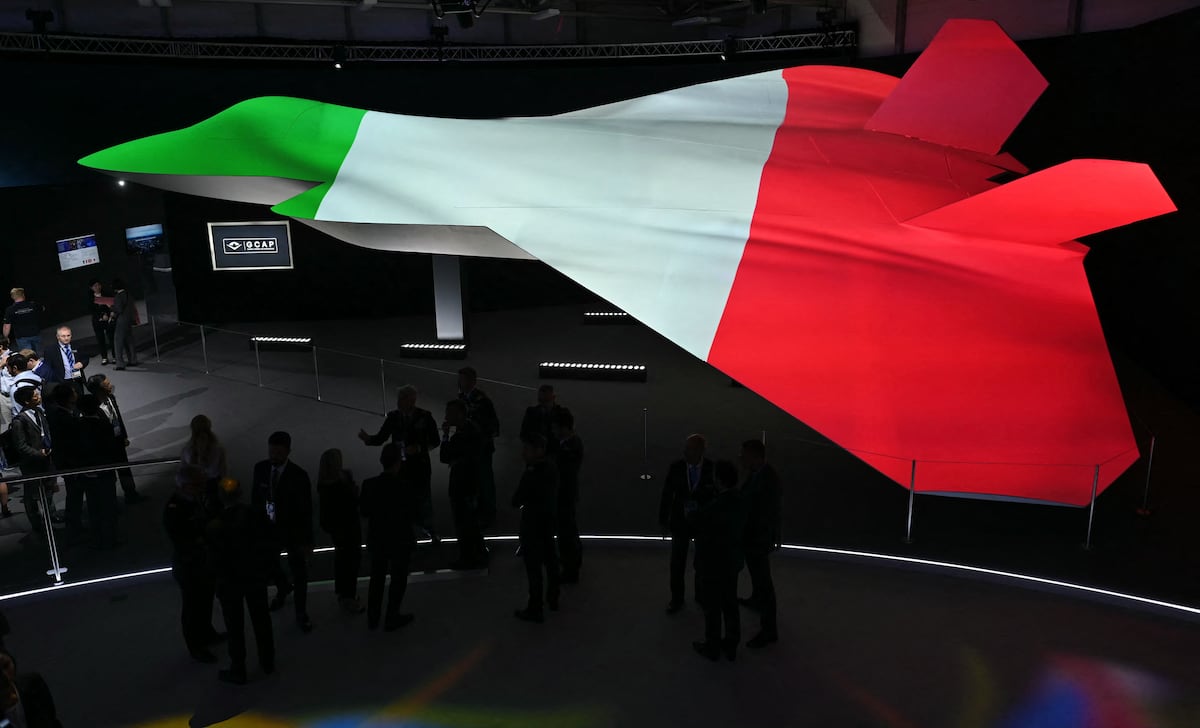
PARIS — The search aperture for drone technology in the tri-national GCAP program remains wide open for Italy, with considerations including a potential conversion of M-345 or M-346 Leonardo trainer jets for the role, according to company CEO Roberto Cingolani.
Those homemade options are in addition to the drone lineup from new joint venture partner Baykar, whose jet-powered Kizilelma aircraft could be closest to what engineers are seeking under the British-Italian-Japanese program, Cingolani told reporters at the Paris Air Show.
“To be honest, we have the 345 and the 346,” he said, referring to the company’s trainer and light fighter plane variants. “We could modify those to be unmanned.”
He added: “But there are also big drones produced by Baykar that could be modified. In that case you have the unmanned, but you have to transform it into a real airplane. We start from a real airplane, transformed into an unmanned one.”
Cingolani’s comments appeared to close to the door on the idea that the Baykar team-up would by default lead to a GCAP drone from the Turkish company’s stable.
As with sixth-generation warplane designs of other nations, the GCAP architecture envisions a central aircraft with human pilots alongside which a plethora of drones boasting sensors and weapons would fly.
The program’s focus for the next five years lies primarily on the main aircraft, but the partner nations are free to explore unmanned companions on their own in the meantime, Cingolani explained.
The latest designs for the main aircraft entail “gigantic” dimensions, at 40 meters, he said with a chuckle.
Sebastian Sprenger is associate editor for Europe at Defense News, reporting on the state of the defense market in the region, and on U.S.-Europe cooperation and multi-national investments in defense and global security. Previously he served as managing editor for Defense News. He is based in Cologne, Germany.
巴黎——据该公司首席执行官罗伯托·辛戈拉尼称,意大利在三国联合GCAP项目中寻找无人机技术的机会仍然很大,考虑的因素包括将M-345或M-346莱昂纳多教练机改装为无人机。
辛戈拉尼在巴黎航展上告诉记者,除了这些自制方案之外,新的合资伙伴 Baykar 还推出了无人机系列,其喷气式 Kizilelma 飞机可能最接近工程师们在英国-意大利-日本计划下所寻求的。
“说实话,我们有345和346,”他指的是该公司推出的教练机和轻型战斗机型号。“我们可以把它们改装成无人驾驶飞机。”
他补充道:“但Baykar公司也生产大型无人机,可以进行改装。那样的话,你就得到了无人驾驶的无人机,但你必须把它改装成一架真正的飞机。而我们则是从一架真正的飞机开始,把它改装成无人驾驶的飞机。”
Cingolani 的评论似乎否定了 Baykar 的合作必然会导致这家土耳其公司推出 GCAP 无人机的想法。
与其他国家第六代战机的设计一样,GCAP架构设想了一架由人类飞行员驾驶的中央飞机,旁边将飞行大量配备传感器和武器的无人机。
辛戈拉尼解释说,该计划未来五年的重点主要在于主飞机,但与此同时,伙伴国家可以自由地自行探索无人伴侣飞机。
他笑着说,主飞机的最新设计尺寸“巨大”,达 40 米。
塞巴斯蒂安·斯普伦格是《防务新闻》欧洲版副主编,负责报道该地区的防务市场状况,以及美欧在防务和全球安全领域的合作和多国投资。此前,他曾担任《防务新闻》执行主编。他现居德国科隆。