Northrop Grumman’s Plan To Replace The MQ-9 Reaper With Stealthy Autonomous Drones诺斯罗普·格鲁曼公司计划用隐形自主无人机取代MQ-9“死神”无人机
We talk to Northrop Grumman Vice President Richard Sullivan about what his company has potentially in store for the Air Force's MQ-Next tender.
Updated Nov 27, 2020 6:05 PM EST
In the 2000s, semi-autonomous unmanned air combat vehicle (UCAV) technology was proving to be the greatest revolution in air combat since the jet engine, then it disappeared totally from the Air Force plans and nomenclature. It was as if the idea of stealthy, long-range drones simply never existed. Now, as the U.S. faces growing threats from peer state competitors with highly capable integrated air defense systems, environments in which the Air Force’s current fleet of MQ-9 Reaper drones cannot survive , the UCAV has suddenly become the next big item on the Air Force’s shopping list.
Dubbed the MQ-Next, the exact requirements for the Air Force’s next-generation combat drone initiative remain undefined, but the service has reached out to its industry partners to see what they have to offer. Northrop Grumman, a company known for its low-observable (stealth) design capabilities and its bright history with advanced unmanned systems —namely the X-47 demonstrators and the RQ-4 Global Hawk —has thrown their hat in the ring for what will be an emerging highly-lucrative tender in the coming years.
With that in mind, Richard Sullivan, a Vice President of Program Management at Northrop Grumman, talked in-depth with The War Zone not just about their own potential drone offerings under the MQ-Next initiative, but also about their shadowy Distributed Autonomy Responsive Control (DARC) advanced mission management system that aims to control not just the MQ-Next vehicles, but what will be a family of interconnected unmanned systems that will rule the skies in the not so distant future.
What Sullivan describes in our discussion is exactly what the author posited half a decade ago, down to the platform-agnostic command and control software that will control future autonomous swarms and the other assets that will enable them. You can read all about that, as well as a deep examination of the mysterious disappearance of the UCAV from the Air Force’s portfolio around 2010 and the massive implications of that reality in this past War Zone feature . In fact, to understand the potential UCAVs offer and what MQ-Next truly represents, it really is a must-read.
With that being said, let’s get to our peek behind the curtain of MQ-Next and into the future of air combat with Richard Sullivan:
RS: You would be quite familiar with the platforms that are out there today if you’ve been staring at the unmanned environment. And you know what, I’ll say, I think the platforms that are out there have been meeting the challenges of today. But with, I’ll say the 2018 NDS [National Defense Strategy] and the potential adversaries, what’s out there today does have to adapt and it does have to change.
What we see in the different contractual things going on is the customer looking at this continuum of, from bringing mass to the fight with Loyal Wingman concepts, as well as the high-end platform for these highly contested environment scenarios. We’ve got the Indo-Pacific region with the tyranny of distance. So how do you… Is that one platform? We don’t think so. We see it as a family of platforms that are gonna be solving these specific customer needs…
DARC is really the foundation of adaptive autonomy that we’ve been working on, and this DARC technology integrates into things that you hear today about open mission systems and the OMS architecture. And one of the things that DARC does is it is able to build upon and do the flight management, sensor management, across a heterogeneous system of systems.
What does that mean?
So, DARC will optimize from an advanced mission management perspective, the mission effectiveness with all the assets that it has. And each of the assets could be different. So heterogeneous, meaning you can have different platforms with different platform performance with different sensors and different sensor performance, but what you do is you give it an objective.
You say, “Hey, I want you to image this area,” and then you let the computer do what it does best, which is to optimize that parametric. So given these different variables, you optimize it with the variables you have. That’s really what DARC does.
Northrop Grumman’s DARC control room Lab. , Northrop Grumman
Now focusing on the MQ-Next response, which I know you’re very interested in. We’ve just provided insight on what we could do. And this was only an RFI at the time, but we just highlighted that, given whatever the customer’s emerging requirements are, we’re going to look at this with affordability in mind.
Our company really prides itself on survivability and aspects of survivability. Understanding the mission set that has to do with the Indo-Pacific region, so range and endurance are key. How the mission sensors are just continuing to get better over time. Just like everything that we have, whether it’s our iPhone, our cars, all the capability, and sensor capability, is advancing over time. With this OMS architecture, we can have that, I’ll say that easy, or easier, adaptation of those sensors to these modern platforms.
It’s all underpinned by having that adaptive smarts on board, which is DARC, which we talked about for a little bit. And how do we know that we have the right solutions? And really, it comes down to… Most of us are completely, I’ll say ingrained with this digital engineering, and how we can do modeling and simulation, and bring a lot of the troubleshooting and the fact-finding to the left.
Through rigorous modeling and simulation, through operational analysis, we fly the platforms to validate the analysis, and then we can start working in the analytical domain, that we can show how a family of platforms can inherently work together to solve missions and objectives.
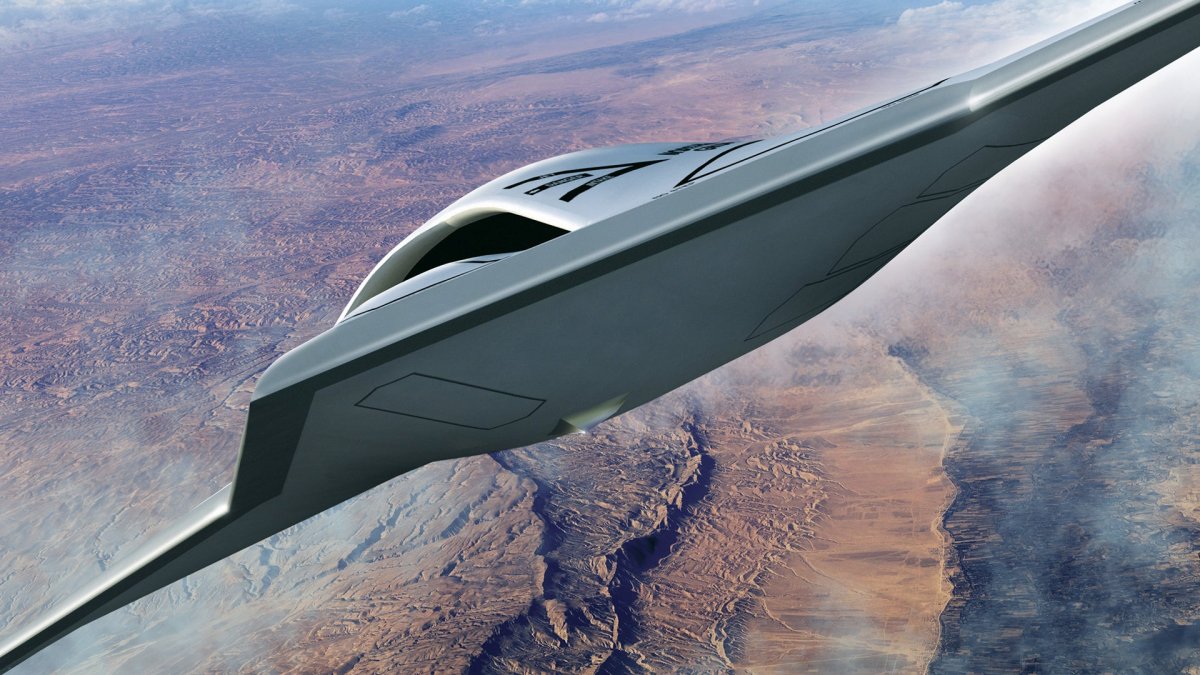
TR: That’s an incredibly succinct take on it. It’s so crazy because I literally wrote this five years ago, and down to the battle management system and everything else. It’s exciting that your team is putting putting forward a nearly identical playbook… I noticed in your imagery that you guys provided to Aviation Week… That it shows an X-47B-like cranked-kite type of low-observable platform. Is that something you think is still valid going into this MQ-Next tender in the coming years?
RS: Yeah, so there was a pretty good investment to find the right solution for the X-47B for what it needed to do, and so when you think about also what it was able to prototype, it prototyped aerial refueling, it prototyped what I would consider one of the most complex takeoff and landings that could ever be humanly imagined, on a carrier deck of a moving aircraft carrier… And by the way, that was, I’ll say the beginnings of DARC. That type of autonomy is what underpins DARC. And at the end of the day, Tyler, what we have to look at is, what is the customer asking for? So if they end up not asking for something that has to have as low of a signature [stealthiness], it may not look exactly the same.
But we feel pretty confident, and I think we’re pretty good at our operational analysis and our mission engineering from the talent that we have, the talent that we’ve grown, that we feel like something that has survivability features like you see in the graphic is going to be something that’s very important for, in particular that highly contested environment. And then you couple that with… Then the size of the platform gives you range and payload constraints.
So, we’re really ready to adapt. It could look different, but what we tried to do was provide the customer just some ideas, and making them feel like we’re not necessarily trying to reinvent the wheel, we’re trying to leverage that government investment and the technology, and I think it enables us to be, have an advantage from that perspective.
X-47B high over Edwards AFB., DoD
TR: And I find it extremely troubling that they have to reinvest… Where are they now, the X-47Bs? Are they just sitting in Palmdale, or are you guys still using them for tests, like risk reduction work? Does the Navy own them? What’s the deal there?
RS: Well, I’ll say we can probably give you a heck of a lot more information later on, but Northrop Grumman now owns the two X-47Bs. And we have them in Palmdale, yes.
TR: So, they probably would be very valuable to prove this technology and show that the risk is quite low. Would that be a good assumption?
RS: With respect to… Are you saying with respect to autonomy or with respect to MQ-Next? So with respect to autonomy, I think…
TR: I think both, right? It seems like a very similar platform to what you guys are proposing.
RS: With MQ-Next, just as I said earlier, the big thing is the customer still has to come out with their requirements, so as we’re trying to share with them, “Hey, these are the things we think you need to do,” they’re going to come back and tell us, and that’s when we, I’ll say when we align it.
Is it [the X-47B] a prototype for autonomy? Absolutely. Just as our HALE-ISR platforms are prototypes for what does it mean to have something on station working for a long time. Our experience with the B-2 too. We are end-to-end on the B-2, design, all the way to operations, all the way to sustainment.
When they’re talking about striking something in denied airspace, in a highly contested environment, we’ve got the tools there for that as well. Is that what they’re looking for? We’re not exactly sure yet. Right? So we’re kind of able to leverage across these multiple spaces, and then going back to that digital engineering, I can’t emphasize how important it is to have that, say, those validated and trusted algorithms, those validated models. So that we can respond to it with the most effective solution.
And I’ll just say, and you said something that I wanna say, is we wouldn’t be… You could imagine we wouldn’t be charging the government again for something that if they wanted exactly an X-47, the program would be cheap as heck. But as a customer, it has requirements that differ from that. One that’s best as a Navy carrier landing vehicle. If the Air Force doesn’t need that, we wouldn’t wanna make them pay for that. And so it all depends on what the customer comes out with, at the end of the day.
A B-2 does a flyby above another B-2 during a ceremony at Northrop’s sprawling complex at Plant 42 in Palmdale, California. The firm has an amazing pedigree when it comes to cutting-edge stealth aircraft design that dates back to Tacit Blue in the early 1980s. , AP
TR: In regards to the DARC system, it is meant to be distributed where? Is the command and control happening on each platform? Or is it happening in a centralized manner and then you’re sending data to tell these platforms what to do? What’s the architecture that Northrop Grumman envisions?
RS: Well, I’ll just say the exact architecture is something that you know I won’t be able to share, but it is… The acronym does stand for Distributed Autonomy Responsive Control, and what that does is there is some autonomy that is placed upon each of the platforms. So the platforms become independent to the… I’ll just say the dependency on comms-links, it becomes independent on the dependency of, I’ll say a changing threat environment.
The threat could be IADS [integrated air defense system], it could be even harsh weather. So as the environment’s changing, we’re able to have adaptation. Of course, when the comms-links are in place, each vehicle will have, as you said, the data of what each vehicle is doing, as well as the mission management, the mission commander is gonna have that data at their fingertips as well…
The autonomy is distributed amongst the entire architecture… And the key thing about DARC is it’s not about a commander who is controlling every step of the battle. It literally is, “Go and perform this objective,” within, we call it the Objective and Constraints Model.
You give a constraint of, “This is what the aircraft is able to do, what it’s able to fly, this is where you’re able to fly, these are the constraints,” those constraints are given to each of the distributed vehicles. And the platforms are then given I’ll say scenarios where comms is out, GPS or whatever’s out, they can work within those constraints themselves as well. And one of the constraints may be, “Don’t go back home, go back to your other buddies, reconnect to your line of sight link,” and let’s make sure that force package is re-registered with themselves. And then that… Yeah.
MQ-X concept art is just that, an idea of what it could be. Hard requirements don’t exist for the program at this time. , Northrop Grumman
TR: I wrote the manual to this thing five years ago! It’s actually very exciting that you guys are talking about all this now, so openly, it’s great. Are these higher-end penetrating drones, UCAVs, whatever you want to call them, part of a family of systems ?
Are you seeing HALE [High-Altitude, Long-Endurance] drones involved as well ? Are you seeing loyal wingman style drones that are attritable [optionally expendible] as part of this larger architecture that you want to build out and supply the Air Force? Or is it more like just two platforms right now, and then we’ll look at the larger architecture as we go?
RS: No, no, it’s absolutely as you said. It is, we’re looking at a continuum, so it’s a continuum of platforms that is the most effective to solve the problem. Now there’s always the case of the economics, and so how we can best provide the customer with an overall affordable solution that may leverage across the entire platform space.
If sensors are common, if the engines are common, if the digital underpinnings are common, we can leverage across the larger tradable space all the way to HALE UAS type of platforms. And how do they all work together? So that’s a key thing is we may not have, I’ll say DARC implemented in an existing platform, although we could, but what happens is the data coming back to the mission management, to that mission commander goes back up through that mission commander.
So, the mission commander, the mission management becomes a node for which I’ll say current systems that may or may not have or do not have DARC on them yet, would be able to be part of this overall architecture.
F-22’s fly in tow of a B-2. A big hurdle going forward will be integrating existing types into an increasingly automated battlespace and command and control architecture. , AP
TR: Some of them would be fully integrated, they have the DARC on board, and then others would be working… You’d still be getting all that intelligence from them, you’d still be getting some datalink information, but maybe they’re not cooperative 100% with the rest of the DARC equipped fleet. Is that how you can tie in legacy platforms to this?
RS: Yeah, I think and… That’s probably a fair way to put it. What I would say is, we’re gonna be able to optimize the architecture based on the type of control we have with each of the vehicles. So there’s gonna be some vehicles that have better control, like I’m not really a Mac guy, but my understanding is my wife’s a Mac person, her phone and her iWatch and her MacBook and all that, they all work as an ecosystem really well together.
And I can still tie into it with my Android phone and all that kinda stuff, and it’s just not as efficient. But it’s not that I’m less efficient, I can’t tell that I’m less effective. She feels like I am, [chuckle] but in reality, is the information that I need to send is something that’s already likely in place. So how can we use that information, and it’s just the command and control that goes through its legacy path?
So you can still optimize each of these different paths, but it is maybe not as advanced, the smart systems that we want to put in place really is, I’ll say coming to being today. And you highlighted some of the things that you indicated from the X-47B time frame. Some of those things are things that we’re ready to go forward with today, and it looks like the customer is really interested in it now.
Author’s note: A big thanks to Richard Sullivan for taking the time to share his thoughts on MQ-Next and more, as well as our gratitude to Daniel Hazard for arranging the Q&A.
Contact the author: Tyler@thedrive.com
Comments couldn’t be loaded. Please refresh the page.
更新于美国东部时间2020年11月27日下午6:05
在21世纪初,半自主无人作战飞行器(UCAV)技术曾被誉为自喷气式发动机问世以来空战领域最伟大的革命,但随后却从美国空军的计划和命名体系中彻底消失。仿佛隐形远程无人机的概念从未存在过。如今,随着美国面临来自拥有高度先进综合防空系统的势均力敌对手日益增长的威胁,以及空军现有MQ-9“死神”无人机难以在此类环境中生存的局面,UCAV突然成为美国空军下一个重点采购项目。
空军下一代作战无人机计划名为MQ-Next,其具体要求尚未明确,但空军已与业界合作伙伴接洽,了解他们能提供什么。诺斯罗普·格鲁曼公司以其低可探测性(隐身)设计能力和在先进无人系统(尤其是X-47验证机和RQ-4“全球鹰”)方面的辉煌历史而闻名,该公司已加入竞标行列,有望在未来几年内赢得丰厚的利润。
考虑到这一点,诺斯罗普·格鲁曼公司项目管理副总裁理查德·沙利文与《战区》杂志深入探讨了该公司在 MQ-Next 计划下的潜在无人机产品,以及他们神秘的分布式自主响应控制 (DARC) 先进任务管理系统。该系统旨在控制的不仅是 MQ-Next 飞行器,而是一系列互联的无人系统,这些系统将在不久的将来主宰天空。
在我们的讨论中,苏利文所描述的内容与作者五年前提出的设想完全一致,甚至包括用于控制未来自主集群的平台无关指挥控制软件以及其他相关设备。您可以在之前的《战区》专题文章中详细了解这些内容,以及对2010年前后空军UCAV神秘消失及其巨大影响的深入分析。事实上,要想真正理解UCAV的潜力以及MQ-Next的真正意义,这篇文章绝对值得一读。
接下来,让我们跟随理查德·沙利文,一窥MQ-Next的真容,展望空战的未来:
RS:如果您一直关注无人领域,那么您应该对目前市面上的平台相当熟悉。而且,我认为这些平台目前能够应对当前的挑战。但是,考虑到2018年《国防战略》以及潜在对手的影响,现有的平台必须做出调整和改变。
我们从各种合同中看到,客户正在考虑的是一个连续的过程,从利用“忠诚僚机”概念为战斗提供大规模火力支援,到针对高对抗环境的高端平台。我们面临着印太地区地理上的挑战。那么,如何……这是否意味着只有一个平台?我们认为并非如此。我们认为这是一个平台家族,旨在满足客户的特定需求……
DARC 实际上是我们一直在研究的自适应自主技术的基础,这项 DARC 技术与您今天听到的开放式任务系统和 OMS 架构相集成。DARC 的功能之一是能够在异构系统之上构建并执行飞行管理和传感器管理。
这意味着什么?
因此,DARC将从高级任务管理的角度出发,优化其所有资产的任务效能。每个资产都可能各不相同,也就是说,它们是异构的,可能拥有不同的平台、不同的传感器以及不同的传感器性能,但关键在于为其设定一个目标。
你说:“嘿,我想让你对这个区域进行成像”,然后让计算机发挥它的优势,也就是优化参数。所以,在给定这些不同的变量的情况下,你用这些变量进行优化。这正是DARC的工作原理。
诺斯罗普·格鲁曼公司的DARC控制室实验室。
现在我们重点谈谈MQ-Next的回应,我知道您对此非常感兴趣。我们刚才已经阐述了我们可以做些什么。当时这只是一个信息征询书(RFI),但我们强调,无论客户的需求如何变化,我们都会以成本效益为首要考虑因素。
我们公司非常重视生存能力及其各个方面。了解与印太地区相关的任务,因此航程和续航能力至关重要。任务传感器也在不断改进。就像我们拥有的所有东西一样,无论是iPhone、汽车,还是所有功能和传感器,都在不断进步。借助这种OMS架构,我们可以更轻松地将这些传感器适配到这些现代平台上。
这一切都建立在自适应智能技术(DARC)之上,我们之前也简单讨论过。那么,我们如何才能确定我们拥有正确的解决方案呢?实际上,关键在于……我们大多数人,可以说,都完全沉浸在数字工程中,知道如何进行建模和仿真,并将大量的故障排除和事实调查工作转移到前端。
通过严格的建模和仿真,通过运行分析,我们对平台进行飞行测试以验证分析结果,然后我们就可以开始在分析领域工作,展示一系列平台如何能够协同工作以完成任务和目标。
TR:这真是精辟的总结。太不可思议了,因为我五年前就写好了这套方案,包括作战管理系统等等。你们团队提出的方案几乎完全一样,这真是令人兴奋……我注意到你们提供给《航空周刊》的图片……展示了一种类似X-47B的低可探测性平台,采用的是曲柄风筝式设计。你们认为这种设计在未来几年参与MQ-Next招标时仍然适用吗?
RS:是的,为了找到适合X-47B需求的解决方案,我们投入了相当可观的资金。想想它所进行的原型测试,比如空中加油,以及在移动航母的甲板上进行的我认为是人类所能想象的最复杂的起降之一……顺便说一句,可以说这就是DARC的雏形。这种自主性正是DARC的基石。归根结底,泰勒,我们必须考虑的是客户的需求是什么?如果他们最终没有要求极低的隐身性能,那么最终的产品可能看起来就不一样了。
但我们相当有信心,而且我认为凭借我们现有的人才,以及我们培养的人才,我们在作战分析和任务工程方面都做得相当出色。我们认为,像图中所示的具备生存能力的装备,对于尤其是在高度对抗的环境中,将至关重要。此外,平台尺寸也会限制其航程和有效载荷。
所以,我们已经做好了充分的准备去适应。最终的形式可能会有所不同,但我们努力做的是为客户提供一些想法,让他们觉得我们并不是要重新发明轮子,而是要利用政府的投资和技术,我认为这能让我们在这方面拥有优势。
X-47B 高空飞越爱德华兹空军基地,美国国防部
TR:我觉得他们不得不重新投资这件事非常令人担忧……那些X-47B现在在哪儿?它们就停在帕姆代尔吗?还是你们还在用它们做测试,比如风险降低之类的工作?海军拥有它们吗?到底是怎么回事?
RS:嗯,我得说我们以后可能会提供更多信息,但诺斯罗普·格鲁曼公司现在拥有这两架X-47B飞机。是的,它们就在帕姆代尔。
TR:所以,它们对于验证这项技术并证明风险很低可能非常有价值。这个假设合理吗?
RS:关于……您是指关于自主性还是关于MQ-Next?如果是自主性的话,我想……
TR:我觉得两者都对,对吧?这看起来和你们提出的平台非常相似。
RS:就像我之前说的,对于 MQ-Next 来说,最重要的是客户仍然需要提出他们的需求,所以当我们试图与他们分享“嘿,这些是我们认为你需要做的事情”时,他们会回来告诉我们,那时我们,我会说,那时我们才能进行调整。
X-47B是自主飞行器的原型吗?绝对是。就像我们的高空长航时情报、监视与侦察(HALE-ISR)平台一样,它们也是自主飞行器长时间驻留作战能力的原型。我们在B-2项目上的经验也是如此。我们对B-2项目拥有端到端的投入,从设计到运行,再到维护,全程参与。
当他们谈到在敌方禁飞区或高度对抗的环境中打击目标时,我们也有相应的工具。这是否正是他们想要的?我们还不完全确定。对吧?所以我们能够跨多个领域进行利用。再说回数字工程,我必须强调拥有经过验证且值得信赖的算法和模型的重要性。这样我们才能用最有效的解决方案来应对。
我只想说,你刚才提到的一些事情我也想说,那就是我们不会……你可以想象,如果他们想要的就是X-47,那这个项目肯定便宜得令人难以置信,我们当然不会再向政府收费。但作为客户,他们的需求与此不同。比如,他们想要的是最适合作为海军舰载机的型号。如果空军不需要这种型号,我们也不想让他们为此买单。所以,最终一切都取决于客户的需求。
在加利福尼亚州帕姆代尔42号工厂,诺斯罗普公司庞大的基地举行仪式,一架B-2轰炸机从另一架B-2轰炸机上方飞过。该公司在尖端隐形飞机设计领域拥有令人瞩目的历史,其历史可以追溯到20世纪80年代初的“静默蓝”(Tacit Blue)项目。(美联社)
TR:关于DARC系统,它的分布式部署在哪里?指挥控制是在每个平台上进行吗?还是集中式的,然后通过发送数据来指示这些平台执行什么操作?诺斯罗普·格鲁曼公司设想的架构是什么样的?
RS:嗯,具体的架构我不能透露,但……这个缩写代表分布式自主响应控制(Distributed Autonomy Responsive Control),它的作用是赋予每个平台一定的自主权。这样一来,平台就不再依赖于……我只能说,不再依赖于通信链路,也不再依赖于不断变化的安全威胁环境。
威胁可能来自综合防空系统(IADS),甚至可能是恶劣天气。因此,随着环境的变化,我们能够做出相应的调整。当然,通信链路一旦到位,正如您所说,每辆车都能获取自身运行数据,任务管理人员也能随时掌握这些数据……
自主性分布在整个架构中……DARC 的关键在于,它并非由一个指挥官控制战斗的每一步。它实际上是“去执行这个目标”,我们称之为目标与约束模型。
你设定一个约束条件,比如“这是飞机能做什么,它能飞到哪里,你能飞到哪里,这些是限制条件”,这些约束条件会被应用到每个分布式载具上。然后,平台会被赋予一些场景,比如通信中断、GPS或其他信号中断,它们也能在这些约束条件下自行运行。其中一个约束条件可能是:“不要返航,返回你的其他伙伴,重新连接你的视距链路”,并确保该部队包已重新注册。然后……是的。
MQ-X概念图仅仅是设想而已,目前该项目还没有具体的要求。——诺斯罗普·格鲁曼公司
TR:这东西的使用手册是我五年前写的!你们现在这么公开地讨论这些,真是太好了,令人兴奋。这些高端渗透无人机、无人作战飞行器(UCAV),或者随便你怎么称呼它们,是不是属于某个系统系列?
您是否也考虑过高空长航时(HALE)无人机?您是否考虑过将忠诚僚机式的、可消耗型无人机纳入您想要构建并提供给空军的更大架构中?或者目前更倾向于两种平台,然后我们会根据进展情况再考虑更大的架构?
RS:不,不,完全正如你所说。我们是在寻找一个连续体,也就是一系列能够最有效地解决问题的平台。当然,经济因素也需要考虑,所以我们需要考虑如何才能为客户提供一个整体上经济实惠的解决方案,并充分利用整个平台领域的优势。
如果传感器通用,如果发动机通用,如果数字底层架构通用,我们就可以在整个可交易领域,乃至高空长航时无人机系统(HALE UAS)平台中加以利用。它们如何协同工作呢?关键在于,我们可能尚未在现有平台上实现DARC(尽管我们可以做到),但实际情况是,返回到任务管理系统(即任务指挥官)的数据会通过该任务指挥官系统进行上报。
因此,任务指挥官、任务管理成为一个节点,而目前可能具有或不具有 DARC 的系统,都可以成为这个整体架构的一部分。
F-22战机由B-2轰炸机拖曳飞行。未来面临的一大挑战是如何将现有机型整合到日益自动化的战场和指挥控制架构中。(美联社)
TR:其中一些会完全整合,它们都搭载了DARC系统,而另一些则会继续运行……你仍然可以从它们那里获取所有情报,仍然可以获取一些数据链信息,但它们可能无法与配备DARC系统的其他舰船完全协同工作。这就是将传统平台与该系统连接起来的方式吗?
RS:是的,我觉得……这么说应该比较贴切。我的意思是,我们将能够根据每辆车的控制方式来优化架构。所以有些车辆的控制性能会更好,比如我本人不太用苹果电脑,但我听说我妻子用的是苹果电脑,她的手机、Apple Watch、MacBook等等,它们作为一个生态系统都能很好地协同工作。
我仍然可以用我的安卓手机之类的设备连接它,只是效率没那么高了。但并不是说我的效率降低了,我感觉不到自己的作用变小了。她觉得我效率降低了,(轻笑)但实际上,我需要发送的信息很可能已经存在了。那么我们该如何利用这些信息呢?这不就是通过传统的命令和控制方式实现的吗?
所以,你仍然可以优化每条不同的路径,但它可能还不够先进。我们想要部署的智能系统,可以说,正在逐步成型。你重点提到了你在X-47B项目期间提到的一些事项。其中一些事项我们现在就可以着手推进,而且客户似乎对此非常感兴趣。
作者注:非常感谢 Richard Sullivan 抽出时间分享他对 MQ-Next 等的看法,也感谢 Daniel Hazard 安排了问答环节。
联系作者:Tyler@thedrive.com
评论加载失败,请刷新页面。