US, Europe vow to secure Ukraine, as Kyiv asks for $60 billion in 2026美国和欧洲承诺保障乌克兰安全,基辅方面要求在2026年获得600亿美元的援助。
A US-backed European peacekeeping force would secure an eventual peace deal, with additional help for Ukraine to build an 800,000-strong peacetime force.
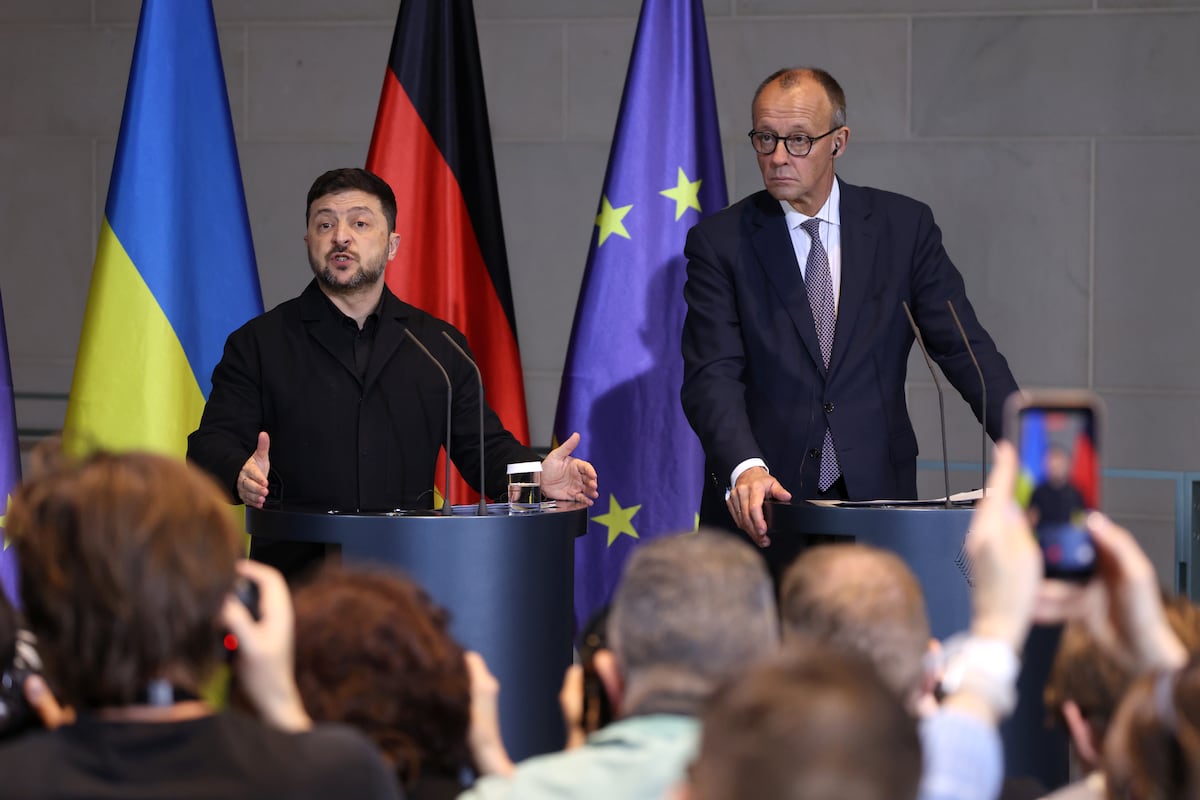
BERLIN — Ukrainian, European and U.S. negotiators have wrapped up two days of talks here with what officials describe as the most substantial movement yet toward a political framework to end Russia’s full‑scale invasion, even as core territorial questions remain unresolved.
Meanwhile, Ukraine on Tuesday predicted the total costs for its defense at $120 billion for 2026, of which half would have to come from foreign support.
According to Zelenskyy and Ukrainian officials, the discussions in Berlin focused on a package of five documents that would underpin an eventual peace deal, several of which are dedicated to long‑term security guarantees for Ukraine. Kyiv says parts of the package are intended to be legally binding, with an “Article 5-like” mutual‑defense commitment, a reference to NATO nomenclature, requiring U.S. congressional approval and backed by additional European pledges.
German officials describe Washington’s offer on legal and material guarantees as “truly remarkable” and a “very important step forward.” The conference marks the first major EU‑hosted attempt to shape the emerging security architecture around a potential ceasefire.
Europe, the U.S. and Ukraine “achieved a common sense of purpose” on Monday in their quest to end the war in Ukraine, German Defense Minister Boris Pistorius said during his opening remarks for the Ukraine Defense Contact Group on Tuesday. There had previously been significant differences between Europe and the U.S. regarding a peace plan proposed by Washington, which was perceived across the Atlantic as a capitulation to most of Moscow’s war aims.
The center of gravity has shifted toward Europe in the past months, as the continent is now single-handedly financing Ukraine’s continued defense against Russia following Washington’s suspension of military assistance since March 2025. Total European allocated aid since the start of Russia’s invasion now more than doubles U.S. support for Ukraine, according to the Kiel Institute , a Germany-based research organization.
Besides progress on security guarantees, negotiators reported no tangible advance on the question of territorial concessions.
Russian demands for formal recognition of its hold over parts of eastern Ukraine remain incompatible with Kyiv’s public position, and Berlin officials describe the road ahead on these questions as “very long.”
Ukrainian government officials have repeatedly stressed that suggestions of ceding Ukrainian-held territory remain off the table and that any deal must avoid freezing the conflict on terms favorable to Moscow. European leaders have said only Ukrainians can decide on a path forward in territorial questions, despite U.S. pressure in recent weeks for Kyiv to give up about a fifth of its land to Russia.
Zelenskyy has signaled that once the five‑document package is finalized with U.S. and European partners, Kyiv expects a direct meeting with President Donald Trump to test whether Moscow will accept the emerging framework.
European and U.S. officials alike are portraying the Berlin talks as “very positive,” saying there is consensus on key issues even if the outcome stopped short of a formal ceasefire proposal.
A European-led multinational peacekeeping force to be deployed in Ukraine once the war ends is a key pillar of the proposed deal.
On Tuesday, British Defence Minister John Healey reaffirmed his country’s commitment to such a mission, saying that London continues “to direct funding to prepare our U.K. troops and armed forces so that we are ready to deploy when peace comes, with troops on the ground and jets in the air.”
Ten European leaders, along with EU Commission President Ursula von der Leyen, issued a joint statement after the talks proposing a “multinational force for Ukraine” led by Europe and backed by the United States. The European proposal additionally called for “sustained and significant support to Ukraine to build its armed forces, which should remain at a peacetime level of 800,000.”
In the meantime, Ukraine will be reliant on support from its Western partners. Speaking at the Ukraine Defense Contact Group meeting on Tuesday, Denys Shmyhal, the Ukrainian minister of defense, said his country expected the war costs to total $120 billion next year, of which Ukraine would be able to cover half on its own.
“The remaining $60 billion must come from our partners,” Shmyhal said, asking the countries present to each allocate at least 0.25% of their 2026 economic power to Ukraine’s defensive effort. Air defense remains a priority, according to the defense minister.
“Strong and coordinated decisions will accelerate our path toward a just and lasting peace,” Shmyhal said. “Now is the moment to bring it closer.”
Linus Höller is Defense News' Europe correspondent and OSINT investigator. He reports on the arms deals, sanctions, and geopolitics shaping Europe and the world. He holds master’s degrees in WMD nonproliferation, terrorism studies, and international relations, and works in four languages: English, German, Russian, and Spanish.
柏林——乌克兰、欧洲和美国的谈判代表在这里结束了为期两天的会谈,官员们称这是迄今为止在建立结束俄罗斯全面入侵的政治框架方面取得的最实质性进展,尽管核心领土问题仍未得到解决。
与此同时,乌克兰周二预测,到 2026 年,其国防总成本将达到 1200 亿美元,其中一半将不得不来自外国援助。
据泽连斯基和乌克兰官员称,柏林会谈的重点是五份文件,这些文件将构成最终和平协议的基础,其中几份文件专门针对乌克兰的长期安全保障。基辅方面表示,该方案的部分内容旨在具有法律约束力,包括一项类似于北约第五条的共同防御承诺,该承诺需要美国国会批准,并得到其他欧洲国家的承诺支持。
德国官员称华盛顿提出的法律和物质保障方案“确实非凡”,是“向前迈出的非常重要的一步”。此次会议标志着欧盟首次主办旨在围绕潜在停火协议构建新兴安全架构的重要尝试。
德国国防部长鲍里斯·皮斯托里乌斯周二在乌克兰防务联络小组开幕致辞中表示,欧洲、美国和乌克兰周一在结束乌克兰战争的努力中“达成了共同目标”。此前,欧洲和美国在华盛顿提出的和平计划上存在重大分歧,该计划被大西洋彼岸视为对莫斯科大部分战争目标的妥协。
过去几个月,局势的重心已经转移到欧洲,因为自华盛顿于2025年3月暂停对乌克兰的军事援助以来,欧洲大陆现在独自承担着乌克兰持续抵御俄罗斯入侵的资金。据总部位于德国的研究机构基尔研究所称,自俄罗斯入侵开始以来,欧洲提供的援助总额现在是美国对乌克兰援助的两倍多。
除了安全保障方面取得进展外,谈判人员报告称,在领土让步问题上没有取得任何实质性进展。
俄罗斯要求正式承认其对乌克兰东部部分地区的控制权,这与基辅的公开立场不符,柏林官员称,在这些问题上,未来的路“非常漫长”。
乌克兰政府官员一再强调,割让乌克兰控制领土的提议仍然不在考虑之列,任何协议都必须避免以有利于莫斯科的条件冻结冲突。尽管美国近几周来一直施压基辅,要求其将约五分之一的领土割让给俄罗斯,但欧洲领导人表示,只有乌克兰人才能决定领土问题的走向。
泽连斯基表示,一旦与美国和欧洲伙伴敲定五份文件,基辅希望与美国总统唐纳德·特朗普举行直接会晤,以检验莫斯科是否会接受正在形成的框架。
欧洲和美国官员都认为柏林会谈“非常积极”,并表示双方在关键问题上达成了共识,尽管会谈结果未能提出正式的停火方案。
拟议协议的关键支柱是,一旦战争结束,将由欧洲领导的多国维和部队部署到乌克兰。
周二,英国国防大臣约翰·希利重申了英国对这项任务的承诺,称伦敦将继续“投入资金,为英国军队和武装部队做好准备,以便在和平到来时,我们能够部署地面部队和空中战机”。
十位欧洲领导人与欧盟委员会主席乌尔苏拉·冯德莱恩在会谈后发表联合声明,提议组建一支由欧洲领导、美国支持的“乌克兰多国部队”。欧洲的提议还呼吁“向乌克兰提供持续且重要的支持,以帮助其建设武装力量,使其保持在和平时期80万人的规模”。
与此同时,乌克兰将依赖西方伙伴的支持。乌克兰国防部长杰尼斯·什米加尔周二在乌克兰防务联络小组会议上表示,乌克兰预计明年战争总费用将达到1200亿美元,其中乌克兰自身能够承担一半。
什米加尔表示,“剩余的600亿美元必须来自我们的伙伴”,并呼吁在场各国将各自2026年经济实力的至少0.25%用于乌克兰的国防建设。这位国防部长强调,防空仍然是重中之重。
“强有力的协调决策将加速我们迈向公正持久和平的进程,”什米哈尔说。“现在正是朝着这个目标迈进一步的时刻。”
林努斯·霍勒是《防务新闻》的欧洲记者和开源情报调查员。他报道影响欧洲乃至全球的军火交易、制裁和地缘政治。他拥有大规模杀伤性武器不扩散、恐怖主义研究和国际关系三个硕士学位,并精通英语、德语、俄语和西班牙语四种语言。