Redistributing surplus food from hawkers among MP suggestions to reduce waste, boost food resilience议员们建议将小贩剩余食物重新分配给他们,以减少浪费,增强粮食安全。
Read more at straitstimes.com.
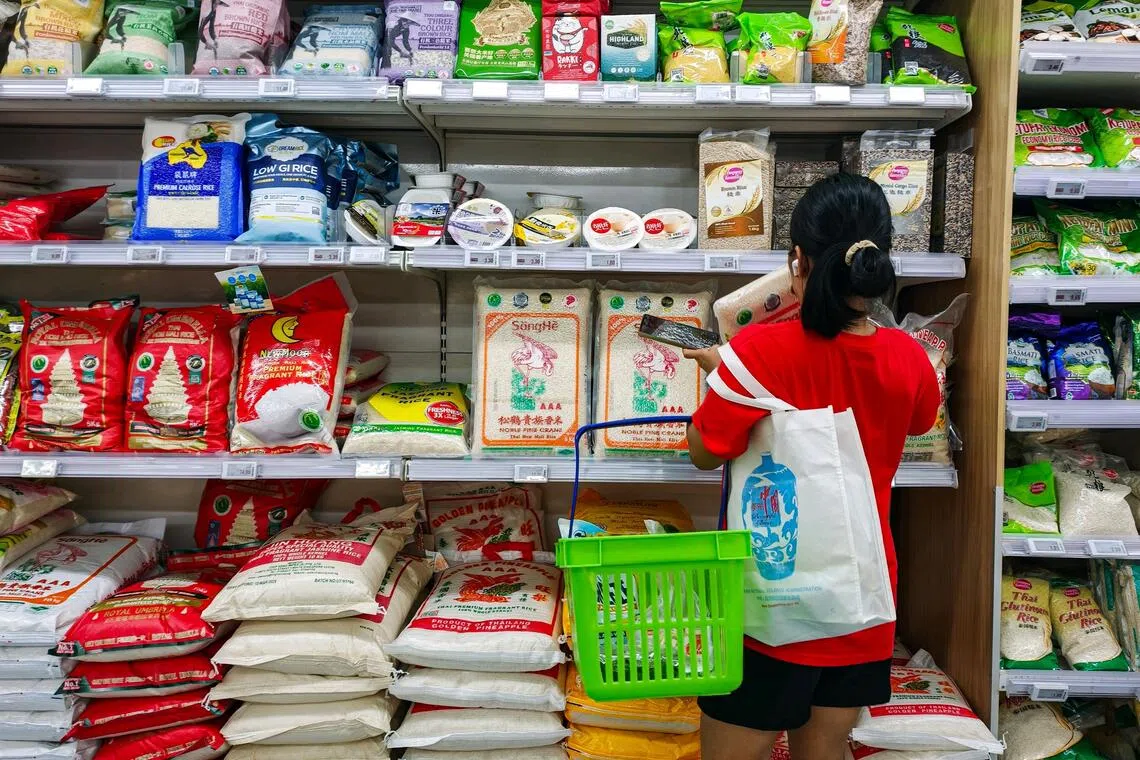
Shoppers at the Sheng Siong supermarket outlet at West Coast on April 6.
Published Sep 09, 2026, 08:00 PM
Updated Sep 09, 2026, 09:36 PM
Community kitchens using rescued food to make affordable meals and shared logistics were among suggestions raised by MPs during a four-and-a-half-hour long debate on a motion about food resilience tabled in Parliament.
The government will take these suggestions into account as part of its ongoing review of the Zero Waste Masterplan.
It is also assessing the safety and feasibility of allowing food that has passed quality-based date-marks to be donated, while maintaining food safety standards.
SINGAPORE – Setting up community kitchens that use rescued food to make nutritious meals, rolling out support for food rescue initiatives, and formalising the re-distribution of surplus hawker food, were among suggestions to tackle food waste raised by MPs on Sept 9.
They were speaking during a four-and-half-hour-long debate on a private member’s motion about food resilience tabled by four PAP MPs from the Government Parliamentary Committee for Sustainability and the Environment.
The motion had urged the Government to enhance food resilience and reduce food waste, so as to ensure that Singaporeans will have access to affordable food despite geopolitical uncertainties and climate risks.
During the debate, 12 MPs highlighted their proposals to enhance food resilience in Singapore. Their suggestions ranged from ways to strengthen support for local farms, to initiatives to reduce food waste and efforts that help Singaporeans access affordable food options.
Poh Li San (Sembwang West), who chairs the committee, suggested that rescued fresh food supplies, such as vegetables, eggs and rice, can be used to prepare nutritious and low-cost or even free meals for Singapore’s communities.
She said: “If food charity organisations, catering companies, community partners, and community volunteers work together, we can prepare and deliver fresh and hot meals for seniors living alone and low-income families living within our community.”
She added that while it is not possible to control food prices in a free market, such an initiative could help to “substantially lower” food expenses for vulnerable groups, ensuring they will always have access to affordable food.
Meanwhile WP’s Fadli Fawzi (Aljunied GRC), PAP’s Valerie Lee (Pasir Ris-Changi GRC) and Lee Hui Ying (Nee Soon GRC) called for more support for logistics, such as refrigerators, to repurpose food that will otherwise be thrown away.
Fadli pointed out that community organisations, non-profits and volunteer groups involved in such work often operate with limited resources and logistical constraints.
Meanwhile, Valerie Lee, who has tracked the efforts of groups such as Food Rescue Sengkang and Fridge Restock Community SG, said rescuers have consistently shared that storage is one of their major challenges.
“Because even if they manage to rescue food today, they need somewhere appropriate to put it while they match it to the communities that need it,” she added.
Separately, Pereira urged the government to work with community partners to re-distribute surplus food from more hawkers centres to lower income and elderly residents , particularly those serving mature HDB estates with a higher proportion of such groups .
Responding to the buffet of ideas, Senior Parliamentary Secretary for the Ministry of Sustainability and the Environment Goh Hanyan said the government will take suggestions to strengthen support for enterprises, food charities, and community initiatives in the food waste space into account as part of the ongoing review of the Zero Waste Masterplan.
In June, the government announced that the plan to cut down Singapore’s waste was undergoing a review slated for completion in 2027.
Goh said the review will include how Singapore can better support innovative and impactful solutions to reduce food wastage and extract value from food waste.
Lee Hui Ying had also asked if Singapore will make it clearer that food past the quality date-marks can still be safe for consumption.
These refer to “best before” or “best consumed by” dates that indicate when a product will be of best flavour or quality.
In response, Goh said the Singapore Food Agency (SFA) is embarking on a study to assess the safety and feasibility of allowing food that has passed quality-based date-marks to be donated, while maintaining food safety standards.
“This could enable more edible food to be redistributed rather than discarded,” she said, adding that SFA will share more details in 2027.
A spokesperson from the Ministry of Sustainability and the Environment said that it has been studying the issue since the enactment of the Good Samaritan Food Donation Act and Food Safety and Security Act.
Since 2026, the SFA has stepped up engagement of businesses to better understand date-marking practices for food sold in Singapore.
Singapore Parliament
4月6日,在西海岸昇菘超市购物的顾客。
发布于2026年9月9日晚上8点
更新于2026年9月9日晚上9:36
在议会就一项关于粮食韧性的动议进行了长达四个半小时的辩论期间,议员们提出了一些建议,其中包括利用回收食物制作价格实惠的餐食的社区厨房以及共享物流。
政府将在持续审查零废弃物总体规划的过程中考虑这些建议。
它还在评估允许捐赠已通过基于质量的日期标记的食品的安全性和可行性,同时保持食品安全标准。
新加坡——9月9日,国会议员们提出了一系列建议,以解决食物浪费问题,其中包括设立利用回收食物制作营养餐的社区厨房、加大对食物救援计划的支持力度,以及规范剩余小贩食物的再分配。
在长达四个半小时的辩论中,他们发表了讲话。这场辩论是关于一项由四名人民行动党议员提出的关于粮食韧性的私人动议,该动议由政府议会可持续发展与环境委员会提出。
该动议敦促政府增强粮食韧性并减少食物浪费,以确保新加坡人即使在地缘政治不确定性和气候风险的情况下也能获得价格合理的食物。
在辩论中,12位国会议员重点阐述了他们关于增强新加坡粮食安全保障的提案。他们的建议涵盖了从加强对本地农场的支持,到减少食物浪费,再到帮助新加坡人获得价格合理的食品等各个方面。
委员会主席 Poh Li San(三旺西选区)建议,可以利用抢救出来的新鲜食品,如蔬菜、鸡蛋和大米,为新加坡社区准备营养丰富、价格低廉甚至免费的餐食。
她说:“如果食品慈善组织、餐饮公司、社区合作伙伴和社区志愿者齐心协力,我们就可以为我们社区中独居老人和低收入家庭准备和配送新鲜热腾腾的饭菜。”
她补充说,虽然在自由市场中无法控制食品价格,但这样的举措可以帮助“大幅降低”弱势群体的食品支出,确保他们始终能够获得价格合理的食品。
与此同时,工人党议员法德利·法兹(阿裕尼集选区)、人民行动党议员瓦莱丽·李(白沙-樟宜集选区)和李慧莹(义顺集选区)呼吁加大对物流(如冰箱)的支持力度,以便重新利用原本会被扔掉的食物。
法德利指出,参与此类工作的社区组织、非营利组织和志愿者团体往往面临资源有限和后勤方面的限制。
与此同时,一直关注“盛港食物救援”和“新加坡冰箱补给社区”等团体工作的 Valerie Lee 表示,救援人员一直反映,储存是他们面临的主要挑战之一。
她补充说:“因为即使他们今天设法抢救出了食物,他们也需要找个合适的地方存放这些食物,同时将它们送到需要的社区。”
另外,佩雷拉敦促政府与社区伙伴合作,将更多小贩中心的剩余食物重新分配给低收入和老年居民,特别是那些服务于成熟组屋区(这类群体比例较高)的小贩中心。
针对各方提出的各种建议,永续发展与环境部高级政务次长吴汉彦表示,政府将把加强对企业、食品慈善机构和社区在食物浪费领域开展的活动的支持的建议纳入考量,作为正在进行的零浪费总体规划审查的一部分。
今年6月,政府宣布,减少新加坡垃圾的计划正在进行审查,预计将于2027年完成。
吴先生表示,此次审查将包括新加坡如何更好地支持创新且有影响力的解决方案,以减少食物浪费并从食物浪费中提取价值。
李慧莹还询问新加坡是否会更明确地说明,超过质量日期标记的食品仍然可以安全食用。
这些指的是“最佳食用日期”或“最佳食用期限”,表明产品何时风味或质量最佳。
对此,吴先生表示,新加坡食品局(SFA)正在开展一项研究,以评估允许捐赠已通过质量检验日期标记的食品的安全性和可行性,同时保持食品安全标准。
“这可以让更多可食用的食物得到重新分配,而不是被丢弃,”她说道,并补充说,新加坡食品局将在 2027 年分享更多细节。
可持续发展与环境部的一位发言人表示,自《好撒玛利亚人食物捐赠法》和《食品安全保障法》颁布以来,该部一直在研究这个问题。
自 2026 年以来,新加坡食品局 (SFA) 加强了与企业的沟通,以更好地了解在新加坡销售的食品的日期标记做法。
新加坡国会