Lockheed Martin secures $950M Australian air battle management contract洛克希德·马丁公司获得价值9.5亿美元的澳大利亚空中作战管理合同
Lockheed Martin says the enhancements under Australia’s Project AIR 6500 Tranche 2B will establish a “scalable path” for future improvements and integration of future technological advances.
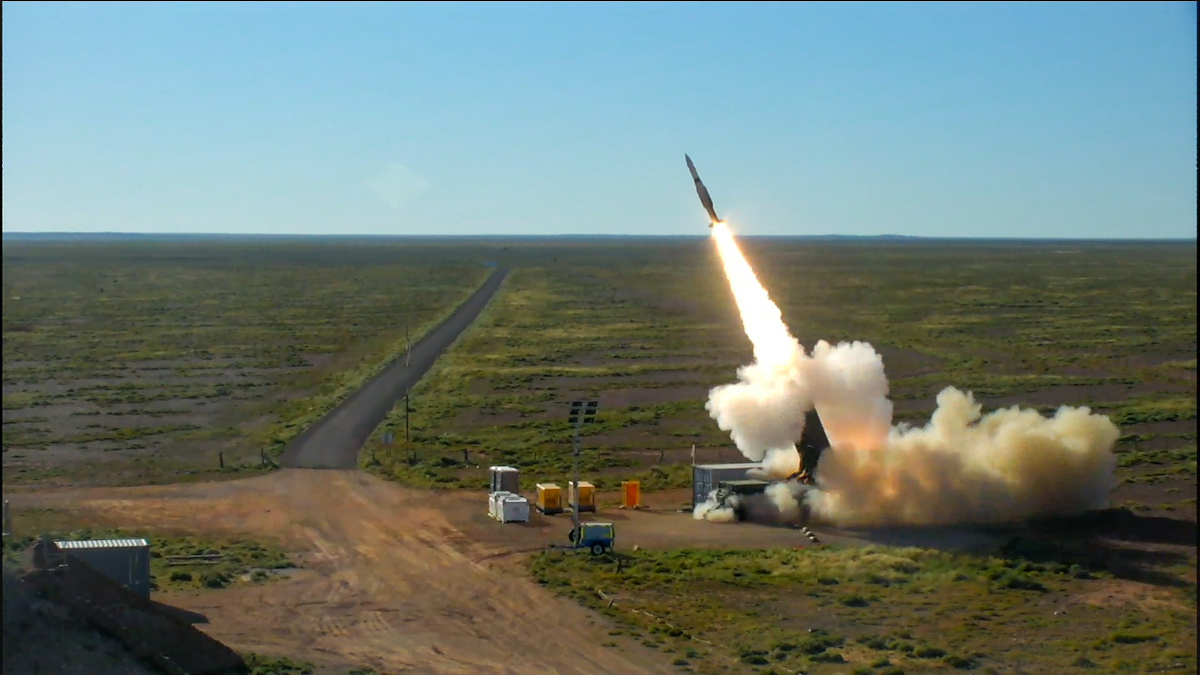
A Royal Australian Navy Standard Missile 2 (SM-2) is fired during Taipan Strike 26 at the Woomera Test Range, in South Australia. The exercise integrated an Australian CEA radar and a virtualized Aegis system and validated system performance of a candidate option for a future ground-based medium-range air defence solution. (Photo: Australian Department of Defence)
SINGAPORE — Lockheed Martin Australia has been awarded a contract to sustain and expand Australia’s joint air battle management system as part of a broader Australian effort to improve its air and missile defense capabilities, the company announced today.
The 1.32 billion AUD ($950 million USD) contract will enhance th e AIR6500’s core architecture with “advanced C2 aids, expanded comms, and cyber‑security to maintain resilient, networked sensor and C2 capabilities that can sense and track incoming threats and integrate with the Australian Defence Force’s targeting enterprise, allies and partners,” according to a Lockheed Martin news release.
Lockheed Martin says the enhancements under Australia’s Project AIR6500 Tranche 2B will establish a “scalable path” for future improvements and integration of future technological advances.
The joint air battle management system “integrates Australia’s air and missile defence capabilities across all-domains into a single, unified view of the battlespace to detect and counter threats at various ranges,” today’s release says.
Lockheed Martin Australia and New Zealand chief executive Jeremy King said in the press release that this next phase of Project AIR 6500 “fortifies the core” of Australia’s integrated air and missile defense system.
“AIR6500 enhances the joint force by bringing all ADF defence assets together on a scalable, resilient, and collaborative platform. It gives us clearer cross‑domain awareness and a more effective way to respond to air and missile threats.”
Defense Minister Richard Marles said in the press release that Project AIR6500 was a landmark investment in Australia’s air defense capability.
The AIR6500 “will help ensure the Australian Defence Force can respond effectively to future threats and deliver on the priorities of both the National Defence Strategy and the Defence Industry Development Strategy,” he added.
The contract award to Lockheed Martin is part of a $2.4 billion AUD investment over six years by Australia, announced today by the Australian Department of Defence, to “modernise air surveillance, and aircraft control functions while supporting the coordination of Defence operations in Australia and overseas.”
“The capability will connect current and future Defence platforms, including Hobart-class destroyers, the F-35A Lightning II aircraft and the accelerated Medium-Range Ground-Based Air Defence system,” according to a departmental release.
Australia’s defense department also separately announced today that the Australian Army’s National Advanced Surface to Air Missile System (NASAMS) capability has attained Final Operational Capability . Australia acquired in 2017 two batteries of three NASAMS launchers each for its short range ground-based air defense requirement under a contract with Raytheon Australia.
“This milestone confirms the NASAMS has met all requirements for operational service and is ready to support Australian Defence Force (ADF) operations,” said today’s announcement.
在南澳大利亚伍默拉试验场举行的“泰潘打击26”演习中,一枚澳大利亚皇家海军标准2型导弹(SM-2)正在发射。此次演习整合了澳大利亚CEA雷达和虚拟化宙斯盾系统,并验证了未来陆基中程防空解决方案候选方案的系统性能。(图片:澳大利亚国防部)
新加坡——洛克希德·马丁澳大利亚公司今天宣布,该公司已获得一份合同,将维护和扩展澳大利亚的联合空中作战管理系统,这是澳大利亚为提高其防空和导弹防御能力而采取的更广泛举措的一部分。
根据洛克希德·马丁公司的新闻稿,这份价值 13.2 亿澳元(9.5 亿美元)的合同将通过“先进的 C2 辅助设备、扩展的通信和网络安全”来增强 AIR6500 的核心架构,以“保持弹性、联网的传感器和 C2 能力,从而能够感知和跟踪来袭威胁,并与澳大利亚国防军的目标定位系统、盟友和合作伙伴进行集成”。
洛克希德·马丁公司表示,澳大利亚 AIR6500 项目第二阶段 B 项下的改进将为未来的改进和未来技术进步的整合建立一条“可扩展的道路”。
今天的新闻稿称,联合空中作战管理系统“将澳大利亚在所有领域的防空和导弹防御能力整合到一个统一的战场视图中,以探测和应对不同距离的威胁”。
洛克希德·马丁澳大利亚和新西兰首席执行官杰里米·金在新闻稿中表示,AIR 6500 项目的下一阶段“加强了”澳大利亚综合防空和导弹防御系统的核心。
“AIR6500通过将所有澳大利亚国防军的防御资产整合到一个可扩展、高弹性和协作的平台上,增强了联合部队的作战能力。它使我们能够更清晰地掌握跨领域态势感知,并更有效地应对空中和导弹威胁。”
国防部长理查德·马尔斯在新闻稿中表示,AIR6500 项目是澳大利亚防空能力的一项里程碑式投资。
他补充说,AIR6500“将有助于确保澳大利亚国防军能够有效应对未来的威胁,并实现国家国防战略和国防工业发展战略的优先事项”。
澳大利亚国防部今天宣布,澳大利亚将斥资 24 亿澳元,在六年内对洛克希德·马丁公司进行投资,以“实现空中监视和飞机控制功能的现代化,同时支持澳大利亚境内外国防行动的协调”。
根据国防部发布的消息,“这项能力将连接当前和未来的国防平台,包括霍巴特级驱逐舰、F-35A闪电II战斗机和加速发展的中程陆基防空系统。”
澳大利亚国防部今天还单独宣布,澳大利亚陆军的国家先进地对空导弹系统(NASAMS)已达到最终作战能力。澳大利亚于2017年根据与雷神澳大利亚公司签订的合同,采购了两套NASAMS导弹系统,每套包含三套发射装置,用于满足其短程地面防空需求。
“这一里程碑证实,NASAMS 已满足所有运行服务要求,并已准备好支持澳大利亚国防军 (ADF) 的行动,”今天的公告称。