Army ‘not walking away’ from UAVs despite reverting drone unit back to infantry尽管已将无人机部队重新编入步兵部队,但陆军“并未放弃”无人机。
“In fact, we pushed back on having something like a drone corps since its inception, because our theory of the case is, if you centralize that in one place, what you lose is the ability to actually scale that learning and send that out to the rest of the Army,” Army CTO Alex Miller said.
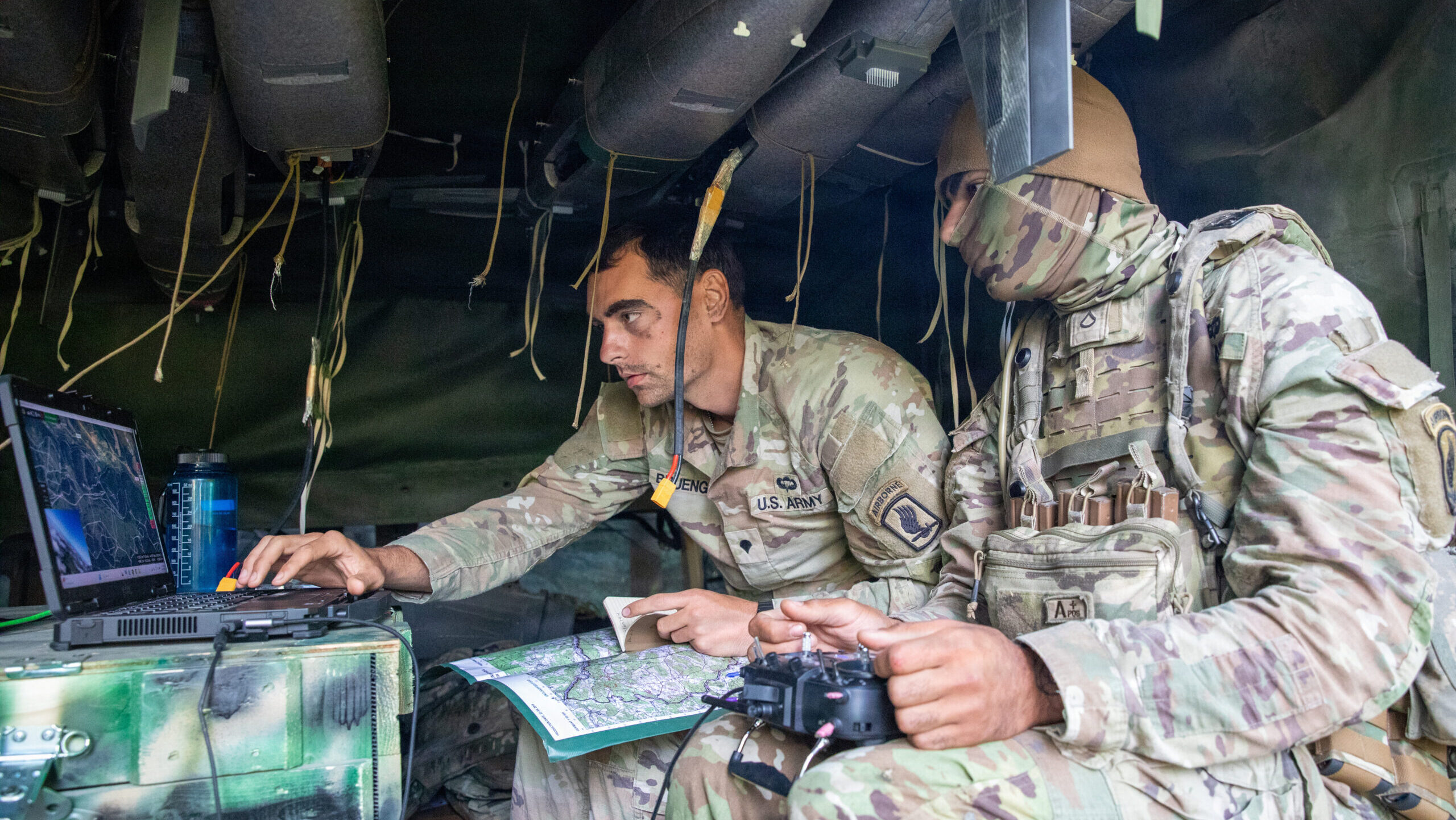
U.S. Army Spc. Taylor Bruenger, left, and Pfc. Zachary Gardner, infantrymen with 3rd Battalion, 504th Parachute Infantry Regiment, 173rd Mobile Brigade Combat Team (Airborne), train with a Hornet, a military unmanned aircraft system,, during exercise Saber Junction 26 at Joint Multinational Readiness Center's Hohenfels Training Area, Germany, Aug. 29, 2026. (U.S. Army Photo by SGT Marc Morgenstern)
WASHINGTON — Following the Army’s decision to transition one of its drone-focused units back to a conventional infantry battalion, the service’s chief technology officer defended the decision today, telling reporters that the Army is not moving away from i ts search for drones and other autonomous systems.
“Let me be very clear, like we are not slowing down on drones or autonomous systems, and we are not walking away from them,” Alex Miller , the Army’s CTO said today when asked about the battalion’s transition. “So I don’t want anybody to take that as a perception that we’re walking away or this is less important.”
The Europe-based battalion, dubbed the 3rd battalion of the 504th Parachute Infantry Regiment, is part of the 173rd Airborne Brigade, and was officially designated as an “unmanned systems battalion” in January. The goal was for the battalion to sharpen its knowledge on drone and other autonomous warfare based on lessons learned from the Ukrainian Armed Forces, according to a statement from an Army official. Soldiers within the battalion participated in various exercises and met with Ukrainian drone operators in NATO territory over the past several months, per The Wall Street Journal , which was the first to report that the drone unit would shutter.
But then in August, a cting Chief of Staff of the Army Gen. Christopher LaNeve directed the unit to revert back to a traditional infantry unit after it completed two exercises in Germany, with the last on e concluding th is month, the Army official told Breaking Defense in the statement.
LaNeve’s direction faced backlash from lawmakers, who requested in a letter to the acting chief and then-Army Se cretary Dan Driscoll , that they would like to “better understand” the leaders’ decision “to eliminate the drone battalion of the 173rd Airborne Brigade.” “We have deep concerns that eliminating this specialized drone unit will limit our ability to learn from allies, particularly the Ukrainian Armed Forces, and hinder our efforts to modernize drone warfare at the speed necessary to compete on the modern battlefield,” the lawmakers wrote. “Both the Ukraine-Russia War and the ongoing conflict in Iran have demonstrated our need to make significant improvements in drone warfare—lessons learned from our Ukrainian allies who have proven their ability to innovate and compete in this space.”
But today Miller said some backlash was “probably” caused by the Army not “telling the full story fast enough, ” noting that th e service never wanted a permanent specialized drone unit.
“They were never flagged to be a permanent centralized drone unit. In fact, we pushed back on having something like a drone corps since its inception, because our theory of the case is, if you centralize that in one place, what you lose is the ability to actually scale that learning and send that out to the rest of the Army,” he said.
Engineering decision advantage for the warfighter
Multi-orbit mission capabilities are accelerating decision making across domains.
Miller added that the Army did not “disband” a drone unit, as the battalion in the 173rd Brigade was always going to be a classic infantry unit, but it was designated to have a drone and autonomy specialization for the “six or seven months before they got their full infantry battalion.” The plan for the initial several months was for the battalion personnel to “learn some of those lessons and then pass them out to the rest of the Army.” “We’re sort of combating this narrative that we stood something new up and then we killed that new thing and we’re going to sacrifice it at the altar of technology,” he added. “That’s just not true.”
2026年8月29日,在德国霍亨费尔斯联合多国战备中心举行的“军刀交汇26”演习中,美国陆军第173机动旅战斗队(空降)第504伞兵步兵团第3营的步兵泰勒·布鲁恩格(左)和扎卡里·加德纳列兵正在使用“大黄蜂”军用无人机系统进行训练。(美国陆军中士马克·摩根斯坦摄)
华盛顿——在陆军决定将其一个以无人机为重点的部队转回常规步兵营后,该军种首席技术官今天为这一决定辩护,并告诉记者,陆军并没有放弃对无人机和其他自主系统的探索。
“我要非常明确地表明,我们并没有放慢无人机或自主系统的研发步伐,也没有放弃它们,”陆军首席技术官亚历克斯·米勒今天在被问及该营的转型时表示。“所以我不希望任何人误以为我们正在放弃或者认为这件事不再那么重要。”
这支驻扎在欧洲的营,隶属于第173空降旅,被命名为第504伞兵步兵团第3营,并于今年1月正式被指定为“无人系统营”。据一位陆军官员称,该营的目标是借鉴乌克兰武装部队的经验,提升其在无人机和其他自主作战方面的知识。据《华尔街日报》报道,过去几个月里,该营士兵参加了各种演习,并在北约控制区与乌克兰无人机操作员进行了会面。《华尔街日报》率先报道了该无人机部队即将解散的消息。
但到了 8 月,陆军代理参谋长克里斯托弗·拉内夫将军指示该部队在德国完成两次演习后恢复为传统的步兵部队,最后一次演习于本月结束,这位陆军官员在声明中告诉 Breaking Defense。
拉内夫的指示遭到了议员们的强烈反对。他们在致代理参谋长兼时任陆军部长丹·德里斯科尔的信中表示,他们希望“更好地理解”领导层“裁撤第173空降旅无人机营”的决定。议员们在信中写道:“我们深感担忧,裁撤这支专业无人机部队将限制我们向盟友,特别是乌克兰武装部队学习的能力,并阻碍我们以在现代战场上竞争所需的速度实现无人机作战现代化。乌克兰-俄罗斯战争和持续不断的伊朗冲突都表明,我们需要在无人机作战方面做出重大改进——这些经验教训来自我们的乌克兰盟友,他们已经证明了自己在该领域创新和竞争的能力。”
但米勒今天表示,一些强烈反对“可能”是由于陆军“没有足够快地讲述全部真相”造成的,并指出陆军从未想过要建立一支永久性的专业无人机部队。
“他们从未被规划为一支永久性的集中式无人机部队。事实上,从一开始我们就反对建立类似无人机部队这样的组织,因为我们的理论是,如果你把这些能力集中在一个地方,你就会失去将所学知识推广到陆军其他部门的能力,”他说。
为作战人员提供工程决策优势
多轨道任务能力正在加速跨领域的决策制定。
米勒补充说,陆军并没有“解散”无人机部队,因为第173旅的这个营原本就是一个传统的步兵单位,只是被指定在“正式步兵营组建完成前的六七个月”内专门负责无人机和自主作战。最初几个月的计划是让该营人员“学习一些经验,然后将其传授给陆军其他部队”。他补充道:“我们正在努力反驳这样一种说法,即我们建立了一个新体系,然后又扼杀了它,为了技术而牺牲它。这根本不是事实。”