‘They’ve grown back’: How Russia surprised the West and rebuilt its force“他们又恢复了元气”:俄罗斯如何出乎西方意料地重建了其军事力量
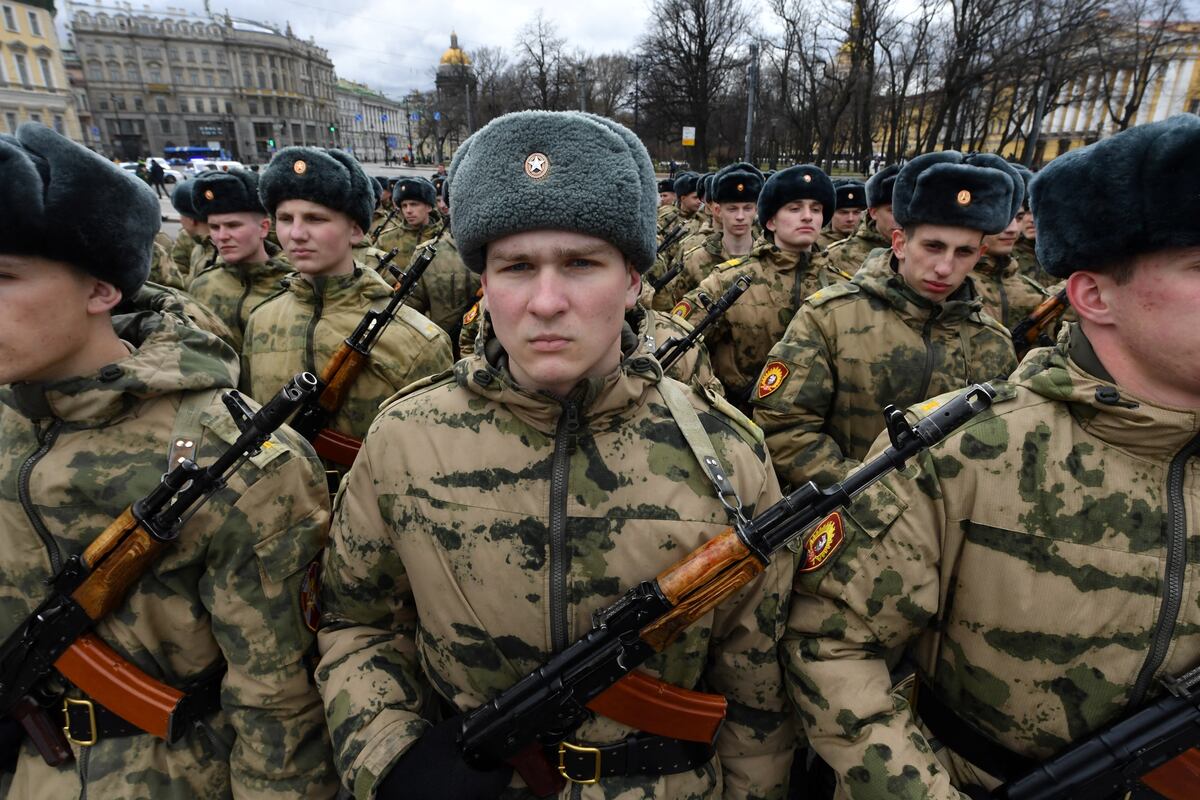
If the Kremlin keeps rebuilding its military faster than expected, it could present a longer-term and perhaps costlier problem for NATO.
The Pentagon in March put a price tag on Russia’s invasion of Ukraine.
Speaking in the officer’s club at Ramstein Air Base in Germany, U.S. Defense Secretary Lloyd Austin read a list of costs the Kremlin had tallied over two years: More than 315,000 troops killed or wounded. Over $211 billion spent. Some 20 medium or large ships damaged or sunk in the Black Sea.
“Russia has paid a staggering cost for [Russian President Vladimir] Putin’s imperial dreams,” Austin said, speaking before a meeting of countries that gather each month in support of Ukraine.
By April, though, Austin’s tone had changed.
At a news conference, Austin and Gen. CQ Brown, America’s top military officer, again detailed Russia’s losses. But they added another trend: Russia’s recovery.
“Russia has ramped up its production,” Austin said. “All of their defense industry really answers directly to the state, so it’s easier for them to do that a bit quicker.”
Brown put it more simply: “Russia has aggressively reconstituted its military force.”
Coming a month apart, the two sets of comments show a distinct change in how the U.S. views Russia’s military. While American officials have long detailed the costs of Moscow’s invasion for its armed forces and its economy, in the last two months they’ve started to acknowledge Russia is recovering faster than the U.S. expected.
The pace matters for Ukraine and those supporting it — in particular the U.S. government, which approved $48 billion more in Ukraine-related security aid this April. American officials say they expect that bill to sustain Kyiv for another year. But if Moscow’s recovery is a moving target, that could change.
Indeed, if the Kremlin keeps rebuilding its forces faster than expected, it could present a longer-term and perhaps costlier problem for the NATO alliance. The U.S. government’s National Defense Strategy calls Russia an “acute threat,” second to the “pacing challenge” of China.
But Moscow’s own capacity may change that.
“They are doing better than we would have thought,” a senior U.S. defense official told Defense News on the condition of anonymity in order to discuss sensitive intelligence.
Three ways to rebuild
When Russia began its full-scale invasion of Ukraine in February 2022, things quickly fell apart. Enduring images of the first two months illustrated Russian frailty by showing rotting tires on armored vehicles and a convoy just outside of Kyiv that became a traffic jam.
A satellite image shows the northern end of a convoy containing resupply vehicles southeast of Ivankiv, Ukraine, on Feb. 28, 2022. (Maxar Technologies)
This prompted self-reflection in the West: If Russia’s military wasn’t as powerful as defense planners had thought before the war, how quickly could it recover?
Even scientific methods to measure an opposing military are inexact, partly because those easiest to measure, such as personnel and equipment, might not be the most important given factors like corruption and morale. But estimates for how long Russia would take to reconstitute mostly fell into the five- to 10-year range, depending on how Western sanctions worked and the Kremlin’s own goals.
“There’s no question — and I think [there’s] unanimity in the intelligence community — it will take years for the Russians to build back up their ground forces,” Avril Haines, the U.S. director of national intelligence, said in March 2023.
Her comments came amid the annual churn of officials visiting Capitol Hill from winter to early spring. Around the same time this year, Gen. Christopher Cavoli, America’s top military officer in Europe, had a second opinion.
“The overall message I would give you is they’ve grown back to what they were before,” Cavoli said. “They’ve got some gaps that have been produced by this war, but their overall capacity is very significant still. And they intend to make it go higher.”
To some extent, the officials were discussing different elements of Russia’s force. When Haines testified last year, she was joined by the chief of the Defense Intelligence Agency at the time, Lt. Gen. Scott Berrier, who said Russia was five to 10 years away from reconstituting. By that, Berrier meant it would take Russia up to a decade to rebuild the high-end equipment lost earlier in the war.
Cavoli, on the other hand, was discussing the overall size of Russia’s military.
Still, European and American defense officials, along with experts on the Russian military, told Defense News the Kremlin’s force is reconstituting faster than expected. They gave three main reasons why.
The first is the resilience of Moscow’s defense industry.
During the war, Russia has almost tripled its defense budget, according to Richard Connolly, an expert on the country’s economy at the London-based Royal United Services Institute think tank. Russia is set to spend somewhere between $130 billion and $140 billion on defense in 2024, which is about 6% of gross domestic product and a third of the government’s overall budget, Connolly approximated.
But because costs and wages are lower in Russia than in high-income countries, like many in NATO , the Kremlin’s defense fund buys much more than it would in the United States. When that conversion is taken into account, Russia’s 2024 defense budget falls between $360 billion to $390 billion, Connolly estimated.
The spending trend itself has raised salaries. Working in the defense industry was once a middling career in Russia; it’s now lucrative and attracting more workers. Based on official Russian figures, which Connolly noted may be inflated, the number of people working in the defense industry rose 20% during the war, from 2.5 million to about 3 million now.
The funds have also gone toward procuring military hardware. Connolly estimates this share of the defense budget probably doubled during the war, helping Russia replace lost equipment.
Connolly said he doubts the state of Russia’s economy will factor into how the war ends. Moscow has a cadre of policy wonks guiding its country through sanctions, he noted, and they have lots of practice doing so. In fact, Putin recently replaced a general at the helm of the Defence Ministry with an economist.
Employees of a military vehicles repair factory renovate and repair T-34 tanks handed over by Laos to Russia in the latter's village of Strelna on Feb. 25, 2020. (Olga Maltseva/AFP via Getty Images)
The second reason is Russia’s ability to dodge financial penalties.
In 2022, the Biden administration and European partners passed a raft of sanctions meant to sink the Russian economy. These ranged from banning the sale of high-tech materials, such as microchips, to a price cap on Russian oil sales.
These haven’t worked, multiple analysts told Defense News. That’s in large part because Moscow has been able to reroute its supply lines through friendly countries.
Chief among those partners is China. From 2022 to 2023, trade between Russia and China grew more than 26%, hitting an all-time high of $240 billion , according to a report by the Washington-based Center for Strategic and International Studies think tank.
Beijing largely avoided sending weapons directly. Instead, Chinese companies became a vital supplier of the items Russia needed to build weapons itself — such as microchips and small electronics.
This leads to the third point: Russia’s reconstitution has relied on surprising levels of support from other U.S. adversaries, who, unlike China, have directly provided military aid to Russia.
Since October, North Korea has sent Russia about 10,000 shipping containers, which could include up to 3 million artillery rounds, according to U.S. government figures. Russia has fired dozens of North Korean ballistic missiles since last fall , an American diplomat told the U.N. in March.
Iran has also provided materiel. Specifically, it’s sent a somewhat plodding attack drone known in Tehran as the Shahed-136 and in Moscow as the Geran-2. Russia has deployed swarms of these to overwhelm Ukraine’s air defenses, firing more than 3,700 Shahed drones, of which there are several variants, during the war as of December, according to the Ukrainian government .
When Cavoli visited Capitol Hill in April, he came with his own list of numbers : Russia’s GDP grew 3% in 2023, despite predictions it would shrink. It can add 1,200 tanks and build at least 3 million artillery rounds or rockets each year. And through a deal with Iran, Russia plans to locally build 6,000 drones by next summer.
A February report by the RUSI think tank , cited by the unnamed senior U.S. defense official, who declined to offer a full set of American figures, said Russia can produce 3,000 armored vehicles per year and had surged its inventory of precision missiles.
Its force inside Ukraine has also grown.
Last year, Russia increased the age limit for the draft from 27 to 30, which the U.S. estimates will add a pool of 2 million eligible conscripts .
And the Kremlin set a goal to recruit more than 400,000 troops — part of a larger target to grow the military to 1.5 million service members by 2026. To do so, Russia offered lavish signing bonuses and salaries, which in some areas are more than five times the average paycheck, according to an Estonian intelligence report .
It’s unclear whether Moscow already met this goal. But Cavoli said in April that Russia was recruiting about 30,000 new soldiers per month and had surged its front-line end strength to 470,000, larger than the Russian army before the war.
Is the military growth sustainable?
In early May, Adm. Tony Radakin, the professional head of the U.K. armed forces, sat down with reporters in the British Embassy in Washington. Speaking over cookies and tea, he discussed Russia’s recent advances.
The Russian military was making marginal progress, but still relying on Soviet-era inventories to restock and struggling to train its newest recruits, Radakin said. The force was on pace to suffer 500,000 casualties by the end of June, he estimated.
“That is an astonishing loss of life and Russian nationhood that has been wasted for such modest gains,” he said.
But a day after he spoke, Russia began a new offensive near Kharkiv, Ukraine’s second-largest city.
Ukrainian servicemen fire a BM-21 Grad multiple rocket launcher toward Russian positions in the Kharkiv region on May 15, 2024. (Roman Pilipey/AFP via Getty Images)
Such attacks raise another question: How long can Russia sustain its operations?
Aside from drones, much of its wartime output has relied on vast warehouses of Soviet-era weapons. To reconstitute materiel lost in battle, Russia is emptying these, repairing the equipment and then sending it all to the front lines — one reason the estimates of Russia’s industrial capacity vary so widely.
“A lot of people are reading some headline figures and then assuming that it’s all new production,” Connolly said.
As an example, he pointed to main battle tanks. Before the war, he said, Russia was delivering about 150 to 250 a year. But of those, he assessed, about 20 to 30 would have been new, while the rest were heavily refurbished.
So while Cavoli’s written testimony in April said Russia could make up to 1,200 tanks per year, Connolly estimated that, at a maximum, 400 of those are new or heavily refurbished. Everything else, he said, is pulled from storage, lightly repaired and then deployed.
The RUSI report from February estimated about 80% of Russia’s wartime production was actually refurbished, aging materiel.
“Of course inventory becomes very important: What was that number to begin with, and what was the state of it?” Connolly said. “Truth is, nobody knows.”
European and American defense officials made the same point. Russia has vast stocks, but they’re not unlimited, which could be why it relies on partners like Iran, Belarus and North Korea.
Russian President Vladimir Putin, center left, and North Korean leader Kim Jong Un, center right, visit the Vostochny Cosmodrome spaceport in Russia's region of Amur on Sept. 13, 2023. (Mikhail Metzel/AFP via Getty Images)
“When you are doing the reform and you are trying to enlarge your military, you are probably losing the quality,” a defense official from a NATO member state told Defense News, speaking on the condition of anonymity to discuss the sensitive topic.
That said, the war in Ukraine has been more about attrition than precision, the official said. In other words, it may not matter much whether Russian soldiers are using a 50-year-old T-72 tank or a new one.
The same questions of sustainability also apply to Ukraine, which has a smaller defense industry, an unreliable source of support in America, and less eligible soldiers. Earlier this year, Kyiv lowered the draft age from 27 to 25 to regenerate its armed forces.
Sitting in the British Embassy, Radakin said it would probably take about a decade for Russia to seriously threaten NATO again. Despite Russia’s refreshed troop levels, its invasion of Ukraine will eventually collapse, though he would not guess at that timeline.
“I don’t think it is sustainable,” he said. “But I don’t know at which point it becomes unsustainable.”
Noah Robertson is the Pentagon reporter at Defense News. He previously covered national security for the Christian Science Monitor. He holds a bachelor’s degree in English and government from the College of William & Mary in his hometown of Williamsburg, Virginia.
今年3月,五角大楼给俄罗斯入侵乌克兰的行为标价。
美国国防部长劳埃德·奥斯汀在德国拉姆施泰因空军基地的军官俱乐部发表讲话,宣读了克里姆林宫统计的两年来的损失清单:超过31.5万名士兵伤亡;花费超过2110亿美元;约20艘中型或大型舰艇在黑海受损或沉没。
“俄罗斯为普京的帝国梦想付出了惨痛的代价,”奥斯汀在每月一次支持乌克兰的国家会议上发表讲话时说道。
但到了四月份,奥斯汀的语气发生了变化。
在新闻发布会上,奥斯汀和美国最高军事长官布朗将军再次详细阐述了俄罗斯的损失。但他们还补充了另一个趋势:俄罗斯的复苏。
奥斯汀说:“俄罗斯已经提高了产量。他们的国防工业实际上直接对国家负责,所以他们更容易更快地做到这一点。”
布朗的说法更简洁明了:“俄罗斯积极重建了其军事力量。”
相隔一个月发表的这两组评论,显示出美国对俄罗斯军事态度的显著转变。尽管美国官员长期以来一直在详细阐述莫斯科入侵对其武装力量和经济造成的损失,但在过去两个月里,他们开始承认俄罗斯的复苏速度比美国预期的要快。
对乌克兰及其支持者而言,复苏的步伐至关重要——尤其是对今年4月批准向乌克兰追加480亿美元安全援助的美国政府而言。美国官员表示,他们预计这笔援助足以维持基辅一年的运转。但如果莫斯科的复苏进程难以预测,情况可能会发生变化。
事实上,如果克里姆林宫继续以超出预期的速度重建其军队,可能会给北约联盟带来更长期、代价也可能更高的问题。美国政府的《国防战略》将俄罗斯列为“迫在眉睫的威胁”,其重要性仅次于中国的“发展速度挑战”。
但莫斯科自身的能力可能会改变这种情况。
一位不愿透露姓名的美国高级国防官员告诉《防务新闻》:“他们的表现比我们预想的要好。”他表示,此举是为了讨论敏感情报。
重建的三种方式
2022年2月,俄罗斯全面入侵乌克兰后,局势迅速恶化。最初两个月的画面令人触目惊心,展现了俄罗斯的脆弱:装甲车轮胎腐烂,基辅郊外的车队堵塞了道路。
2022年2月28日,卫星图像显示,一支载有补给车辆的车队位于乌克兰伊万科夫东南部的北端。(Maxar Technologies)
这促使西方进行自我反思:如果俄罗斯的军事实力没有战前国防规划者所认为的那么强大,那么它能以多快的速度恢复呢?
即使是科学的军事评估方法也并非万无一失,部分原因是,那些最容易衡量的指标,例如人员和装备,可能并非最重要的,因为腐败和士气等因素都会影响评估结果。但对于俄罗斯重建所需时间的估计大多在五到十年之间,具体取决于西方制裁的成效以及克里姆林宫自身的目标。
“毫无疑问——而且我认为情报界对此也一致认为——俄罗斯需要数年时间才能重建其地面部队,”美国国家情报总监艾薇儿·海恩斯在2023年3月表示。
她发表这番言论之际,正值每年冬季到初春期间官员频繁出入国会山之时。大约在同一时间,美国驻欧洲最高军事指挥官克里斯托弗·卡沃利将军也提出了另一种看法。
卡沃利说:“我想传达的总体信息是,他们已经恢复到战前的水平。这场战争给他们造成了一些损失,但他们的整体实力仍然非常强大。而且他们打算进一步提升实力。”
在某种程度上,这些官员讨论的是俄罗斯军队的不同组成部分。去年海恩斯作证时,时任国防情报局局长斯科特·贝里尔中将也一同作证。贝里尔表示,俄罗斯需要五到十年时间才能重建其军事力量。贝里尔的意思是,俄罗斯需要长达十年的时间才能重建战争初期损失的高端装备。
另一方面,卡沃利讨论的是俄罗斯军队的整体规模。
不过,欧美国防官员以及俄罗斯军事专家告诉《防务新闻》,克里姆林宫的军队重建速度比预期要快。他们给出了三个主要原因。
首先是莫斯科国防工业的韧性。
据伦敦皇家联合军种研究所(RUSI)的俄罗斯经济专家理查德·康诺利称,战争期间,俄罗斯的国防预算几乎翻了三倍。康诺利估计,俄罗斯2024年的国防开支预计将在1300亿至1400亿美元之间,约占国内生产总值的6%,以及政府总预算的三分之一。
但由于俄罗斯的成本和工资水平低于许多北约成员国等高收入国家,克里姆林宫的国防预算购买力远超美国。康诺利估计,考虑到这一因素,俄罗斯2024年的国防预算将在3600亿美元至3900亿美元之间。
支出趋势本身就推高了工资水平。在俄罗斯,国防工业曾经只是一份中等收入的职业;如今,它已成为一份高薪职业,吸引了越来越多的劳动者。根据俄罗斯官方数据(康诺利指出这些数据可能有所夸大),二战期间国防工业从业人员数量增长了20%,从250万增至目前的约300万。
这些资金也用于采购军事装备。康诺利估计,战争期间国防预算中这部分资金可能翻了一番,帮助俄罗斯补充损失的装备。
康诺利表示,他怀疑俄罗斯的经济状况不会影响战争的最终结局。他指出,莫斯科有一批政策专家指导国家实施制裁,而且他们在这方面经验丰富。事实上,普京最近就用一位经济学家取代了国防部长一职上的将军。
2020年2月25日,在老挝斯特列利纳村,一家军用车辆修理厂的员工正在翻新和修理老挝移交给俄罗斯的T-34坦克。(Olga Maltseva/AFP via Getty Images)
第二个原因是俄罗斯有能力逃避经济制裁。
2022年,拜登政府及其欧洲伙伴通过了一系列旨在重创俄罗斯经济的制裁措施。这些措施包括禁止出售高科技材料(例如微芯片)以及对俄罗斯石油销售设定价格上限。
多位分析人士告诉《防务新闻》,这些措施并未奏效。这主要是因为莫斯科已经能够通过友好国家改道其供应链。
其中最重要的合作伙伴是中国。据位于华盛顿的智库战略与国际研究中心的一份报告显示,从2022年到2023年,俄罗斯和中国之间的贸易额增长超过26%,达到创纪录的2400亿美元。
北京方面基本上避免直接向俄罗斯输送武器。相反,中国企业成为俄罗斯制造武器所需零部件的重要供应商,例如微芯片和小型电子元件。
这就引出了第三点:俄罗斯的重建依赖于其他美国对手出人意料的支持,这些对手与中国不同,直接向俄罗斯提供了军事援助。
据美国政府数据显示,自去年10月以来,朝鲜已向俄罗斯运送了约1万个集装箱,其中可能包含多达300万发炮弹。一位美国外交官在3月份向联合国表示,自去年秋季以来,俄罗斯已向朝鲜发射了数十枚弹道导弹。
伊朗也提供了物资。具体来说,它运送了一种速度略显缓慢的攻击型无人机,德黑兰称之为“沙赫德-136”,莫斯科称之为“格朗-2”。据乌克兰政府称,截至去年12月,俄罗斯已在战争期间部署了超过3700架“沙赫德”无人机(该无人机有多个型号),以压制乌克兰的防空系统。
卡沃利四月份访问国会山时,带来了一系列数据:俄罗斯2023年的GDP增长了3%,这与此前的预测相反。俄罗斯每年可以新增1200辆坦克,并至少生产300万发炮弹或火箭弹。此外,通过与伊朗达成的协议,俄罗斯计划在明年夏天之前在伊朗本土生产6000架无人机。
一位不愿透露姓名的美国高级国防官员援引皇家联合军种研究所 (RUSI) 2 月份的一份报告称,俄罗斯每年可生产 3000 辆装甲车,并大幅增加了精确制导导弹的库存。这位官员拒绝提供完整的美国数据。
它在乌克兰境内的势力也日益壮大。
去年,俄罗斯将征兵年龄上限从 27 岁提高到 30 岁,美国估计这将增加 200 万符合条件的应征入伍者。
克里姆林宫设定了招募超过40万名士兵的目标——这是到2026年将军队规模扩大到150万军人的更大目标的一部分。为了实现这一目标,俄罗斯提供了丰厚的签约奖金和薪水,根据爱沙尼亚的一份情报报告,在某些地区,薪水是平均工资的五倍多。
目前尚不清楚莫斯科是否已经实现了这一目标。但卡沃利在4月份表示,俄罗斯每月招募约3万名新兵,并将前线兵力扩充至47万人,超过了战前俄军的规模。
军备增长是否可持续?
5月初,英国武装部队职业指挥官托尼·拉达金海军上将在英国驻华盛顿大使馆会见了记者。在享用茶点时,他谈到了俄罗斯近期的进展。
拉达金表示,俄军虽然取得了一些进展,但仍依赖苏联时代的库存进行补给,而且新兵训练也面临重重困难。他估计,到6月底,俄军伤亡人数将达到50万人。
他说:“为了如此微不足道的收益,却白白牺牲了如此巨大的生命和俄罗斯民族尊严,这令人震惊。”
但就在他发表讲话的第二天,俄罗斯在乌克兰第二大城市哈尔科夫附近发动了新的攻势。
2024年5月15日,乌克兰军人在哈尔科夫地区向俄军阵地发射BM-21“冰雹”多管火箭炮。(Roman Pilipey/AFP via Getty Images)
此类袭击引发了另一个问题:俄罗斯的军事行动能够持续多久?
除了无人机之外,俄罗斯战时生产很大程度上依赖于苏联时期遗留下来的大量武器库。为了重建战场上损失的物资,俄罗斯正在清空这些武器库,修复装备,然后全部运往前线——这也是俄罗斯工业产能的估算值差异如此之大的原因之一。
康诺利说:“很多人只看到一些耸人听闻的数据,就以为这全是新增产量。”
他以主战坦克为例。他说,战前俄罗斯每年交付约150至250辆主战坦克。但他估计,其中只有约20至30辆是全新的,其余的都是经过大量翻新的。
因此,尽管卡沃利在四月份的书面证词中称俄罗斯每年最多可生产1200辆坦克,但康诺利估计,其中最多只有400辆是全新的或经过大幅翻新的。他说,其余的坦克都是从仓库里取出,稍加修理后就投入使用。
RUSI 2 月份的报告估计,俄罗斯战时生产的物资中约有 80% 实际上是翻新的、老化的物资。
“当然,库存就非常重要了:最初的库存数量是多少?库存状况如何?”康诺利说,“说实话,没人知道。”
欧美国防官员也表达了同样的观点。俄罗斯拥有庞大的国防储备,但并非无限,这或许可以解释为什么它依赖伊朗、白俄罗斯和朝鲜等伙伴国。
2023年9月13日,俄罗斯总统弗拉基米尔·普京(左二)和朝鲜领导人金正恩(右二)访问了位于俄罗斯阿穆尔州的东方航天发射场。(图片来源:Mikhail Metzel/AFP via Getty Images)
一位来自北约成员国的国防官员在接受《防务新闻》采访时表示:“当你进行改革并试图扩大军队规模时,你很可能会失去军队的质量。” 由于讨论这一敏感话题,他要求匿名。
这位官员表示,乌克兰战争更多的是消耗战而非精确打击。换句话说,俄罗斯士兵使用的是50年前的T-72坦克还是新型坦克,可能并不那么重要。
同样的可持续性问题也适用于乌克兰。乌克兰国防工业规模较小,来自美国的援助来源不可靠,而且符合条件的士兵也较少。今年早些时候,基辅将征兵年龄从27岁降至25岁,以重振其武装力量。
拉达金坐在英国大使馆里表示,俄罗斯可能还需要十年左右的时间才能再次对北约构成严重威胁。尽管俄罗斯重新部署了军队,但其入侵乌克兰的行动最终会失败,不过他没有预测具体的时间。
“我认为这不可持续,”他说。“但我不知道它究竟在哪个临界点上会变得不可持续。”
诺亚·罗伯逊是《防务新闻》的五角大楼记者。他此前曾为《基督教科学箴言报》报道国家安全新闻。他拥有弗吉尼亚州威廉斯堡威廉与玛丽学院的英语和政治学学士学位。