Hermeus Unveils Air-Launched Ramjet Test Vehicle for High-Speed ExperimentsHermeus公司推出用于高速实验的空射冲压式喷气发动机试验飞行器
The ramjet-powered vehicle could give researchers and developers a new way to put hardware into sustained high-Mach flight environments. The air-launched vehicle could give researchers and developers a new way to put hardware into sustained high-Mach flight environments.
Published Sep 9, 2026 4:23 PM EDT
Hermeus is developing an expendable ramjet-powered aircraft, Ramjet-X, which will be air-launched from its reusable, F-16-sized Quarterhorse high-speed drone. The result aims to create a two-vehicle architecture intended to make high-speed flight testing less dependent on expensive, single-use test platforms. That would give Hermeus and potential customers a way to conduct repeated high-Mach flight tests without expending a large booster on every mission.
America didn’t lose ground in high-speed flight because of a lack of ideas. We slowed down because flight tests became too expensive, too rare, and too cautious. Meet Ramjet-X. Air-launched from the Quarterhorse program, it’s a low-cost, repeatable test vehicle built to fly and… pic.twitter.com/rMed6NhcvD — Zach Shore (@Zsshore) September 9, 2026
America didn’t lose ground in high-speed flight because of a lack of ideas. We slowed down because flight tests became too expensive, too rare, and too cautious. Meet Ramjet-X. Air-launched from the Quarterhorse program, it’s a low-cost, repeatable test vehicle built to fly and… pic.twitter.com/rMed6NhcvD
The company unveiled the concept today. Hermeus says the Ramjet-X will be carried beneath Quarterhorse and released at a speed of around Mach 3, at which its ramjet can begin operating. The smaller vehicle will then accelerate, climbing to around 100,000 feet, and a speed in the region of Mach 4. Quarterhorse will then return to base and be available for another mission.
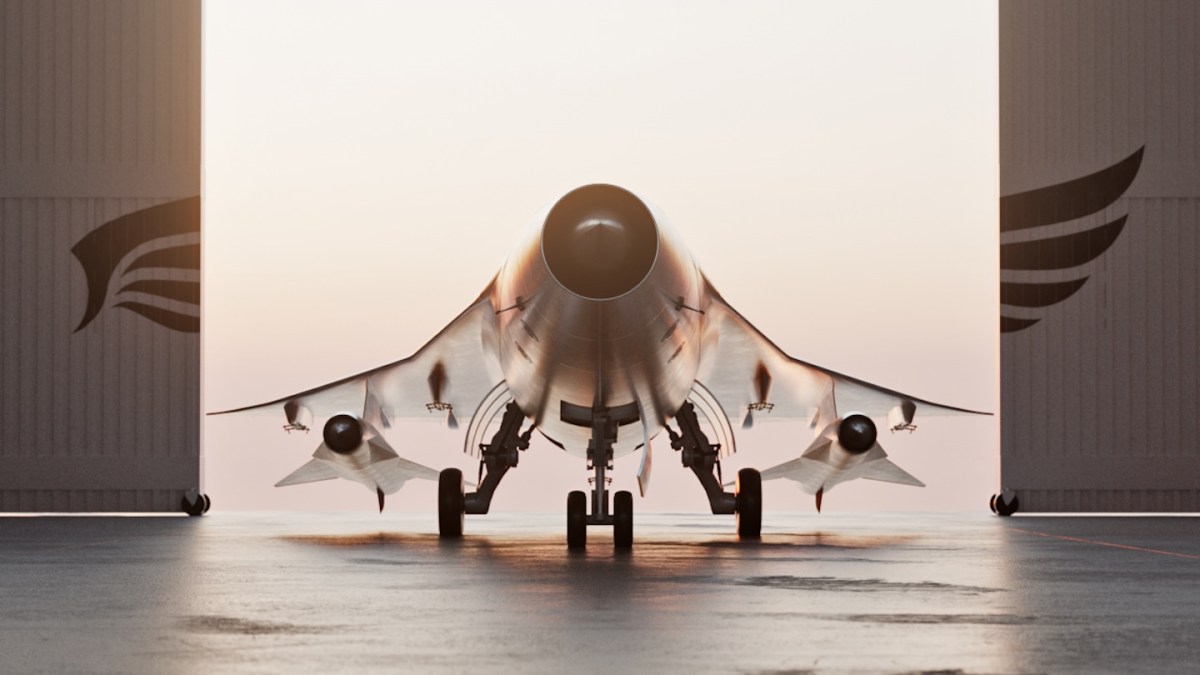
Imagery released by Hermeus shows a Quarterhorse carrying a Ramjet-X mounted on a pylon under each wing, indicating that two different high-speed tests can be carried out in a single sortie. Intriguingly, the Quarterhorse is shown with no fewer than six underwing hardpoints in all, suggesting that other kinds of external payloads are envisaged.
Hermeus has not released detailed performance specifications for Ramjet-X, including its range, payload capacity, or the critical expected cost per flight. We have reached out to the company for more information.
Images released by the company show a relatively compact, missile-like vehicle with delta wings incoporating prominent dihedral. There are no horizontal tail surfaces, but a conventional vertical fin is complemented by a ventral fin. Axios reports that Ramjet-X is approximately 22 feet long and 7 feet wide.
In terms of appearance, and also thanks to its ramjet propulsion system, the vehicle is outwardly very reminiscent of the Lockheed’s D-21 Tagboard supersonic spy drone. However, at more than 40 feet long and with a wingspan of 20 feet, the D-21 was significantly bigger. Overall, the entire concept recalls the Cold War-era D-21 and its M-21 mothership, on a smaller scale.
A D-21 drone. U.S. Air Force
M-21 and D-21 paired together. CIA
The basic concept aims to address a longstanding problem with ramjet flight testing. Unlike a conventional jet engine, a ramjet cannot provide useful thrust from a standstill. The vehicle therefore has to be accelerated to a sufficiently high speed before the ramjet can take over.
That acceleration can traditionally require another propulsion system, including an expendable rocket booster . Hermeus is proposing to substitute a reusable aircraft for that initial boost. It is unclear if the Ramjet-X vehicles are similarly recoverable, but we have asked Hermeus for more details here, too.
As it stands, flight-test programs of this kind are often constrained not only by the cost and availability of test infrastructure, but also by the limited availability of suitable airspace and range access . A reusable carrier aircraft could help address both challenges, allowing multiple Ramjet-X vehicles to be deployed from airports near a designated test range as required and launched only once the vehicle is within the approved test area. That flexibility could reduce the need for a new large booster for every experiment while also making it easier to conduct tests, including at shorter notice, within increasingly constrained airspace.
Hermeus says Ramjet-X is being designed not just for its own development work but as a potential test platform for outside customers. The company is calling the concept “Flight Test as a Service,” with customers able to fly payloads including sensors, communications equipment, computing and autonomy systems, materials, and propulsion hardware.
The program reflects a broader push toward increasing the availability of commercial high-speed flight testing that has attracted U.S. government interest.
Hermeus was also selected by the Defense Innovation Unit for work under its Hypersonic and High-Cadence Airborne Testing, or HyCAT, effort. That program is intended to use commercial flight-test capabilities to expand the government’s access to relevant high-speed environments.
The company is also pursuing its own increasingly ambitious Quarterhorse aircraft. Its Quarterhorse Mk 2.1 completed an uncrewed supersonic flight earlier this year, reaching Mach 1.21 on its third test flight. The company’s roadmap calls for subsequent Quarterhorse variants to progressively increase speed and address the thermal and propulsion challenges associated with high-Mach flight.
Quarterhorse Mk 2.1. Hermeus
Supersonic. Mach 1.21. Quarterhorse Mk 2.1 is now the world’s first privately developed, unmanned supersonic jet and the fastest unmanned aircraft flying today. This flight makes Hermeus the fastest company in aviation history to go from founding to supersonic flight – exactly… pic.twitter.com/wjoIcdiEOj — Hermeus (@hermeuscorp) May 26, 2026
Supersonic. Mach 1.21. Quarterhorse Mk 2.1 is now the world’s first privately developed, unmanned supersonic jet and the fastest unmanned aircraft flying today. This flight makes Hermeus the fastest company in aviation history to go from founding to supersonic flight – exactly… pic.twitter.com/wjoIcdiEOj
The imagery released for Ramjet-X shows a different Quarterhorse configuration than the 2.1 version, including beefed-up landing gear with twin nosewheels. The requirement for release of the Ramjet-X at Mach 3 suggests that its launch platform will be the Quarterhorse Mk 2.3, which will be the first to reach this kind of speed. This summer, Hermeus confirmed that its second supersonic aircraft, the Quarterhorse Mk 2.2, and the Mach 3-capable Mk 2.3 aircraft were under construction.
For its future Quarterhorse Mk 3, Hermeus has been developing Chimera, a turbine-based combined-cycle propulsion system . This is intended to transition from turbine operation to ramjet operation as speed increases.
Ramjet-X effectively separates part of that problem into another aircraft and the system could also be useful for experiments that do not require an entire hypersonic aircraft.
For example, an organization developing a high-temperature material might need to know how it behaves in an actual high-speed flight environment, rather than only in a ground test. The same could apply to weapons, sensors, communications systems, guidance hardware, onboard computers, or other components intended for high-speed vehicles.
So far, however, it’s not clear what kind of flight profiles Ramjet-X will provide. Hermeus has mentioned a cruise phase lasting “tens of minutes.”
The ramjet intake on the Ramjet-X. Hermeus
But a short-duration dash through a high-Mach regime is not equivalent to sustained flight at those speeds. The duration available to an experiment, thermal loads, acceleration, vibration, available electrical power, telemetry, maneuverability, and payload mass will all determine what can actually be tested.
The company says it is already testing the Ramjet-X propulsion system at its High Enthalpy Air-Breathing Test facility in Jacksonville, Florida. High-temperature structures are also under development at its El Segundo, California, headquarters. Integrated vehicle testing is currently planned for 2027.
The HEAT facility itself is part of Hermeus’ effort to establish high-speed propulsion test infrastructure. The company says the facility is being developed to eventually provide continuous high-Mach airflow for more flight-like ground testing.
Ramjet-X has yet to fly, but if it performs as intended, it could help lower one of the major barriers to obtaining real-world flight data at high Mach numbers. At the same time, the company is entering a market that is attracting growing interest from other aerospace firms, which are also expanding their high-speed flight-test capabilities , especially to capitalize on the broader hypersonics boom , including Stratolaunch .
There are fairly clear potential weaponization of this concept, for strike and surveillance missions, as well, although there has been no indication of that being in the works at this time.
The planned 2027 integrated testing should provide the first meaningful indication of whether the concept can progress to become a practical high-speed test capability.
Contact the author: thomas@thewarzone.com
Comments couldn’t be loaded. Please refresh the page.
发布于美国东部时间2026年9月9日下午4:23
Hermeus公司正在研发一款名为Ramjet-X的一次性冲压发动机动力飞机,该飞机将从其可重复使用的F-16大小的Quarterhorse高速无人机上空发射。此举旨在打造一种双飞行器架构,从而降低高速飞行测试对昂贵的一次性测试平台的依赖。这将使Hermeus及其潜在客户能够进行多次高马赫数飞行测试,而无需每次任务都消耗大型助推器。
美国在高速飞行领域落后并非因为缺乏创新。我们放慢速度是因为飞行测试成本过高、过于罕见且过于谨慎。隆重介绍 Ramjet-X。这款飞机由 Quarterhorse 计划研发,是一款低成本、可重复测试的飞行器,旨在飞行…… pic.twitter.com/rMed6NhcvD — Zach Shore (@Zsshore) September 9, 2026
美国在高速飞行领域落后并非因为缺乏创新。我们放慢速度是因为飞行测试成本过高、过于罕见且过于谨慎。隆重介绍 Ramjet-X。这款飞机由 Quarterhorse 计划空射研发,是一款低成本、可重复测试的飞行器,旨在飞行并…… pic.twitter.com/rMed6NhcvD
该公司今天公布了这一概念。Hermeus公司表示,Ramjet-X发动机将搭载在Quarterhorse飞行器下方,并以约3马赫的速度释放,此时其冲压发动机即可开始工作。随后,这架小型飞行器将加速爬升至约10万英尺(约30000米)的高度,速度达到4马赫左右。Quarterhorse飞行器随后将返回基地,准备执行下一次任务。
Hermeus公司发布的图像显示,一架Quarterhorse飞机机翼下方各挂载了一个Ramjet-X发动机,这意味着一次飞行任务即可完成两种不同的高速测试。值得注意的是,Quarterhorse飞机机翼下方共有不少于六个挂点,这表明该公司可能计划搭载其他类型的外部有效载荷。
Hermeus公司尚未公布Ramjet-X火箭的详细性能参数,包括航程、有效载荷能力以及每次飞行的关键预期成本。我们已联系该公司以获取更多信息。
该公司发布的图片显示,这是一款相对紧凑、外形类似导弹的飞行器,采用具有显著上反角的三角翼。它没有水平尾翼,但配备了传统的垂直尾翼和腹鳍。据Axios报道,Ramjet-X长约22英尺,宽约7英尺。
从外观上看,也得益于其冲压喷气推进系统,这款飞行器与洛克希德公司的D-21 Tagboard超音速间谍无人机极为相似。然而,D-21的长度超过40英尺,翼展达20英尺,体型要大得多。总的来说,这款飞行器的设计理念让人联想起冷战时期的D-21及其母机M-21,只不过尺寸更小。
一架D-21无人机。美国空军
M-21 和 D-21 配对使用。中央情报局
该基本概念旨在解决冲压式喷气发动机飞行测试中长期存在的一个问题。与传统喷气发动机不同,冲压式喷气发动机无法从静止状态提供有效推力。因此,飞行器必须加速到足够高的速度,冲压式喷气发动机才能开始工作。
传统上,这种加速需要另一套推进系统,包括一次性火箭助推器。Hermeus公司提议用可重复使用的飞机来代替初始助推。目前尚不清楚Ramjet-X飞行器是否也具有类似的可回收性,但我们已就此向Hermeus公司询问了更多细节。
目前,此类飞行测试项目不仅受限于测试基础设施的成本和可用性,还受限于合适的空域和靶场准入的有限性。可重复使用的运载飞机有助于应对这两大挑战,使多架Ramjet-X运载火箭能够根据需要从指定靶场附近的机场部署,并在火箭进入批准的测试区域后才进行发射。这种灵活性可以减少每次试验都需要新的大型助推器的需求,同时也能使在日益受限的空域内,更便捷地开展测试,包括在更短的时间内完成测试。
Hermeus公司表示,Ramjet-X的设计不仅是为了自身的研发工作,也是作为外部客户的潜在测试平台。该公司将这一概念称为“飞行测试即服务”,客户可以利用该平台搭载包括传感器、通信设备、计算和自主系统、材料以及推进硬件在内的有效载荷。
该计划体现了提高商业高速飞行测试可用性的更广泛努力,这引起了美国政府的关注。
Hermeus公司还被国防创新部门选中,参与其高超音速和高频率空中测试(HyCAT)项目。该项目旨在利用商业飞行测试能力,扩大政府在相关高速环境下的试验渠道。
该公司也在积极研发其雄心勃勃的“四分之一马”(Quarterhorse)飞机。今年早些时候,其“四分之一马”Mk 2.1型飞机完成了无人超音速飞行,在第三次试飞中达到了1.21马赫的速度。该公司的研发路线图显示,后续的“四分之一马”改进型飞机将逐步提高速度,并解决高马赫飞行带来的热力学和推进系统方面的挑战。
Quarterhorse Mk 2.1。赫尔墨斯
超音速。1.21马赫。Quarterhorse Mk 2.1 现已成为世界上首架私人研发的无人超音速喷气式飞机,也是目前飞行速度最快的无人机。此次飞行使 Hermeus 成为航空史上从成立到实现超音速飞行速度最快的公司——确切地说…… pic.twitter.com/wjoIcdiEOj — Hermeus (@hermeuscorp) 2026年5月26日
超音速。1.21马赫。Quarterhorse Mk 2.1 现已成为世界上首架私人研发的无人超音速喷气式飞机,也是目前飞行速度最快的无人机。此次飞行使 Hermeus 成为航空史上从成立到实现超音速飞行速度最快的公司——确切地说…… pic.twitter.com/wjoIcdiEOj
Ramjet-X 公布的图像显示,其 Quarterhorse 2.1 型的配置与 2.1 型有所不同,包括加固的双前轮起落架。Ramjet-X 要求以 3 马赫的速度投放,这表明其发射平台将是 Quarterhorse Mk 2.3,这将是首架达到如此速度的飞机。今年夏天,Hermeus 公司确认其第二款超音速飞机 Quarterhorse Mk 2.2 和能够达到 3 马赫速度的 Mk 2.3 型飞机正在建造中。
Hermeus公司为其未来的Quarterhorse Mk 3型飞机开发了Chimera系统,这是一种基于涡轮的联合循环推进系统。该系统旨在随着速度的增加,从涡轮运行过渡到冲压喷气运行。
Ramjet-X 有效地将部分问题转移到另一架飞机上,该系统对于不需要整个高超音速飞机的实验也很有用。
例如,研发高温材料的机构可能需要了解该材料在实际高速飞行环境中的性能,而不仅仅是在地面测试中的表现。同样的道理也适用于武器、传感器、通信系统、制导硬件、机载计算机或其他用于高速飞行器的部件。
然而,目前尚不清楚Ramjet-X将提供怎样的飞行剖面。赫尔墨斯曾提到巡航阶段将持续“数十分钟”。
Ramjet-X 上的冲压喷气发动机进气口。Hermeus
但短时间的高马赫数飞行并不等同于以这些速度持续飞行。实验的持续时间、热负荷、加速度、振动、可用电力、遥测、机动性和有效载荷质量等因素,都将决定实际能够测试的内容。
该公司表示,已在其位于佛罗里达州杰克逊维尔的高焓吸气式试验设施中对Ramjet-X推进系统进行测试。此外,其位于加利福尼亚州埃尔塞贡多的总部也在开发高温结构。整车测试目前计划于2027年进行。
HEAT设施本身是Hermeus公司构建高速推进系统测试基础设施计划的一部分。该公司表示,该设施的开发最终目的是提供持续的高马赫数气流,以进行更接近飞行状态的地面测试。
Ramjet-X 尚未进行试飞,但如果其性能符合预期,将有助于降低获取高马赫数真实飞行数据的一大障碍。与此同时,该公司正进入一个日益受到其他航空航天公司关注的市场,这些公司也在扩展其高速飞行测试能力,尤其希望从更广泛的高超音速技术繁荣中获利,其中包括 Stratolaunch 公司。
该概念显然具有武器化的潜在可能性,可用于打击和侦察任务,尽管目前还没有任何迹象表明这方面的工作正在进行中。
计划于 2027 年进行的综合测试应该能够首次有意义地表明该概念是否能够发展成为一种实用的高速测试能力。
联系作者:thomas@thewarzone.com
评论加载失败,请刷新页面。