AI-powered biowarfare is coming; the Army lays plans to ‘fight through’ it人工智能驱动的生物战即将到来;陆军正在制定应对计划。
A new strategy aims to prepare to “deploy, fight, and win decisively in a bio-contested environment” by 2035.
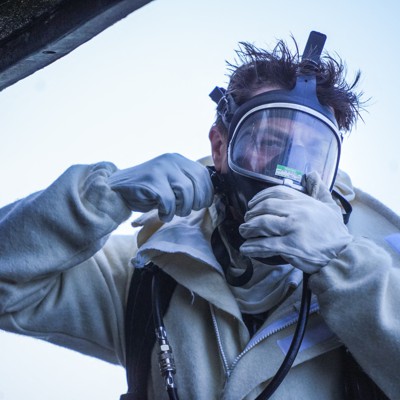
A Romanian soldier during the "Shield Protector" military exercise near Constanta, Romania, on June 21, 2022. MIHAI BARBU / AFP via Getty Images
A new strategy aims to prepare to “deploy, fight, and win decisively in a bio-contested environment” by 2035.
Artificial Intelligence
FORT BELVOIR, Va. — AI is “dramatically lowering the barrier” to creating biological weapons, according to the Army’s updated biodefense strategy —even as it gives commanders and troops a better picture of how biological threats, both natural and manmade, will shape future battlefields, service officials say.
The new strategy aims to prepare the Army to “deploy, fight, and win decisively in a bio-contested environment” by 2035, via new training, advanced early warning, and hardened equipment. But its leaders and bio-threat experts are already working to overhaul how the service thinks about and responds to biological threats. AI will be central to this new era of biodefense, whether advising in the disposition of forces or countering enemy attempts to sow confusion and panic about outbreaks, according to officials who spoke to reporters Tuesday.
The era of AI bioweapons
In 2023, Anthropic CEO Dario Amodei told U.S. lawmakers that AI could “widen the range of actors with the technical capability to conduct a large-scale biological attack,” a scenario he said could come to pass within “two to three years.”
The scenario is drawing nearer. This week, a new paper out of Stanford described how feeding genetic data into high-performance AI models could lead to a new kind of virus that can infect bacteria, showing it’s ability to breakthrough the immunity barriers of other organisms.
This has alarmed RAND molecular biologist Steph Guerra, who wrote , “As AI capabilities advance, viral bioweapons could become much easier to design and produce and could cause even more harm than the weapons used in the past.”
But AI also play a role in defending societies and militaries from such weapons. “We know that everything is changing faster now and so part of the key to the strategy is making sure that we're adaptable,” Alison Tamasi, the chief of the survivability and effects division at the Army’s Nuclear and CWMD Agency, said Tuesday.
Just as detecting a needle in a haystack is harder than making needles, using AI to detect biological threats on the battlefield is more complicated and human-centered task than feeding data into a model. That’s one reason why the updated Army biodefense strategy is so important, the researchers said.
One key element is new, portable genetic-sequencing kits . No bigger than a computer printer, the kits can analyze genetic samples on a laptop computer not connected to the cloud. That might sound like the sort of thing you could encounter in a doctor's office. But a cheek swab that a doctor might take in a relatively clean conditions is very different from samples contaminated with dust, air, fiber, or animal tissue. And getting analysis in the field in a day or so beats waiting weeks for a sample transported back to the States.
The Army hopes the kits, which can classify a sample as a known biothreat or a new one, will help forge strategies when new ones arise.
You can’t stop biology. You can plan for it.
AI isn’t the only factor increasing risks of future biological threats. New viruses occur naturally and spread more quickly today as a function of globalization. But the military’s response to the COVID-19 pandemic “exposed shortfalls in Army biodefense capabilities,” according to the new strategy.
A 2023 study found that COVID-19, which thrust the military into new civilian support roles and imposed new guidelines on forces around the world, undermined team cohesion, military readiness, and of course, mental and physical health.
The new strategy emphasizes better planning for operating during a pandemic, manmade or not. Demonstrating this capability might just deter an adversary from attempting to launch a bioattack as part of a larger campaign, officials said.
“The challenge is going to be how we do this [sample collection, analysis] in the crisis phase, or worse, in the conflict phase,” said Col. Dennis Ruffolo, deputy director for force health protection at the Office of the Surgeon General and Army Medical Command. “That's really what this is going to get after is is is making sure all Army leaders understand that we have to learn ways to fight through the biothreats.”
Here, too, AI will play a key role, said Ruffolo, in helping commanders better understand the biothreats they face, or even will face, in as much detail as possible.
That sort of understanding, enabled not just by new AI models but also humans collecting samples, monitoring environments, and performing analysis, will better prepare the Army for those contingencies. That adaptation means getting more soldiers to understand that bio-threat monitoring is a new priority, ensuring they are capable of biological threat monitoring, and providing them with the equipment and training to do so.
“I have operators below me who do not have doctorates or [are] not microbiologists, I have E-4 specialists who are able to operate that technology with protocols that I have written, and they can do that unsupervised.” said Army microbiologist Amina Zeidan, with the 44th Medical Brigade.
The strategy makes those sorts of efforts a core priority across training, equipping, facilities, policy, and so forth.
“Historically, the Army treated biodefense as a specialized problem,” reads the strategy. “Victory in future conflicts requires an Army that treats biodefense not as a secondary concern, but as a core warfighting imperative. This strategy provides the roadmap.”
NEXT STORY: Maven is becoming the Pentagon’s everything app
2022年6月21日,一名罗马尼亚士兵在罗马尼亚康斯坦察附近参加“盾牌守护者”军事演习。图片来源:MIHAI BARBU / AFP via Getty Images
一项新战略旨在做好准备,以便在 2035 年前“在生物争夺环境中进行部署、战斗并取得决定性胜利”。
人工智能
弗吉尼亚州贝尔沃堡——据陆军更新的生物防御战略称,人工智能正在“大幅降低”制造生物武器的门槛——同时,它还能让指挥官和士兵更好地了解自然和人为的生物威胁将如何影响未来的战场,军方官员表示。
新战略旨在通过新的训练、先进的预警系统和强化装备,使陆军能够在2035年前“在生物威胁环境下部署、作战并取得决定性胜利”。但陆军领导层和生物威胁专家已经在着手改革陆军对生物威胁的思考和应对方式。据周二接受记者采访的官员透露,人工智能将在生物防御的新时代发挥核心作用,无论是在部队部署方面提供建议,还是在应对敌方散布疫情恐慌和制造混乱的企图方面。
人工智能生物武器时代
2023 年,Anthropic 首席执行官 Dario Amodei 告诉美国立法者,人工智能可能会“扩大拥有进行大规模生物攻击技术能力的行动者范围”,他表示这种情况可能会在“两到三年内”发生。
这种情况正变得越来越近。本周,斯坦福大学发表的一篇新论文描述了将基因数据输入高性能人工智能模型如何可能导致一种新型病毒的出现,这种病毒能够感染细菌,展现了其突破其他生物体免疫屏障的能力。
这引起了兰德公司分子生物学家斯蒂芬·格拉的警觉,她写道:“随着人工智能能力的进步,病毒生物武器的设计和生产可能会变得更加容易,并且可能比过去使用的武器造成更大的危害。”
但人工智能在保护社会和军队免受此类武器侵害方面也发挥着作用。“我们知道现在一切都在加速变化,因此战略的关键之一是确保我们具有适应性,”陆军核武器和大规模杀伤性武器局生存能力和影响部门负责人艾莉森·塔马西周二表示。
正如大海捞针比制造针更难一样,利用人工智能在战场上检测生物威胁比将数据输入模型更复杂,也更需要人为干预。研究人员表示,这正是更新后的陆军生物防御战略如此重要的原因之一。
关键要素之一是新型便携式基因测序试剂盒。这些试剂盒体积仅与电脑打印机相当,无需连接云端即可在笔记本电脑上分析基因样本。这听起来像是你在诊所里才能见到的东西。但医生在相对洁净的环境下采集的口腔拭子样本,与被灰尘、空气、纤维或动物组织污染的样本截然不同。而且,在现场一天左右就能获得分析结果,远胜于等待数周才能将样本运回美国进行分析。
陆军希望这些试剂盒能够将样本分类为已知的生物威胁或新的生物威胁,从而帮助制定应对新威胁的策略。
你无法阻止生物规律,但你可以为此做好准备。
人工智能并非加剧未来生物威胁风险的唯一因素。新病毒自然产生,并且由于全球化的影响,如今传播速度更快。但根据这项新战略,军方对新冠疫情的应对“暴露了陆军生物防御能力的不足”。
2023 年的一项研究发现,COVID-19 迫使军队承担新的民事支持角色,并对世界各地的部队施加了新的指导方针,这削弱了团队凝聚力、军事战备能力,当然也损害了身心健康。
新战略强调要更好地规划在疫情期间(无论疫情是否由人为造成)的行动。官员们表示,展示这种能力或许能够阻止对手试图发动生物攻击,从而打消其发动更大规模生物攻击的念头。
“真正的挑战在于,我们如何在危机阶段,甚至更糟的是,在冲突阶段开展这项工作(样本采集和分析)。”陆军军医总监办公室和陆军医疗司令部负责部队健康保护的副主任丹尼斯·鲁弗洛上校说道。“这项工作的真正目的在于确保所有陆军领导人都明白,我们必须学会如何应对生物威胁。”
鲁弗洛表示,人工智能在这里也将发挥关键作用,帮助指挥官尽可能详细地更好地了解他们面临或将要面临的生物威胁。
这种理解不仅得益于新型人工智能模型,也得益于人类采集样本、监测环境和进行分析,这将使军队更好地应对此类突发事件。这种适应意味着要让更多士兵认识到生物威胁监测是一项新的优先事项,确保他们具备生物威胁监测能力,并为他们提供相应的设备和培训。
“我手下有些操作员没有博士学位,也不是微生物学家,但我手下有E-4级专家,他们能够按照我编写的规程操作这项技术,而且他们可以独立完成。”陆军微生物学家、第44医疗旅的阿米娜·泽丹说道。
该战略将此类努力作为培训、装备、设施、政策等方面的核心优先事项。
该战略指出:“历史上,陆军一直将生物防御视为一个专门问题。未来冲突的胜利需要陆军将生物防御视为核心作战要务,而非次要问题。本战略为此提供了路线图。”
下一篇报道:Maven 正在成为五角大楼的万能应用