NATO launches analyses for hardening its eastern flank北约启动加强东翼防御的分析工作
Potential force changes spanning the land, air, naval and cyber domains are expected to be ready for decisions by national leaders at the NATO summit in Madrid in late June.
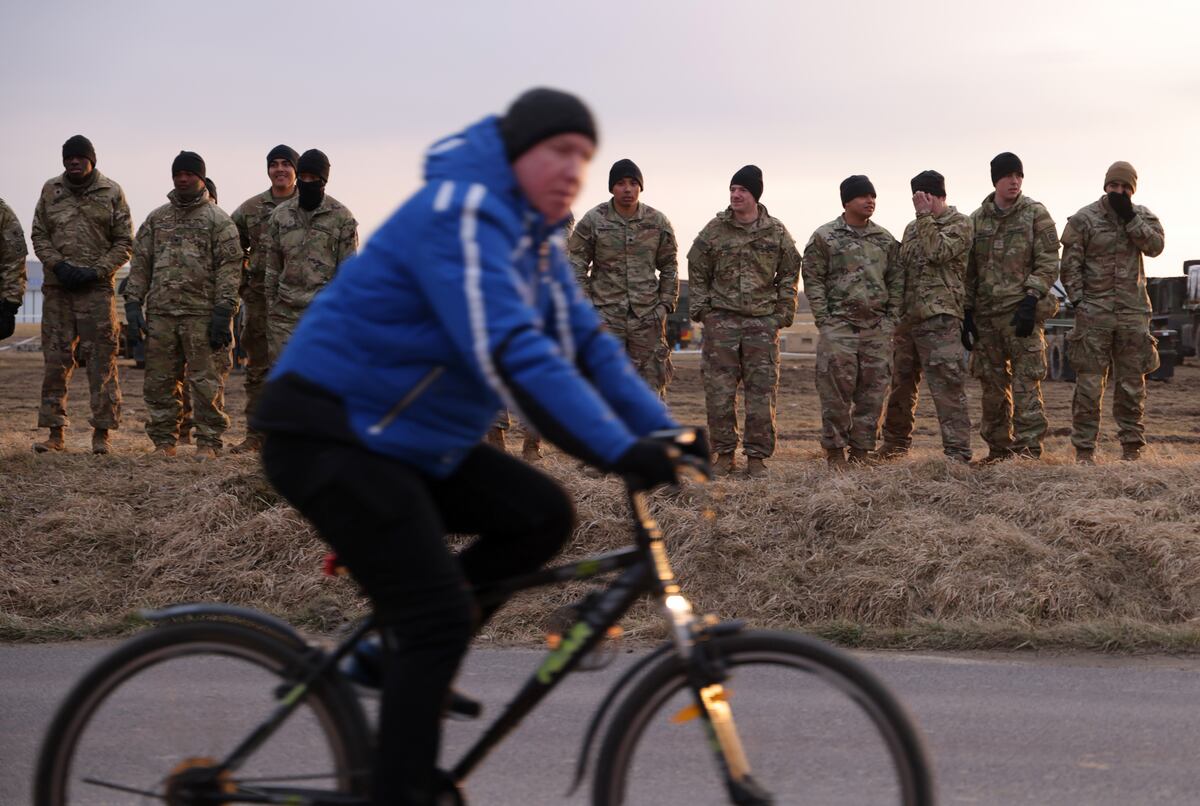
WASHINGTON – NATO military planners have begun weighing options for beefing up the defensive capabilities of vulnerable alliance members following Russia’s invasion of Ukraine, Secretary-General Jens Stoltenberg said Wednesday.
Potential force changes spanning the land, air, naval and cyber domains are expected to be ready for decisions by national leaders at the NATO summit in Madrid in late June, he told reporters in Brussels.
“On land, our new posture should include substantially more forces in the eastern part of the alliance, at higher readiness, with more prepositioned equipment and supplies,” Stoltenberg said. “In the air, more allied air power and strengthened integrated air and missile defense. At sea, carrier strike groups, submarines and significant numbers of combat ships on a persistent basis.”
On top of the expected increases, alliance members also would “train and exercise more often, and in greater numbers,” Stoltenberg added.
NATO members formerly part of the Soviet Union or the Warsaw Pact have asked for more assistance, as they fear Russian President Vladimir Putin’s war on Ukraine could portend a broader push to restore a Soviet-esque sphere of influence for Moscow.
Stoltenberg on Wednesday again rejected the idea of a no-fly zone over Ukraine, arguing such a move would set up a direct confrontation between NATO and Russia. He called averting such escalation the alliance’s “responsibility,” as Western leaders try desperately to hasten an end to the war through diplomacy, economic pressure and with weapon shipments to Ukraine.
Ukrainian forces, meanwhile, were still able to keep Russian advances at bay thanks to Western military support, raising the cost for Moscow and tempering the Putin regime’s appetite for outlandish demands in negotiations with Kyiv.
That dynamic, Stoltenberg suggested, was starting to bear fruit. “We support Ukraine because we know what they can achieve on the negotiating table is of course very closely linked to the situation on the battlefield,” he said. “So I strongly also believe that one reason why the Ukrainians also are saying that they have seen some steps in the right direction is because they have been able to fight back.”
In the United States, meanwhile, defense officials have already begun their own planning of what forces Washington could offer in support of NATO’s renewed deterrence push.
Assistant Defense Secretary for Strategy, Plans and Capabilities Mara Karlin told the House Armed Services Committee earlier this month the Pentagon would be re-examining the Global Posture Review, Defense Secretary Lloyd Austin’s most recent troop allocation plan.
“We recognize this dynamic situation now requires us to give it another fine-tooth look, to see what’s necessary to ensure that we’ve got deterrence of Russia and that we can absolutely 150% say that NATO is safe and secure,” Karlin said.
Joe Gould contributed to this story.
Sebastian Sprenger is associate editor for Europe at Defense News, reporting on the state of the defense market in the region, and on U.S.-Europe cooperation and multi-national investments in defense and global security. Previously he served as managing editor for Defense News. He is based in Cologne, Germany.
华盛顿——北约秘书长延斯·斯托尔滕贝格周三表示,在俄罗斯入侵乌克兰之后,北约军事规划人员已经开始权衡各种方案,以加强脆弱的联盟成员国的防御能力。
他在布鲁塞尔告诉记者,涵盖陆地、空中、海上和网络领域的潜在兵力调整预计将在6月下旬马德里举行的北约峰会上由各国领导人做出决定。
斯托尔滕贝格表示:“在陆地上,我们的新部署态势应包括在联盟东部部署更多兵力,保持更高的战备状态,并预置更多装备和物资。在空中,我们将增强盟军的空中力量,并加强一体化防空和导弹防御。在海上,我们将持续部署航母打击群、潜艇和大量作战舰艇。”
斯托尔滕贝格补充说,除了预期的增长之外,联盟成员还将“更频繁、更大规模地进行训练和锻炼”。
北约成员国(这些国家以前是苏联或华沙条约组织的成员)要求获得更多援助,因为他们担心俄罗斯总统弗拉基米尔·普京对乌克兰的战争可能预示着莫斯科将更广泛地恢复类似苏联的势力范围。
斯托尔滕贝格周三再次否决了在乌克兰设立禁飞区的提议,他认为此举将导致北约与俄罗斯直接对抗。他称避免局势升级是北约的“责任”,与此同时,西方领导人正竭力通过外交手段、经济压力以及向乌克兰提供武器等方式加速结束战争。
与此同时,在西方军事支持下,乌克兰军队仍然能够阻止俄罗斯的推进,这提高了莫斯科的代价,并抑制了普京政权在与基辅谈判中提出过分要求的意愿。
斯托尔滕贝格认为,这种动态已经开始取得成效。“我们支持乌克兰,因为我们知道他们在谈判桌上能取得什么成果,当然与战场上的局势密切相关,”他说。“所以我坚信,乌克兰人也表示他们看到了一些朝着正确方向迈出的步伐,其中一个原因就是他们已经能够进行反击。”
与此同时,美国国防官员已经开始制定自己的计划,考虑华盛顿可以提供哪些力量来支持北约重新加强威慑的行动。
负责战略、计划和能力的助理国防部长玛拉·卡林本月早些时候告诉众议院军事委员会,五角大楼将重新审查全球态势评估,这是国防部长劳埃德·奥斯汀最新的部队分配计划。
卡林说:“我们认识到,当前形势瞬息万变,需要我们再仔细审视一番,看看需要采取哪些措施来确保我们对俄罗斯具有威慑力,并确保我们能够百分之百地保证北约的安全。”
Joe Gould 对本文亦有贡献。
塞巴斯蒂安·斯普伦格是《防务新闻》欧洲版副主编,负责报道该地区的防务市场状况,以及美欧在防务和全球安全领域的合作和多国投资。此前,他曾担任《防务新闻》执行主编。他现居德国科隆。