Lockheed Martin making final push for Greek frigate construction, modernization work洛克希德·马丁公司正全力推进希腊护卫舰的建造和现代化改造项目
Greece has already committed to buying three French frigates -- but there are still a lot of gaps in its surface modernization program that Lockheed Martin is trying to fill, now that talks with Greece have been extended for six more months.
WASHINGTON — Talks between Lockheed Martin and the Greek Navy will continue, as the company has modified its pitch to secure a piece of the country’s surface fleet modernization program.
Lockheed Martin and the U.S. Navy together offered the official U.S. bid to the Hellenic Navy in December, in a letter of agreement that expired March 17.
Industry sources told Defense News the U.S. Navy has extended the LOA through Sept. 18, giving the U.S. team more time to talk with Greek officials and decide if the deal will go forward.
Greece originally laid out a multi-pronged approach to modernizing its surface fleet: buying new frigates and corvettes, upgrading its four Hydra-class MEKO frigates, and obtaining used surface ships to operate while the MEKOs are in their mid-life upgrade program.
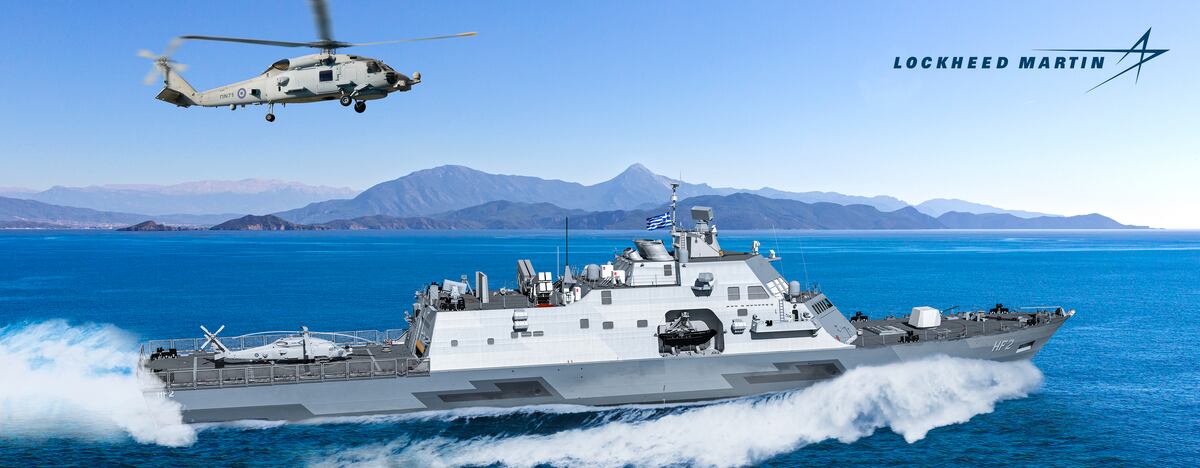
The official U.S. pitch was for Lockheed Martin to upgrade the MEKOs with the company’s suite of products centered around the Aegis Combat System; the Hellenic Navy to buy some number of the company’s Hellenic Future Frigate, also centered around the Aegis system and designed specifically for Greece’s mission needs, the first of which would be built in the U.S. and later ships built in Greece; and the U.S. Navy to provide four decommissioned warships to serve as a temporary gap-filler.
Greece announced Sept. 28 it would buy three Belharra frigates from France , but Lockheed Martin Vice President and General Manager for Naval Combat and Missile Defense Systems Joe DePietro told Defense News his company is pitching the Hellenic Navy on buying additional new ships to round out the program.
DePietro said in a Feb. 17 interview Greece originally wanted as many as four to six frigates and four to six corvettes. Not only has Greece only inked a deal for three frigates — leaving the door open to buy more — but DePietro said Greece also made clear it wanted its domestic shipbuilding industry involved. Naval Group, which builds the Belharra frigates, will construct Greece’s ships on its production line in Lorient with its own predominantly French supply chain.
Lockheed Martin said it sees an opening to push for ship modernization and even ship construction with Greek shipbuilders and suppliers.
The crux of Lockheed Martin’s revised pitch is that it could sell Greece a slightly different surface combatant than the Hellenic Future Frigate — either the Freedom-variant littoral combat ship with lethality and survivability upgrades to fill the corvette piece of the plan, or the larger Multi-Mission Surface Combatant currently being built for Saudi Arabia that the HF2 design was derived from — and be ready to start production right away at the Hellenic Shipyard outside Athens.
DePietro acknowledged the LCS is larger than a typical corvette — about 3,300 metric tons, compared to a traditional corvette that might be 1,500 to 2,500 metric tons — but said the ship’s use of water jets instead of propellers allows the LCS to operate in shallower waters than European corvettes. While the price tag of about $400 million apiece is a bit more expensive than the other options, he said it comes with the training and spares support associated with a U.S. foreign military sales case.
On the MMSC option, Lockheed Martin said it could use the proven work instructions from the hot MMSC line at Fincantieri Marinette Marine shipyard in Wisconsin and immediately bring them over to the Greek shipyard — whereas the original HF2 proposal was a related but distinct ship design and would be considered a new start. In that case, Lockheed Martin had originally proposed working out the kinks with its experienced workforce in Wisconsin on the first ship.
Lockheed said it has already had conversations with George Procopiou, who last year purchased the Hellenic Shipyard in Skaramagas, just west of Athens.
“We’ve met with him now five times, and we got to the point where, at the last sit-down, I was walking him through the module breakdown of the construction of an LCS or an MMSC, parts, material flows, what would be done in the yard and how we would like optimize the yard,” DePietro said, adding they talked through what buildings the yard would need to replicate the ship construction model at Marinette Marine.
“Mr. Procopiou is willing to make a significant investment like we did in Marinette to make that transformation,” DePietro said.
DePietro said Lockheed Martin hasn’t signed formal agreements with the shipyard, but the other shipyard in Greece — Elefsis Shipyard, just up the waterfront from Hellenic Shipyard — does not have a clear owner right now and is not in a position to have these detailed discussions.
Lockheed would likely do the MEKO repairs and modernization at the Hellenic Shipyard as well. This means the workforce there would be trained to do ship construction and repair to U.S. Navy standards.
The Navy this year will deploy its first Freedom-variant LCS from Florida to U.S. 6th Fleet in Europe and/or U.S. 5th Fleet in the Middle East, kicking off what’s expected to be a continuous LCS presence on the other side of the Atlantic. The Navy has a contract with Spanish contractor Navantia to conduct surface ship maintenance in Rota, Spain, but DePietro said the addition of LCSs to the region would require additional maintenance capacity.
The Hellenic Shipyard would have the facilities and the trained workforce to do these repairs, if the Navy opted to do use the yard as an Eastern Mediterranean maintenance hub to complement the work taking place just outside the Med in Rota.
It remains unclear if Greece is interested in Lockheed’s proposals, with talks being extended but no agreements reached.
Megan Eckstein is the naval warfare reporter at Defense News. She has covered military news since 2009, with a focus on U.S. Navy and Marine Corps operations, acquisition programs and budgets. She has reported from four geographic fleets and is happiest when she’s filing stories from a ship. Megan is a University of Maryland alumna.
华盛顿——洛克希德·马丁公司与希腊海军的谈判将继续进行,该公司已修改其方案,以确保获得该国水面舰队现代化计划的一部分。
洛克希德·马丁公司和美国海军于去年 12 月共同向希腊海军提交了正式的美国投标书,该协议于 3 月 17 日到期。
业内人士告诉《防务新闻》,美国海军已将意向书的有效期延长至 9 月 18 日,以便美国团队有更多时间与希腊官员进行谈判,并决定该交易是否会继续进行。
希腊最初制定了一项多管齐下的方法来使其水面舰队现代化:购买新的护卫舰和轻型护卫舰,升级其四艘九头蛇级 MEKO 护卫舰,并获得二手水面舰艇,以便在 MEKO 护卫舰进行中期升级计划期间运行。
美国官方的方案是:洛克希德·马丁公司用其以宙斯盾作战系统为核心的全套产品升级MEKO;希腊海军购买一定数量的该公司“希腊未来护卫舰”,该护卫舰也以宙斯盾系统为核心,专为满足希腊的任务需求而设计,首艘将在美国建造,后续舰艇将在希腊建造;美国海军提供四艘退役军舰作为临时填补空缺。
希腊于 9 月 28 日宣布将从法国购买三艘 Belharra 级护卫舰,但洛克希德·马丁公司海军作战和导弹防御系统副总裁兼总经理乔·德彼得罗告诉《防务新闻》,他的公司正在向希腊海军推销购买更多新舰艇以完善该计划。
德皮特罗在2月17日的采访中表示,希腊最初希望建造四到六艘护卫舰和四到六艘轻型护卫舰。希腊不仅只签署了三艘护卫舰的合同——这意味着未来仍有可能增购——而且德皮特罗还表示,希腊已明确表示希望本国造船业参与其中。建造“贝尔哈拉”级护卫舰的法国海军集团将利用其位于洛里昂的生产线,并主要依靠法国本土的供应链,为希腊建造这些舰艇。
洛克希德·马丁公司表示,它看到了与希腊造船厂和供应商合作,推动船舶现代化甚至船舶建造的机会。
洛克希德·马丁公司修改方案的核心在于,它可以向希腊出售一种与希腊未来护卫舰略有不同的水面作战舰艇——要么是经过杀伤力和生存能力升级的自由级濒海战斗舰,以填补该计划中的轻型护卫舰部分;要么是目前正在为沙特阿拉伯建造的更大的多用途水面作战舰艇(HF2的设计正是源于此),并且能够立即在雅典郊外的希腊造船厂开始生产。
德皮特罗承认,濒海战斗舰(LCS)比典型的轻型护卫舰要大——约3300吨,而传统轻型护卫舰的排水量可能在1500到2500吨之间——但他表示,LCS采用喷水推进器而非螺旋桨,使其能够在比欧洲轻型护卫舰更浅的水域作业。虽然每艘约4亿美元的造价比其他方案略高,但他表示,这笔费用包含了美国对外军售项目相关的培训和备件支持。
关于MMSC方案,洛克希德·马丁公司表示,它可以直接采用位于威斯康星州芬坎蒂尼·马里内特海事造船厂MMSC生产线上成熟的作业指导书,并将其应用于希腊造船厂——而最初的HF2方案虽然与MMSC相关,但设计方案却截然不同,因此将被视为一个全新的项目。在这种情况下,洛克希德·马丁公司最初曾提议先利用其在威斯康星州经验丰富的团队,在首艘船上解决各种技术难题。
洛克希德公司表示,他们已经与乔治·普罗科皮乌进行了对话,普罗科皮乌去年收购了位于雅典以西斯卡拉马加斯的希腊造船厂。
“我们已经和他见过五次面了,在最后一次会面中,我向他详细介绍了LCS或MMSC的建造模块分解、部件、材料流、船厂将要进行的工作以及我们希望如何优化船厂,”德皮特罗说道,并补充说,他们讨论了船厂需要哪些建筑物才能复制马里内特海事公司的船舶建造模式。
“普罗科皮乌先生愿意像我们在马里内特所做的那样进行大量投资,以实现这种转变,”德皮特罗说。
德皮特罗表示,洛克希德·马丁公司尚未与该造船厂签署正式协议,但希腊的另一家造船厂——埃莱夫西斯造船厂(位于希腊造船厂沿岸不远处)——目前没有明确的所有者,因此无法进行这些详细的讨论。
洛克希德公司很可能也会在希腊造船厂进行MEKO级舰艇的维修和现代化改造。这意味着那里的工人将接受培训,按照美国海军的标准进行舰艇建造和维修。
今年,美国海军将从佛罗里达州部署首艘“自由”级濒海战斗舰(LCS),前往驻欧洲的美国第六舰队和/或驻中东的美国第五舰队,这标志着美国濒海战斗舰将在大西洋彼岸持续部署。海军已与西班牙承包商纳凡蒂亚公司签订合同,由其在西班牙罗塔进行水面舰艇维护。但德皮耶特罗表示,在该地区部署濒海战斗舰将需要额外的维护能力。
如果海军选择将希腊造船厂用作东地中海维修中心,以补充在地中海外罗塔进行的维修工作,那么希腊造船厂将拥有进行这些维修所需的设施和训练有素的工人。
目前尚不清楚希腊是否对洛克希德公司的提议感兴趣,双方已延长谈判时间,但尚未达成协议。
梅根·埃克斯坦是《防务新闻》的海军作战记者。自2009年以来,她一直从事军事新闻报道,主要关注美国海军和海军陆战队的行动、采购项目和预算。她曾报道过四个不同地理区域的舰队,最喜欢在舰艇上进行新闻报道。梅根毕业于马里兰大学。