DSEI UK to show war’s tech revolution, military adviser Waterfall says军事顾问沃特福尔表示,DSEI英国展将展示战争中的技术革命。
This year’s edition of the show will feature an expanded tech zone, and organizer Clarion says DSEI UK 2025 will be the biggest yet.
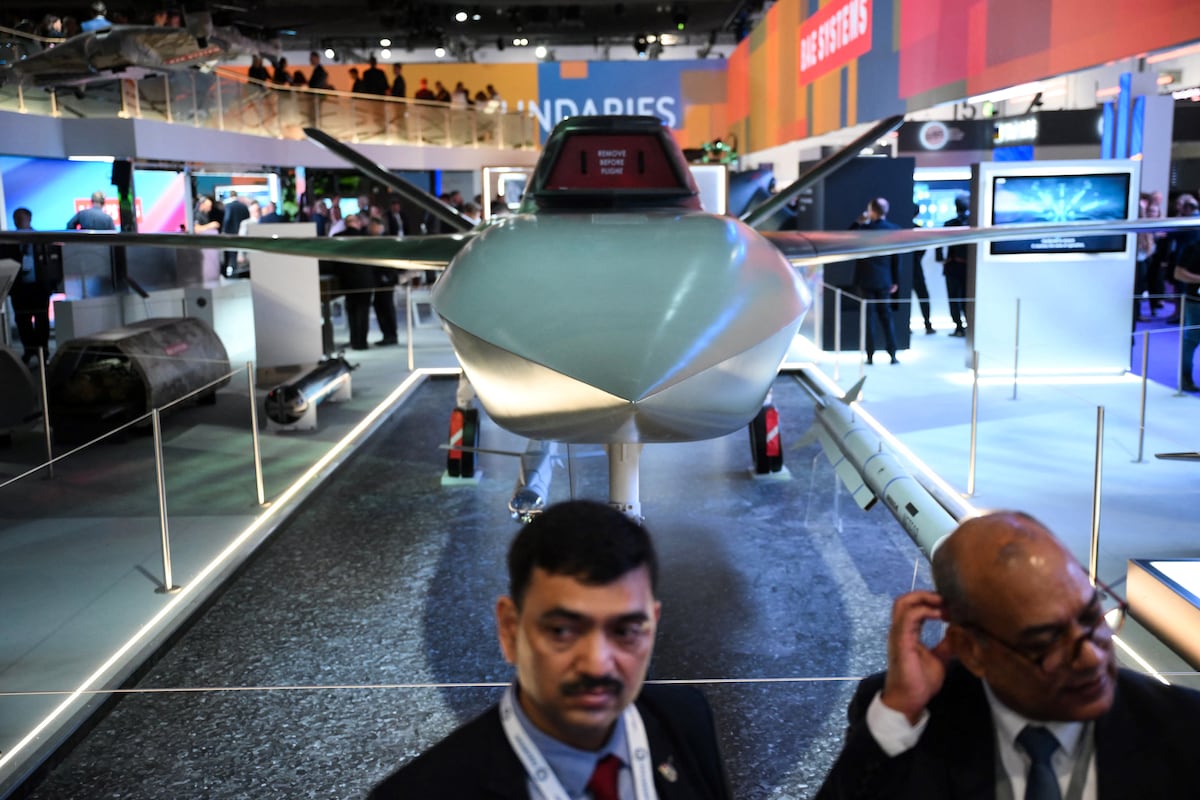
PARIS — As geopolitical tensions surge and drones and artificial intelligence continue to reshape warfare, the 2025 DSEI UK show in London is set to highlight the technological advancements that are transforming the battlefield.
This year’s show will focus on how countries such as the U.K. can make sure their armed forces are ready for the evolving nature of warfare, retired Air Vice-Marshal Gary Waterfall, the event’s senior military adviser, told Defense News.
Unconventional warfare has surged in the past year, from cyber and information warfare to the use of unmanned vehicles across air, land and sea, with a “dramatic uptick” in drone and counter-drone technology across all theaters, according to Waterfall, who helped develop the DSEI 2025 core theme of “Preparing the Future Force” in consultation with the U.K. Ministry of Defence.
“We’re in this midst of this technological revolution, and technologies are just rolling out at such a rapid pace, and it’s really important for all militaries to get to grips with it as soon as they can,” said Waterfall. “The real growth area is in the tech, and that tech will permeate throughout the show.”
Retired Air Vice-Marshal Gary Waterfall is the DSEI UK show's senior military adviser. (C4ISRNET/staff)
This year’s edition of the show will feature an expanded tech zone, and organizer Clarion says DSEI UK 2025 will be the biggest yet, with 654 new exhibitors signed up and more than 45 countries represented. The four-day show will kick off on Tuesday, Sept. 9, with a greater presence from countries including Czechia and Lithuania, as well as more exhibitors from the United States and Canada.
The show’s focus on “future-proofing” the armed forces goes beyond just upgrading weapon systems to rethinking the entire defense ecosystem, from industrial production to military readiness, according to Waterfall.
“It’s much, much broader than thinking about the soldier, the sailor, the airman, and making sure they’re appropriately equipped,” Waterfall said. “It’s all well and good having the most effective military fighting force, but if your supply chain is wafer thin and you don’t have the resilience and that capability to sustain your military readiness, then you’re going nowhere quite quickly.”
The DSEI adviser highlighted the key role of small and medium-sized enterprises, with innovation often coming from smaller companies rather than big defense contractors. Waterfall cited Formula One industry spin-offs applying their AI and machine-learning skills to defense, and who will be among the exhibitor companies in the tech zone alongside the likes of Hadean and Palantir.
“Everyone would agree that the answer isn’t always provided by the prime contractor,” Waterfall said. “A lot of times it’s going to be the small, medium enterprises that have got the agility, from a financial and also people perspective, to rise to the challenge.”
The show’s sub themes of “Securing advantage,” “Driving advantage” and “Maintaining advantage” will each focus on a different aspect of defense readiness.
Securing advantage involves agile acquisition and supply-chain security, with Waterfall saying that even the most advanced military force would become ineffective without a resilient supply chain.
Driving advantage will look at the digital transformation of defense, with AI, cyber security and data analytics acting as force multipliers. Waterfall said the goal is not to replace human decision-making but to enhance it, and enable military leaders to make quicker, more informed decisions on the battlefield.
“We need to work quicker and act quicker than our potential adversaries. Which comes back to AI, machine learning, being able to decide and act quicker than those that you’re going up against,” Waterfall told Defense News.
Maintaining advantage will focus on the workforce challenge, with Waterfall saying the job market is competitive, not only in the U.K. but elsewhere, and attracting people to defense and security “might not be as straightforward as we would wish it to be.”
To address this, DSEI UK will dedicate its final day to engaging with the next generation of defense professionals. This will include university teams, industry apprenticeships, and military leaders discussing how to attract young talent to the defense sector.
Waterfall believes the workforce challenge may be just as critical as the technological advancements being showcased at DSEI, as defense experts will need to guide the development of AI and machine learning, and ensure that technology is deployed effectively.
“It’s the workforce challenge that’s probably a larger strategic problem than actually getting that defense industrial base strong enough.”
Rudy Ruitenberg is a Europe correspondent for Defense News. He started his career at Bloomberg News and has experience reporting on technology, commodity markets and politics.
巴黎——随着地缘政治紧张局势加剧,无人机和人工智能不断重塑战争,2025 年在伦敦举行的英国防务展 (DSEI UK) 将重点展示正在改变战场的技术进步。
退役空军副元帅加里·沃特福尔是本次活动的资深军事顾问,他告诉《防务新闻》,今年的展会将重点关注英国等国家如何确保其武装部队能够应对不断变化的战争性质。
据 Waterfall 称,过去一年来,非常规战争激增,从网络战和信息战到在空中、陆地和海上使用无人驾驶车辆,无人机和反无人机技术在所有战区都出现了“显著增长”。Waterfall 曾与英国国防部协商,帮助制定了 DSEI 2025 的核心主题“培养未来部队”。
“我们正处于一场技术革命之中,各种技术正以惊人的速度涌现,所有军队都必须尽快掌握这些技术,”沃特福尔说道。“真正的增长领域在于技术,而这些技术将贯穿整个展会。”
退役空军副元帅加里·沃特福尔是英国DSEI防务展的高级军事顾问。(C4ISRNET/工作人员)
今年的展会将扩大技术专区,主办方Clarion表示,DSEI UK 2025将是迄今为止规模最大的一届,已有654家新参展商签约,参展国家超过45个。为期四天的展会将于9月9日(周二)开幕,届时捷克和立陶宛等国的参展规模将更大,美国和加拿大的参展商数量也将增加。
据沃特福尔称,该节目对“面向未来”的武装部队的关注点不仅限于升级武器系统,而是重新思考整个国防生态系统,从工业生产到军事战备。
“这远不止是考虑士兵、水手、飞行员,以及确保他们装备精良那么简单,”沃特福尔说。“拥有最有效的军事作战力量固然重要,但如果你的后勤保障体系薄弱,缺乏维持军事战备所需的韧性和能力,那么你很快就会陷入困境。”
DSEI顾问强调了中小企业的关键作用,创新往往来自规模较小的公司,而非大型国防承包商。沃特福尔举例说,一些一级方程式赛车行业的衍生企业正在将其人工智能和机器学习技术应用于国防领域,这些企业将与Hadean和Palantir等公司一起在科技展区参展。
“大家都会同意,答案并非总是由总承包商提供的,”沃特福尔说。“很多时候,中小企业在财务和人员方面都更具灵活性,能够迎接挑战。”
该节目的子主题“确保优势”、“扩大优势”和“保持优势”将分别侧重于国防准备的不同方面。
确保优势需要敏捷的采购和供应链安全,沃特福尔表示,即使是最先进的军事力量,如果没有有韧性的供应链,也会变得毫无效力。
“驱动优势”项目将着眼于国防领域的数字化转型,人工智能、网络安全和数据分析将发挥倍增器的作用。沃特福尔表示,其目标并非取代人类决策,而是增强人类决策能力,使军事领导人能够在战场上做出更快、更明智的决策。
“我们需要比潜在对手更快地行动。这归根结底还是人工智能、机器学习,以及比对手更快地做出决策和采取行动的能力,”沃特福尔告诉《防务新闻》。
保持优势的关键在于应对劳动力挑战。沃特福尔表示,就业市场竞争激烈,不仅在英国,在其他地方也是如此,吸引人们从事国防和安全工作“可能不像我们希望的那样简单”。
为了解决这个问题,DSEI英国展将在最后一天专门用于与下一代国防专业人才交流。届时,大学代表队、行业学徒和军事领导人将齐聚一堂,探讨如何吸引年轻人才加入国防领域。
Waterfall 认为,劳动力挑战可能与 DSEI 上展示的技术进步同样重要,因为国防专家需要指导人工智能和机器学习的发展,并确保技术得到有效部署。
“劳动力短缺问题可能比真正加强国防工业基础更具战略意义。”
鲁迪·鲁伊滕贝格是《防务新闻》的欧洲记者。他的职业生涯始于彭博新闻社,拥有报道科技、大宗商品市场和政治方面的经验。