Italy disavows plan to count massive Sicily bridge as NATO spending意大利否认将西西里岛大桥项目计入北约开支的计划
Officials had mulled the idea of classifying a new bridge planned to link the Italian mainland to Sicily as a project of strategic, military importance.
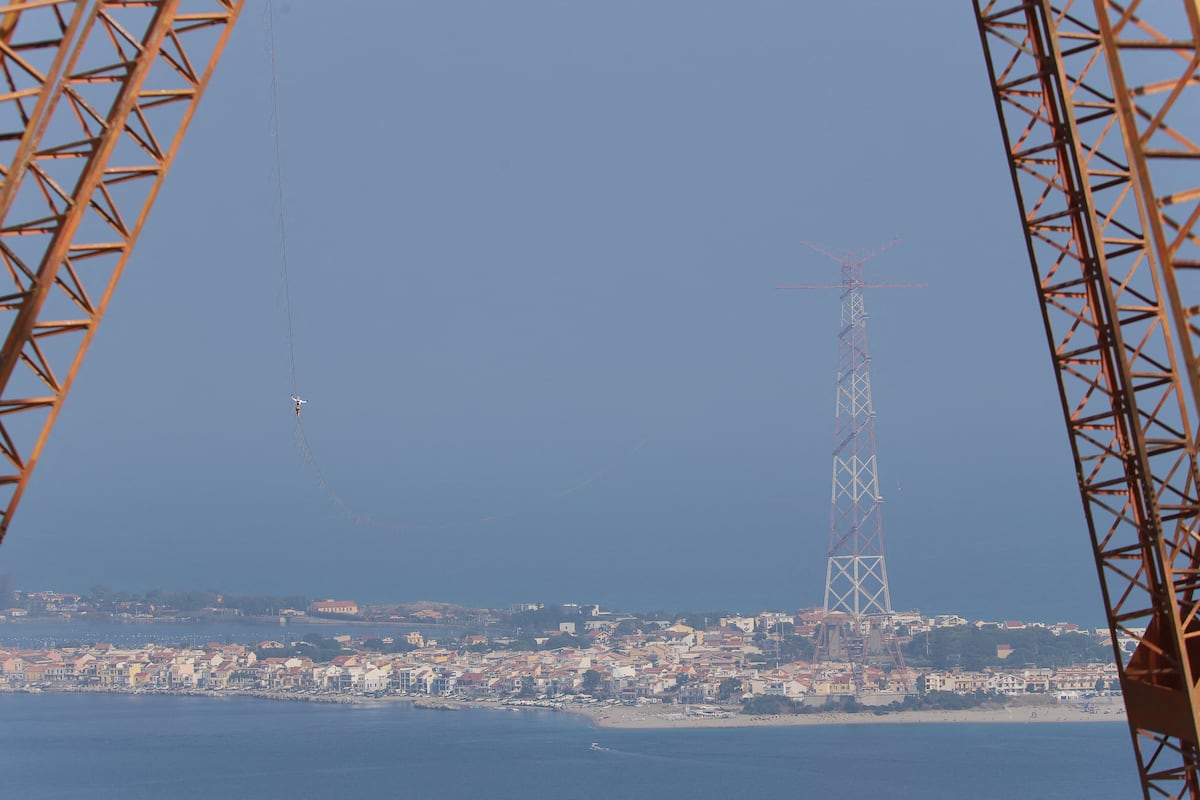
ROME — Italy has promised it will not use its spending on a new bridge to Sicily to reach NATO defense budget targets following a stern warning from a U.S. official.
Rome gave the guarantee after U.S. Ambassador to NATO Matthew Whitaker said that alliance member defense spending should not be padded with cash for “bridges that have no strategic military value.”
The unlikely story of Italy placing a bridge in its defense budget got underway in June when NATO members agreed to push their defense spending to 5% of GDP by 2035 following pressure from U.S. President Donald Trump.
Members agreed that of the total, 3.5% would be bonafide defense spending, while the other 1.5 percent could be spent to protect “critical infrastructure, defend our networks, ensure our civil preparedness and resilience, unleash innovation, and strengthen our defense industrial base.”
In Italy, officials reportedly mulled the idea of classifying a new bridge planned to link the Italian mainland to Sicily as a project of strategic, military importance since it would allow easier access of bases on the island.
Italy allegedly told the European Union the bridge over the Strait of Messina would be of strategic importance to NATO and the EU, while Italian transport minister Matteo Salvini went on record last month stating the bridge was “evidently dual use for reasons of security.”
By defining the bridge as dual use, officials reportedly believed the €13.5 billion ($15.8 billion) budgeted for its construction could have qualified as part of Italy’s 1.5 percent of GDP defense spending, which corresponds to about €30 billion according to Italy’s current GDP.
Italian investment bank Equita has said that spending on the bridge could represent 0.2 percent of GDP a year - around €4 billion - during the peak construction period.
The bank said that defining the bridge as defense spending was “opportunistic accounting.”
This week in an interview with Bloomberg, Whitaker however signaled the U.S. viewed the maneuver in a poor light, prompting a quick response from Italy’s transport ministry.
“The Strait of Messina Bridge is already entirely financed by state resources, and no defense funds are earmarked,” it said in a statement.
“The possible use of NATO resources is not currently on the agenda, and, above all, it is not an absolute necessity,” it added.
Tom Kington is the Italy correspondent for Defense News.
罗马——在一位美国官员发出严厉警告后,意大利承诺不会将修建西西里岛新桥的支出用于达到北约国防预算目标。
此前,美国驻北约大使马修·惠特克表示,联盟成员国的国防开支不应该用来修建“没有战略军事价值的桥梁”,罗马方面随后作出了保证。
意大利将一座桥梁纳入国防预算的不可思议的故事始于今年6月,当时在美国总统唐纳德·特朗普的压力下,北约成员国同意到2035年将国防开支提高到GDP的5%。
成员们一致认为,总额中的 3.5% 将是真正的国防开支,而其余 1.5% 可用于保护“关键基础设施、捍卫我们的网络、确保我们的民防准备和韧性、释放创新潜力以及加强我们的国防工业基础”。
据报道,意大利官员正在考虑将计划连接意大利大陆和西西里岛的新桥列为具有战略军事意义的项目,因为它将使岛上的军事基地更容易进入。
据称意大利告诉欧盟,横跨墨西拿海峡的大桥对北约和欧盟具有战略意义,而意大利交通部长马泰奥·萨尔维尼上个月公开表示,出于安全原因,这座桥梁“显然是两用桥”。
据报道,官员们认为,通过将这座桥梁定义为两用桥梁,其建设预算中的 135 亿欧元(158 亿美元)可以算作意大利 1.5% 的 GDP 国防开支的一部分,根据意大利目前的 GDP,这相当于约 300 亿欧元。
意大利投资银行 Equita 表示,在建设高峰期,这座桥梁的支出可能占到每年 GDP 的 0.2%——约 40 亿欧元。
该银行表示,将这座桥梁定义为国防开支是“机会主义会计”。
本周,惠特克在接受彭博社采访时表示,美国对这一举动持负面看法,这促使意大利交通部迅速做出回应。
声明中称:“墨西拿海峡大桥的建设资金已全部来自国家资源,没有拨出任何国防资金。”
声明还补充说:“目前,动用北约资源的可能性并未提上议程,而且,最重要的是,这并非绝对必要。”
汤姆·金顿是《防务新闻》驻意大利记者。