Tan See Leng says he would never have entered politics if money had been primary consideration陈思龙表示,如果金钱是首要考虑因素,他绝不会涉足政坛。
During the debate on political salaries, Dr Tan says he sometimes wishes he could have had a longer runway and been better equipped for public office.
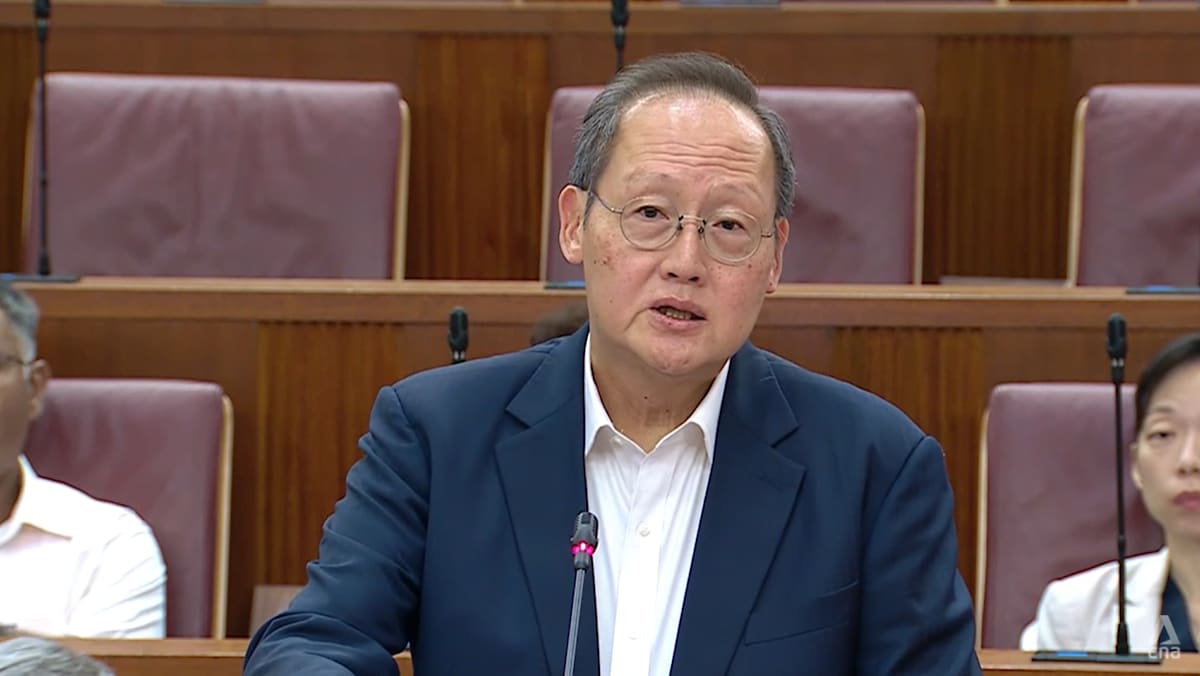
During the debate on political salaries, Dr Tan says he sometimes wishes he could have had a longer runway and been better equipped for public office.
A file photo of Dr Tan See Leng, minister for trade and industry (energy and industry).
This audio is generated by an AI tool.
SINGAPORE: Minister Tan See Leng said on Thursday (Sep 10) that had money been his primary consideration, he would never have entered politics, as he reflected on the personal and financial sacrifices in leaving the private sector for public service.
“I just felt I had to give back to the country and the people who had given me so much,” Dr Tan said during the parliamentary debate on political salaries.
Dr Tan, 61, is currently minister for trade and industry (energy and industry). He was a practising doctor, and took on top leadership positions in the healthcare sector before entering politics in 2020.
On Tuesday, Prime Minister Lawrence Wong announced that Singapore’s political office holders will receive a salary increase of up to 9 per cent – the first time since 2011 that ministerial salaries have changed.
Reflecting on his own experience, Dr Tan said those asked to enter public service would have to make considerable changes to their lives, while their spouses and children may have to make some sacrifices.
“Yes, we hope many will still answer the call. But please don’t forget, that at a personal level, there is much that they must be prepared to give up,” Dr Tan said, pointing to time, future opportunities, personal goals, privacy and financial remuneration as opportunity costs.
Some people would conclude that the “sum total” was too high, he added.
“If that happens too often, Singapore loses – not because these people who we reach out to lack the heart to serve, but because the personal price becomes too great.”
Dr Tan, who spent more than three decades in the private sector before entering politics, said no realistic level of ministerial salary could have matched what he was earning before joining the government – or what he could have continued earning had he stayed in the private sector.
CNA Games Guess Word Crack the word, one row at a time Buzzword Create words using the given letters Mini Sudoku Tiny puzzle, mighty brain teaser Mini Crossword Small grid, big challenge Word Search Spot as many words as you can Show More Show Less
Dr Tan began his speech with personal reflections on his time in the private sector.
Before entering politics, Dr Tan was a practising doctor. He founded Healthway Medical Group and was its CEO from 1993 to 2002. Under his leadership, the group expanded to 40 locations and achieved a turnover of S$20 million (US$15.8 million).
He was Group CEO and managing director of Parkway Pantai from 2010 to 2019, and was also Group CEO and managing director of IHH HealthCare Berhad from 2014 to 2019.
“Over the years, my responsibilities grew beyond the consult room.
“I was privileged to lead healthcare organisations and businesses, with the opportunity to shape not just individual patient care, but healthcare systems that served hundreds of thousands of people,” said Dr Tan, adding that the work was “deeply meaningful and fulfilling”.
While intellectually challenging, the work also “rewarded me handsomely”, he said.
On why he eventually left that career behind, Dr Tan said there was no single defining moment.
“It was a gradual but a growing inner realisation that whatever experience I had accumulated over those years in the private sector could perhaps be put to good use in a different way – not to change just a few lives at a time, or to build an organisation, but to give back to my country and my people.
“So when the opportunity came to serve, I stepped forward.”
Political office was more demanding, with longer hours, heavier responsibilities, and decisions subject to scrutiny, as well as little separation between public duty and private life, he said.
But Dr Tan said he viewed public service as a special, but tough calling.
He added that the government was “unlike any organisation” he had ever worked in, with multi-faceted issues and difficult trade-offs having to be made.
“For me, the learning curve was not just steep, it was humbling ... It still is today,” Dr Tan said.
“Even after decades of experience in leadership, I find myself having to learn something new every single day – learning how the government really works, how policies intersect; learning to listen better, balancing competing interests; and learning the good intentions alone are never enough.”
Dr Tan said he sometimes asks himself whether he had made the right choice in entering politics.
“Have I given up too much; am I really doing good to justify my choice of public service?
“The reality is that political service demands significantly more from those who choose to serve.”
Dr Tan also reflected on entering politics relatively late in his career, saying he had wondered how things would have been if he had had the opportunity to serve earlier – in his 40s rather than his 50s.
“There are times, I wish I could have been better equipped for public office. Perhaps if I had a longer runway I could in time have contributed more, been more useful to Singapore,” he said.
He recognised it was not easy for young professional executives to walk away from careers they have spent years building.
Dr Tan referred to Foreign Affairs Minister Vivian Balakrishnan and former Defence Minister Ng Eng Hen, who had been surgeons before entering politics.
“Their ministerial salaries could never have matched what they gave up financially,” he said.
The same dilemma could confront an entrepreneur whose company is just taking off, someone in finance who was beginning to reap the big rewards of years of work, or a rapidly rising mid-career executive supporting ageing parents while raising children.
But these are exactly the kinds of people whose experiences Singapore might benefit from, if they chose public service, said Dr Tan.
“People who come into politics in their prime, have enough runway to learn the ropes from their seniors, and then make lasting contributions to Singapore.”
NEVER BE MOTIVATED BY PROFIT
Dr Tan said the debate was not about whether public service should be motivated by money.
“There is no question: it must never be motivated by financial profit,” he said.
Neither was the aim to ensure that ministers could earn what they would otherwise have made in the private sector, he said, describing that as “simply not possible”.
Instead, the more fundamental question was whether Singapore can continue attracting people of ability, integrity and experience from all walks of life into political service, including those in the prime of their careers, rather than only those who had already made their fortunes.
“If we make entry into public service come at too high a personal cost for too many capable Singaporeans, then over time we will indeed narrow the pool from which our country can draw its leaders from,” he said.
“And ... that would be a far greater cost than any salary we debate in this House.”
At the end of the day, the strength of the government depends not on what it pays those who serve, but on whether it can continue to recruit the best people, he added.
Get our pick of top stories and thought-provoking articles in your inbox
Stay updated with notifications for breaking news and our best stories
Join our channel for the top reads for the day on your preferred chat app
在关于政治薪酬的辩论中,陈医生表示,他有时希望自己能有更长的从政时间,并能更好地为公职做好准备。
贸易及工业部长(能源及工业)陈诗龙博士的资料照片。
这段音频是由人工智能工具生成的。
新加坡:陈思龙部长周四(9月10日)表示,如果金钱是他的主要考虑因素,他永远不会进入政界。他反思了离开私营部门投身公共服务所做出的个人和经济牺牲。
“我只是觉得我必须回报这个国家和那些给予我如此之多的人们,”陈医生在国会就政治薪酬问题进行辩论时说道。
现年61岁的陈医生目前担任贸工部长(能源及工业)。他曾是一名执业医生,并在医疗保健领域担任过多个高级领导职务,于2020年步入政坛。
周二,新加坡总理黄循财宣布,新加坡政治官员的薪水将上涨至多 9%——这是自 2011 年以来部长级薪酬首次发生变化。
陈医生回顾自己的经历时表示,那些被要求进入公共服务领域的人将不得不对自己的生活做出相当大的改变,而他们的配偶和子女可能不得不做出一些牺牲。
“是的,我们希望许多人仍然会响应号召。但请不要忘记,从个人层面来说,他们必须做好放弃很多东西的准备,”谭医生说,他指出时间、未来的机会、个人目标、隐私和经济报酬都是机会成本。
他还补充说,有些人可能会认为“总和”太高了。
“如果这种情况发生得太频繁,新加坡就会蒙受损失——不是因为我们接触的这些人缺乏服务他人的心,而是因为个人付出的代价太大了。”
在从政前曾在私营部门工作三十多年的陈医生表示,任何现实的部长薪酬水平都无法与他加入政府之前的收入相提并论,也无法与他如果留在私营部门所能继续获得的收入相提并论。
CNA游戏 猜词游戏 逐行破解单词 流行词游戏 用给定的字母组成单词 迷你数独 小小谜题,挑战你的大脑 迷你填字游戏 小方格,大挑战 单词搜索 尽可能多地找出单词 显示更多 显示更少
陈博士在演讲伊始,回顾了他在私营部门工作的经历。
在从政之前,陈医生是一名执业医生。他创立了健康之路医疗集团,并于1993年至2002年担任首席执行官。在他的领导下,该集团扩展到40个地点,营业额达到2000万新元(1580万美元)。
2010 年至 2019 年,他担任百汇班台集团首席执行官兼董事总经理;2014 年至 2019 年,他担任 IHH 健康护理有限公司集团首席执行官兼董事总经理。
“多年来,我的职责范围已经扩展到诊室之外。”
“我很荣幸能够领导医疗保健机构和企业,有机会不仅塑造个人患者的护理,还能塑造服务于数十万人的医疗保健系统,”谭医生说,并补充说这项工作“意义深远,令人满足”。
他说,这项工作虽然在智力上具有挑战性,但也“给了我丰厚的回报”。
关于他最终为何放弃那份职业,谭医生表示,并没有一个单一的决定性时刻。
“我逐渐意识到,我在私营部门积累的那些年的经验或许可以以不同的方式加以利用——不是为了一次改变几个人的生活,也不是为了建立一个组织,而是为了回馈我的国家和人民。”
“所以当有机会为人民服务时,我挺身而出。”
他说,政治职务要求更高,工作时间更长,责任更重,决策会受到审查,而且公职与私生活之间几乎没有界限。
但陈医生表示,他认为公共服务是一项特殊但艰巨的事业。
他还补充说,政府“与他以往工作过的任何组织都不同”,它涉及多方面的问题,需要做出艰难的权衡。
“对我来说,学习曲线不仅陡峭,而且令人谦卑……直到今天依然如此,”谭医生说。
“即使拥有数十年的领导经验,我仍然发现自己每天都必须学习新东西——学习政府的实际运作方式,政策之间的相互影响;学习更好地倾听,平衡相互冲突的利益;以及学习仅仅有良好的意愿是远远不够的。”
陈医生说,他有时会问自己,当初选择从政是否正确。
“我是否放弃了太多?我所做的一切是否真的足以证明我选择公共服务是正确的?”
“现实情况是,政治服务对选择从事政治服务的人提出了更高的要求。”
陈医生也反思了自己相对晚年才进入政坛的经历,他说他曾想过,如果他有机会更早地为人民服务——在 40 多岁而不是 50 多岁——情况会是怎样的。
“有时候,我希望自己能更好地胜任公职。或许如果我有更长的从政时间,就能为新加坡做出更多贡献,发挥更大的作用,”他说。
他意识到,对于年轻的职业高管来说,放弃自己花费多年时间建立的职业生涯并不容易。
陈医生提到了外交部长维文·巴拉克里希南和前国防部长黄永宏,他们在从政前都是外科医生。
他说:“他们的部长薪水永远无法弥补他们在经济上做出的牺牲。”
同样的困境也可能出现在公司刚刚起步的创业者、开始收获多年辛勤工作丰厚回报的金融从业者,或者一边赡养年迈父母一边抚养孩子的快速晋升的中年高管身上。
陈医生表示,如果这些人选择公共服务,他们的经历恰恰能使新加坡受益。
“那些在正值壮年时投身政坛的人,有足够的时间向前辈学习经验,然后为新加坡做出持久的贡献。”
永远不要以盈利为目的
陈医生表示,这场辩论的焦点并非公共服务是否应该以金钱为驱动。
“毫无疑问,绝不能以经济利益为动机,”他说。
他还表示,此举的目的也不是为了确保部长们能够获得他们在私营部门所能获得的收入,并称这“根本不可能”。
相反,更根本的问题是,新加坡能否继续吸引各行各业有能力、有操守、有经验的人士投身政治服务,包括那些正值事业巅峰的人,而不仅仅是那些已经功成名就的人。
他说:“如果我们让太多有能力的的新加坡人付出过高的个人代价才能进入公共服务领域,那么随着时间的推移,我们确实会缩小我们国家能够选拔领导人才的范围。”
“而且……那将比我们众议院讨论的任何薪水都要高得多。”
他补充说,归根结底,政府的实力不在于它给公职人员支付多少薪水,而在于它能否继续招募到最优秀的人才。
订阅我们的邮件,即可获取精选热点新闻和引人深思的文章。
订阅通知,第一时间获取突发新闻和精彩报道。
加入我们的频道,即可在您常用的聊天应用上获取当日热门文章。