Details on when new childcare leave benefits kick in to be shared in early 2027: Indranee关于新的育儿假福利何时生效的详情将于2027年初公布:Indranee
The Marriage and Parenthood Reset Workgroup will address barriers to leave-taking and develop sector-specific solutions, and will share its full recommendations in early 2027, said Indranee. Read more at straitstimes.com.
This is as laws have to be amended and implementation details worked out with the employers and unions.
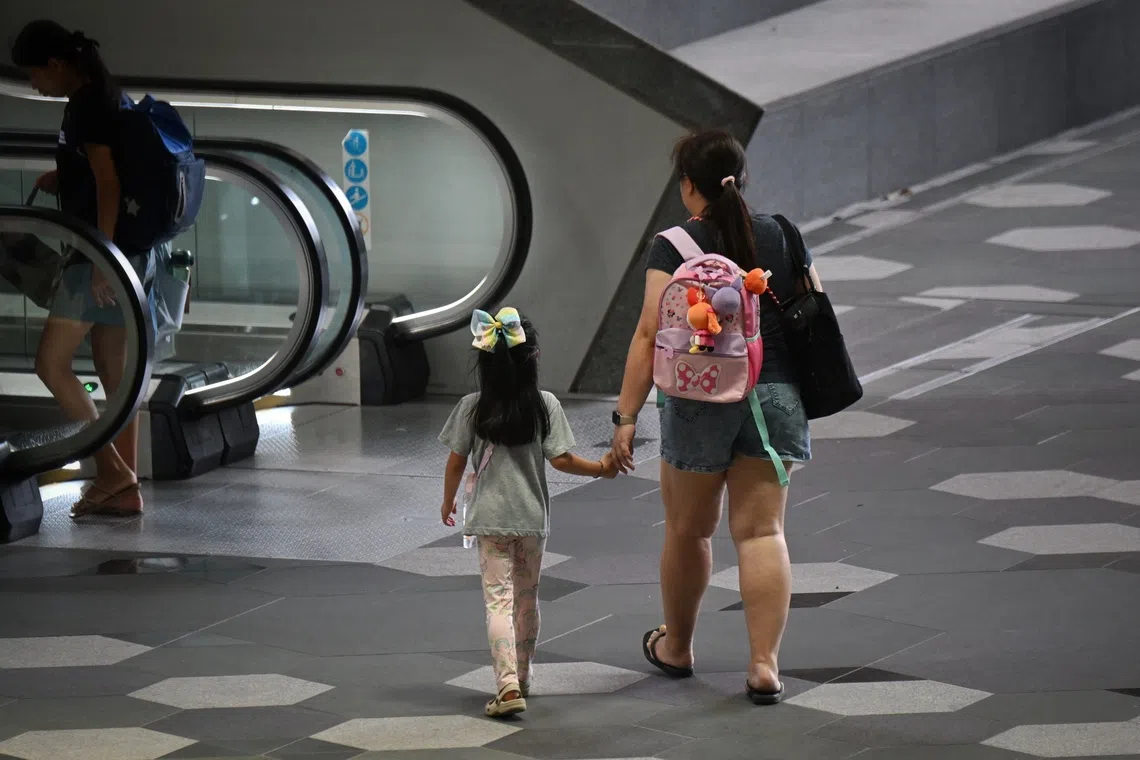
ST PHOTO: KUA CHEE SIONG
Published Sep 10, 2026, 02:55 PM
Updated Sep 10, 2026, 03:00 PM
More details on the start date of enhanced childcare leave benefits, doubling leave for parents to up to 12 days, will be shared in early 2027 after legal and implementation preparations.
The Government will encourage companies to adapt workplace norms to normalise caregiving leave, including flexible work and backfilling support.
The Marriage and Parenthood Reset Workgroup will address barriers to leave-taking and develop sector-specific solutions, and will share its full recommendations in early 2027.
Follow our live coverage here.
SINGAPORE - More details on the start date of childcare leave enhancements announced at the National Day Rally will be shared in early 2027, said Minister in the Prime Minister’s Office Indranee Rajah.
This is as laws have to be amended and implementation details worked out with the employers and unions, Indranee said in response to parliamentary questions on Sept 10.
The Government is also studying ways to better support companies with backfilling arrangements, though the longer-term solution to firms’ operational challenges is to accept that leave for caregiving needs is now part and parcel of normal human resource policy, and to design their workplace norms and practices around this, she added.
Indranee was replying to four questions by MPs on the expanded leave benefits that Prime Minister Lawrence Wong had announced in August, which will provide each working parent with up to 12 days of childcare leave a year, up from the current six days if their children are aged up to six and two days if their kids are aged seven to 12.
Wong had also said the state will fully fund all costs for statutory child-related leave up to a limit, instead of the current model where costs are shared 50-50 with employers.
WP NCMP Andre Low asked how the authorities will help businesses beyond the reimbursement of leave costs. He also noted that the impact of expanded childcare leave would disproportionately impact smaller firms.
Indranee replied that apart from financial support, a change in mindsets will have to be a big part of the solution, and that the Government is engaging employers on this.
“The signal that we’re sending to all employers is that the workplace of today has changed. We cannot work on the same paradigm and model as we have for the last 10 and 20 years,” she said.
With the Government covering childcare leave costs, businesses may use the increased reimbursement to support covering arrangements, such as by hiring temporary staff or recognising employees who take on additional covering responsibilities, said Indranee.
Going forward, companies should be planning on the assumption that there there will be a manpower gap at any given time, rather than the way it is today where “the moment somebody’s taken out, you’re struggling to fill the gap”, she added.
Improved workplace culture and norms benefit not only parents with children but also singles and those married without children by helping them to better balance work and personal responsibilities, including caregiving needs said Indranee.
The minister said the Marriage and Parenthood Reset Workgroup she chairs will also identify barriers that companies face in facilitating leave-taking, and will develop practical solutions tailored to help different sectors and firms address such barriers. The workgroup will share its full set of recommendations in early 2027.
In a follow-up question, Poh Li San (Sembawang West) asked if the Government will study how workers who are not parents but who have genuine caregiving needs can be better supported.
Indranee said her workgroup is looking at parent-related policies, but the Government as a whole is looking at caregiving in general, including for seniors.
“It comes back to changing the workplace in recognition of the fact that there will always be a need for somebody to step out,” she said, adding that this would include job redesign, job sharing, and “most importantly” flexible work arrangements.
While most people think of flexible work arrangements as working from home, the minister said this is a much broader concept that includes flexi-time.
“For example, if you need to take your parent or your child for medical appointment early in the morning, you could either put back the hours later or during lunchtime, or you go back at the same time, but maybe you make it up at home,” she said.
Such arrangements do require employers to have conversations with their employees, as every sector is different.
“You can see the enormity of the task that we have before us, and what we intend to do is to approach it sector by sector, get the trade associations and chambers on board, and work on it using the tripartite model,” she said.
Cassandra Lee (West Coast-Jurong West GRC) asked if the Government would consider publishing a clear set of criteria that employers must meet to be accredited and eligible to display the Made For Families mark, such as expectations on family-friendly workplace practices.
The mark was launched in 2020 by the National Population and Talent Division for organisations to show they provide family-friendly programmes, products or services, though there currently is no defined criteria a firm must meet in order to display it.
Indranee said the Government is actively looking at this, without making it too onerous for employers who are already being asked to change workplace norms and practices.
Shermaine Ang is a journalist at The Straits Times, covering social issues in Singapore.
Singapore Parliament
这是因为法律需要修订,并且需要与雇主和工会协商制定实施细节。
《海峡时报》摄影:郭志雄
发布于 2026 年 9 月 10 日下午 2:55
更新于2026年9月10日下午3:00
关于加强育儿假福利(将父母的假期延长一倍至最多 12 天)的开始日期的更多细节,将在完成法律和实施准备工作后于 2027 年初公布。
政府将鼓励企业调整工作场所规范,使照护假正常化,包括灵活工作安排和提供替补支持。
婚姻和育儿重置工作组将解决离职障碍,制定针对特定领域的解决方案,并将于 2027 年初公布其全部建议。
请点击此处关注我们的实时报道。
新加坡——总理公署部长英兰妮·拉贾表示,在国庆群众大会上宣布的育儿假福利提升计划的更多细节将于2027年初公布。
9月10日,英兰妮在回答议会质询时表示,这是因为需要修改法律,并与雇主和工会协商制定实施细节。
她补充说,政府也在研究如何更好地支持企业进行人员补充安排,但解决企业运营挑战的长期方案是接受照顾需求休假现在是正常人力资源政策的一部分,并围绕这一点来设计工作场所规范和做法。
英兰妮是在回答国会议员提出的四个问题时做出上述表态的。这些问题是关于总理黄循财在8月份宣布的扩大育儿假福利的,该福利将为每位在职父母提供每年最多12天的育儿假,而目前如果孩子年龄在6岁以下,则为6天;如果孩子年龄在7至12岁,则为2天。
黄先生还表示,州政府将全额承担法定育儿假的所有费用,但会设定上限,而不是像现在这样与雇主各承担 50% 的费用。
工人党非选区议员刘安德询问,除了报销休假费用外,当局还将如何帮助企业。他还指出,延长育儿假的影响将对小型企业造成不成比例的冲击。
英德拉妮回应说,除了财政支持外,改变观念也是解决问题的重要部分,政府正在就此与雇主进行沟通。
“我们向所有雇主发出的信号是,如今的工作场所已经发生了变化。我们不能再沿用过去10年或20年的模式和方法了,”她说道。
英德拉妮表示,由于政府承担了育儿假费用,企业可以利用增加的报销额来支持人员替补安排,例如雇用临时员工或表彰承担额外替补责任的员工。
她补充说,展望未来,企业应该假设任何时候都会出现人力缺口,而不是像现在这样,“一旦有人离开,你就很难填补空缺”。
Indranee表示,改善工作场所文化和规范不仅有利于有孩子的父母,也有利于单身人士和已婚无子女人士,有助于他们更好地平衡工作和个人责任,包括照顾孩子的需求。
这位部长表示,她主持的“婚姻与育儿重置工作组”还将找出企业在协助员工休假方面面临的障碍,并制定切实可行的解决方案,帮助不同行业和公司克服这些障碍。该工作组将于2027年初公布其全部建议。
在后续提问中,Poh Li San(三巴旺西选区)询问政府是否会研究如何更好地支持那些并非父母但确实有照顾需求的劳动者。
英兰妮表示,她的工作组正在研究与父母相关的政策,但政府整体上正在研究一般的照护问题,包括对老年人的照护。
“归根结底,我们需要改变工作场所,认识到总会有人需要离开,”她说道,并补充说,这将包括工作重新设计、工作分担,以及“最重要的是”灵活的工作安排。
虽然大多数人认为灵活的工作安排就是在家工作,但这位部长表示,这是一个更广泛的概念,还包括弹性工作时间。
“例如,如果你需要一大早就带父母或孩子去看医生,你可以把时间推迟到晚些或午休时间,或者你照常回去,但也许你可以在家补上,”她说。
此类安排确实需要雇主与雇员进行沟通,因为每个行业的情况都不同。
“你们可以看到我们面前的任务有多么艰巨,我们打算分行业逐一解决,让行业协会和商会参与进来,并采用三方合作模式来解决,”她说。
卡桑德拉·李(西海岸-裕廊西集选区)询问政府是否会考虑公布一套明确的标准,规定雇主必须满足这些标准才能获得认证并有资格展示“Made For Families”标志,例如对家庭友好型工作场所实践的期望。
该标志由国家人口与人才司于 2020 年推出,旨在向提供家庭友好型项目、产品或服务的机构展示,但目前尚无明确的标准规定企业必须满足哪些条件才能展示该标志。
英德拉妮表示,政府正在积极研究此事,同时不会给已经要求改变工作场所规范和做法的雇主增加过多负担。
Shermaine Ang是《海峡时报》的记者,负责报道新加坡的社会问题。
新加坡国会