Rheinmetall secures nitrocellulose supply amid European ammo scramble在欧洲弹药争夺战中,莱茵金属公司确保了硝化纤维素的供应。
Rheinmetall agreed to buy Hagedorn-NC, a German maker of industrial nitrocellulose, to expand its supply of raw material for artillery propellant.
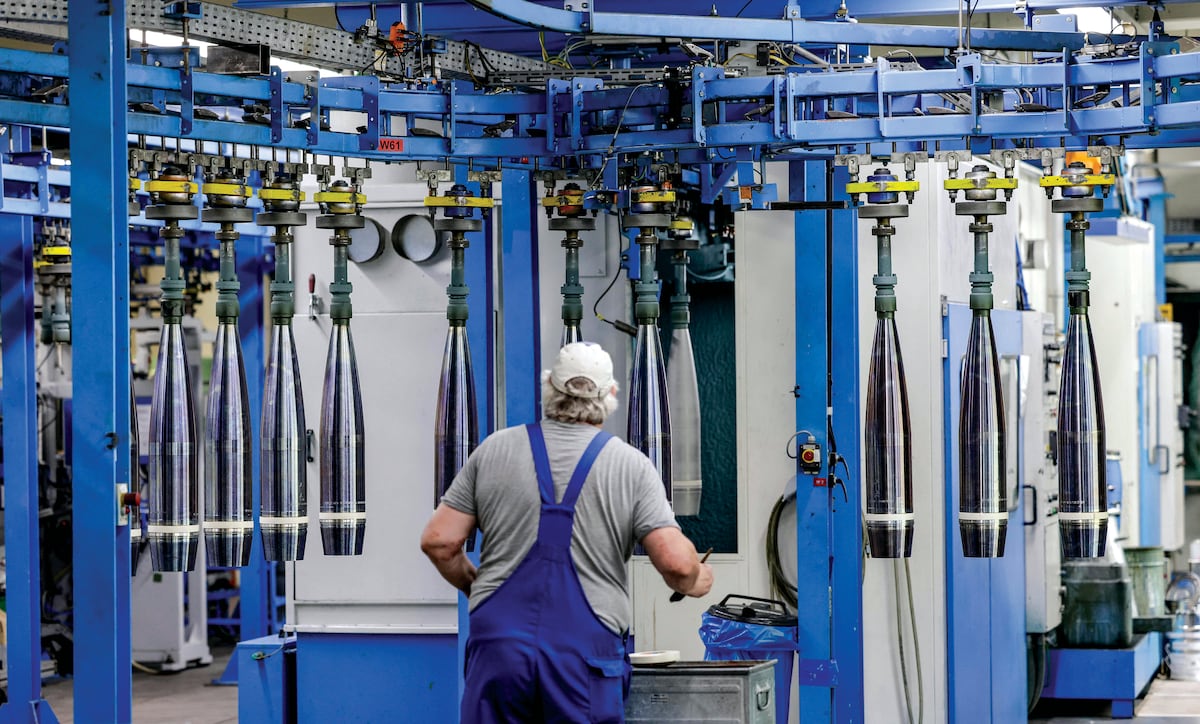
PARIS — Rheinmetall agreed to buy Hagedorn-NC, a German maker of industrial nitrocellulose, to expand its supply of raw material for artillery propellant, the latest move in a rush by countries and companies across Europe to safeguard or build up production of ammunition and explosives.
Rheinmetall plans to convert production at Hagedorn-NC to military-grade cellulose in coming months, though existing civilian customers will continue to be supplied “for the time being,” it said in a statement on Monday.
The purchase closes a strategic shortage in the supply chain, the company said.
“The acquisition helps us to overcome a strategic bottleneck in propellant production,” Rheinmetall CEO Armin Papperger said. “It gives us an important source of raw materials and continues the vertical integration along the entire value chain in the production of ammunition.”
Europe’s artillery ammunition makers have scrambled to boost output after Russia invaded Ukraine in 2022, with industry and the European Union jointly spending more than €1.5 billion ($1.6 billion) to add capacity for explosives, propellant and shells. The EU now expects the bloc to produce 2 million artillery shells in 2025, from estimated annual capacity of 230,000 rounds in early 2023.
Firing all those shells relies on nitrocellulose, which is the raw material for the charges that can propel a 155 mm grenade from a modern howitzer to distances of 40 kilometers (25 miles) or more. Gunners typically use modular charges, stacking more propellant to fire greater distances.
Rheinmetall is among those that has been ramping up production of large-caliber ammunition, and the company aims for capacity to produce up to 1.1 million 155 mm artillery shells annually by 2027. Hagedorn-NC will give Rheinmetall a fourth nitrocellulose production site, in addition to factories in Switzerland, Spain and South Africa, the company said.
The purchase comes after Prague-based defense firm Czechoslovak Group (CSG) in November snapped up the nitrocellulose business of U.S.-based International Flavors & Fragrances in Walsrode, Germany. The Czech firm plans to add production of nitrocellulose for ammunition over time, in addition to industrial applications such as wood coatings and nail polish.
Nitrocellulose is produced from either cotton linters or wood pulp, using nitrating acids to convert cellulose. The EU has banned export of nitrocellulose to Russia since April 2022, and of its precursor cotton linter pulp since June 2023.
The Hagedorn-NC acquisition is subject to antitrust approval, Rheinmetall said. The company said the purchase will strengthen its position as a leading supplier of large-caliber ammunition within NATO and ensure long-term and independent supply of essential components.
Rheinmetall didn’t immediately respond to e-mailed questions regarding financial details, production capacity and any remaining bottleneck issues in nitrocellulose.
The company says its acquisition of Hagedorn-NC will add 90 employees. Meanwhile, CSG said more than 350 people work in the Walsrode nitrocellulose plant and associated industrial park the company is buying.
New or additional production capacity for explosives and artillery propellant is arising or being planned across Europe, after Ukraine’s shell shortage in its fight against Russia and NATO’s inability to deliver enough ammunition raised the alarm for military planners and policymakers.
France last month restarted explosive powder production at Eurenco in Bergerac, in the southwest of the country, having halted domestic manufacture of propellant in 2007. Meanwhile, Denmark in March picked Norway’s Nammo to restart an ammunition plant that had been shut down in 2020.
Polish lawmakers in November agreed to invest around 3 billion zloty ($760 million) in local ammunition production, particularly of 155 mm shells. The government signed a letter of intent with fertilizer maker Grupa Azoty and defense manufacturer Polska Grupa Zbrojeniowa earlier that month to set up nitrocellulose and propellant production in Poland.
Rheinmetall currently makes nitrocellulose through the Nitrochemie joint venture with RUAG MRO Holding at a site in Wimmis, Switzerland, as well as at sites in Murcia in Spain and Welllington in South Africa.
Hagedorn-NC is based on Osnabrück in northwest Germany, with a production site in Lingen, and currently makes nitrocellulose specifically for industrial applications, particularly lacquers and printing inks.
Rudy Ruitenberg is a Europe correspondent for Defense News. He started his career at Bloomberg News and has experience reporting on technology, commodity markets and politics.
巴黎——莱茵金属公司同意收购德国工业硝化纤维素制造商Hagedorn-NC,以扩大其炮弹推进剂原材料的供应。这是欧洲各国和公司为保障或扩大弹药和炸药的生产而采取的最新举措。
莱茵金属公司周一在一份声明中表示,计划在未来几个月内将哈格多恩-北卡罗来纳州工厂的生产线改造为生产军用级纤维素,但“目前”仍将继续向现有民用客户供货。
该公司表示,此次收购填补了供应链中的一个战略性缺口。
莱茵金属公司首席执行官阿明·帕珀格表示:“此次收购有助于我们克服推进剂生产方面的战略瓶颈。它为我们提供了重要的原材料来源,并继续推进弹药生产整个价值链的垂直整合。”
自2022年俄罗斯入侵乌克兰以来,欧洲炮弹生产商争相提高产量。欧盟和相关行业共同出资超过15亿欧元(16亿美元),用于扩建炸药、推进剂和炮弹的生产能力。欧盟目前预计,到2025年,欧盟的炮弹产量将达到200万发,而2023年初的年产能预计为23万发。
发射所有这些炮弹都依赖于硝化纤维素,它是发射药的原材料,可以将现代榴弹炮发射的155毫米榴弹射到40公里(25英里)或更远的距离。炮兵通常使用模块化装药,通过增加发射药的用量来增加射程。
莱茵金属公司是众多加大大口径弹药生产力度的公司之一,该公司计划到2027年实现每年生产110万发155毫米炮弹的能力。该公司表示,哈格多恩-NC工厂将使莱茵金属公司拥有第四个硝化纤维素生产基地,此前该公司已在瑞士、西班牙和南非设有工厂。
此次收购发生在总部位于布拉格的捷克斯洛伐克集团(CSG)于去年11月收购了美国国际香料香精公司(IFF)位于德国瓦尔斯罗德的硝化纤维素业务之后。这家捷克公司计划逐步增加硝化纤维素的生产,用于制造弹药,并拓展其在木材涂料和指甲油等工业领域的应用。
硝化纤维素是由棉短绒或木浆经硝化酸转化纤维素制成的。欧盟自2022年4月起禁止向俄罗斯出口硝化纤维素,并自2023年6月起禁止向俄罗斯出口其前体棉短绒浆。
莱茵金属公司表示,对Hagedorn-NC的收购尚需获得反垄断机构的批准。该公司称,此次收购将巩固其作为北约大口径弹药领先供应商的地位,并确保关键零部件的长期独立供应。
莱茵金属公司没有立即回复有关财务细节、产能以及硝化纤维素生产中任何剩余瓶颈问题的电子邮件询问。
该公司表示,收购Hagedorn-NC将新增90名员工。与此同时,CSG表示,该公司正在收购的沃尔斯罗德硝化纤维素厂及其相关工业园区拥有超过350名员工。
在乌克兰与俄罗斯作战时炮弹短缺,以及北约无法提供足够的弹药之后,这引起了军事规划者和决策者的警觉。此后,欧洲各地正在兴起或计划建设新的或额外的炸药和炮弹推进剂生产能力。
法国上个月在西南部贝尔热拉克的欧伦科公司重启了炸药生产,该公司于 2007 年停止了国内推进剂的生产。与此同时,丹麦在 3 月份选择挪威的纳莫公司重启一家于 2020 年关闭的弹药厂。
波兰议员11月同意投资约30亿兹罗提(约合7.6亿美元)用于本地弹药生产,特别是155毫米炮弹。当月早些时候,波兰政府与化肥生产商阿佐蒂集团(Grupa Azoty)和国防制造商波兰军工集团(Polska Grupa Zbrojeniowa)签署了意向书,计划在波兰建立硝化纤维素和推进剂生产线。
莱茵金属目前通过与 RUAG MRO Holding 成立的合资企业 Nitrochemie 在瑞士维米斯的工厂以及西班牙穆尔西亚和南非惠灵顿的工厂生产硝化纤维素。
Hagedorn-NC 公司总部位于德国西北部的奥斯纳布吕克,在林根设有生产基地,目前专门生产用于工业应用的硝化纤维素,特别是用于清漆和印刷油墨。
鲁迪·鲁伊滕贝格是《防务新闻》的欧洲记者。他的职业生涯始于彭博新闻社,拥有报道科技、大宗商品市场和政治方面的经验。