New Zealand vows to play catch-up on defense investments新西兰誓言要在国防投资方面迎头赶上。
“Just because we’re small doesn’t mean we’re insignificant,” said Minister of Defence Judith Collins. “We’re a maritime nation.”
WELLINGTON, New Zealand — Government leaders in New Zealand have pledged to increase defense spending and plug longstanding capability gaps, as countries in the region contend with the rise of China.
“We can’t have prosperity without security. That’s why we’re [doubling] defense spending to 2% of GDP over the next eight years,” Prime Minister Christopher Luxon posted on X after the country’s long-awaited Defence Capability Plan (DCP) was released April 7.
The document says the New Zealand Defence Force (NZDF) needs to be able to project force to deter adversaries.
“While the initial investment will be focused on selecting the first asset/s (ships, planes, or vehicles) to be equipped with missiles, future refreshes will consider expanding this to other assets, potentially delivering long range strike from multiple domains,” the plan reads.
The 48-page document describes investment options out to 2040 for a beleaguered NZDF that lacks personnel, has inadequate accommodation, a naval base troubled by silt, air bases with corroded runways and taxiways — and three warships without sailors.
There will be a planned commitment within the next four years of NZ$12 billion (US$ 6.6 billion) in capability and enablers. Progress will be reviewed every two years, officials said.
“Just because we’re small doesn’t mean we’re insignificant,” said Minister of Defence Judith Collins. “We’re a maritime nation.”
Political and public interest in naval affairs was accentuated in February by the presence of a Chinese naval flotilla, including a 439-foot frigate, a 586-foot replenishment vessel and a 591-foot cruiser in the Tasman Sea.
Their voyage around Australia included an unexpected live-firing exercise which led commercial flights between New Zealand and Australia to be diverted. However, Luxon says the DCP is not targeted at any particular country and there is no change to the country’s anti-nuclear policy.
The current NZDF workforce consists of approximately 8,700 Regular Force personnel, 3,300 reserves and 3,000 civilians. “While the exact growth will be determined by in-depth analysis as capabilities are developed, it is estimated that to support the delivery of this plan, by 2040 NZDF will have grown by around 2,500 people,” the plan reads.
“Up to NZ$1 billion plus” will be spent before 2029 on improving housing and real estate, the document adds.
In the same period the Royal New Zealand Air Force’s (RNZAF’s) two Boeing 757s will be replaced, at up to $NZ1 billion; the Army’s Light Armored Vehicles (LAVs) will get new turrets and more than NZ$1 billion will be spent on “Enterprise Resource Planning.”
The military will buy new drones, both aerial and sea-going, and stock up on Javelin anti-tank missiles.
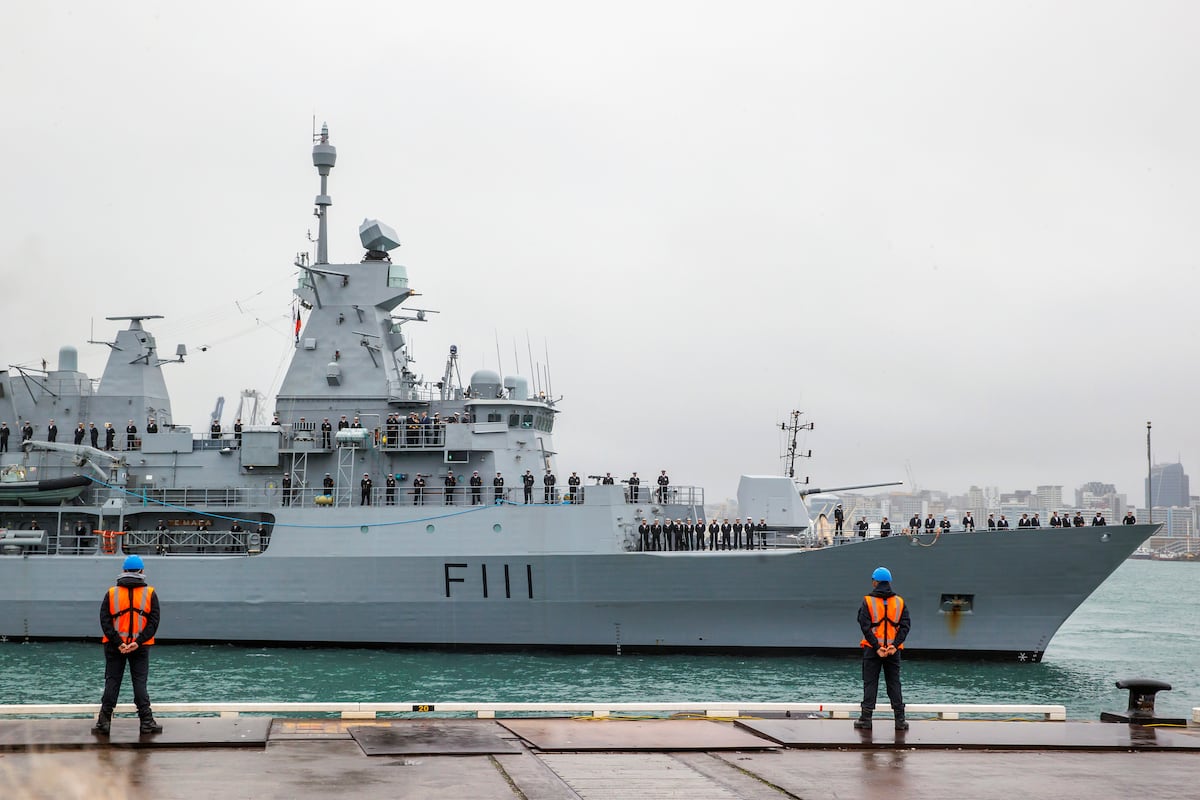
Sustaining the Royal New Zealand Navy’s two Anzac-class frigates, 26 and 28 years old, respectively, will cost up to NZ$600 million over the next four years; replacing their Kaman SH-2G(I) Seasprite helicopters is estimated at more than NZ$2 billion, officials here project.
In the decade to 2039, the NZDF “will look at” replacing weapon systems, including 105mm light guns (in service since the late 80s), the LAVs and the Army’s heavier vehicles, upgrades for the recently introduced C-130J-30 Hercules and the establishment of an Information Warfare Academy.
The NH90 and A109 helicopter fleets may be increased, updated or replaced, and the P-8As will be upgraded. Increased attention will be given both to acquiring drones and defending against them, the plan envisions.
“New Zealand will seek to procure the same assets and equipment as Australia where it makes sense to do so. This will help interoperability,” the document reads.
Nick Lee-Frampton is the New Zealand correspondent for Defense News.
新西兰惠灵顿——随着该地区各国应对中国的崛起,新西兰政府领导人承诺增加国防开支,并弥补长期存在的能力差距。
“没有安全就没有繁荣。这就是为什么我们将在未来八年内将国防开支增加一倍,达到GDP的2%。”总理克里斯托弗·卢克森在4月7日该国期待已久的国防能力计划(DCP)发布后,在X上发帖表示。
该文件指出,新西兰国防军(NZDF)需要具备投射武力以威慑对手的能力。
该计划指出:“虽然最初的投资将集中于选择首批装备导弹的资产(舰船、飞机或车辆),但未来的升级将考虑将其扩展到其他资产,有可能从多个领域进行远程打击。”
这份 48 页的文件描述了到 2040 年新西兰国防军的投资选择方案。新西兰国防军目前面临人员短缺、住宿不足、海军基地淤泥堆积、空军基地跑道和滑行道腐蚀等问题,还有三艘军舰没有水兵。
未来四年内,新西兰政府计划投入120亿新西兰元(约合66亿美元)用于能力建设和配套设施建设。官员表示,进展情况将每两年进行一次评估。
“我们国土面积小并不意味着我们无关紧要,”国防部长朱迪思·柯林斯说。“我们是一个海洋国家。”
2 月份,中国海军舰队出现在塔斯曼海,其中包括一艘 439 英尺长的护卫舰、一艘 586 英尺长的补给舰和一艘 591 英尺长的巡洋舰,这加剧了公众和政界对海军事务的关注。
他们的环澳航行中包括一次出乎意料的实弹演习,导致新西兰和澳大利亚之间的商业航班被迫改道。然而,卢克森表示,DCP并非针对任何特定国家,该国的反核政策也未发生任何改变。
目前新西兰国防军人员约有8700名正规军人员、3300名预备役人员和3000名文职人员。“虽然具体的增长规模将随着能力的提升而通过深入分析来确定,但据估计,为了支持该计划的实施,到2040年,新西兰国防军的人员规模将增加约2500人,”该计划指出。
该文件还补充说,到 2029 年,将花费“高达 10 亿新西兰元以上”用于改善住房和房地产。
同期,新西兰皇家空军(RNZAF)的两架波音757飞机将被替换,耗资高达10亿新西兰元;陆军的轻型装甲车(LAV)将获得新的炮塔,并且将在“企业资源规划”上花费超过10亿新西兰元。
军方将采购新型无人机,包括空中无人机和海上无人机,并储备标枪反坦克导弹。
新西兰皇家海军的两艘安扎克级护卫舰(舰龄分别为 26 年和 28 年)在未来四年内将耗资高达 6 亿新西兰元;据当地官员预测,更换其卡曼 SH-2G(I) 海妖直升机的费用预计将超过 20 亿新西兰元。
在到 2039 年的十年间,新西兰国防军“将考虑”更换武器系统,包括 105 毫米轻型火炮(自 80 年代末以来一直在服役)、LAV 装甲车和陆军的重型车辆,升级最近引进的 C-130J-30 大力神运输机,以及建立信息战学院。
NH90和A109直升机机队可能会增加、更新或替换,P-8A反潜巡逻机也将进行升级。该计划设想,将更加重视无人机的采购和防御。
文件指出:“新西兰将在条件允许的情况下,寻求采购与澳大利亚相同的资产和设备。这将有助于实现互操作性。”
Nick Lee-Frampton 是《国防新闻》驻新西兰记者。