The Harrowing Tale Of The Nuke-Laden Russian Typhoon Class Sub That Almost Sunk In 19911991年,一艘载有核弹头的俄罗斯台风级潜艇险些沉没,这段惊心动魄的故事令人揪心。
The quick thinking captain that saved the vessel and the world from disaster was never decorated for his actions.
Updated May 17, 2019 5:23 PM EDT
A man whose quick and bold thinking likely saved the world from a nuclear disaster has died. The Barents Observer reports that Igor Grishkov, the 67 year old retired Russian Navy captain, passed away in Severodvinsk, located along the frigid White Sea. Grishkov had lived there since retiring from the Russian Navy.
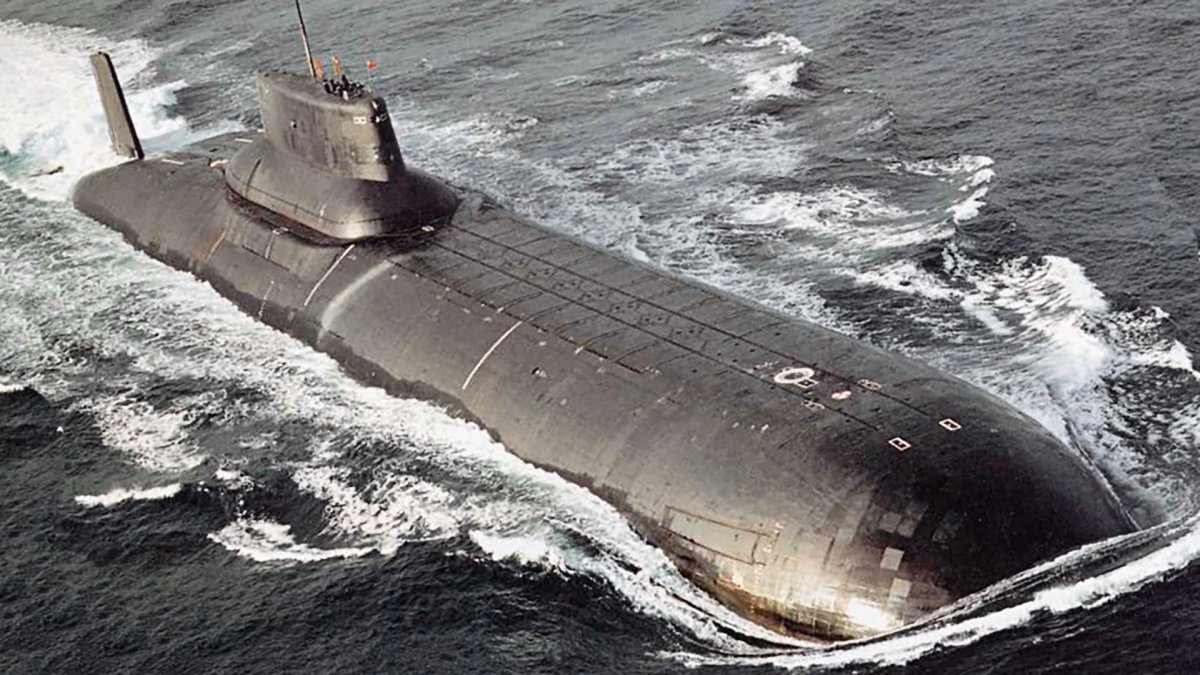
27 years earlier, then Captain Grishkov was in command of one of six of the deadliest weapons the Soviet Union ever created, the massive Typhoon class nuclear ballistic missile (SSBN) submarine TK-17. It was during the most turbulent time in Russian affairs since WWII when TK-17 slunk beneath the waves in the White Sea, not far from the place of his death, that Grishkov was faced with one of a nuclear submariner’s worst nightmare scenarios.
The near catastrophic event remained deeply classified for decades, but today we have a decent idea of what happened on that fateful day in September of 1991.
Igor Grishkov , Image from Facebook via Barents Observer
TK-17 was ordered to execute a test launch of one of its 20 SS-N-20 Sturgeon (locally called the R-39 Rif) submarine-launched ballistic missiles. Like their host submarine, these three-stage solid-fuel ballistic missiles were absolutely massive in size, weighing a staggering 185,000 pounds and able to carry up to ten multiple independently-targeted reentry vehicles (MIRVs).
A early photo of a Typhoon class SSBN with a graphic comparing it to a football field. , Public Domain
A test missile, which had inert warheads, was loaded into one of TK-17’s vertical launch tubes before the submarine headed out to sea. Once launched, it would fly thousands of miles east, impacting on Russia’s missile range on the Chukotka Peninsula . The exercise was largely a display of continuity, strength, and stability to a world which had just witnessed a failed coup attempt against Soviet President Mikhail Gorbachev. In reality, the Soviet Union was in a state of collapse, and by Christmas of that same year it would disintegrate in full.
Foreshadowing events to come politically for the USSR, the test launch turned into a harrowing failure. On September 27th, 1991, TK-17 moved into launch depth position and ran through its pre-firing sequence. As the launch clock clicked down towards zero, instead of the 53 foot long, 23 foot wide missile boosting its way towards the ocean’s surface it exploded while still cocooned inside its launch tube. The silo door that covered the missile tube was totally blown off.
The submarine shook violently and alarms rang—it seemed as if the TK-17 was doomed. Such an event would be horrific for the boat’s crew, but the loss of control of the vessel’s twin nuclear reactors and the live nuclear weapons it carried could result in a nuclear incident of massive proportions. In essence, the loss of a Typhoon class SSBN was the sum of Soviet Navy’s fears.
A picture of a ice covered Typhoon class SSBN likely taken sometime in the 1980s., Bellona Foundation/wikicommons
Grishkov acted quickly and decisively, ordering up an emergency blow of TK-17’s ballast tanks, a move that would send the 574 foot long submarine porpoising to the surface.
The action was completed successfully and TK-17’s crew was able visually examine the submarine’s long forward-set missile farm. What they saw wasn’t good. There were a series of fires raging near where the test missile had detonated.
The missile’s solid fuel propellant had scattered across the submarine’s upper surface. The rubber anechoic coating that helps the submarine from being detected acoustically was set alight and the fire would rapidly spread. 19 other missiles sat tightly packed in two neat lines of ten under and near the blaze.
Heat and ballistic missiles armed with nuclear warheads are a bad combination.
Once again, Captain Grishkov acted quickly and decisively, ordering a counter-intuitive maneuver for a submarine that is damaged in ways that crew couldn’t fully understood at the time.
His plan was to put the fire out in a way only a submarine can, by submerging the vessel and starving the flames of oxygen. Grishkov knew that the stricken missile’s launch compartment would flood, and possibly other sections nearby, and alerted the crew to this possibility, but he had to make a decision that would save the boat from sinking , even if it meant taking on new types of damage and even possibly casualties.
A Typhoon class sub sits in port. , Georges DeKeerle/Sygma via Getty Images)
The crew carried out the snap order far quicker than it could normally have been accomplished. When the boat was ordered back up to the surface again the fires were extinguished. The plan had worked and TK-17 wouldn’t become the embarrassment of a crumbling empire or the cause of an international crisis and environmental catastrophe.
The stricken submarine and its crew of 160 limped back to Severodvinsk where its burnt skin and badly damaged launch tube were repaired under a shroud of secrecy. The tube would never be used again and was permanently sealed off. TK-17 would go onto serve for 13 more years before being sidelined in 2004.
Grishkov was never pronounced a Hero of Russia or given an award for staving off disaster, the impact of which is hard to fathom, especially at such a turbulent time in Russian history. The Kursk tragedy nearly nine years later, which had clear parallels to the incident aboard TK-17, was controversially handled in a standoff manner by Russia, and the country wasn’t undergoing anywhere near the political turmoil as the Soviet Union was in the fall of 1991.
Three of the six Typhoon class boats produced still exist, with just one remaining in active service. The other two, seen here in a 2013 satellite image, which includes TK-17, await the scrapper’s torch and the removal of their nuclear reactors., Digital Globe via Getty Images
Would Russia have reached out for help if one of their prized Typhoon class boomers sunk? Would embarrassment and the sensitive technology held within the relatively new submarine—the most advanced fielded at the time of the incident—kept the Soviet Union from telling the world of the disaster before it was too late? How would the overthrow of the Communist Party just months later have impacted a response effort, especially if it was highly classified at the time of the political transformation?
Thanks to Captain Grishkov and his crew we don’t have an answer to those questions.
The lack of adulation towards Grishkov was largely due to the sensitive nature of the incident. Although some of the Russian Navy brass wanted to decorate him for his heroic efforts on that day, instead the powers that be chose to keep the incident secret . In turn, neither the captain or any of his crew, who all survived the incident, would ever receive the recognition they deserved.
SEVEROMORSK, RUSSIA – JULY 15, 2017: The Dmitriy Donskoy (TK-208) nuclear ballistic missile submarine leaves for St Petersburg to take part in a ship parade marking Russian Navy Day., Lev FedoseyevTASS via Getty Images
As for TK-17, the vessel has been sitting idle ( take a look inside !) in Severodvinsk next to her sister-ship TK-20 awaiting decommissioning and disposal of their volatile nuclear reactors. A single Typhoon class submarine remains in Russian Navy service, the first one ever built, the Dmitry Donskoy TK-208.
Submarine-launched ballisitic missile test vessel.
Contact the author: Tyler@thedrive.com
Comments couldn’t be loaded. Please refresh the page.
更新于美国东部时间2019年5月17日下午5:23
一位思维敏捷、胆识过人的男子去世了,他很可能曾使世界免于一场核灾难。《巴伦支观察报》报道称,这位名叫伊戈尔·格里什科夫的67岁俄罗斯海军退役上校在位于寒冷的白海沿岸的北德文斯克去世。格里什科夫自俄罗斯海军退役后就一直居住在那里。
27年前,时任上校的格里什科夫指挥着苏联制造的六件最致命的武器之一——巨型台风级核弹道导弹潜艇(SSBN)TK-17。二战后俄罗斯局势最为动荡的时期,TK-17在白海海域沉没,距离他牺牲的地方不远,格里什科夫面临着核潜艇兵最可怕的噩梦之一。
这起险些酿成灾难的事件在几十年里一直被严格保密,但今天我们对 1991 年 9 月那个命运攸关的日子里发生的事情已经有了比较清晰的了解。
伊戈尔·格里什科夫(Igor Grishkov),图片来自 Facebook,来自 Barents Observer
TK-17号潜艇奉命试射其20枚SS-N-20“鲟鱼”(当地称为R-39“里夫”)潜射弹道导弹中的一枚。与搭载它们的潜艇一样,这些三级固体燃料弹道导弹体积庞大,重量惊人,达18.5万磅,最多可携带10枚多弹头独立重返大气层载具(MIRV)。
一张早期台风级弹道导弹核潜艇的照片,旁边配有将其比作足球场的图示。(公共领域)
一枚装有惰性弹头的试验导弹被装入TK-17潜艇的垂直发射管中,随后潜艇驶向大海。导弹发射后将向东飞行数千英里,落入俄罗斯位于楚科奇半岛的导弹靶场。此次演习主要是为了向刚刚目睹了针对苏联总统戈尔巴乔夫的未遂政变的世界展示苏联的连续性、实力和稳定性。事实上,苏联当时已处于崩溃边缘,并在同年圣诞节前彻底解体。
这次试射预示着苏联未来政治局势的走向,最终以惨痛的失败告终。1991年9月27日,TK-17导弹进入发射深度,并完成了发射前的准备程序。随着发射倒计时接近尾声,这枚长53英尺、宽23英尺的导弹并没有像预想的那样冲向海面,而是在发射管内爆炸,当时它仍然包裹在发射筒内。覆盖导弹发射筒的发射井门也被完全炸飞。
潜艇剧烈摇晃,警报声响起——TK-17号似乎已无力回天。对于艇员而言,这样的事件无疑是恐怖的,但失去对艇上两座核反应堆以及所携带的核武器的控制,则可能引发一场规模巨大的核事故。从本质上讲,损失一艘台风级弹道导弹核潜艇,正是苏联海军所有恐惧的集中体现。
一张台风级弹道导弹核潜艇被冰雪覆盖的照片,很可能拍摄于20世纪80年代。(图片来源:贝罗纳基金会/维基共享资源)
格里什科夫迅速果断地采取行动,下令紧急炸毁TK-17的压载舱,这一举动将使这艘574英尺长的潜艇像海豚一样跃出水面。
行动顺利完成,TK-17号潜艇艇员得以目视检查潜艇前部长长的导弹发射阵。他们看到的景象并不乐观。在测试导弹引爆点附近,燃起了一系列熊熊大火。
导弹的固体燃料推进剂散落在潜艇上表面。用于防止潜艇被声学探测的橡胶消声涂层被引燃,火势迅速蔓延。另外19枚导弹紧密排列成两排,每排十枚,位于火焰下方和附近。
热能和携带核弹头的弹道导弹是糟糕的组合。
格里什科夫上校再次迅速果断地采取行动,下令对一艘受损程度连船员当时都无法完全理解的潜艇进行反直觉的机动。
他的计划是用只有潜艇才能做到的方式灭火:让潜艇下潜,隔绝氧气,从而扑灭火焰。格里什科夫知道受损导弹的发射舱会进水,附近的舱室也可能被淹,他已提醒艇员注意这种可能性,但他必须做出一个能避免潜艇沉没的决定,即使这意味着潜艇会遭受新的损坏,甚至可能出现人员伤亡。
一艘台风级潜艇停泊在港口。(图片来源:Georges DeKeerle/Sygma via Getty Images)
船员们迅速执行了紧急命令,速度远超正常情况。当潜艇再次接到返回水面的命令时,火势已被扑灭。计划成功了,TK-17号潜艇不会成为一个摇摇欲坠的帝国的耻辱,也不会成为国际危机和环境灾难的根源。
这艘受损的潜艇及其160名艇员艰难地返回了北德文斯克港。在那里,其烧毁的艇身和严重受损的发射管在高度保密的情况下进行了修复。该发射管从此再也没有被使用过,并被永久封存。TK-17号潜艇又服役了13年,直到2004年才退役。
格里什科夫从未被授予“俄罗斯英雄”称号,也未因阻止灾难而获得任何嘉奖,这其中的影响难以估量,尤其是在俄罗斯历史上如此动荡的时期。近九年后发生的库尔斯克号悲剧与TK-17事件有着明显的相似之处,但俄罗斯对此采取了颇具争议的冷漠态度,而且当时俄罗斯的政治动荡程度远不及1991年秋季的苏联。
六艘台风级潜艇中,现存三艘,仅剩一艘仍在服役。另外两艘(如图所示,摄于2013年卫星图像,其中包括TK-17)正等待拆解和核反应堆拆除。(图片来源:Digital Globe via Getty Images)
如果俄罗斯引以为傲的“台风”级弹道导弹潜艇之一沉没,俄罗斯会寻求援助吗?尴尬以及这艘相对较新的潜艇(事发时最先进的潜艇)所搭载的敏感技术,是否会阻止苏联在为时已晚之前向世界通报这场灾难?几个月后共产党的垮台又会对救援行动产生怎样的影响,尤其是在政治变革时期,如果救援行动高度机密的话?
多亏了格里什科夫船长和他的船员们,我们才无法回答这些问题。
格里什科夫未得到应有的赞誉,很大程度上是由于事件的敏感性。尽管一些俄罗斯海军高层希望表彰他当天的英勇表现,但当权者最终选择将此事保密。因此,无论是舰长还是所有幸存的船员,都未能获得他们应得的荣誉。
俄罗斯北莫尔斯克 – 2017年7月15日:德米特里·顿斯科伊号(TK-208)核动力弹道导弹潜艇启程前往圣彼得堡,参加俄罗斯海军节阅兵式。(图片来源:列夫·费多谢耶夫,塔斯社/盖蒂图片社)
至于TK-17号潜艇,它一直闲置在北德文斯克港(可以看看内部!),与它的姊妹舰TK-20号潜艇并排停泊,等待退役和处置其危险的核反应堆。目前俄罗斯海军仅剩一艘台风级潜艇,即建造的第一艘,德米特里·顿斯科伊号TK-208。
潜射弹道导弹试验船。
联系作者:Tyler@thedrive.com
评论加载失败,请刷新页面。