Political salary debate: PAP MPs, NMPs weigh in on pay structure, relay residents' concerns政治薪酬辩论:人民行动党议员和非议员就薪酬结构发表意见,并转达居民的担忧
Nominated MPs suggested lowering the fixed component of a minister's salary and proposed longer-term goals for ministerial bonuses.
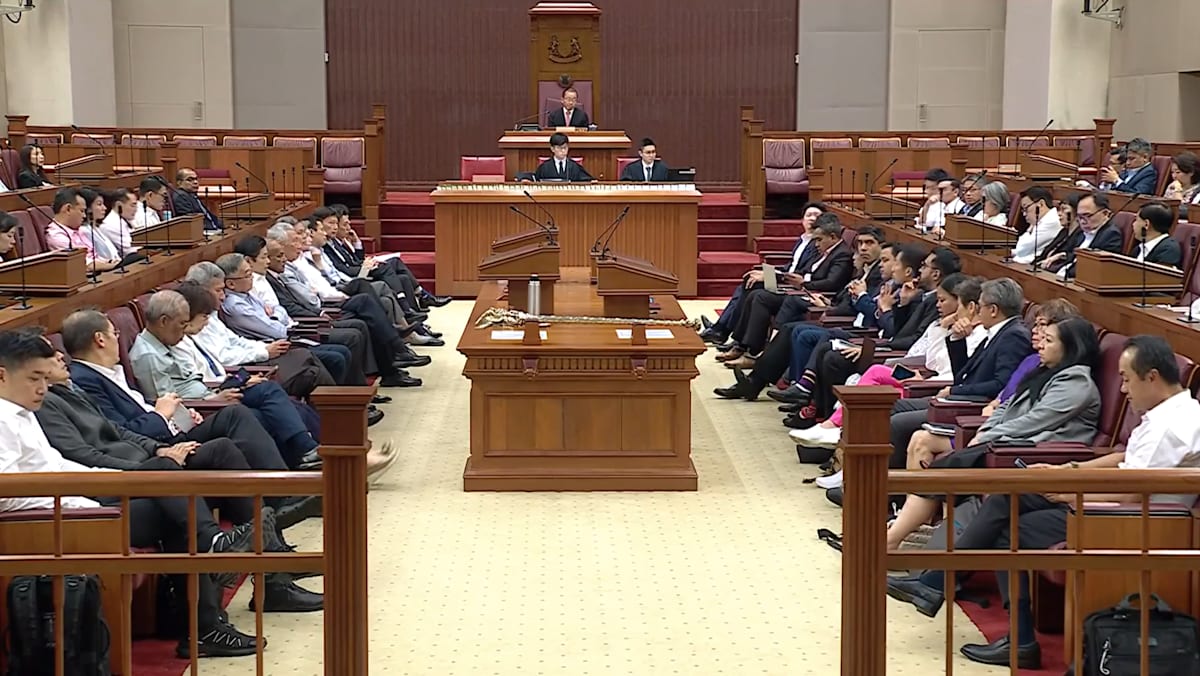
Nominated MPs suggested lowering the fixed component of a minister's salary and proposed longer-term goals for ministerial bonuses.
MPs in parliament on Sep 10, 2026.
This audio is generated by an AI tool.
SINGAPORE: Nominated Members of Parliament (NMPs) called for changes to the political salary framework's structure during a parliamentary debate on Thursday (Sep 10), as People's Action Party (PAP) MPs relayed residents' questions and concerns about the planned increase.
The debate , which lasted over four hours, saw four PAP MPs speak alongside Workers' Party chief Pritam Singh , five NMPs and Minister for Trade and Industry (Energy and Industry) Tan See Leng .
Among the NMPs' proposals were lowering a minister's fixed salary component and adding longer-term goals to ministerial bonuses.
Prime Minister Lawrence Wong announced on Tuesday that political office holders will get a salary increase of up to 9 per cent, the first revision since 2011 . The variable component of a minister's pay will make up more than a third of total annual remuneration.
CNA Games Guess Word Crack the word, one row at a time Buzzword Create words using the given letters Mini Sudoku Tiny puzzle, mighty brain teaser Mini Crossword Small grid, big challenge Word Search Spot as many words as you can Show More Show Less NMP Azhar Othman suggested raising the variable component to 55 per cent of a minister's annual pay, with a fixed component of 45 per cent. He said the 55 per cent should be "explicitly, transparently, and heavily" weighted toward national performance metrics that directly affect real median income growth, unemployment rates and housing affordability. “Under such a model, if the nation thrives, our leaders thrive with it, justly so. But if the nation faces headwinds, our leaders share in the national sacrifice,” he said. NMP Kenneth Goh proposed adding longer-term goals to a minister's key performance indicators. He said the current indicators determining the national bonus – the unemployment rate of citizens, real income growth for citizens in the 50th and 20th percentile and real GDP growth rate – "largely tell us how Singapore is performing now". “I ask whether the government would consider assessing our progress on indicators that reflect Singapore's capacity to thrive over the medium and long term,” said Assoc Prof Goh. “Some of our most difficult challenges unfold over much longer horizons: demographic sustainability, social mobility, climate adaptation, social cohesion.” He suggested developing a "long-term national stewardship scorecard" alongside the national bonus framework, assessing three- to five-year progress towards long-horizon outcomes and milestones. “The broader question is whether our framework should assess not only how well Singapore performs today, but whether today's leaders leave Singapore stronger for tomorrow.”
NMP Azhar Othman suggested raising the variable component to 55 per cent of a minister's annual pay, with a fixed component of 45 per cent.
He said the 55 per cent should be "explicitly, transparently, and heavily" weighted toward national performance metrics that directly affect real median income growth, unemployment rates and housing affordability.
“Under such a model, if the nation thrives, our leaders thrive with it, justly so. But if the nation faces headwinds, our leaders share in the national sacrifice,” he said.
NMP Kenneth Goh proposed adding longer-term goals to a minister's key performance indicators.
He said the current indicators determining the national bonus – the unemployment rate of citizens, real income growth for citizens in the 50th and 20th percentile and real GDP growth rate – "largely tell us how Singapore is performing now".
“I ask whether the government would consider assessing our progress on indicators that reflect Singapore's capacity to thrive over the medium and long term,” said Assoc Prof Goh.
“Some of our most difficult challenges unfold over much longer horizons: demographic sustainability, social mobility, climate adaptation, social cohesion.”
He suggested developing a "long-term national stewardship scorecard" alongside the national bonus framework, assessing three- to five-year progress towards long-horizon outcomes and milestones.
“The broader question is whether our framework should assess not only how well Singapore performs today, but whether today's leaders leave Singapore stronger for tomorrow.”
Is the right benchmark being used for ministerial pay? NMP Kenneth Goh posed this question in parliament on Thursday (Sep 10). Simply being highly paid does not make a private sector role comparable to that of a minister, he said. So, instead of starting with Singapore’s top earners, he suggested identifying roles with similar levels of skill, judgement, complexity and responsibility, and examining what they pay. Future reviews could test the current benchmark against this alternative comparison group. Noting that private sector incomes can fluctuate, while some professions have relatively short periods of peak earnings, he proposed looking at average earnings over three to five years. Once a credible benchmark is established, the political service discount could be replaced with a “compensating premium” that recognises the burdens of political office. Assoc Prof Goh also called for the inclusion of indicators that assess whether political leaders are leaving Singapore stronger for the future. He spoke in parliament on Thursday (Sep 10).
POLITICAL SERVICE DISCOUNT
Assoc Prof Goh also recommended replacing the "political service discount" with "an adjustment that reflects the distinctive burden of political office".
Currently, to reflect the ethos of public service, benchmarks for new ministers are set at a 40 per cent "discount" off what top Singaporean earners get, including chief executives and professionals from a range of fields.
With the changes, a maximum 9 per cent adjustment will see a political appointment holder with a salary of S$1.1 million adjusted to about S$1.2 million. In 2026, the benchmark of the median top 1,000 earners is S$3.1 million, making S$1.2 million an effective discount of over 60 per cent.
Assoc Prof Goh said that a minister’s “willingness to give more should not itself become a reason to pay them less”.
“There's a difference between someone willingly accepting sacrifice because of a sense of service and designing a compensation system that requires financial sacrifice as evidence of that service,” he said.
Political office imposes burdens many comparable leadership roles do not, he said, such as intense public scrutiny, loss of privacy, reputational risk and the possibility that family members are drawn into unwanted public attention.
“In labour markets, unusually demanding or unattractive features of a job can justify a compensating premium, so why should political office automatically require a discount?” he asked.
QUALITY OF LIFE INDICATOR
Coordinating Minister for Public Services Chan Chun Sing said on Tuesday that the government agreed with the review committee to explore including a quality of life measure in the national bonus framework, as part of the variable pay component.
NMP Kenneth Poon said that while the existing national bonus indicators provide a "strong picture of economic progress", the committee's quality of life recommendation "gives us an opportunity to complement this with a clearer conception of social progress".
He recommended four areas for determining quality of life: whether Singaporeans have enough to meet their essential needs, whether they can obtain essential services when they need them, whether Singaporeans feel that they belong and whether Singaporeans themselves feel that their lives are going well.
NMP Haresh Singaraju asked when considerations for a quality of life measure will be published and presented to parliament.
“Singapore doing well is not the same as Singaporeans living well. Political pay rests mostly on the first. I ask the government to start measuring the second,” he said.
The reaction on the ground is not a comfortable one. Feedback from workers in the land transport sector on the salary adjustments revolved around the timing and the realities. MP Yeo Wan Ling shared these observations in parliament on Thursday (Sep 10), saying they must be taken seriously. She stressed the need to explain plainly how the benchmark works - as a reference point within a salary structure. She also pointed out that if political remuneration is tied to Singapore's progress, then the progress of workers must be part of that picture. She also agreed with workers that political service must ultimately be motivated by a desire to serve. Ms Yeo said it is right to scrutinise the numbers but Singaporeans should not lose sight of the need for the framework to enable capable people to step forward to serve.
RESIDENTS QUESTIONED TIMING, QUANTUM
PAP MPs backed the move but relayed residents' concerns.
MP Yeo Wan Ling (PAP-Punggol) said workers in the land transport sector had asked her: "Aren't we supposed to share the good times and the difficult times together? Why choose this time?"
While Singapore's economic numbers may look healthy, she said, workers told her it is "not necessarily how the economy feels to them on the ground".
“Some could understand salaries being reviewed and adjusted, but felt that 9 per cent was too high, instinctively comparing it with their own annual agreements, which are considerably lower,” said Ms Yeo.
Some had also asked why there were "so many years" between adjustments, she added.
Ms Yeo said the 9 per cent may look like a large figure, but the increment had to account for about 15 years without adjustments, while workers generally see progression in wages "year after year".
It was right to scrutinise the numbers and benchmarks underpinning the wage framework, she said, but "we should not lose sight of why we have this framework in the first place: to enable capable people to step forward to serve".
MP Mariam Jaafar (PAP-Sembawang) recounted a resident who runs a coffee shop telling her: "That kind of money, even if I work for 20 years, I can't get a whiff of it."
"She wasn't angry, she was simply stating candidly just how far that amount was from her reality," Ms Mariam said.
She said she would not tell Singaporeans struggling with the cost of living, housing, healthcare and school fees, or mature workers and young people anxious about job security and the impact of AI, that a "seven-figure number should not make them uncomfortable". But that discomfort "cannot be the end of the conversation", she added.
“We must also consider some other harder questions: If not this, then what is the alternative? And if not now, then when?”
How Singapore's leaders respond to crisis is one of the most direct tests of leadership over the past few decades, said MP Liang Eng Hwa. Speaking in parliament on Thursday (Sep 10), he highlighted examples of their ability to steer Singapore out of rough waters and execute long-term plans while preparing for adversity. He pointed out that the team will face many tests again and stressed that as a small country, the margin for error is far smaller. Singapore “cannot compromise on the quality of leadership”, he said. Ministerial salaries have remained unchanged for 15 years and it is time for adjustment, he added. Mr Liang noted that many people still face a “psychological hurdle” in accepting that the salaries of political appointment holders should be linked to the market. But for Singapore to continue to have an outstanding political leadership team, it must establish a reasonable and sustainable system that encourages capable people of integrity and a strong sense of mission to serve the country, he said.
PAY SHOULD NOT BE AN OBSTACLE
MP Liang Eng Hwa (PAP-Bukit Panjang) said a spirit of service and reasonable remuneration "are not mutually contradictory concepts".
“The key is to find a key balance between the spirit of dedication inherent in public service and the need to attract and retain outstanding people – a balance that the society can accept and the country can sustain over the long term,” he said.
“In my view, the existing ministerial salary framework is the balance we seek.”
NMP Terence Ho used the analogy of Singapore’s efforts to raise its total fertility rate.
“For people to start and grow families, they must want children and see parenthood as meaningful. Yet, for many couples, the cost of raising children is an issue, and more generous financial support could, for some, tilt the balance in favour of starting a family or having another child,” he said.
“Likewise, pay cannot and should not be the principal motivation for someone to seek political office. Yet, for some, the financial sacrifice on top of other sacrifices may be what tilts the balance one way or the other.”
MP Christopher De Souza (PAP-Holland-Bukit Timah) said that in other countries, some politicians see public office as a chance to earn more after they step down.
“The public will inevitably wonder whether today's decisions are made solely in the national interests, or whether tomorrow's opportunities are also at the back of the minds of their leaders,” he said.
Singapore, in contrast, compensates its leaders transparently through a clean wage, one "sufficient to ensure that they are not incentivised to look elsewhere to make up the difference", he said.
In a Facebook post on Thursday, Senior Minister Lee Hsien Loong said he was glad there was "substantial consensus" supporting the government's move on both sides of the house.
“By keeping civil service and political salaries realistic, we have been able to build a high-quality civil service, and assemble a strong and capable team of ministers to serve Singapore well,” he said.
If public sector salaries are allowed to “fall out of line”, the quality of the administration and political leadership will “slowly but inexorably” decline, he added.
“I urge Singaporeans to continue supporting realistic and practical policies that will keep Singapore exceptional for many years to come.”
Get our pick of top stories and thought-provoking articles in your inbox
Stay updated with notifications for breaking news and our best stories
Join our channel for the top reads for the day on your preferred chat app
获委任议员建议降低部长薪水中的固定部分,并提出部长奖金的长期目标。
2026年9月10日,议员们在议会。
这段音频是由人工智能工具生成的。
新加坡:周四(9月10日),在国会辩论中,委任议员呼吁对政治薪酬框架结构进行改革。与此同时,人民行动党议员转达了居民对计划中的加薪的疑问和担忧。
这场持续四个多小时的辩论中,四名人民行动党议员与工人党主席毕丹星、五名非选区议员以及贸易和工业部长(能源和工业)陈世龙一起发言。
非议员们提出的建议包括降低部长固定薪酬部分,以及在部长奖金中增加长期目标。
总理黄循财周二宣布,政治官员的薪酬将增加至多9%,这是自2011年以来的首次调整。部长薪酬中的浮动部分将占年度总薪酬的三分之一以上。
CNA游戏 猜词游戏 逐行破解单词 流行词游戏 用给定的字母组成单词 迷你数独 小谜题,脑力挑战 迷你填字游戏 小方格,大挑战 单词搜索 尽可能多地找出单词 显示更多 显示更少 非议员阿兹哈尔·奥斯曼建议将部长年薪中的浮动部分提高到55%,固定部分为45%。他表示,这55%的浮动部分应该“明确、透明且高度”地与直接影响实际收入中位数增长、失业率和住房负担能力的国家绩效指标挂钩。“在这种模式下,如果国家繁荣发展,我们的领导人也会随之受益,这是理所应当的。但如果国家面临逆境,我们的领导人也应该承担起国家的牺牲,”他说。非议员吴建国建议在部长的关键绩效指标中加入长期目标。他表示,目前决定国家奖金的指标——公民失业率、收入处于第50和第20百分位的公民实际收入增长率以及实际GDP增长率——“在很大程度上反映了新加坡当前的经济状况”。吴副教授说:“我询问政府是否会考虑用能够反映新加坡中长期发展能力的指标来评估我们的进展。我们面临的一些最严峻的挑战需要更长的时间才能显现:人口可持续性、社会流动性、气候适应和社会凝聚力。”他建议在国家奖金框架之外,制定一个“长期国家管理记分卡”,评估新加坡在实现长期目标和里程碑方面三到五年的进展。“更广泛的问题是,我们的框架是否不仅应该评估新加坡当前的经济表现,还应该评估今天的领导人是否能让新加坡在未来更加强大。”
非议员阿扎尔·奥斯曼建议将部长年薪中的浮动部分提高到 55%,固定部分为 45%。
他表示,这 55% 的权重应该“明确、透明且高度”地分配给直接影响实际收入中位数增长、失业率和住房负担能力的国家绩效指标。
他说:“在这种模式下,如果国家繁荣昌盛,我们的领导人也会随之受益,这是理所应当的。但如果国家遭遇逆境,我们的领导人也要为国家做出牺牲。”
非议员 Kenneth Goh 提议在部长关键绩效指标中增加长期目标。
他表示,目前决定国家奖金的指标——公民失业率、第 50 和第 20 百分位公民的实际收入增长率以及实际 GDP 增长率——“在很大程度上告诉我们新加坡现在的表现如何”。
“我想问问政府是否会考虑根据能够反映新加坡在中长期发展能力的指标来评估我们的进展,”吴副教授说道。
“我们面临的一些最严峻的挑战需要在更长远的层面上才能显现:人口可持续性、社会流动性、气候适应、社会凝聚力。”
他建议在国家奖金框架之外,制定“长期国家管理记分卡”,评估三到五年内实现长期目标和里程碑的进展情况。
“更广泛的问题是,我们的评估框架是否不仅应该评估新加坡今天的表现,还应该评估今天的领导人是否能让新加坡在未来更加强大。”
部长薪酬的基准是否恰当?非选区议员吴庆祥(Kenneth Goh)于周四(9月10日)在国会提出此问题。他指出,高薪并不能使私营部门的职位与部长职位相提并论。因此,他建议,与其从新加坡收入最高的人群入手,不如先找出技能、判断力、复杂性和责任水平相似的职位,并考察它们的薪酬。未来的评估可以以此替代群体来检验当前的基准。他指出,私营部门的收入可能波动,而某些职业的收入高峰期相对较短,因此建议参考三到五年的平均收入。一旦建立了可信的基准,就可以用“补偿性溢价”取代政治服务折扣,以体现政治职务的负担。吴庆祥副教授还呼吁纳入一些指标,以评估政治领导人是否为新加坡的未来发展做出了贡献。他于周四(9月10日)在国会发表了讲话。
政治服务折扣
吴副教授还建议用“反映政治职务独特负担的调整”来取代“政治服务折扣”。
目前,为了体现公共服务的精神,新任部长的薪酬基准设定为比新加坡最高收入者(包括首席执行官和各领域专业人士)的收入低 40%。
调整后,最高9%的涨幅将使年薪110万新元的政治任命官员的年薪调整至约120万新元。到2026年,收入最高的1000名官员的年薪中位数基准为310万新元,这意味着120万新元的涨幅相当于超过60%的折扣。
吴副教授表示,部长“愿意付出更多本身不应成为减少其薪酬的理由”。
他说:“一个人出于服务精神而自愿接受牺牲,与设计一种要求以经济牺牲作为服务证明的补偿制度,这两者之间是有区别的。”
他表示,政治职位会带来许多类似领导职位所没有的负担,例如公众的密切关注、隐私的丧失、声誉风险以及家庭成员可能被卷入不必要的公众关注。
他问道:“在劳动力市场中,一份工作如果具有异常苛刻或缺乏吸引力的特点,就可以获得相应的补偿性溢价,那么为什么政治职位就必须自动享受折扣呢?”
生活质量指标
公共服务统筹部长陈振声周二表示,政府已同意检讨委员会的意见,探讨将生活质量指标纳入国家奖金框架,作为浮动薪酬的一部分。
非议员潘建国表示,虽然现有的国家奖金指标“清晰地展现了经济进步”,但委员会的生活质量建议“让我们有机会用更清晰的社会进步概念来补充这一指标”。
他建议从四个方面来判断生活质量:新加坡人是否有足够的资源来满足基本需求,他们是否能在需要时获得基本服务,新加坡人是否感到自己有归属感,以及新加坡人自己是否觉得自己的生活过得很好。
非议员哈雷什·辛加拉朱询问何时公布生活质量措施的相关考量并提交国会。
“新加坡经济繁荣并不等同于新加坡人民生活富足。政治回报主要取决于前者。我要求政府开始衡量后者,”他说道。
基层民众的反应并不积极。陆路交通运输业员工对薪资调整的反馈主要集中在调整的时机和实际情况上。国会议员杨婉玲周四(9月10日)在国会分享了这些看法,并表示必须认真对待。她强调,需要清楚地解释基准薪资是如何运作的——作为薪资结构中的一个参考点。她还指出,如果政治薪酬与新加坡的发展挂钩,那么员工的进步也必须纳入考量。她也同意员工的观点,即政治服务的最终动机必须是为人民服务。杨婉玲表示,仔细审查数据固然重要,但新加坡人不应忽视这一框架的必要性,即让有能力的人能够挺身而出为人民服务。
居民质疑时机和数量
人民行动党议员支持这项举措,但也转达了居民的担忧。
议员杨婉玲(人民行动党-榜鹅)表示,陆路运输行业的工人曾问她:“我们不是应该一起经历顺境和逆境吗?为什么偏偏选择这个时候?”
她表示,虽然新加坡的经济数据看起来很健康,但工人们告诉她,“这并不一定能让他们切身感受到经济的实际情况”。
“有些人能够理解薪资需要审查和调整,但他们觉得9%的涨幅太高了,本能地将其与自己低得多的年度合同进行比较,”杨女士说。
她补充说,有些人还问为什么两次调整之间间隔了“这么多年”。
叶女士表示,9% 的涨幅看起来可能很大,但这一增长必须考虑到大约 15 年没有进行调整的情况,而工人的工资通常是“逐年”增长的。
她表示,仔细审查工资框架背后的数字和基准是正确的,但是“我们不应该忘记我们最初设立这个框架的原因:让有能力的人能够站出来服务”。
国会议员玛丽亚姆·贾法尔(人民行动党-三巴旺)转述了一位经营咖啡店的居民对她说的话:“那种钱,就算我工作20年,也一分钱都拿不到。”
“她并没有生气,只是坦率地陈述了这个金额与她的实际情况有多么大的差距,”玛丽亚姆女士说。
她表示,她不会告诉那些正为生活成本、住房、医疗保健和学费苦苦挣扎的新加坡人,也不会告诉那些对工作保障和人工智能影响感到焦虑的中老年员工和年轻人,“七位数的金额不应该让他们感到不安”。但她补充说,这种不安“不能成为讨论的终点”。
“我们还必须考虑一些更棘手的问题:如果不是这样做,那么还有什么替代方案?如果不是现在,那么什么时候?”
新加坡国会议员梁荣华表示,过去几十年来,新加坡领导人如何应对危机是对领导力最直接的考验之一。他在周四(9月10日)的国会发言中,着重列举了他们带领新加坡走出困境、执行长期规划并做好应对逆境准备的实例。他指出,领导团队将再次面临诸多考验,并强调作为一个小国,新加坡的容错空间非常有限。他表示,新加坡“不能在领导质量上妥协”。他还补充说,部长级薪酬已经15年没有调整,现在是时候做出改变了。梁先生指出,许多人仍然难以接受政治任命官员的薪酬应该与市场挂钩。但他表示,为了继续拥有一支杰出的政治领导团队,新加坡必须建立一个合理且可持续的制度,鼓励有能力、有操守、有使命感的人才为国家服务。
薪酬不应成为障碍
国会议员梁恩华(人民行动党-武吉班让)表示,服务精神和合理报酬“并非相互矛盾的概念”。
他说:“关键在于找到公共服务固有的奉献精神与吸引和留住优秀人才的需求之间的平衡——这种平衡既要让社会接受,又要让国家长期维持下去。”
“在我看来,现有的部长级薪酬体系正是我们所追求的平衡。”
非议员何志强以新加坡提高总和生育率的努力为例进行了类比。
他说:“人们要组建和发展家庭,必须渴望孩子,并且认为为人父母是有意义的。然而,对许多夫妇来说,养育孩子的成本是一个问题,更慷慨的经济支持或许能够帮助一些人扭转局面,促使他们组建家庭或再生一个孩子。”
“同样,薪酬不应该也不可能成为人们竞选公职的主要动机。然而,对某些人来说,除了其他方面的牺牲之外,经济上的牺牲可能会成为决定他们最终选择参选的关键因素。”
国会议员克里斯托弗·德·索萨(人民行动党-荷兰-武吉知马选区)表示,在其他国家,一些政治人物将公职视为卸任后赚取更多收入的机会。
他说:“公众必然会质疑,今天的决策是否仅仅是为了国家利益,还是领导人也考虑到了明天的机遇。”
相比之下,新加坡通过透明的薪酬制度向其领导人支付报酬,这种薪酬“足以确保他们不会为了弥补收入差距而另谋出路”,他说。
周四,高级部长李显龙在脸书上发帖称,他很高兴看到国会两院都“基本达成共识”支持政府的这一举措。
他说:“通过保持公务员和政治人物薪酬的合理性,我们得以建立一支高素质的公务员队伍,并组建一支强大而有能力的部长团队,为新加坡提供优质服务。”
他补充说,如果允许公共部门的工资“脱离正常水平”,行政和政治领导的质量将会“缓慢但不可避免地”下降。
“我呼吁新加坡人民继续支持务实有效的政策,这将使新加坡在未来许多年里继续保持卓越地位。”
订阅我们的邮件,即可获取精选热点新闻和引人深思的文章。
订阅通知,第一时间获取突发新闻和精彩报道。
加入我们的频道,即可在您常用的聊天应用上获取当日热门文章。