Government to study quality of life indicators, wary of KPIs that ‘drive the wrong behaviour’: Chan Chun Sing政府将研究生活质量指标,警惕关键绩效指标“导致不良行为”:陈振声
Mr Chan also responded to MP suggestions during the debate on political salaries, such as providing clearer targets to ascertain the effectiveness of political leadership.
新闻视频
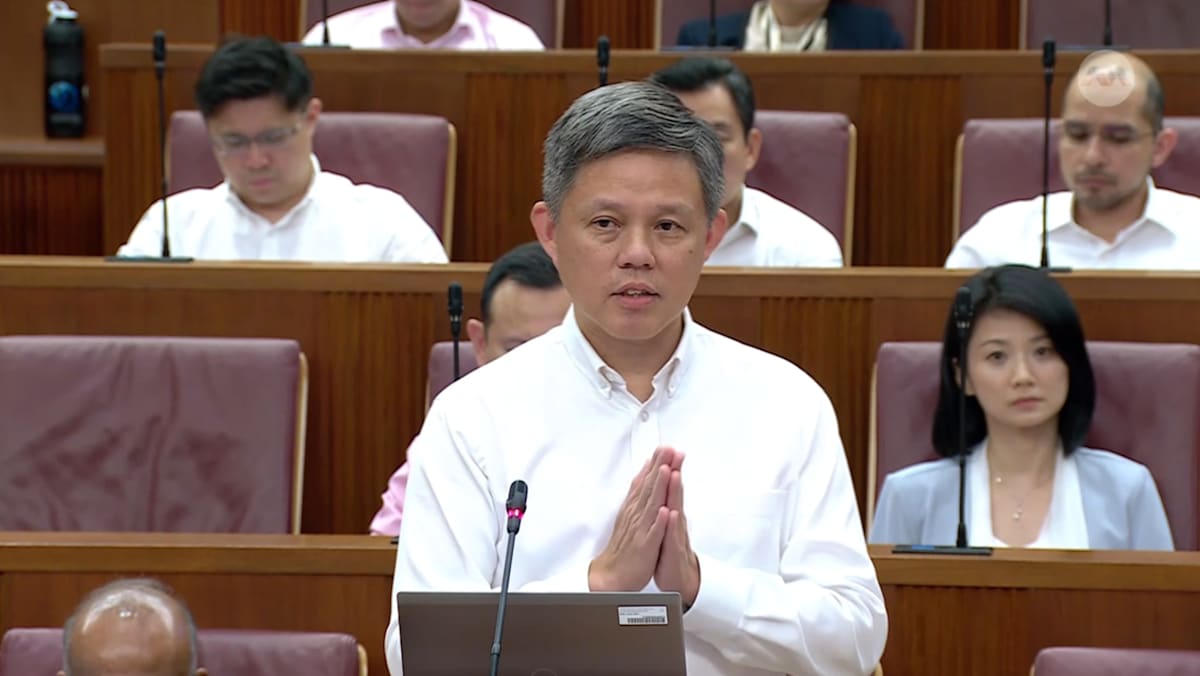
Mr Chan also responded to MP suggestions during the debate on political salaries, such as providing clearer targets to ascertain the effectiveness of political leadership.
Coordinating Minister for Public Services Chan Chun Sing speaking in parliament on Sep 10, 2026 during the debate on political salaries.
This audio is generated by an AI tool.
SINGAPORE: Singapore’s government will look into how it can broaden indicators on the quality of life in the country, but does not want to set the wrong goals that may “drive the wrong behaviour”, said Coordinating Minister for Public Services Chan Chun Sing on Thursday (Sep 10).
He was speaking in parliament during a debate on the government’s response to a review committee’s recommendations on salaries for political appointment holders and Members of Parliament (MPs).
The committee had recommended that a quality of life measure be included in the national bonus framework, which determines part of the variable pay component for political appointment holders.
The national bonus is currently tied to four indicators: the unemployment rate, real income growth rate at the median level, real income growth rate at the bottom 20 per cent and real gross domestic product growth rate.
CNA Games Guess Word Crack the word, one row at a time Buzzword Create words using the given letters Mini Sudoku Tiny puzzle, mighty brain teaser Mini Crossword Small grid, big challenge Word Search Spot as many words as you can Show More Show Less During the debate, Nominated Member of Parliament (NMP) Kenneth Poon said a quality of life indicator would ask a broader question on whether Singaporeans are doing well. He suggested four dimensions of social progress for consideration: material adequacy, access to essential services, social connectedness to Singapore and subjective well-being. Another NMP, Dr Haresh Singaraju, asked who would build the quality-of-life measure, when it would be presented to parliament and whether it would be published, even if it does not count toward the national bonus. Mr Chan said the government wants to broaden the indicator, but there has to be data that can be collected and organised into a stable series before targets can be set. It is not easy to set such indicators because they may be qualitative rather than quantitative, and some factors should be measured over multiple years, rather than a single year, he said. “We certainly do not want to set the wrong KPI (key performance indicators) to encourage or drive the wrong behaviour,” he added. Mr Chan said some important things in life cannot be measured, and Singapore must be careful not to only value the things that can be measured. He said the Public Service Division will look into this and come up with a proposal on what is feasible and possible. Mr Chan, who is also defence minister, responded to a question on whether the government would consider including indicators that reflect Singapore’s capacity to thrive in the medium- and long-term, beyond the immediate social and economic performance. “The job of the Cabinet, the job of the leadership team, is not just about meeting the KPIs on a yearly basis, and the here and now,” he said.
During the debate, Nominated Member of Parliament (NMP) Kenneth Poon said a quality of life indicator would ask a broader question on whether Singaporeans are doing well.
He suggested four dimensions of social progress for consideration: material adequacy, access to essential services, social connectedness to Singapore and subjective well-being.
Another NMP, Dr Haresh Singaraju, asked who would build the quality-of-life measure, when it would be presented to parliament and whether it would be published, even if it does not count toward the national bonus.
Mr Chan said the government wants to broaden the indicator, but there has to be data that can be collected and organised into a stable series before targets can be set.
It is not easy to set such indicators because they may be qualitative rather than quantitative, and some factors should be measured over multiple years, rather than a single year, he said.
“We certainly do not want to set the wrong KPI (key performance indicators) to encourage or drive the wrong behaviour,” he added.
Mr Chan said some important things in life cannot be measured, and Singapore must be careful not to only value the things that can be measured.
He said the Public Service Division will look into this and come up with a proposal on what is feasible and possible.
Mr Chan, who is also defence minister, responded to a question on whether the government would consider including indicators that reflect Singapore’s capacity to thrive in the medium- and long-term, beyond the immediate social and economic performance.
“The job of the Cabinet, the job of the leadership team, is not just about meeting the KPIs on a yearly basis, and the here and now,” he said.
In his years of public service, he learnt that pre-empting a problem so that the public does not even need to deal with it or know about it is the “mark of success”.
“The mark of success is not how well we do the firefighting. The mark of success ... more often than not, is how we have prevented the fire in the first place,” he said, adding that this generally requires leaders to take a longer-term view.
NMP Kenneth Goh suggested that the benchmark salary formula should consider the wages of roles in the private sector that “reflect the skills, judgment, complexity and weight of responsibility we expect of political office holders”, instead of using the median annual income of the top 1,000 Singaporean earners.
Mr Chan said the top 1,000 Singaporean earners serve as a broad proxy, and are not meant to identify jobs comparable to ministers.
He added that when the framework first started, only certain vocations were used, but that format was deemed too narrow.
“We agree with you that we would like to find job roles that are more comparable rather than just from a financial perspective. Then the question is, how do we identify those roles, and will we get back to the same situation where we first started?” he said.
Associate Professor Goh also suggested considering the average earnings of the comparative group in the private sector over three to five years, as there may be fluctuations from year to year.
Mr Chan said that is a fair idea, but noted that the performance of the government cannot be measured year by year, and that there could be a change in government.
“Those are practical difficulties as we consider this particular suggestion,” he said, adding that the time cycle for results can differ widely across different government ministries.
In response to Dr Singaraju’s suggestion that the government be clear about what its target was for outcomes that it reports, Mr Chan said governance is not about a series of KPIs, and Singapore has to be careful about how and what is published.
“There are many things that we may not be able to publish. How do we account for the tough negotiations that MTI (Ministry of Trade and Industry) has to undertake behind the scenes to secure our trade agreements?” asked the minister.
“How do we share with the public the sensitive things that MFA (Ministry of Foreign Affairs), MINDEF (Ministry of Defence) or MHA (Ministry of Home Affairs) has to work behind the scenes to keep the threats at bay?”
GIVING SINGAPORE A BETTER CHANCE
Mr Chan also reiterated that increasing the salaries of political appointment holders is meant to give Singapore a better chance of assembling a strong team of leaders that can and will take the country forward.
The most important factor is the burden of responsibility to get it right for Singaporeans, he said.
“This is not a business venture. It is about the lives and livelihoods of Singaporeans. If a business fails, we can start a new one. But if Singapore fails, we are finished,” he said.
Money should not be the primary consideration, but it should be discussed as one of many practical considerations.
Singapore needs a diverse team comprising younger members who bring fresh energy, ideas and perspectives, as well as experienced people who can take on more significant responsibilities.
It must also not exclude established individuals with deep experience who can contribute substantially.
“Finding that combination is hard enough. We should not make it harder, not just for this government, but for any government, by narrowing the field even before the selection begins,” he said.
“The wider the pool, the more choices we have, the greater our chances of finding and composing the team that Singapore deserves.”
Get our pick of top stories and thought-provoking articles in your inbox
Stay updated with notifications for breaking news and our best stories
Join our channel for the top reads for the day on your preferred chat app
在关于政治薪酬的辩论中,陈先生也回应了议员们的建议,例如提供更明确的目标来确定政治领导的有效性。
2026年9月10日,公共服务统筹部长陈振声在国会就政治薪酬问题进行辩论时发表讲话。
这段音频是由人工智能工具生成的。
新加坡:新加坡公共服务统筹部长陈振声周四(9月10日)表示,新加坡政府将研究如何扩大衡量该国生活质量的指标,但不希望设定可能“导致错误行为”的错误目标。
他在议会就政府对审查委员会关于政治任命官员和国会议员薪酬建议的回应进行辩论时发表了讲话。
委员会建议将生活质量指标纳入国家奖金框架,该框架决定政治任命人员的部分浮动薪酬。
国家奖金目前与四个指标挂钩:失业率、中位数实际收入增长率、底层 20% 人群的实际收入增长率和实际国内生产总值增长率。
CNA游戏猜词游戏:逐行破解单词;流行词游戏:用给定的字母组成单词;迷你数独:小巧的谜题,强大的脑力挑战;迷你填字游戏:小方格,大挑战;单词搜索:尽可能多地找出单词。显示更多 显示更少 在辩论中,官委议员潘建华表示,生活质量指标将提出一个更广泛的问题,即新加坡人的生活是否良好。他建议考虑社会进步的四个维度:物质充足、获得基本服务、与新加坡的社会联系以及主观幸福感。另一位官委议员哈雷什·辛加拉朱博士询问,谁将制定生活质量指标,何时提交国会,以及即使该指标不计入国家奖金,是否会公布。陈先生表示,政府希望扩大指标范围,但在设定目标之前,必须有可以收集并整理成稳定序列的数据。他表示,设定此类指标并非易事,因为它们可能是定性的而非定量的,而且有些因素需要多年而非一年来衡量。“我们当然不希望设定错误的关键绩效指标(KPI),从而鼓励或导致错误的行为,”他补充道。陈先生指出,生活中有些重要的事情是无法衡量的,新加坡必须谨慎,不能只重视那些可以衡量的事物。他表示,公共服务署将对此进行研究,并提出切实可行的方案。陈先生同时也是国防部长,在被问及政府是否会考虑纳入反映新加坡在中长期发展能力(超越眼前的社会和经济表现)的指标时,他回应道:“内阁和领导团队的职责不仅仅是每年完成KPI,也不仅仅是着眼于当下。”
在辩论中,官委议员潘建华表示,生活质量指标将提出一个更广泛的问题,即新加坡人的生活是否良好。
他提出了社会进步的四个维度供考虑:物质充足性、获得基本服务的机会、与新加坡的社会联系以及主观幸福感。
另一位非议员哈雷什·辛加拉朱博士问道,谁来制定生活质量衡量标准,何时提交国会,以及即使该标准不计入国家奖金,是否会公布。
陈先生表示,政府希望扩大指标范围,但必须先收集数据并将其整理成稳定的序列,才能设定目标。
他说,设定这类指标并不容易,因为它们可能是定性的而不是定量的,而且有些因素应该以多年为单位进行衡量,而不是以一年为单位。
“我们当然不希望设定错误的关键绩效指标(KPI)来鼓励或导致错误的行为,”他补充道。
陈先生表示,生活中有些重要的事情是无法衡量的,新加坡必须谨慎,不要只重视那些可以衡量的东西。
他说,公共服务部门将对此事进行调查,并提出切实可行的方案。
兼任国防部长的陈先生回答了有关政府是否会考虑纳入反映新加坡在中长期发展能力(而不仅仅是眼前的社会和经济表现)的指标的问题。
他说:“内阁的职责,领导团队的职责,不仅仅是每年完成关键绩效指标,也不仅仅是着眼于当下。”
在他多年的公共服务生涯中,他了解到,预先防范问题,使公众甚至不需要处理或了解问题,才是“成功的标志”。
“成功的标志不是我们灭火做得有多好,而是……通常情况下,我们如何从一开始就预防了火灾,”他说道,并补充说,这通常需要领导者从长远角度考虑问题。
非议员吴庆炎建议,基准薪酬公式应该考虑私营部门职位的工资,这些职位“反映了我们对政治官员的技能、判断力、复杂性和责任的期望”,而不是使用新加坡收入最高的 1000 人年收入中位数。
陈先生表示,新加坡收入最高的 1000 名人群只是一个大致的参考指标,并不是为了确定与部长职位相当的工作。
他还补充说,该框架最初启动时,只使用了某些职业,但这种形式被认为过于狭隘。
“我们同意你的看法,我们希望找到更具可比性的工作岗位,而不仅仅是从薪资角度来看。那么问题来了,我们如何找到这些岗位,以及我们是否会回到最初的境地?”他说道。
吴副教授还建议考虑私营部门比较组三到五年的平均收入,因为收入可能会逐年波动。
陈先生表示这是一个合理的想法,但他指出,政府的政绩不能逐年衡量,而且政府可能会更迭。
“这些都是我们在考虑这项具体建议时遇到的实际困难,”他说道,并补充说,不同政府部门的审批时间可能差异很大。
针对辛加拉朱博士建议政府应该明确其报告结果的目标是什么,陈先生表示,治理不是一系列关键绩效指标,新加坡必须谨慎对待发布内容和发布方式。
部长问道:“有很多事情我们可能无法公开。我们该如何解释贸工部为了达成贸易协议而在幕后进行的艰难谈判呢?”
“我们如何向公众透露外交部、国防部或内政部为了防范威胁而在幕后开展的敏感工作?”
给新加坡一个更好的机会
陈先生还重申,提高政治任命官员的薪酬是为了让新加坡更有机会组建一支强大的领导团队,带领国家向前发展。
他说,最重要的因素是肩负着为新加坡人做好一切的责任。
“这不是一项商业投资,而是关乎新加坡人的生命和生计。如果一项生意失败了,我们可以再开一家新的。但如果新加坡失败了,我们就完了。”他说道。
金钱不应是首要考虑因素,但应作为众多实际考虑因素之一进行讨论。
新加坡需要一支多元化的团队,既包括能带来新鲜活力、想法和视角的年轻成员,也包括能承担更重要责任的经验丰富的成员。
此外,也不应排除那些经验丰富、能够做出实质性贡献的资深人士。
他说:“找到合适的组合已经够难了。我们不应该在遴选开始之前就缩小范围,这不仅对本届政府,对任何一届政府来说都是如此,让遴选变得更加困难。”
“候选人范围越广,我们的选择就越多,找到并组建新加坡应有的球队的机会也就越大。”
订阅我们的邮件,即可获取精选热点新闻和引人深思的文章。
订阅通知,第一时间获取突发新闻和精彩报道。
加入我们的频道,即可在您常用的聊天应用上获取当日热门文章。