Primary 1 changes could improve diversity in popular schools but increase competition, say observers观察人士称,小学一年级改革可能会提高热门学校的多样性,但也会加剧竞争。
Measures signal that alumni are not guaranteed admission in their alma maters, they added. Read more at straitstimes.com.
新闻视频
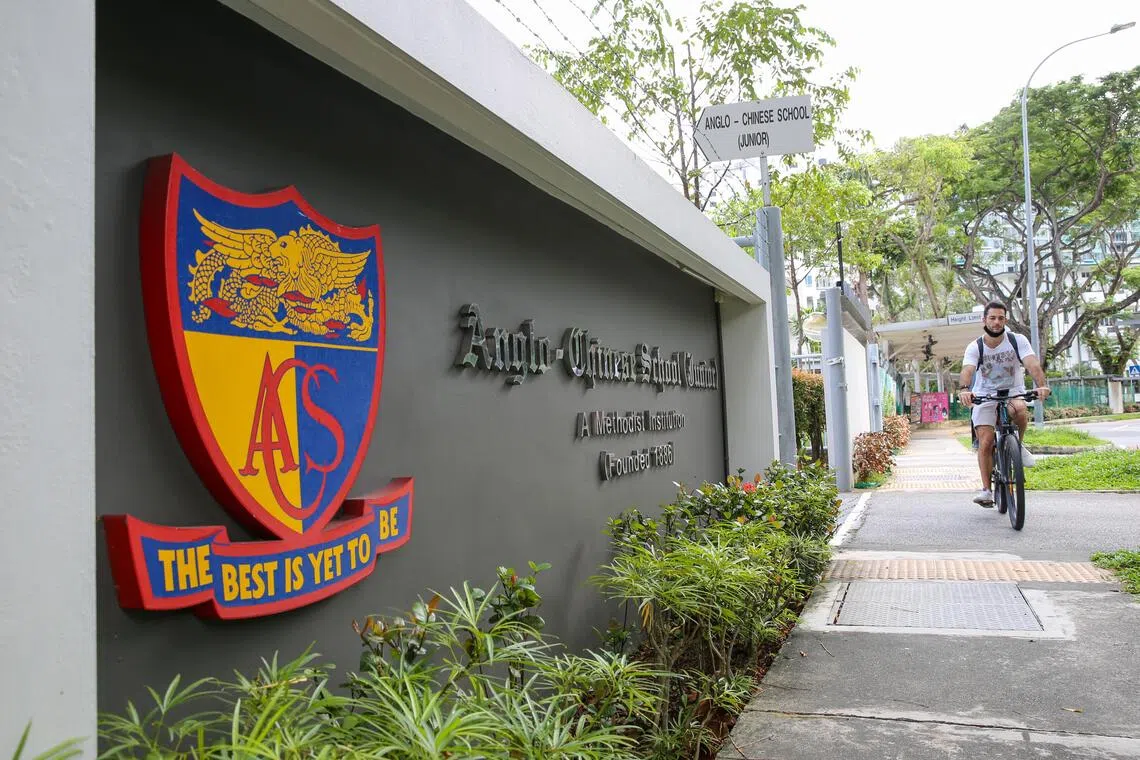
A new two-track system for 12 schools, including the popular Anglo-Chinese School (Junior) in Newton, will also be implemented.
Vanessa Paige Chelvan
Published Sep 10, 2026, 10:00 PM
Updated Sep 10, 2026, 10:00 PM
The 2027 Primary 1 registration changes reserve 60 Phase 2C places in popular schools for children without prior ties, promoting diversity.
A new two-track system splits Phase 2C places between children living within and beyond 2km, widening geographic access.
Experts say changes soften legacy ties and reduce property premium and transactional volunteering, urging parents to adopt broader school choice strategies amid increased competition.
SINGAPORE - The latest changes to the Primary 1 registration system could broaden the mix of pupils in some of Singapore’s most popular primary schools, academics said, by giving more children without prior ties a higher chance of admission.
They said the measures also send a signal to parents that priority admission to their alma mater is not a guarantee.
But they also noted that the changes may intensify competition across most phases , and high resale prices in public housing estates with popular schools may make the area less accessible to lower-income families.
The Ministry of Education (MOE) announced on Sept 10 that 60 places will be reserved in Phase 2C for children with no prior connections to the school, up from 40 currently. This will apply to schools with intakes of more than 180 pupils, from the 2027 P1 registration exercise.
A new two-track system for 12 schools , including the popular Nanyang Primary School in Bukit Timah and Anglo-Chinese School (Junior) in Newton, will also be implemented.
Under this scheme , half of the 60 reserved places in Phase 2C at these schools will be for children living within 2km of the school, and the other half for those living farther away.
Splitting Phase 2C places between children living within and beyond 2km could widen the geographical catchment of these schools, said Vincent Chua, an associate professor of sociology and anthropology from the National University of Singapore.
This could also weaken the link between living close to a popular school and having a better chance of getting in, he added.
Chua said the changes could promote social mixing by widening access to families who have no prior connection to a school.
The new two-track system for the 12 selected schools is particularly significant, he said. These schools are located in neighbourhoods where public housing makes up less than 40 per cent of homes within 2km of them.
This proportion is significantly lower than the national average in Singapore, where about four in five of the resident population live in public housing. So far, only these 12 schools are located in such neighbourhoods, MOE said.
Chua added that the latest changes will force parents to recalibrate their long-term strategies and expectations. This is because buying or renting an expensive property adjacent to a brand-name school will no longer guarantee top priority on the ballot.
In addition, putting a squeeze on the earlier Phase 2B stage reduces the incentive for parents to engage in volunteer work purely to secure admission to a school, said Chua.
Jacqueline Ho, an assistant professor from SMU’s department of sociology, said the changes could send a stronger signal to alumni that admission to their former school is not guaranteed, although the reduction of places for such affiliation is “relatively small”.
There is now a higher “barrier to entry” for their alma mater , she said, adding that there may be some pushback from alumni.
“It gets people used to this idea that alumni shouldn’t be entitled to this privilege and other people should also have an opportunity to enter schools,” she said. “This could potentially set us up for bolder changes in the longer term.”
This means that alumni and parent volunteers will face higher balloting risks, with fewer spots left for Phases 2A and 2B, said Chua. And in Phase 2C, the changes open the applicant pool to families from a much broader geographic region.
“This inevitably increases the volume of applicants competing on the same ballot, intensifying balloting pressure in popular schools. But crucially, it also levels the playing field, giving families living further away a genuinely equal shot at admission,” he added.
The two-track system could further broaden the pool of applicants at the 12 schools, Ho said.
For example, a child living in Toa Payoh, for whom a popular school such as Nanyang Primary School in Bukit Timah was out of bounds because of distance, would now stand a better chance of securing a place set aside for children living beyond 2km.
A child living in Toa Payoh, for whom a popular school such as Nanyang Primary School in Bukit Timah was out of bounds because of distance, would now stand a better chance of securing a place set aside for children living beyond 2km. PHOTO: ST FILE
A child living in Toa Payoh, for whom a popular school such as Nanyang Primary School in Bukit Timah was out of bounds because of distance, would now stand a better chance of securing a place set aside for children living beyond 2km.
However, Ho said the policy would need to be accompanied by measures to make these schools a realistic option for families who live further away.
Schools could consider improving transport options or facilitating carpooling, she said, suggesting that school bus services be subsidised so that transport costs do not become a barrier.
Ho also noted that the changes do not address popular schools in public housing estates where home prices have risen sharply.
For example, schools such as Nan Hua Primary School in Clementi may be surrounded by public housing, she said, but these flats can command high resale prices, potentially making the area less accessible to lower-income families.
Chua said the latest changes are a step towards broadening access and “focus on softening the dominance of legacy ties”, but do not fundamentally overhaul the P1 registration system.
“While school heritage is valuable and should be celebrated through alumni associations and events, it cannot be allowed to act as an exclusive gatekeeper that chokes out public access to public educational infrastructure.”
Ganesh Kurup, 43, a father of two boys aged six and four, said he and his wife were initially considering Radin Mas Primary School for their elder son entering Primary 1 in 2027.
The school is a popular choice in the Bukit Merah area where they live, and they realised upon checking its balloting history that it is usually heavily oversubscribed.
Though they live within 1km to 2km from the school, they were not optimistic about their chances in Phase 2C. They decided to apply to Cantonment Primary instead.
“At Radin Mas, many parents volunteer but they are not guaranteed a place in the school. So we decided to go for a closer option, where my son can walk to school,” said Kurup, a commercial manager in the marine sector.
Despite the lates t Primary 1 registration changes, which would increase spots in Radin Mas from 40 to 60 in Phase 2C, Kurup said he is not tempted to enrol his younger son there.
He would rather secure a place for the boy in his older brother’s school through Phase 1.
“I will not take that chance and put him in a different school, because for logistics it doesn’t make sense. I would rather they both attend the same school,” he said.
Elisha Tushara is a correspondent at The Straits Times, specialising in Singapore’s education landscape.
Vanessa Paige Chelvan is a correspondent at The Straits Times. She writes about all things transport and pens the occasional commentary.
Shermaine Ang is a journalist at The Straits Times, covering social issues in Singapore.
Primary 1 registration
Education and schools
包括位于牛顿的颇受欢迎的英华中学(小学部)在内的 12 所学校也将实行新的双轨制教学体系。
凡妮莎·佩奇·切尔万
发布于2026年9月10日晚上10:00
更新于2026年9月10日晚上10:00
2027 年小学一年级入学登记改革将在热门学校预留 60 个第二阶段 C 类名额,供没有先前关系的儿童就读,以促进多元化。
新的双轨制将 2C 阶段名额分配给居住在 2 公里以内和 2 公里以外的儿童,扩大了地理覆盖范围。
专家表示,这些变化削弱了传统联系,降低了房产溢价和交易性志愿服务,促使家长在日益激烈的竞争中采取更广泛的择校策略。
新加坡——学者们表示,小学一年级注册制度的最新变化可能会扩大新加坡一些最受欢迎的小学的学生构成,让更多没有先前关系的孩子有更高的入学机会。
他们表示,这些措施也向家长们发出一个信号,即优先录取到他们的母校并不能保证他们的孩子一定能被录取。
但他们也指出,这些变化可能会加剧大多数阶段的竞争,而且拥有热门学校的公共住房区的高转售价格可能会使低收入家庭更难负担得起该地区。
教育部于9月10日宣布,从2027年小学一年级入学登记开始,第二阶段C期将为与学校没有先前联系的儿童预留60个名额,高于目前的40个。这项政策将适用于招生人数超过180人的学校。
包括武吉知马的南洋小学和牛顿的英华小学(初级部)在内的 12 所学校也将实行新的双轨制。
根据这项计划,这些学校 2C 期预留的 60 个名额中,一半将分配给居住在学校 2 公里范围内的儿童,另一半将分配给居住在更远地方的儿童。
新加坡国立大学社会学和人类学副教授蔡文森表示,将 2C 阶段的学位分配给居住在 2 公里范围内和范围外的儿童,可以扩大这些学校的地理招生范围。
他还补充说,这可能会削弱居住在热门学校附近与更有可能被录取之间的联系。
蔡先生表示,这些改变可以促进社会融合,让以前与学校没有任何联系的家庭也能有机会入学。
他表示,为这12所选定学校设立的新的双轨制教学体系意义尤为重大。这些学校位于公共住房占比不到40%的社区,这些社区距离学校仅2公里。
这一比例远低于新加坡的全国平均水平,新加坡约有五分之四的居民居住在公共组屋中。教育部表示,目前只有这12所学校位于此类社区。
蔡女士补充说,最新的变化将迫使家长们重新调整他们的长期策略和预期。这是因为购买或租赁毗邻名校的昂贵房产不再能保证在选票上获得优先权。
蔡先生表示,此外,对更早的 2B 阶段施加压力,会降低家长为了确保孩子入学而参与志愿工作的积极性。
新加坡管理大学社会学系助理教授何嘉琳表示,这些变化可能会向校友发出更强烈的信号,即他们无法保证被母校录取,尽管此类关系名额的减少“相对较小”。
她表示,现在他们重返母校的“门槛”更高了,并补充说,这可能会遭到一些校友的抵制。
她说:“这能让人们逐渐接受这样一个观念:校友不应该享有这种特权,其他人也应该有机会进入学校。从长远来看,这或许能为我们带来更大胆的变革。”
蔡教授表示,这意味着校友和家长志愿者将面临更高的投票风险,因为第二阶段A和B的剩余名额会减少。而在第二阶段C,这些变化将申请人范围扩大到更广阔的地理区域。
“这必然会增加同一张选票上的申请人数,加剧热门学校的选票压力。但至关重要的是,这也创造了一个公平的竞争环境,让居住较远的家庭拥有真正平等的入学机会,”他补充道。
何先生表示,双轨制可以进一步扩大这12所学校的申请者范围。
例如,住在 Toa Payoh 的孩子,由于距离太远,无法就读像 Bukit Timah 的 Nanyang 小学这样的热门学校,现在将有更大的机会获得为居住在 2 公里以外的孩子预留的学位。
住在Toa Payoh的孩子,由于距离太远,原本无法就读像武吉知马的南洋小学这样的热门学校,现在更有可能获得为居住在2公里以外儿童预留的学位。(图片:海峡时报档案)
住在 Toa Payoh 的孩子,由于距离太远,原本无法就读像 Bukit Timah 的 Nanyang 小学这样的热门学校,现在更有可能获得为居住在 2 公里以外的孩子预留的学位。
然而,何先生表示,这项政策需要辅以相应的措施,才能使这些学校成为居住较远家庭的现实选择。
她表示,学校可以考虑改善交通选择或促进拼车,并建议对校车服务进行补贴,以免交通费用成为障碍。
何先生还指出,这些改革措施并没有解决公共屋邨内热门学校的问题,而这些地区的房价已经大幅上涨。
她举例说,像金文泰的南华小学这样的学校可能被公共组屋包围,但这些组屋的转售价格可能很高,这可能会使低收入家庭更难负担得起该地区。
蔡先生表示,最新的改革是朝着扩大准入范围和“着重削弱传统关系的支配地位”迈出的一步,但并没有从根本上改革P1注册制度。
“虽然学校的传统很有价值,应该通过校友会和各种活动来庆祝,但不能允许它成为阻碍公众获取公共教育基础设施的专属守门人。”
43 岁的 Ganesh Kurup 是两个男孩的父亲,分别六岁和四岁。他说,他和妻子最初考虑让他们的大儿子在 2027 年进入小学一年级,就读拉丁马斯小学。
这所学校在他们居住的武吉美拉地区很受欢迎,他们在查看学校的抽签历史后发现,这所学校通常都非常抢手。
虽然他们住在离学校1到2公里远的地方,但他们对进入第二阶段C组并不乐观。他们决定转而申请坎顿门特小学。
“在拉丁马斯学校,很多家长都做志愿者,但他们并不能保证孩子一定能入学。所以我们决定选择离家更近的学校,这样我儿子就可以步行上学了。” 库鲁普说道,他是一名海洋行业的商务经理。
尽管小学一年级注册的最新变化将使拉丁马斯小学 2C 阶段的入学名额从 40 个增加到 60 个,但库鲁普表示他并没有被吸引让他的小儿子在那里就读。
他宁愿通过第一阶段的入学计划,让儿子在他哥哥的学校里获得一个名额。
“我不会冒这个险把他送到另一所学校,因为从后勤角度来看,这样做不合理。我宁愿他们俩都上同一所学校,”他说。
Elisha Tushara 是《海峡时报》的记者,专门报道新加坡的教育领域。
Vanessa Paige Chelvan是《海峡时报》的记者。她撰写有关交通运输方面的文章,偶尔也撰写评论文章。
Shermaine Ang是《海峡时报》的记者,负责报道新加坡的社会问题。
小学一年级注册
教育和学校