Letters Of Last Resort Are Post-Apocalyptic Orders for UK Vanguard Sub Crews最后通牒是末日后英国先锋潜艇艇员的命令
The Prime Minister writes hand-penned orders to Royal Navy ballistic missile submarine captains explaining what to do following a sneak nuclear attack that wipes out the United Kingdom government.
Updated Jul 3, 2020 4:09 AM EDT
The idea that the UK’s entire command and control apparatus, and even the country as a whole, could be wiped off the face of the earth in a single nuclear barrage is chilling. Yet it is this possibility that prompted a dark and sobering tradition among Prime Ministers following the advent of the UK’s “second strike” nuclear deterrent —their nuclear ballistic missile submarines.
As soon as a new Prime Minister takes office, they receive highly classified briefings regarding the country’s nuclear weapons capabilities—specifically on the massive destruction that a single Vanguard class nuclear ballistic missile submarine and its 16 Trident II D5 missiles can convey. They also hear about the immense amounts death the UK’s potential nuclear armed adversaries can deliver on a moment’s notice.
Afterwards, and in conjunction with their top military advisor , the Prime Minister pens four identical letters in their own hand writing outlining instructions on what to do if a nuclear exchange has occurred and the British government, including the Prime Minister and a designated second person, has been killed or incapacitated. Under the worst of circumstances, the Letter of Last Resort would stand as the last act of Her Majesty’s Government.
Once the letters are written, they are transferred to the four Vanguard class nuclear ballistic missile submarines that makeup the UK’s nuclear deterrent. Onboard, they are stored inside double nested safes and will remain there until the Prime Minister decides to change the orders or their reign ends. After which time they will be destroyed in sealed condition so that nobody knows what the orders were.
During the time following a perceived attack, a series of progressive checks are made by submarine crews leading up to the captain opening the letter. These include trying to listen for radio transmissions from various levels of Royal Navy and Ministry of Defense command using multiple methods, and most famous of all, listening for new radio broadcasts by BBC Radio channel four, and specifically new episodes of BBC Today. If all else fails, following a certain predetermined period of time, rumored to be a matter of a few days, the skipper of the Vanguard class submarine will move toward extracting the letter and executing its blind instructions.
Daniel Martyn Commanding Officer of HMS Vigilant next to a safe that contains the Prime Minister’s last resort instructions, on board Vanguard class submarine HMS Vigilant (AP photo):
There are a handful of known instructions the Prime Minister can choose from when penning their Letters of Last Resort, and a combination of them can also be stated. These commands include retaliate, don’t retaliate, use your own judgement, put yourself under the command of the US Navy if it still exists, or go to the same in Australia. Clearly the secrecy surrounding the letters is key as without knowledge of what the fail-safe second-strike commands are, the nuclear deterrent remains credible.
If a Prime Minister’s command is to not retaliate, it may be because they have gamed out that if the letter is opened, the nuclear deterrent has already failed. Thus raining down more destruction will only result in more lives lost and lower chances that Earth can recover from the heavy radiation, fallout and nuclear winter that may follow.
Obviously under most situations commands to launch would be delivered via an emergency action message, that can even be conveyed via America’s VLF communications capabilities. The Prime Minister would have just minutes to order a retaliatory strike through established channels before the enemy’s warheads detonated over London and other population centers, as well as key government and military installations around the UK. In a Daily Mail expose , Peter Hennessy and Richard Knight described the room where this order would be received and pushed out to the Vanguard class submarine on patrol:
“Were the order to fire to be given from a still-functioning government, it would come to CTF 345, a bunker known as ‘The Hole’ at the Northwood facility in Middlesex. There, inside a perimeter of intense security, a small group of Naval officers sit waiting for that unlikely communication. We went to CTF 345, the first journalists ever to visit, to meet those men. They are, like their colleagues in Vanguard, quietly efficient, businesslike and matter-of-fact.
They explained that the heavily encrypted message arrives on a computer from wherever the Prime Minister had issued it — which would most probably be the Government Emergency Room in a bunker deep beneath the MoD in Whitehall. The officers then collect codes from two safes attached to the far wall of the ops room. Those safes are monitored constantly, via CCTV, by Royal Marines.
If anyone approaches them who is not properly authorised to do so, the Marines will storm the room with weapons ready. The officers of CTF 345 showed us how they would, in pairs, authenticate the message and, finally, put it onto the transmission system for communication to the submarine on patrol, together with the encrypted coordinates of the designated target.”
Alternatively, if a surprise strike wiped out the UK’s ability to communicate with their Trident missile equipped boats, one of which is on patrol in the Atlantic at all times, the Letter of Last Resort can work as a sort of automated fail-safe response that ensures the second strike capability is activated as a means of vengeance.
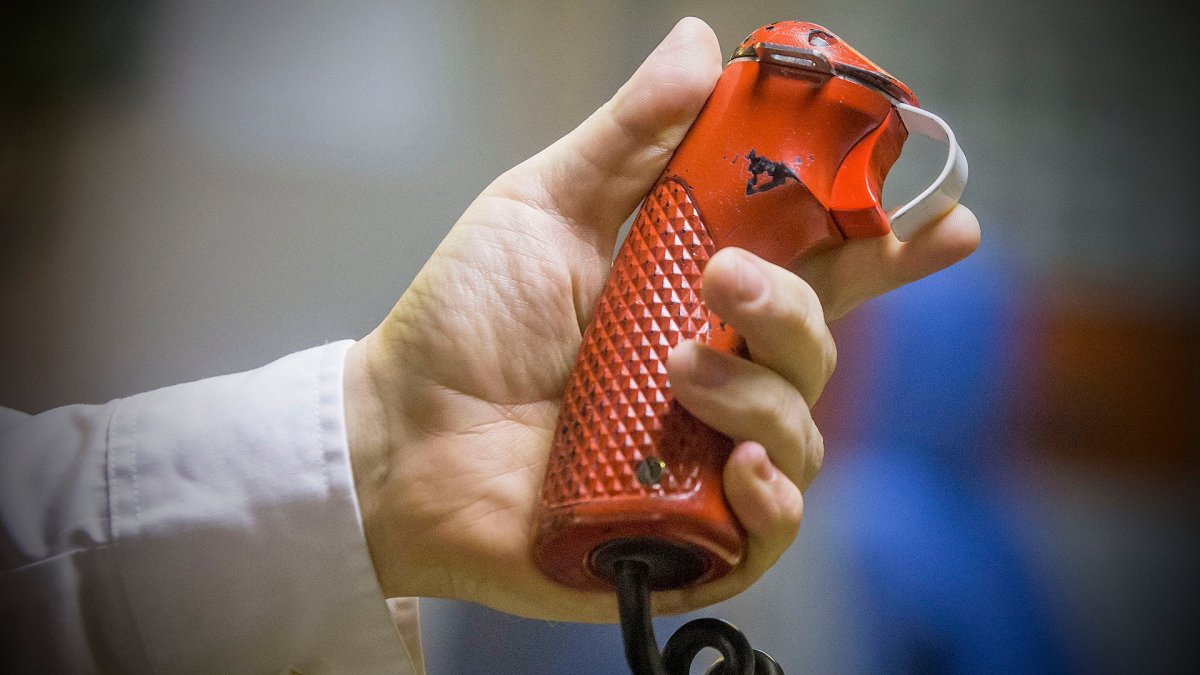
The trigger that fires D5 Trident SLBMs aboard a Vanguard class SSBN. It is made out of the grip of a Colt 45 (AP photo):
Some cite the Letter of Last Resort system as flawed, not just over the fact that a person who is probably dead is dictating the fate of millions of lives without knowing the exact details of the situation, but if submarine commander is ordered to strike, how do they know exactly who to strike? Not just that, but it seems that glitches in the system are possible, especially considering that an already isolated submarine’s ability to gauge who is left alive in Britain, and within the governmental command authority, in a relatively short period of time no less, is questionable.
Letters of Last Resort are not deployed aboard America’s nuclear ballistic missile submarines, but the US, with it large landmass, extensive command and control infrastructure, and nuclear triad is more survivable to a sudden nuclear attack than the UK. Only the President or Vice President can order nuclear weapons release, and that decision has to be made either very quickly once an incoming barrage is detected, or the hope is that the President or Vice President can survive the strike, along with Strategic Command’s flying outposts, in order to relay commands to execute a retaliatory strike.
For more great information on this dark but fascinating topic, listen to this BBC special “The Humon Button,” it is well worth your time.
Contact the author Tyler@thedrive.com
Comments couldn’t be loaded. Please refresh the page.
更新于美国东部时间2020年7月3日凌晨4:09
英国整个指挥控制系统乃至整个国家都可能在一次核打击中从地球上彻底消失,这种想法令人不寒而栗。然而,正是这种可能性,促使英国首相在英国拥有“二次打击”核威慑力量——核弹道导弹潜艇——之后,形成了一种令人不安的传统。
新首相一上任,就会收到高度机密的简报,内容涉及英国的核武器能力——特别是单艘“先锋”级核弹道导弹潜艇及其搭载的16枚“三叉戟II D5”型导弹所能造成的巨大破坏。他们还会了解到,英国潜在的核武器对手能够在瞬间造成多么巨大的伤亡。
随后,首相与首席军事顾问共同亲笔撰写了四封内容相同的信件,概述了如果发生核战争,且包括首相本人和一名指定第二人在内的英国政府成员全部阵亡或丧失行动能力时应采取的措施。在最坏的情况下,这封“最后手段信函”将成为女王陛下政府的最后行动。
信件写好后,会被送往构成英国核威慑力量的四艘先锋级核弹道导弹潜艇。在潜艇上,这些信件会被存放在双层嵌套的保险箱中,直到首相决定更改命令或其任期结束。之后,这些信件将被密封销毁,以确保无人知晓其内容。
在感知到袭击发生后的一段时间内,潜艇艇员会进行一系列循序渐进的检查,直至艇长打开信件。这些检查包括尝试使用多种方法监听来自皇家海军和国防部各级指挥部的无线电通讯,其中最著名的当属监听BBC第四广播频道的新节目,特别是BBC《今日》节目的最新剧集。如果所有方法都失败了,在一段预定的时间(据传是几天)之后,先锋级潜艇的艇长将着手取出信件并执行其中的指令。
“警戒”号潜艇指挥官丹尼尔·马丁站在一个保险箱旁,保险箱里装着首相的最后手段指示。(美联社照片)
总理在撰写“最后手段信函”时,可以从少数几项已知的指令中选择,也可以组合使用。这些指令包括:进行报复、不进行报复、自行判断、如果美国海军仍然存在,则接受其指挥,或者采取与澳大利亚相同的措施。显然,这些信件的保密性至关重要,因为如果不了解这些万无一失的二次打击指令,核威慑力量就能保持可信度。
如果首相下令不进行报复,可能是因为他们已经推算出,一旦信件被打开,核威慑就已经失效。因此,施加更多破坏只会造成更多生命损失,并降低地球从随之而来的严重辐射、放射性尘埃和核冬天中恢复的可能性。
显然,在大多数情况下,发射指令会通过紧急行动信息传达,甚至可以通过美国的甚低频通信能力传递。首相只有几分钟时间通过既定渠道下令进行报复性打击,否则敌方弹头就会在伦敦和其他人口中心以及英国各地重要的政府和军事设施上空引爆。在《每日邮报》的一篇揭露性报道中,彼得·亨尼西和理查德·奈特描述了接收并向巡逻中的“先锋”级潜艇发出命令的房间:
“如果一个仍在运作的政府下达开火命令,命令会传到位于米德尔塞克斯郡诺斯伍德基地、被称为‘洞穴’的345特遣部队。在那里,在严密的安保措施下,一小群海军军官正等待着那不太可能发生的命令。我们是第一批到访345特遣部队的记者,去采访了这些军官。他们和他们在先锋部队的同事一样,行事低调高效、务实冷静、实事求是。”
他们解释说,这条高度加密的信息会从首相发出信息的地点——很可能是位于白厅国防部地下深处的政府紧急指挥中心——通过一台电脑发送到这里。之后,军官们会从作战室远处墙上的两个保险箱中获取密码。皇家海军陆战队通过闭路电视对这两个保险箱进行持续监控。
如果有人未经授权擅自接近他们,海军陆战队员将全副武装地冲进房间。第345特遣队的军官们向我们演示了他们如何两人一组验证信息的真实性,并最终将其连同指定目标的加密坐标一起输入传输系统,发送给巡逻潜艇。
或者,如果一次突袭摧毁了英国与其配备三叉戟导弹的舰艇(其中一艘始终在大西洋巡逻)的通信能力,那么《最后手段信函》可以作为一种自动故障安全响应,确保启动第二次打击能力以进行报复。
这是先锋级弹道导弹核潜艇上发射D5“三叉戟”潜射弹道导弹的扳机。它由柯尔特45手枪的握把制成(美联社照片):
有人指出“最后手段指令”系统存在缺陷,不仅因为一个可能已经去世的人在不了解具体情况的情况下决定着数百万人的命运,还因为如果潜艇指挥官接到攻击命令,他们如何才能准确知道攻击目标?不仅如此,该系统似乎还可能出现故障,尤其考虑到一艘已经与世隔绝的潜艇,要在相对较短的时间内准确判断英国境内以及政府指挥权范围内还有哪些人活着,这一点令人质疑。
“最后手段信函”并未部署在美国的核弹道导弹潜艇上,但美国拥有广袤的陆地、完善的指挥控制基础设施和核三位一体,因此比英国更能抵御突如其来的核攻击。只有总统或副总统才能下令使用核武器,而且这一决定必须在探测到来袭核弹头后迅速做出,否则就只能寄希望于总统或副总统以及战略司令部的空中哨兵能够幸存下来,以便传递指令执行报复性打击。
想要了解更多关于这个黑暗但引人入胜的话题的精彩信息,请收听BBC特别节目“人类按钮”,绝对值得一听。
联系作者:Tyler@thedrive.com
评论加载失败,请刷新页面。