Houthis capture Yemeni town of Mocha: Why it’s important胡塞武装占领也门城市摩卡:这为何重要
The Houthi seizure of Mocha threatens global trade routes, severs vital supply lines, and displaces thousands in Yemen.
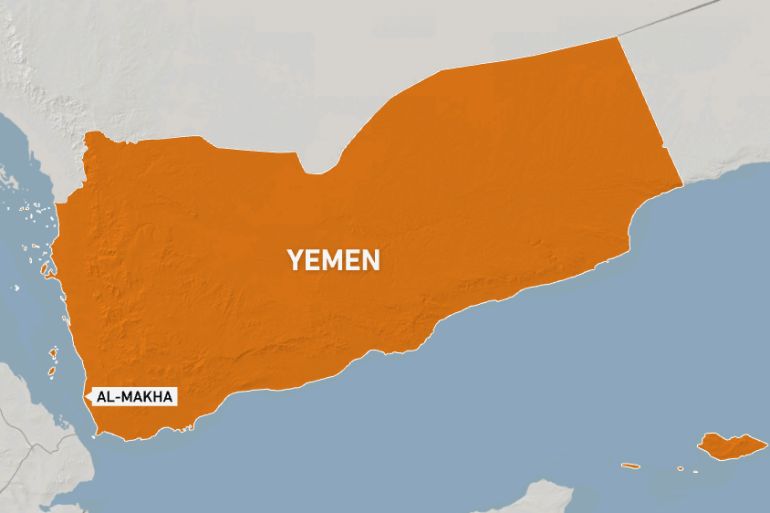
The seizure of the historic port city threatens global energy supplies, cuts vital supply lines, and triggers mass displacement.
Houthi forces grabbed control of the Yemeni port city of Mocha on Thursday, in a major offensive that comes amid escalated fighting between the Iran-aligned movement and Yemen’s Saudi-backed government.
Hundreds of women and children left Mocha, seeking shelter in the Saudi-backed government-controlled provinces of Lahij and Aden, as the growing violence also threatened to exacerbate an already devastating humanitarian crisis across the Taiz and al-Hodeidah provinces, where more than 20,000 people have been displaced due to clashes over the past two weeks.
Al Jazeera’s Yemeni affairs editor, Ahmed al-Shalafi, highlighted the immediate civilian toll of the military shift. “Areas south of Hodeidah and Mocha witnessed waves of displacement towards Dhubab and Aden,” he said.
The fall of Mocha is the culmination of a massive Houthi offensive that exposed vulnerabilities within government-aligned defences. According to al-Shalafi, the Houthis applied pressure from three distinct axes starting on September 3: western Taiz, southern Hodeidah, and Mocha city itself.
The combat was intense on the outskirts of Mocha.
A key factor that helped the Houthis take control of the city was the withdrawal of the National Resistance Forces from the fighting, said al-Shalafi and Al Jazeera correspondent Maha Ali, who was reporting from Taiz.
The National Resistance, led by Tareq Saleh — nephew of Yemen’s former President Ali Abdullah Saleh, who was killed by the Houthis after initially allying with them — has been a central part of the Saudi-backed alliance, and the internationally recognised government it leads.
The Houthis took control of Mocha “following the withdrawal of the National Resistance Forces from them at dawn today and their movement towards Mocha”, al-Shalafi said. He added that it is unclear whether the National Resistance Forces withdrew “to arrange their ranks, or for a military reason, or due to their inability to withstand the intense military formations”.
According to Al Jazeera’s Maha Ali, Saleh ordered forces to execute “a tactical withdrawal and repositioning in exchange for the Houthis’ advance in the al-Waziyah and Mawza fronts”, and instructed them to establish an alternative command centre.
The conflict is rapidly spilling over into maritime and distant terrestrial domains. Reuters quoted four unnamed sources as telling it that the Houthis “were launching attacks on the strategic Red Sea islands of Hanish”.
Simultaneously, Ali reported that “the military media of the National Resistance announced that the air aviation [of pro-government forces] targeted Houthi positions in Al-Tuhayta, Al-Salif, and Kamaran Island in Hodeidah governorate, while the Houthis launched two ballistic missiles towards the strategic Zuqar Island”.
Clashes also intensified inland. In Marib, “warplanes targeted Houthi reinforcements coming from Sanaa in Fardhat Nihm and others heading to north and south of Marib”, Ali reported.
Mocha’s geography makes its capture a global concern. The city sits approximately 75km (47 miles) north of the Bab al-Mandeb Strait, which connects the Red Sea to the Gulf of Aden.
Known as the Gate of Tears , this narrow passage is a critical artery for crude oil and fuel travelling from the Gulf to the Mediterranean via the Suez Canal, as well as for Asian commodities and Russian oil.
Al Jazeera’s Yousef Mawry explained that controlling Mocha could give the Houthis a “stranglehold along the Bab al-Mandeb”.
Furthermore, it severs critical anti-Houthi supply lines, including “the road linking Mocha with Taiz” running south from Mocha, and supply lines through Mocha’s port.
“This is a turning point right now in the war,” defence policy analyst Wolfgang Pusztai told Al Jazeera. “This might lead to a breakdown of the government forces in the southern part of Yemen.”
“The port of Mocha was the last harbour fully under control of the internationally recognised government,” Pusztai said.
The international community is reacting with alarm.
A spokesperson for the United Kingdom’s Foreign Commonwealth and Development Office declared that “the Houthis bear full responsibility for this crisis”, and urged them to “cease their attacks and escalation immediately”.
Long before it became the focal point of a geopolitical crisis, Mocha was the Arabian Peninsula’s premier commercial hub and the birthplace of the global coffee trade. Mocha coffee gets its name from the city.
Mentioned in ancient Himyarite texts as “Makhn”, the city was first seized by Abyssinians in 517 AD before they were expelled by the Himyarite King Dhu Nuwas.
An ancient mosque dominates the landscape in Mocha, Yemen [Eric Laffourge/Gamma-Rapho via Getty Images]
The Ottoman Empire overtook the city in 1536-1538 AD, transforming it into a military base to launch raids against the Portuguese.
Ironically, it was the Portuguese who became the first Europeans to taste Yemeni coffee when the Sheikh of Mocha hosted them and offered a “black drink that refreshes the body and relaxes the mind”.
According to historians, the Sufi scholar Ali bin Omar al-Shadhili first brought coffee to Mocha from Abyssinia.
The Ottomans initiated the first export operations through the port in 1536, sending beans via the Red Sea to Suez and Alexandria, where they were sold to Europeans. The Dutch secured their first commercial coffee deal in 1628, eventually smuggling live seeds to cultivate in Java and the Americas.
Mocha, Yemen is still a shipping hub for the country’s coffee today [File: Courtesy of Port of Mocha]
Mocha’s golden age extended through the 17th and 18th centuries. However, the city’s prominence faded in the late 19th century due to conflicts between the Ottomans and the British, and the rapid rise of rival ports in Aden and Hodeidah.
This economic decline devastated the local demographics: Mocha’s population plummeted from approximately 20,000 in the 19th century to just 1,000 in the 1930s, before a slow recovery brought the numbers back up to over 10,000 by 2004.
占领这座历史悠久的港口城市威胁到全球能源供应,切断了重要的供应线路,并引发了大规模人口流离失所。
周四,胡塞武装夺取了也门港口城市摩卡的控制权。此次大规模攻势正值伊朗支持的胡塞武装与沙特支持的也门政府之间的战斗升级之际。
数百名妇女和儿童离开摩卡,前往沙特支持的政府控制的拉赫季省和亚丁省寻求庇护。与此同时,不断升级的暴力事件也威胁到塔伊兹省和荷台达省本已严重的人道主义危机,过去两周的冲突已导致超过 2 万人流离失所。
半岛电视台也门事务编辑艾哈迈德·沙拉菲强调了军事行动转移对平民造成的直接伤害。他说:“荷台达和摩卡以南地区出现了一波又一波的流离失所者,涌向杜巴卜和亚丁。”
摩卡的陷落标志着胡塞武装大规模攻势的最终爆发,这场攻势暴露了政府军防线上的薄弱环节。据沙拉菲称,胡塞武装从9月3日起从三个不同的方向发起进攻:塔伊兹西部、荷台达南部以及摩卡市区。
摩卡郊外的战斗十分激烈。
沙拉菲和半岛电视台驻塔伊兹记者玛哈·阿里表示,胡塞武装控制该市的一个关键因素是国民抵抗部队从战斗中撤出。
由塔里克·萨利赫领导的全国抵抗运动(塔里克·萨利赫是也门前总统阿里·阿卜杜拉·萨利赫的侄子,阿里·阿卜杜拉·萨利赫最初与胡塞武装结盟,后被胡塞武装杀害)一直是沙特支持的联盟及其领导的国际公认政府的核心组成部分。
沙拉菲表示,胡塞武装“在今天黎明时分全国抵抗力量撤离摩卡并向摩卡方向推进后”控制了该城。他还补充说,目前尚不清楚全国抵抗力量撤退的原因“是为了重整旗鼓,还是出于军事考量,抑或是因为无力抵挡胡塞武装的密集兵力”。
据半岛电视台记者玛哈·阿里报道,萨利赫命令部队执行“战术撤退和重新部署,以换取胡塞武装在瓦齐亚和莫扎前线的推进”,并指示他们建立一个替代指挥中心。
冲突正迅速蔓延至海上和遥远的陆地领域。路透社援引四位匿名消息人士的话称,胡塞武装“正在对具有战略意义的红海岛屿哈尼什发动袭击”。
与此同时,阿里报道称,“全国抵抗运动的军事媒体宣布,(亲政府部队的)空军以胡塞武装在荷台达省的图海塔、萨利夫和卡马兰岛的阵地为目标,而胡塞武装则向具有战略意义的祖卡尔岛发射了两枚弹道导弹”。
内陆地区的冲突也愈演愈烈。阿里报告称,在马里卜,“战机在法尔达特尼赫姆袭击了从萨那方向赶来的胡塞武装增援部队,以及其他前往马里卜北部和南部的部队”。
摩卡的地理位置使其成为全球关注的焦点。这座城市位于曼德海峡以北约75公里(47英里)处,曼德海峡连接红海和亚丁湾。
这条被称为“泪之门”的狭窄通道,是原油和燃料从海湾经苏伊士运河运往地中海的重要动脉,也是亚洲商品和俄罗斯石油的重要通道。
半岛电视台记者优素福·马乌里解释说,控制摩卡可以让胡塞武装“扼住曼德海峡的咽喉”。
此外,它还切断了反胡塞武装的重要补给线,包括从摩卡向南延伸的“连接摩卡和塔伊兹的道路”,以及通过摩卡港的补给线。
“现在是战争的一个转折点,”国防政策分析师沃尔夫冈·普斯泰告诉半岛电视台。“这可能导致也门南部政府军的崩溃。”
“摩卡港是最后一个完全由国际公认的政府控制的港口,”普斯泰说。
国际社会对此感到震惊。
英国外交、联邦和发展事务部发言人宣称,“胡塞武装应对这场危机负全部责任”,并敦促他们“立即停止袭击和局势升级”。
早在成为地缘政治危机的焦点之前,摩卡就是阿拉伯半岛首屈一指的商业中心,也是全球咖啡贸易的发源地。摩卡咖啡的名字就来源于这座城市。
古希姆亚尔文献中称之为“马赫恩”,该城于公元 517 年首次被阿比西尼亚人占领,之后被希姆亚尔国王杜努瓦斯驱逐。
在也门摩卡,一座古老的清真寺雄踞一方。[Eric Laffourge/Gamma-Rapho via Getty Images]
奥斯曼帝国于公元 1536 年至 1538 年占领了这座城市,并将其改造成军事基地,对葡萄牙人发动袭击。
具有讽刺意味的是,葡萄牙人成为第一批品尝也门咖啡的欧洲人,当时摩卡酋长款待了他们,并提供了一种“能提神醒脑、放松身心的黑色饮料”。
据历史学家称,苏菲派学者阿里·本·奥马尔·沙迪利首先将咖啡从阿比西尼亚带到摩卡。
奥斯曼帝国于1536年通过该港口开始了首次出口业务,将咖啡豆经红海运往苏伊士和亚历山大港,在那里出售给欧洲人。荷兰人在1628年达成了第一笔商业咖啡交易,最终走私了咖啡种子,并在爪哇和美洲进行种植。
也门摩卡至今仍是该国咖啡的运输枢纽。[图片:由摩卡港提供]
摩卡的黄金时代延续到了17世纪和18世纪。然而,由于奥斯曼帝国和英国之间的冲突,以及亚丁和荷台达等竞争港口的迅速崛起,这座城市在19世纪后期逐渐衰落。
经济衰退对当地人口结构造成了毁灭性打击:摩卡的人口从 19 世纪的约 20,000 人骤降至 20 世纪 30 年代的仅 1,000 人,之后经过缓慢复苏,到 2004 年人口数量才回升至 10,000 多人。