Romanian court pauses presidential vote over fears of Russian meddling罗马尼亚法院因担心俄罗斯干预而暂停总统选举
Calin Georgescu, a NATO-skeptic, Putin-friendly candidate, was to be on the ballot in Sunday's presidential election.
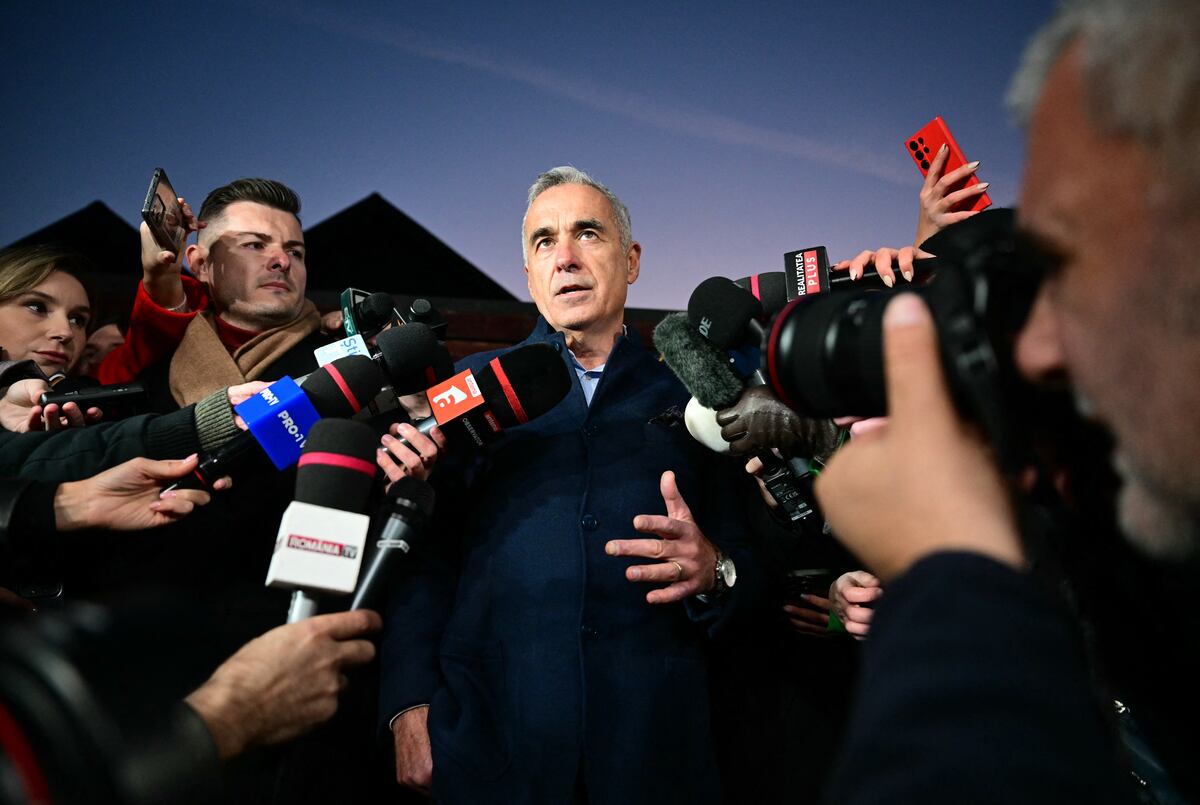
ROME — The potential election of a nationalist president in Romania who admires Vladimir Putin and threatened to cut off aid to Ukraine has been thwarted after a court scrapped a run-off vote on Sunday in which he was favorite.
Fears about NATO’s future in Romania have grown since Calin Georgescu, 62, defied polls to win a first round of voting on Nov. 24 after describing Putin as a “patriot” and opposing NATO’s missile defense set-up at Deveselu in the south of the country.
On Sunday Georgescu was due to face pro-European centrist candidate Elena Lusconi in a run-off for the presidency.
In Romania the president doubles as commander of the armed forces and has nominal control over foreign and security policy.
But on Friday, Romania’s constitutional court annulled the election and ordered the first round to be rerun after warnings of Russian meddling in the campaign.
The judges’ decision came after Romania’s top security council reported mid-week that the country had been targeted by “aggressive hybrid Russian attacks” during the first round of voting.
The council released reports suggesting social media algorithms had been manipulated to favor Georgescu’s campaign and that local influencers had been paid to back him, even though he claimed to have spent nothing on his campaign.
Additionally, scores of hacking attacks on election servers were the work of a state actor, the documents said.
That triggered a sharp response from the U.S. State Department which said, “Romania’s hard-earned progress anchoring itself in the Transatlantic community cannot be turned back by foreign actors seeking to shift Romania’s foreign policy away from its Western alliances.”
To ensure the “correctness and legality of the electoral process”, the constitutional court said on Friday, “the government will set a new date for the election of the President of Romania.”
A hitherto reliable NATO partner, Romania has a strategic position on Europe’s eastern flank with a long border with Ukraine and access to the Black Sea.
The country has donated a Patriot battery to Ukraine and hosts an air base at Kogălniceanu which is being turned into one of NATO’s largest and set to outgrow the U.S. base at Ramstein in Germany.
Romania also hosts a French-led NATO battle group, has ordered 32 F-35s and is home to a training hub for Ukrainian F-16 pilots.
Georgescu said this week he would halt support to Ukraine, including the pilot training and has said he has no interest in Ukraine’s defense against Russia, claiming he will seek to pursue Romania’s interests alone in the region.
Despite ringing alarm bells in Europe and the United States, one analyst said institutional safeguards would prevent Georgescu undermining NATO’s presence in Romania, even if he became president.
“Thanks to Romania’s constitution there is not much he can do,” said Iulian Chifu, a former adviser to the Romanian government on international security who now heads the Conflict Prevention and Early Warning Center think tank in Bucharest.
“The president does have a role in security, defense and foreign policy but he is dependent on the government, which controls the foreign ministry, interior ministry and intelligence service,” he said.
“The Supreme Defense Council is under the president but half of its members are appointed by the government and the other half by parliament, while the prime minister is vice president of the council,” he added. Parliamentary elections held last weekend saw mainstream, pro-NATO parties secure a majority.
Chifu said the president was also able to block parliament’s nominations for ambassadors, generals and judges, but only once. “At that point if parliament proposes the name a second time he cannot block it. If he does he can be impeached by a majority in parliament. Then there is a referendum,” he said.
“With a two-thirds vote in parliament, the president can also be accused of high treason and ousted then sent to trial,” Chifu added.
“The next president of Romania would not be able to reverse deals that have gone through parliament like the enlargement of the NATO base,” he said.
Sandu-Valentin Mateiu a Romanian defense commentator and former naval captain and military intelligence officer, said it was still unclear what Georgescu would try to do if elected president.
“He is a mystery. He has denied things he said in past interviews. He has called the missile defense system a disgrace then said he would reevaluate it. He has said Romania would fulfill its obligations to alliances but will demand more respect. It’s unclear what ‘respect’ means,” he said.
“It’s probable he won’t want to leave NATO or the European Union, but we are in uncharted territory,” he added.
Editor’s note: This story was updated to reflect new developments in Romania, including the constitutional court’s ruling to annul the presidential election process that was set to culminate in a run-off vote on Sunday.
Tom Kington is the Italy correspondent for Defense News.
罗马——一位崇拜弗拉基米尔·普京并威胁要切断对乌克兰援助的罗马尼亚民族主义总统候选人可能当选,但法院在周日取消了第二轮投票后,他的当选之路受阻。此前,他在第二轮投票中领先。
自 62 岁的卡林·乔治斯库 (Calin Georgescu) 在 11 月 24 日的首轮投票中获胜以来,人们对北约在罗马尼亚的未来越来越感到担忧。乔治斯库在投票中称普京为“爱国者”,并反对北约在罗马尼亚南部德韦塞卢 (Deveselu) 建立导弹防御系统。
周日,乔治斯库将与亲欧派中间候选人埃琳娜·卢斯科尼进行总统选举第二轮投票。
在罗马尼亚,总统兼任武装部队总司令,名义上控制着外交和安全政策。
但周五,罗马尼亚宪法法院宣布选举无效,并下令重新举行第一轮选举,此前有警告称俄罗斯干预了竞选活动。
法官们做出裁决之前,罗马尼亚最高安全委员会在本周中报告称,该国在第一轮投票期间遭到了“俄罗斯的侵略性混合攻击”。
委员会发布的报告显示,社交媒体算法被操纵以利于乔治斯库的竞选活动,并且当地有影响力的人收受贿赂支持他,尽管他声称自己在竞选活动中一分钱也没花。
此外,文件还指出,数十起针对选举服务器的黑客攻击是国家行为体所为。
这引发了美国国务院的强烈回应,国务院表示:“罗马尼亚为融入跨大西洋共同体而付出的艰辛努力,绝不能被试图使罗马尼亚外交政策背离其西方联盟的外国势力所逆转。”
宪法法院周五表示,为确保“选举过程的正确性和合法性”,“政府将确定罗马尼亚总统选举的新日期”。
罗马尼亚是北约一直以来可靠的伙伴,地处欧洲东翼,战略位置重要,与乌克兰接壤,并可通往黑海。
该国向乌克兰捐赠了一套爱国者导弹系统,并在科格尔尼恰努设有一个空军基地,该基地正在发展成为北约最大的基地之一,并将超越位于德国拉姆施泰因的美国基地。
罗马尼亚还驻扎着一个由法国领导的北约战斗群,订购了 32 架 F-35 战斗机,并且是乌克兰 F-16 飞行员的训练中心所在地。
乔治斯库本周表示,他将停止对乌克兰的支持,包括飞行员培训,并表示他对乌克兰抵御俄罗斯的防御毫无兴趣,声称他将在该地区单独追求罗马尼亚的利益。
尽管这在欧洲和美国敲响了警钟,但一位分析人士表示,即使乔治斯库当选总统,制度保障措施也能防止他破坏北约在罗马尼亚的存在。
“由于罗马尼亚宪法的限制,他能做的并不多,”尤利安·奇富说道。他曾是罗马尼亚政府的国际安全顾问,现在领导着位于布加勒斯特的冲突预防和预警中心智库。
他说:“总统在安全、国防和外交政策方面确实发挥着作用,但他依赖于政府,而政府控制着外交部、内政部和情报部门。”
他补充说:“最高国防委员会隶属于总统,但其成员一半由政府任命,另一半由议会任命,而总理则担任委员会副主席。” 上周末举行的议会选举中,主流的亲北约政党赢得了多数席位。
奇夫表示,总统也曾有机会阻止议会提名大使、将军和法官,但只有一次机会。“如果议会第二次提名,他就不能再阻止了。如果他再次阻止,议会多数议员可以弹劾他。之后将举行全民公投。”他说。
“只要议会三分之二的投票通过,总统也可以被指控犯有叛国罪,并被罢免,然后被送上法庭受审,”奇夫补充道。
他说:“罗马尼亚下一任总统无法推翻已经通过议会的协议,例如扩大北约基地。”
罗马尼亚国防评论员、前海军上校兼军事情报官员桑杜-瓦伦丁·马泰乌表示,如果乔治斯库当选总统,他会采取什么行动,目前还不清楚。
“他是个谜。他否认了自己过去在采访中说过的话。他曾称导弹防御系统是耻辱,之后又说要重新评估。他曾表示罗马尼亚会履行对盟国的义务,但会要求更多尊重。至于‘尊重’究竟是什么意思,却不得而知。”他说道。
“他可能不想离开北约或欧盟,但我们正处于未知领域,”他补充道。
编者按:本文已更新,以反映罗马尼亚的最新进展,包括宪法法院裁定取消原定于周日举行的总统选举决选。
汤姆·金顿是《防务新闻》驻意大利记者。