Australia narrows its frigate search down to German, Japanese designs澳大利亚将护卫舰的选购范围缩小到德国和日本的设计方案。
A final ship selection in the A$10 billion frigate program is expected in sometime in 2025.
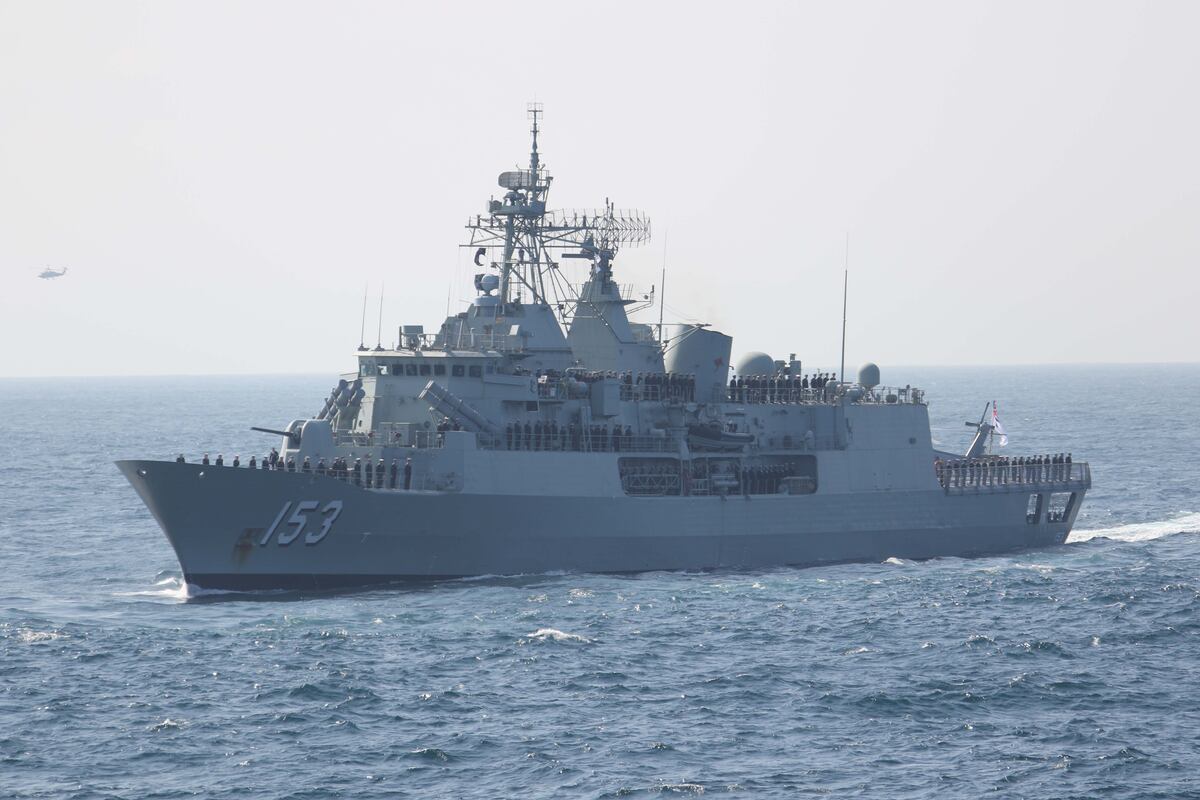
CHRISTCHURCH, New Zealand — The Australian government has shortlisted German and Japanese shipbuilders for Australia’s Sea 3000 frigate project, as Korean and Spanish contenders fell by the wayside.
Thyssenkrupp Marine Systems (TKMS) has offered the MEKO A-200 platform, while Mitsubishi Heavy Industries submitted its improved Mogami class for this estimated A$10 billion (US$6.4 billion) program.
A tender issued in May sought 11 general-purpose frigates “equipped for undersea warfare and local air defense in order to secure maritime trade routes and our northern approaches.” The first three warships will be built overseas, and the remainder in Western Australia.
Defence Minister Richard Marles confirmed in late November that three designs had been shortlisted. This is because TKMS has two MEKO variants: one a standard 3,700-ton A-200, and the other likely a customized 4,700-ton A-210 configuration boasting equipment more common to the Royal Australian Navy (RAN).
In Germany’s favor, the sea service’s current Anzac-class frigates were based on the older MEKO 200, which should ensure familiarity with the A-200′s newer, more modular design. As for Japan, while it is a novice at exporting advanced naval vessels, the government is enthusiastically backing a deal.
This graphic shows how Japan’s improved Mogami class and the German MEKO A-200 stack up against other Australian surface combatants. (Australian MOD)
Indeed, on Nov. 28 Japan’s Cabinet Office took the unusual step of publishing approval for a potential sale of 4,800-ton improved Mogami-class 06FFM frigates. Japan’s navy will adopt the first of these same improved warships in FY2028. They are larger and more heavily armed than 3,900-ton Mogami frigates currently under construction.
Japan rates its strategic partnership with Australia as second only to that with the United States. “Based on this policy, this joint development and production project will contribute to significantly improving interoperability and compatibility with Australia, strengthen the foundation for shipbuilding and maintenance in the Indo-Pacific region, and improve the future capabilities of Japan’s ships,” reads a statement of the Tokyo government.
However, important questions remain over combat systems, sensors and weapons. In a rush to introduce frigates to service, the RAN is foregoing usual installation requirements for Saab’s 9LV combat management system or CEA radars, for example, as used elsewhere in Australia’s fleet.
Minister for Defence Industry and Capability Delivery Pat Conroy acknowledged that just one of the three frigate options utilizes Saab’s 9LV, but insisted it is not problematic. “We’ve operated multiple combat management systems in the past. When I talk to the chief of navy, his focus is on getting more hulls in the water – more hulls with very exciting capability.”
By 2026, the RAN will possess just nine surface combatants. This coincides with a period of serious security threats as China flexes its muscles.
Australian National University’s Jennifer Parker told Defense News: “Most predict an increased period of risk in the late 2020s, and that’s where Australia has the capability gap.”
According to Marles, a final ship selection is expected in sometime in 2025. “What we’re seeking to do is to have the first of those general-purpose frigates actually in service in the 2020s,” he said.
Gordon Arthur is an Asia correspondent for Defense News. After a 20-year stint working in Hong Kong, he now resides in New Zealand. He has attended military exercises and defense exhibitions in about 20 countries around the Asia-Pacific region.
新西兰基督城——澳大利亚政府已将德国和日本造船厂列入澳大利亚“海洋3000”护卫舰项目的候选名单,而韩国和西班牙的竞争者则被淘汰出局。
蒂森克虏伯海事系统公司 (TKMS) 提供了 MEKO A-200 平台,而三菱重工则提交了其改进型的 Mogami 级,参与这项预计价值 100 亿澳元(64 亿美元)的项目。
五月份发布的一份招标书寻求建造11艘通用护卫舰,“这些护卫舰需配备水下作战和近海防空装备,以确保海上贸易航线和北部通道的安全”。前三艘军舰将在海外建造,其余的将在西澳大利亚建造。
国防部长理查德·马尔斯在11月下旬证实,已有三个设计方案入围。这是因为TKMS公司拥有两种MEKO型舰艇:一种是标准的3700吨级A-200,另一种可能是定制的4700吨级A-210,其配备的设备更常见于澳大利亚皇家海军(RAN)。
对德国有利的是,其海军现役的安扎克级护卫舰是以较老的MEKO 200型为基础建造的,这应该能确保他们熟悉A-200型新型模块化设计。至于日本,虽然它在出口先进海军舰艇方面经验尚浅,但日本政府正积极支持这项交易。
这张图表展示了日本改进型最上级战舰和德国MEKO A-200战舰与澳大利亚其他水面作战舰艇的性能对比。(澳大利亚国防部)
事实上,11月28日,日本内阁府罕见地宣布批准向国外出售4800吨级的改进型“最上”级06FFM护卫舰。日本海军将于2028财年接收首艘此类改进型战舰。与目前正在建造的3900吨级“最上”级护卫舰相比,这些改进型战舰更大,火力也更强大。
日本将与澳大利亚的战略伙伴关系视为仅次于与美国的战略伙伴关系。东京政府在一份声明中表示:“基于这一政策,该联合开发和生产项目将有助于显著提高与澳大利亚的互操作性和兼容性,加强印太地区造船和维护的基础,并提升日本舰艇的未来能力。”
然而,关于作战系统、传感器和武器方面仍存在一些重要问题。例如,为了尽快让护卫舰服役,澳大利亚皇家海军放弃了通常的安装要求,例如,澳大利亚海军其他舰艇使用的萨博9LV作战管理系统或CEA雷达。
国防工业与能力交付部长帕特·康罗伊承认,三种护卫舰方案中只有一种采用了萨博公司的9LV系统,但他坚称这并非问题。“我们过去曾使用过多种作战管理系统。我与海军司令沟通时,他关注的重点是让更多舰艇下水——更多具备卓越性能的舰艇。”
到2026年,澳大利亚皇家海军将仅拥有9艘水面作战舰艇。与此同时,中国正不断展示其军事实力,澳大利亚面临着严峻的安全威胁。
澳大利亚国立大学的詹妮弗·帕克告诉《防务新闻》:“大多数人预测,2020 年代后期风险将会增加,而这正是澳大利亚的能力差距所在。”
据马尔斯称,最终的舰艇选择预计将在 2025 年的某个时候进行。“我们的目标是让第一艘通用护卫舰在 2020 年代真正投入使用,”他说。
戈登·阿瑟是《防务新闻》的亚洲特派记者。在香港工作20年后,他现居新西兰。他曾到访亚太地区约20个国家,参加过军事演习和防务展览。