Setting The Record Straight On Why Fighter Jets Can’t All Simply Fly Away To Escape Storms澄清为什么战斗机不能全部飞走以躲避风暴
Outrage over F-22s left behind at Tyndall AFB as Michael hit and statements saying they should have all been flown away are divorced from reality.
Updated Dec 1, 2019 7:12 AM EST
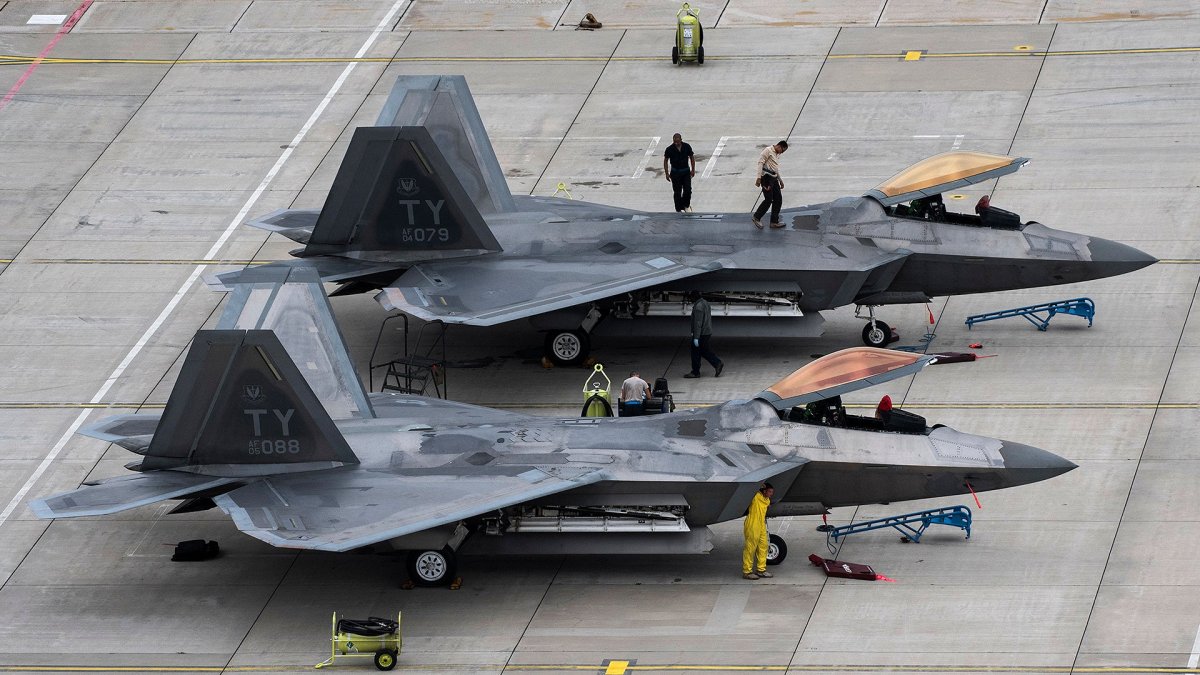
We have been leading the coverage on the state of aircraft left behind after Hurricane Michael made a direct strike on the highly important Tyndall Air Force Base. We have posted pictures showing QF-16s, Mu-2s, and yes, F-22s, sitting among the rubble inside badly damaged hangars at the base. The USAF has stated that aircraft were left behind, with unofficial figures being reported that range from three to 18 of the precious super fighters riding out the storm on site. Even though I repeatedly explained why not all aircraft can fly off in advance of a storm’s arrival, I have been inundated with tweets, Facebook messages, emails, and comments ranging from people demanding to know how this could have happened to being outraged that the commanders at the base didn’t see that all of the planes flew out and that they should face stiff punishments for their actions. Some even claimed they should have been flown out on transport planes. These are naive and in some cases absurd statements that are totally divorced from the reality of tactical jet operations. Here’s why.
At modern fighter is not a Honda Accord. You don’t just hop in it and drive it around for months until you finally have to take it for a one-hour oil change when the light comes on. If anything, they are far more akin to high-end sports cars that require a lot of expensive TLC to keep operating. The F-22, in particular, is more analogous to an exotic supercar or even a high-end race car than anything else. It requires dozens of hours of maintenance for every single flight hour and deep maintenance can take days or even many weeks to accomplish, depending on what is needed to be done and availability of spare parts, which can be scarce.
An F119 engine is replaced on an F-22. , USAF
On top of some aircraft being sidelined for extended periods of time for repairs, others have to go through periodic planned servicing, discreet component inspections, and invasive phase inspections, the latter of which sees the aircraft largely disassembled before being arduously put back together and flight tested before returning it to the active flight line after all its issues, or ‘gripes,’ are worked out. In other words, many of these operations are not ones you can simply stop and reverse to rapidly generate the aircraft into a flying condition in a matter of a day or two—in some cases, not even close. There are always a number of aircraft going through these planned maintenance intervals, that way a squadron’s inventory can remain fairly predictable given the demands being placed upon it.
So it is not uncommon to have at least a handful of a unit’s aircraft incapable of flying due to foreseen maintenance, let alone unforeseen issues. That number can actually grow higher based on the type, the age of the aircraft, and the general readiness status of the aircraft’s community overall.
An airman services an F-22. , USAF
Take the 142nd Fighter Wing in Portland, Oregon—one of the best F-15 operators on the planet. They had a snap readiness drill earlier in the year that challenged them to get every jet airborne they could within 24 hours. This resulted in 13 aircraft taking to the skies, including the unit’s alert aircraft, which was an awesome achievement they should be proud of. The wing has 21 aircraft assigned to it in total.
As I mentioned earlier, some military aircraft communities are better able to cope with a sudden demand to generate flyable aircraft than others. If you have been around a USMC or Navy Hornet squadron that is in a low-readiness period you will see a lot of aircraft missing parts and sitting zombie-like on the flight line or in the unit’s maintenance hangars. Cannibalization of airframes for parts, and in some cases not even to benefit the same unit’s aircraft, is a very common reality. You can read about this first hand in this past feature of ours .
This sorry state of affairs is slowly improving for the Navy and Marine Corps, but it still has a long way to go before reaching traditional readiness targets, let alone a new and arguably fantastical one Defense Secretary Mattis just set for them . The USAF’s 5th generation F-22 and F-35 fleets also suffer from similar parts shortages and logistical logjams. An aircraft that had critical components taken off of it to help keep another aircraft flying is not that likely to be able to wing it out of an air base in a matter of a couple days as a storm moves into the region.
The F-22 fleet, in particular, sits at the lowest readiness rate across the USAF fast-jet inventory. There are a number of contributing factors to this, including the type’s short production run that pretty much everyone regrets in hindsight . But as of 2017, the F-22 community as a whole struggled to meet a 50 percent mission capable rate. Their legacy fighter predecessors fared better at generally above 70 percent.
So no, the commanders at Tyndall AFB—the home of F-22 training and a base with 55 of the stealth fighters on hand, as well as the home to many other aircraft—can’t simply click their flight boots together and magically get 55 F-22s in the air. And the very idea that those that lead elite fighter units don’t care enough about preserving the jets they have under their purview is simply outrageous. Trust me, anyone at a command level in the USAF fighter community cares plenty about their aircraft. If you think otherwise then you haven’t spent much time around these types of individuals or the culture they operate in.
But you know what commanders generally care more about than their jets? The lives of the humans under their command. This is not some abstract challenge to see how many jets can fly in a matter of few days. The crew chiefs, airframe technicians, pilots, egress shop people, accountants, operations folks, and every one of the hundreds of other people that make up a squadron all have lives outside of their jobs and families to protect.
It seems as if some think that somehow a catastrophic storm doesn’t impact those who work in the air combat business. They have to evacuate just like any other person in a community. They can’t be sitting around tinkering on F-22s as a category four storm crashes into their hangar. They also have to support the crazy logistical operation of evacuating the aircraft that can fly, which is no easy feat.
There is only so much capacity in a very finite amount of time that these individuals can provide during a hurricane evacuation scenario. At a certain point, they too have to rush to safety with their loved ones. And for very good reason. 100 percent of the housing on Tyndall and infrastructure to support daily life was destroyed by Michael. It’s all gone, and yet nobody died. You can view highly detailed imagery of the base here to see what it looks like in Michael’s aftermath.
Just some of the devastation seen in high-resolution NOAA aerial imagery of the base. , NOAA
As for many of the childish notions that many have thrown around over the last 24 hours with great authority—like flying aircraft away on transports or wheeling them out on trucks—they don’t help inform the public of the realities of these types of evacuation operations. No, these planes aren’t just Lego sets that you can take apart and pour into a C-5. Removing wings on an F-22? That is a massive undertaking, let alone getting a C-5 in and loading it up to fly away to someplace. Once again, limited capacity in a limited timespan, and that is a long-lead type of project.
Throwing jets on flatbed trucks? People don’t realize how large of a flying machine a Raptor is. They are roughly 44 feet wide, 62 feet long, and weigh over 43,000lbs. They are not something you just throw on pop’s flatbed and skidaddle out of dodge. Nor are they made to be transported that way in the first place. And to where? You are talking about a highly sensitive asset packed with classified material. Its skin treatment alone presents a national secret risk. These aircraft are supposed to sit in last minute hurricane traffic heading somewhere as they hog up multiple lanes? The whole notion is ridiculous. And if they can’t seek refuge in time, you have a flying machine strapped to a flatbed. Good luck with that.
Shipping a fighter via transport is a big and laborious undertaking. , Public Domain
I even had people say they should fly them off on the backs of NASA 747s like the Space Shuttle. First off, those 747s no longer exist. Second, they only flew two types of aircraft in their entire history—the Shuttle and the X-45C . The Shuttle only flew after an amazing amount of engineering work and study and the X-45C also had to go through an extensive process. Just loading and unloading these craft took a special crane system to be erected and special mounting hardware. Anyways, I am not going to spend any more time on that fantasy.
Tyndall F-22s and T-38 aggressors pack into one of the base’s main hangars to ride out Hurricane Alberto . That hangar was clearly not capable of taking the brunt of category 4 hurricanes., USAF
So let’s debate the logic of basing these types of assets in major hurricane zones. Let’s debate building at least one large hangar facility on at-risk bases that can withstand Mother Nature’s most power onslaughts so that unflyable aircraft and critical gear have a place to safely ride out a storm. Let’s also debate the readiness of our air combat fleets and the service’s funding priorities in relation to those issues. But claiming that it is an outrage that every plane at Tyndall Air Force Base didn’t flock to safety at a moment’s notice is a sign of ignorance on this topic more than a hot take rooted in fact.
Yes, F-22s are a woefully scarce and finite commodity within the USAF. Any loss, or even damage , to a Raptor is a significant event that has a real impact on the total force. But there is no getting around it, there will likely be substantial losses of not just Raptors but also T-38A Talon aggressors and Mu-2 radar operator training aircraft , not to mention QF-16s, due to Michael. When it comes to the QF-16s, the USAF spent millions per airframe turning those jets into full-scale aerial targets (FSATs) fairly recently. They can fly for years with or without a pilot in the cockpit after going through that conversion, so losing a number of them is not just some trivial thing and those airframes are badly needed for critical weapons testing and development purposes.
The harsh truth is that fighter aircraft are not 737s, they don’t just reliably churn out hours upon hours of flight time without a major issue. They are finicky, maintenance intensive, and comparatively unreliable thoroughbred fighting machines that spend far more time on the ground broken than in the air—or even being capable of being in the air in the F-22’s case. And the more complex they are the less consistent they are operationally speaking. So save the outrage over F-22s left behind at Tyndall and let’s discuss solutions to what will clearly be an increasingly common and crushingly expensive issue to contend with in the future.
Contact the author: Tyler@thedrive.com
Comments couldn’t be loaded. Please refresh the page.
更新于美国东部时间2019年12月1日上午7:12
我们一直密切关注飓风“迈克尔”正面袭击廷德尔空军基地后,基地内遗留飞机的状况。我们发布了照片,显示QF-16、Mu-2,以及F-22战斗机,它们静静地躺在基地损毁严重的机库废墟中。美国空军已声明有飞机被遗留在基地,但据非官方报道,有3到18架珍贵的超级战斗机留在基地内,等待风暴过去。尽管我反复解释并非所有飞机都能在风暴来临前撤离,但我仍然收到了大量来自推特、脸书、电子邮件和评论的信息,人们纷纷质问为何会发生这种情况,也有人愤怒地指责基地指挥官没有看到所有飞机都已撤离,并要求他们为此受到严厉惩罚。甚至有人声称,这些飞机应该用运输机运走。这些说法天真幼稚,在某些情况下甚至荒谬绝伦,完全脱离了战术喷气式飞机作战的实际情况。原因如下。
现代战斗机可不是本田雅阁。你不可能开着它到处跑几个月,直到机油指示灯亮起才去做个一小时的保养。它们更像是高端跑车,需要大量的昂贵维护才能正常运转。尤其是F-22,更像是超级跑车,甚至是顶级赛车。它每飞行一小时就需要几十个小时的维护,而深度维护可能需要几天甚至几周的时间才能完成,具体取决于需要进行的工作以及备件的供应情况,而备件往往很稀缺。
美国空军正在更换F-22战斗机上的F119发动机。
除了部分飞机需要长时间停飞维修外,其他飞机还必须进行定期计划保养、部件检查和深度检修。深度检修需要将飞机大部分拆解,然后费力地重新组装并进行飞行测试,最终才能将所有问题或“小毛病”解决后重新投入使用。换句话说,这些操作并非一朝一夕就能完成,无法在短短一两天内让飞机恢复飞行状态——在某些情况下,甚至根本无法做到。因此,总会有一些飞机按计划进行维护保养,这样才能确保中队的飞机数量在满足各种需求的情况下保持相对稳定。
因此,一个部队中至少有几架飞机因可预见的维护而无法飞行并不罕见,更不用说那些不可预见的问题了。根据飞机的型号、机龄以及整个机队的战备状态,这个数字实际上可能会更高。
一名空军士兵正在为一架F-22战斗机进行维护保养。(美国空军)
以驻扎在俄勒冈州波特兰的第142战斗机联队为例——他们是全球最优秀的F-15战斗机操作部队之一。今年早些时候,他们进行了一次快速战备演习,要求在24小时内让所有战机升空。最终,共有13架战机升空,其中包括该部队的警戒战机,这是一项值得他们骄傲的卓越成就。该联队总共拥有21架战机。
正如我之前提到的,一些军用飞机部队比其他部队更能应对突如其来的适航需求。如果你曾接触过处于低战备状态的美国海军陆战队或海军“大黄蜂”战斗机中队,你会看到很多飞机缺少零部件,像僵尸一样停在跑道上或部队的维修机库里。拆解飞机获取零部件,甚至在某些情况下并非为了本部队的飞机,这种情况非常普遍。你可以在我们之前的专题报道中读到相关内容。
海军和海军陆战队的这种糟糕状况正在缓慢改善,但距离传统的战备目标仍有很长的路要走,更不用说国防部长马蒂斯刚刚为他们设定的那个新的、可以说是不切实际的目标了。美国空军的第五代F-22和F-35机队也面临着类似的零部件短缺和后勤保障障碍。如果一架飞机的关键部件被拆卸下来以保障另一架飞机的飞行,那么当风暴来袭时,这架飞机不太可能在短短几天内就从空军基地起飞。
尤其值得注意的是,F-22 机队的战备率在美国空军所有快速喷气式战斗机中垫底。造成这种情况的原因有很多,包括该机型生产周期短,事后几乎所有人都对此感到后悔。但截至 2017 年,F-22 机队整体上难以达到 50% 的任务可用率。相比之下,其前身老款战斗机的表现则要好得多,通常超过 70%。
所以,廷德尔空军基地——F-22战斗机的训练基地,驻扎着55架F-22隐形战斗机,同时也是许多其他飞机的基地——的指挥官们,不可能简单地把飞行靴扣在一起,就让55架F-22变魔术般地升空。认为那些领导精锐战斗机部队的人不关心他们管辖下的战机的维护保养,这种想法简直荒谬至极。相信我,美国空军战斗机部队的任何指挥官都非常关心他们的战机。如果你不这么认为,那说明你对这类人员以及他们所处的文化环境了解甚少。
但你知道指挥官们通常更关心的是什么吗?比起他们的战机,他们更关心的是他们麾下官兵的生命。这并非什么抽象的挑战,不是为了看几天之内能有多少架战机起飞。机组长、机身技师、飞行员、弹射座椅维护人员、会计、作战人员,以及组成一个中队的数百名其他人员,除了工作之外,他们还有自己的生活和家庭需要保护。
似乎有些人认为,灾难性的风暴不会影响到空战人员。但他们和社区里的其他人一样,也必须撤离。他们不可能在四级飓风袭击机库时还待在那儿摆弄F-22战斗机。他们还要负责疏散那些还能飞行的飞机,这绝非易事。
在飓风疏散的情况下,这些人能在有限的时间内提供的能力是有限的。到了某个时刻,他们也必须和亲人一起赶往安全地带。这完全可以理解。廷德尔空军基地的所有住房和维持日常生活的基础设施都被“迈克尔”飓风摧毁了。一切都化为乌有,但幸运的是,没有人丧生。您可以在这里查看基地的高清图像,了解“迈克尔”飓风过后基地的景象。
这是美国国家海洋和大气管理局(NOAA)高分辨率航拍图像中显示的该基地部分损毁情况。
至于过去24小时里许多人信誓旦旦地抛出的那些幼稚想法——比如用运输机把飞机运走或者用卡车拉走——这些都无助于公众了解此类撤离行动的实际情况。不,这些飞机可不是乐高积木,可以拆开装进C-5运输机。卸掉F-22的机翼?那都是一项浩大的工程,更别提用C-5运输机把它运过来装上飞机飞往某个地方了。再说一遍,运力有限,时间紧迫,而且这还是一项需要长期准备的工作。
把喷气式飞机扔到平板卡车上?人们根本没意识到猛禽战斗机有多大。它们大约宽44英尺,长62英尺,重达43000磅。这可不是你能随便扔到你爸的平板卡车上就能扬长而去的。而且,它们本来就不是设计成这样运输的。再说,又能运到哪儿去?这可是装满了机密材料的高危资产。光是机身涂层就足以构成国家机密风险。难道这些飞机要被困在飓风来袭前的拥堵路段,堵塞多条车道吗?这想法简直荒谬。万一它们来不及找到避难所,你就只能眼睁睁地看着一架飞机被绑在平板卡车上。祝你好运吧。
通过运输机运送战斗机是一项庞大而艰巨的任务。(公共领域)
甚至有人说应该像航天飞机那样,用NASA的747飞机把它们运走。首先,747飞机早已不复存在。其次,NASA历史上只发射过两种飞机——航天飞机和X-45C。航天飞机的研制和研发耗费了大量的工程技术,X-45C的研发过程也十分复杂。光是装卸这些飞行器就需要专门的起重系统和安装硬件。总之,我不想再浪费时间在这种幻想上了。
廷德尔空军基地的F-22战斗机和T-38假想敌战机挤进基地的一个主要机库,以躲避飓风阿尔贝托。显然,这个机库无法承受四级飓风的猛烈冲击。(美国空军)
所以,让我们来探讨一下在飓风高发区部署这类资产的合理性。让我们来探讨一下是否应该在易受飓风侵袭的基地至少建造一座大型机库,使其能够抵御大自然最猛烈的袭击,以便让无法飞行的飞机和关键设备有一个安全的地方躲过风暴。我们还要探讨一下我们空中作战机队的战备状态以及空军在这些问题上的资金优先事项。但是,声称廷德尔空军基地的所有飞机没有立即转移到安全地带是令人愤慨的,与其说是基于事实的激烈争论,不如说是对此问题缺乏了解的表现。
是的,F-22战斗机在美国空军中极其稀缺。任何一架猛禽战斗机的损失,哪怕只是轻微的损坏,都会对整个空军造成重大影响。但无可避免的是,由于“迈克尔”飓风的影响,不仅猛禽战斗机,T-38A“鹰爪”假想敌教练机、Mu-2雷达操作员训练机,以及QF-16战斗机都可能遭受重大损失。说到QF-16战斗机,美国空军最近花费了数百万美元将它们改装成全尺寸空中靶机(FSAT)。改装后的QF-16战斗机无论是否有飞行员驾驶都能飞行多年,因此损失一定数量的QF-16绝非小事,而且这些飞机对于关键武器测试和研发至关重要。
残酷的现实是,战斗机不是波音737,它们不可能像飞机那样可靠地连续飞行数小时而不会出现重大故障。它们是娇气、维护成本高、可靠性相对较低的纯粹战斗机器,它们待在地面维修的时间远远超过在空中飞行的时间——甚至像F-22那样,经常处于无法起飞的状态。而且,它们的结构越复杂,作战稳定性就越差。所以,与其对留在廷德尔空军基地的F-22感到愤慨,不如让我们来探讨一下如何应对这个显然会日益普遍且代价高昂的问题。
联系作者:Tyler@thedrive.com
评论加载失败,请刷新页面。