NATO trials naval drones in Baltic Sea demo北约在波罗的海进行海军无人机试验演示
The alliance wants to ensure that it can monitor ship traffic near sea floor cables and other maritime infrastructure.
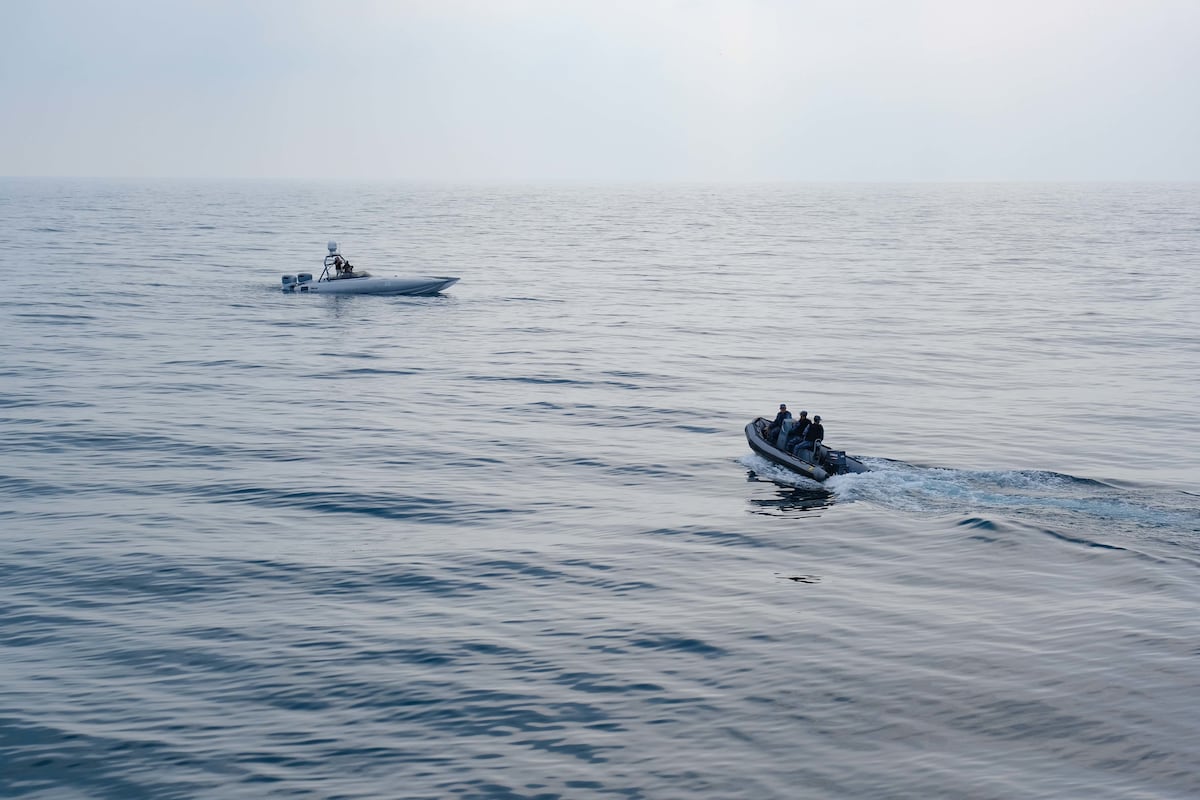
MILAN — NATO showed off its underwater surveillance capabilities in an unmanned surface vessel demonstration in the Baltic Sea as part of alliance efforts to deter acts of sabotage against critical undersea infrastructure in the strategic area.
The trials took place in waters near Denmark from Feb. 17 to 20 and involved integrating manned and unmanned assets in live-firing events and tactical maneuvers.
Participating drone boats were fielded through the Task Force X initiative established earlier this month by the alliance’s top transformation branch as part of patrolling activities in Baltic waters.
“It provides a framework for all nations to contribute by enabling the deployment of their autonomous capabilities. … This collaborative effort will fill gaps in surveillance, particularly in areas not covered by existing systems like the Automatic Identification System,” Adm. Pierre Vandier, commander of NATO’s Allied Command Transformation, said in a press release.
Additional ships from NATO’s Standing NATO Maritime Group 1, the Royal Danish and German Navies took part in the demonstration.
In a recent interview with Defense News , as Vandier detailed plans for the alliance’s first fleet of naval surveillance drones, he hinted that it was likely to be equipped with proven platforms that would lean on experiments by the U.S. Navy’s Task Force 59.
TF59 is a unit dedicated to integrating unmanned systems and artificial intelligence in the U.S. Navy’s 5th Fleet area of operations that operates out of Bahrain.
However, according to an Allied Maritime Command press release, Task Force X will also leverage successful campaigns such as the U.S. Navy’s TF66, which experiments with uncrewed systems in the Europe-Africa area of responsibility.
Established in 2023, the group is made up of civilian and military personnel that put a variety of unmanned maritime systems to the test in bodies of water faced with different challenges than in the Gulf region.
Last year, it launched a pilot program centered on boosting maritime domain awareness, during which it tested the autonomous underwater and surface vessels of the Ocean Aero Triton platform, as reported by USNI News.
Elisabeth Gosselin-Malo was a Europe correspondent for Defense News. She covers a wide range of topics related to military procurement and international security, and specializes in reporting on the aviation sector. She is based in Milan, Italy.
米兰——北约在波罗的海进行了一次无人水面舰艇演示,展示了其水下监视能力,这是该联盟为阻止针对该战略区域关键海底基础设施的破坏行为而做出的努力的一部分。
试验于 2 月 17 日至 20 日在丹麦附近水域进行,涉及将有人和无人资产整合到实弹射击事件和战术演习中。
参与此次行动的无人船是通过联盟最高转型部门本月早些时候成立的“X特遣队”计划部署的,作为波罗的海水域巡逻活动的一部分。
“它为所有国家通过部署自主能力做出贡献提供了一个框架。……这种合作努力将填补监视方面的空白,尤其是在现有系统(例如自动识别系统)未覆盖的领域,”北约盟军转型司令部司令皮埃尔·范迪耶海军上将在新闻稿中表示。
来自北约常设海上第一集团军、丹麦皇家海军和德国海军的更多舰艇也参加了此次演示。
在最近接受《防务新闻》采访时,范迪尔详细介绍了联盟首支海军监视无人机舰队的计划,并暗示该舰队可能会配备成熟的平台,这些平台将借鉴美国海军第 59 特遣部队的试验成果。
TF59 是一支致力于在美国海军第五舰队作战区域内整合无人系统和人工智能的部队,其行动基地位于巴林。
然而,根据盟军海上司令部的新闻稿,X 特遣部队还将借鉴美国海军 TF66 等成功案例,TF66 在欧洲-非洲责任区试验无人系统。
该组织成立于 2023 年,由平民和军人组成,他们在与海湾地区面临不同挑战的水域中测试各种无人海上系统。
据美国海军学会新闻报道,去年,该公司启动了一项以提升海上领域感知能力为中心的试点项目,期间测试了 Ocean Aero Triton 平台的自主水下和水面船只。
伊丽莎白·戈斯林-马洛曾任《防务新闻》欧洲通讯员。她的报道涵盖军事采购和国际安全等广泛领域,尤其擅长航空领域的报道。她常驻意大利米兰。