Here’s Why Naval Convoys Are An Ideal Solution Hated By Everyone这就是为什么海军护航队是理想的解决方案,却又人人厌恶的原因
As Iran threatens commercial shipping in the Strait of Hormuz, many are calling for convoys. Here is why they aren't so easy to execute or maintain.
Updated Dec 1, 2019 5:56 AM EST
Recently, Jeremy Hunt, the Foreign Secretary of the United Kingdom, proposed a “ European led maritime protection mission ” in response to Iranian aggression in the Persian Gulf. If you are wondering what a European led maritime protection mission looks like, you are not alone. I have talked to a dozen or so naval strategists over the last few days, and nobody is quite sure what he is talking about. The feedback I got was clear on two points, however.
First, the Royal Navy (RN), while qualitatively one of the best navies in the world, does not have the force structure required to provide constant security and coverage to all British flagged commercial ships operating in the Persian Gulf on an enduring basis. Yes, the Royal Navy might escort and protect a single ship or two through the Strait of Hormuz, but protecting all British flagged commercial ships over the long term is another case entirely.
Second, beyond the short term protection that the RN is able to provide, whatever this larger protection mission winds up being, it may not end up looking like a traditional convoy system. Why? Because every relevant stakeholder in this drama hates convoys.
Tankers Are The Perfect Target
While commercial ships come in all shapes and sizes, tankers carrying crude oil and refined petrochemical products have some characteristics in common. They have vast holding tanks, which increases economies of scale. They are highly automated and minimally manned, which decreases operating costs. These design parameters result in commercial tankers being large, slow, difficult to maneuver, and easy to detect both visually and by radar, which makes them extremely easy for malign actors to target or seize.
This is not a new development. Because of their economic value during peacetime and their industrial utility during wartime, commercial ships, especially oil and petrochemical tankers, have always been high-value targets.
U.S. Navy cruiser patrols an oil terminal in the Persian Gulf., USN
Iran Attacks and Seizes Tankers
Over the past several months, the Islamic Republic of Iran has conducted a number of destabilizing attacks against maritime commercial shipping in the Middle East. These attacks have ranged from kinetic operations, including an alleged attempt to sink or severely damage two petrochemical tankers , to harassment of shipping engaged in navigation through the Strait of Hormuz (SOH) , to the outright seizure of the Stena Impero , a British flagged crude oil tanker.
The geographical dispersion of these and previous Iranian operations ranges from the Persian Gulf through the Strait of Hormuz and into the Gulf of Oman, and as far as the Gulf of Aden, the Strait of Bab El Mandeb and the Red Sea. This shows the reach of the Islamic Republic of Iran Navy (IRIN), the Islamic Revolutionary Guards Corps Navy (IRGCN), and the IRGC’s Quds Force, which trains shore-based proxies of Iran, including the Houthi rebels of Yemen.
It’s All About The Benjamins
There are a lot of plausible reasons behind Iran’s provocative and destabilizing behavior, but the most obvious cause is the Iranian regime’s dire financial situation. While the United States has always had some form of sanctions imposed against Iran since the revolution of 1979, it’s fair to say that the current program of “maximum pressure” sanctions is more comprehensive and uniformly enforced than at any point during the last 40 years.
The sanctions are imposing a severe cost on the Iranian economy, as formally declared oil exports have shrunk to less than 500,000 barrels per day (BPD). As recently as October of 2016, Iran was exporting over 3,000,000 BPD. To be clear, this is not just a U.S. program of sanctions. The European Union (EU) has its own set of sanctions that have impacted Iran, including in indirect ways. Enforcing sanctions on Syria, a major Iranian ally, was the primary cause of the U.K. seizing the Iranian oil tanker Grace 1 .
As a result of the decrease in oil exports, the Iranian regime has experienced a massive reduction in revenue. Iran is in desperate need of increased cash flow, both for legitimate domestic expenditures for basic governmental functions inside Iran and to support its illegitimate international operations, including propping up the Assad regime in Syria, subsidizing Hezbollah in Lebanon, supplying surface to surface rockets to Hamas in Gaza, and its support for Houthi rebels in Yemen. Of particular concern in the context of maritime security is the fact that Iran is supplying cruise missiles and explosive-laden remote-controlled boats to Houthi rebels in Yemen. The Houthis have been particularly active. Not content with targeting just commercial shipping , they have also targeted Saudi naval vessels , Emirati supply ships , and even U.S. Navy warships .
Iran has a large collection of diverse naval assets that work in and around the Strait of Hormuz, including diesel-electric submarines. , AFP/Getty Images
By destabilizing the security situation for commercial shipping in the Persian Gulf, Iran hopes to achieve two separate, but related outcomes. First, in the near term, Iran hopes to see an increase in the price of oil. Second, over the long run, Iran hopes to demonstrate that it is the dominant regional power in the Middle East and use that status as negotiating leverage in order to reduce sanctions.
In this scenario, Iran would offer to guarantee the security of commercial shipping in the Persian Gulf and the Strait of Hormuz in return for reduced sanctions. While the first outcome, an increase in oil prices, is plausible and perhaps even likely, the second outcome, relief of sanctions, looks increasingly unrealistic. The U.S. is committed to the maximum pressure approach and will be for the foreseeable future. By seizing a British flagged tanker, Iran has made a rapprochement with the European Union (EU) much less likely, as well.
Convoys Are The Perfect Technical Solution
At the beginning of this article, we talked about why oil and petrochemical tankers are easy targets, they are large, slow, difficult to maneuver, easy to detect and worth a lot of money. Iran has targeted tankers for attacks, harassment, and seizure. There is no reason to suspect this behavior will stop anytime soon. Fortunately, there is a tried and true solution that has proven throughout history to be very effective.
Convoys of merchant vessels, guarded by relatively few military ships, have been used for the better part of a thousand years to offer protection. Convoys were used extensively by the Royal Navy to great effect during the Napoleonic Wars. During World War I, less than 1% of merchant vessels that sailed across the Atlantic as part of the American and British convoys were lost to German submarine attacks. While the German surface raiders and U-boats of World War II were significantly more capable than their predecessors, the convoy system operated by Allied fleets resulted in the successful delivery of hundreds of millions of tons of cargo to Great Britain and the Soviet Union.
From a supply and logistics perspective, it is beyond dispute that the strategic bombing campaign against Nazi Germany, the Russian offensive on the Eastern Front, and the landings in North Africa, Italy, and at Normandy would have been categorically impossible without the convoy system delivering the food, raw materials, and finished products required for these operations. Convoys were the essential logistical element of victory over Nazi Germany in World War II.
An Atlantic convoy during WWII seen from a Sunderland flying boat. , Public Domain
Operation Earnest Will
Convoys are not merely a relic of wars past. A major component of the Iran-Iraq War of the 1980s was the so-called “Tanker War” that resulted in over 450 commercial ships being hit. Iran targeted ships owned, flagged, or operated by Kuwait and Saudi Arabia in retaliation for their financial support to Iraq. In response, the U.S. Navy initiated Operation Earnest Will in 1987, the largest convoy operation since World War II.
During this operation, Kuwaiti and Saudi vessels were “reflagged” to U.S. merchant status, and the U.S. Navy began escorting convoys out of the northern and central Persian Gulf ports through the Strait of Hormuz. Once far enough outside the Persian Gulf to be protected from Iranian attacks, the convoys would disband, and inbound empty tankers would form up into a convoy to go back through the Strait into the Persian Gulf.
Operation Earnest Will lasted from July 1987 to September 1988 and was a major factor in forcing Iran to accept a negotiated end to the Iran-Iraq War.
From a technical perspective, convoys are an obvious “off the shelf” solution to the current problem that could be implemented in very short order.
Why Hasn’t The Convoy Solution Been Invoked?
At this point, you might be wondering why the convoy solution hasn’t already been embraced. Given that the Iranian threat to commercial shipping is realistic and enduring and given that the convoy system is a tried and true solution to the problem, what is keeping the U.S. Navy and its allies in the Persian Gulf from offering convoys up to commercial shipping? Why haven’t the commercial shipping lines requested or even demanded this solution be promulgated as soon as possible?
To be clear, the United Kingdom is proposing a European-centric “maritime protection mission” in response to the seizure of Stena Impero . The exact nature of this nascent maritime protection mission might wind up looking very similar to a convoy system, but then again, it might not. While convoys are proven concept, unless they are in response to a shooting war, both navies and commercial shipping companies really dislike using them.
For a recent example of this, we can look to the problem of Somali piracy and how, despite an enduring threat that lasted about a decade and resulted in hundreds of attacks, both navies and commercial shipping companies resisted adopting convoys.
A tanker convoy during the Tanker Wars of the late 1980s., AFP/Stringer
Convoys And Somali Piracy
Pirates operating from the African continent are hardly a new problem. In fact, the first major foreign war fought by the United States following independence from Great Britain was the First Barbary War from 1801 to 1805 in response to pirates from the Barbary States of Tripoli, Tunis, Algiers, and Morocco preying on American commercial shipping in the Mediterranean. Almost exactly 200 years after defeating the Barbary pirates, the U.S. Navy was again confronted with the problem of piracy, this time originating from the failed state of Somalia.
Starting in 2005, Somali pirates conducted hundreds of attacks against commercial ships in the Gulf of Aden and Somali Sea, later extending the attack zone out in the Arabian Sea and the Indian Ocean. The economic impact was significant. Direct payments to the pirates between 2005 and 2012 totaled just under $400 million. Indirect costs were much higher, with estimates approaching $20 billion per year. Insurance rates for commercial ships skyrocketed. Shipping companies incurred significant fuel costs by routing ships further and further around the attack zones. Along with the fuel cost of rerouting ships, cargo brokers suffered from the increased time required to transit around the piracy zones.
Yet even after a U.S. flagged ship, the MV Maersk Alabama , was seized by Somali pirates, both commercial shippers and the U.S. and allied navies resisted adopting a convoy system to prevent attacks. There was no technical reason to avoid convoys, but there were financial and operations reasons to reject the convoy option.
Shipping Companies Hate The Cost Of Convoys
The modern shipping industry is extremely competitive and efficient. One of the ways that modern shipping norms are more efficient than in years past is the quick turnaround time typically experienced in modern ports. Shipowners want the ships to pull into port, discharge cargo, load cargo, and get underway again as soon as possible. A ship and crew pushing cargo from port-to-port is generating revenue. A ship sitting in port is only generating costs.
Under normal transit procedures, as soon as an oil tanker loads up, at, say, the Saudi port of Ras Tanura in the Persian Gulf, it can immediately depart for its offload port. If that tanker has to wait to sail until a convoy forms up, that delay imposes an immense cost on the shipowner. Ships are like any major capital investment, most of them are purchased with a combination of equity investment and debt financing. Equity investors expect a return on their investment, and debt financiers expect their interest payments to be made on time. Ships sitting around empty—or worse, ships that are full of a cargo that has been purchased, but now sits idly, getting no closer to the destination and paying customers—generate a lot of costs, but no revenue.
Ultimately, shipowners, operators, investors in shipping companies, and debt financiers despise the idea of waiting around for convoys to form up. Their view is, a convoy might prevent an attack by Somali pirates or Iranian terrorists, but it absolutely will impose additional significant costs.
Modern Navies Hate Convoys More Than Shipping Companies Do
The term asymmetric warfare has been overused to the point of exhaustion, but the case of a modern navy operating a convoy system in order to protect commercial ships from a ragtag collection of pirates running around in fishing boats with rusty AK-47s and second-hand Rocket Propelled Grenades (RPG) is about as clear an example of asymmetric conflict as one could imagine. This is true both for the equipment that would be used as well as for the missions that would be curtailed in order to resource a convoy system.
In terms of equipment, the U.S. Navy surface combatants that would be used in a convoy system are primarily Ticonderoga class cruisers and Arleigh Burke class destroyers, supplemented by Cyclone class patrol ships and even smaller vessels. These cruisers and destroyers are extremely expensive and capable ships. To any foe, a brand new Arleigh Burke class destroyer is a one ship nightmare waiting to happen, armed with a dazzling array of weapons, including 5-inch guns, Tomahawk cruise missiles capable of hitting targets a thousand miles away with pinpoint accuracy, SM-2, SM-3, and SM-6 guided missiles that can engage manned aircraft, unmanned drones, ballistic missiles, and even satellites, as well as close-in weapon systems, smaller guns, and two MH-60R helicopters with all their sensors and weapons.
No matter how you calculate the price tag, a fully manned, trained, and armed Arleigh Burke class destroyer costs well over two billion dollars. The fishing skiffs that Somali pirates use are maybe worth $10,000, at the most. The modified speedboats that the Iranians use to harass, attack, or seize commercial ships are certainly more advanced and expensive than Somali pirate vessels, but an entire flotilla of IRGCN speedboats modified with short-range missiles and guns costs less than a single Arleigh Burke class destroyer.
While the U.S. Navy Cyclone class patrol ships are a more cost appropriate platform to deter harassment and attacks by Iranian gunboats, neither they nor the smaller still Mark VI patrol boats have adequate Command, Control, Communications and Intelligence (C3I) bandwidth to lead a convoy, nor do they have adequate range to escort a convoy without refueling, in many cases. Both the Cyclone patrol ships and Mark VI patrol boats would clearly be part of a convoy protection system, but either a cruiser or destroyer would have to lead the convoy and Cyclone and Mark VI hulls may need to be refueled at sea during the convoy transit, which would add an additional complicating factor.
From an operational perspective, the mismatch is even more glaring than the financial considerations. Navy surface combatants in the Middle East have two operational commitments that dwarf all others.
First, protecting the carriers from anti-ship cruise missiles. While Navy carriers have some point defense systems, they are designed to operate in concert with cruisers and destroyers that push the defensive envelope out to well over a hundred miles. Second, to provide ballistic missile defense capabilities to U.S. and allied forces in the Middle East. If these extremely capable, extremely expensive Navy ships are playing sheepdog to a convoy of slow oil tankers, they can’t protect the carriers or provide ballistic missile defense.
The Cyclone patrol ships and Mark VI patrol boats are equally task saturated, albeit with different missions, more of a Special Operations Forces (SOF) support angle. Suffice to say, every Navy ship in the Central Command (CENTCOM) Area of Responsibility (AOR) has plenty of existing missions to attend other than escorting a convoy.
Bottom line, both commercial shipping owners/operators and modern navies hate the convoy system, and both hate it for the costs it imposes.
As a side note, at this point you might wonder, what about the Navy’s Littoral Combat Ships (LCS)? The LCS was conceived for exactly this type of mission, shallow water operations in a low-intensity conflict zone. LCS hulls are big enough to run an entire convoy route without refueling and have adequate C3I bandwidth to lead a convoy. At less than half the size of an AlreighBurke class destroyer, the LCS is just big enough to play mother goose to a convoy, without wasting a lot of excess capacity. Sounds perfect, right?
Well, the LCS would be a perfect fit for running convoys if it were deployable and fit for even low-intensity conflict zones. Regrettably, the LCS has earned its nickname of “Little Crappy Ship” by failing to meet many of its operational performance objectives or timelines. Forget deploying to a combat zone, or even a low-intensity conflict zone. The LCS fleet, and there is a fleet now, has barely been able to deploy to friendly foreign ports in recent years. Suffice to say the LCS is in this circumstance, as it has been since the first ship was commissioned in 2008, relatively irrelevant, except to the extensive damage it has done to the Navy budget and the burden it has placed on other ships that have to fill the gaps left by the nearly non-deployable LCS.
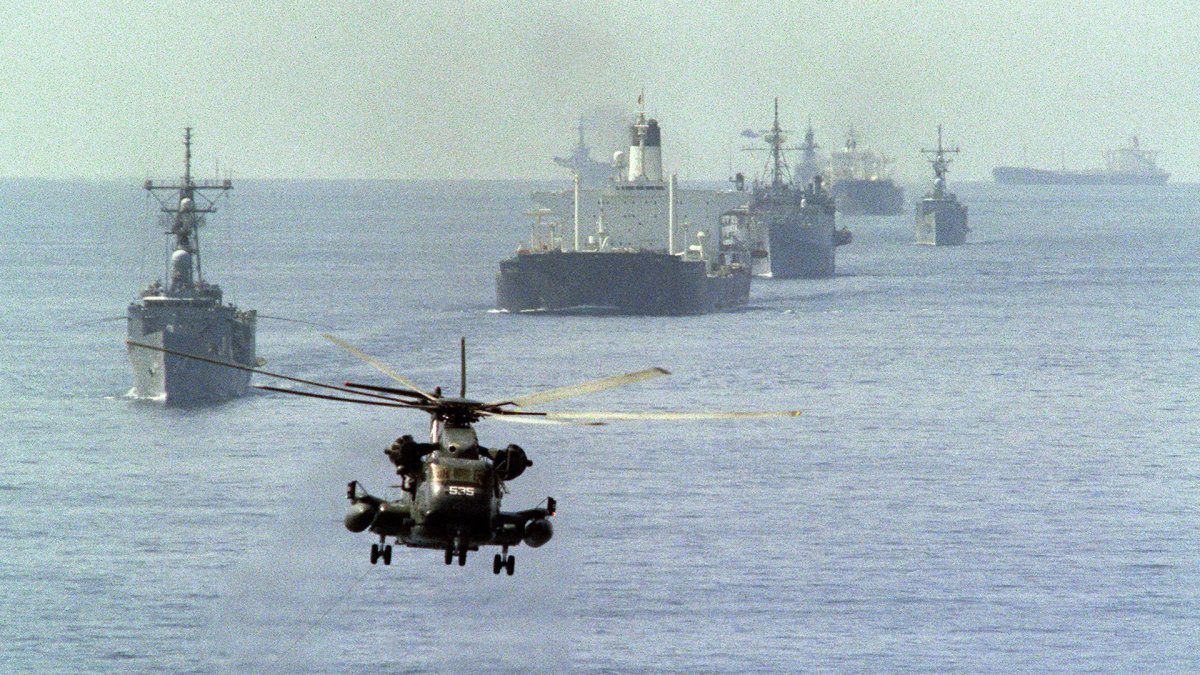
A U.S. Navy Avenger class minesweeper takes part in an international convoy exercise in the Persian Gulf. , USN
So What Happened To The Somali Piracy Problem?
In terms of deterring (no, not defeating—they are never defeated) Somali pirates, the resolution was provided by a combination of solutions that were implemented over a long timeline.
First, the U.S. and allied countries focused more on addressing security and governance issues on the landward side of the problem. While Somalia has been, at some level, a failed state for the better part of three decades, there are pockets of security and good governance. The U.S. and partners began working more closely with local institutions to deliver better security and governance, thus blunting some of the root causes of piracy.
Second, merchant ships began employing security contractors onboard. Pirates are fundamentally just thieves looking for an easy payday. The last thing pirates want is to try and seize a ship that is defended by professional security operatives.
Third, the U.S. and partner navies started Operation Ocean Shield that targeted pirate vessels, particularly “motherships” that were used to stage further attacks, for inspection and seizure.
Between improved security and governance in Somalia, security personnel on the commercial vessels, and the presence of warships operating in a coordinated fashion, the Somali piracy problem was gradually suppressed, if not solved nearly in full. By 2013, there were no successful seizures of large commercial ships by Somali pirates. To be clear, the problem has been suppressed, not eliminated, and could reappear in short order if conditions degrade, but for now, there is only a very limited threat to commercial shipping from Somali pirates.
Does Today’s Announcement Change Anything?
Today’s announcement by the British government that the RN would escort any British flagged vessels through the Strait of Hormuz contained two caveats. First, the escort is limited to the Strait. Second, the escort will only happen if the shipowner gives the RN “sufficient notice…of their passage.”
Regarding the location, the easiest place for Iran to harass, attack, or seize ships is in the Strait of Homruz, but it is hardly the only place. It’s just under 400 nautical miles from Bandar Abbas, Iran, located in the middle of the Strait, to Ras Tanura, Saudi Arabia. Iran could easily choose to forego operations in the Strait and attack elsewhere in the Persian Gulf. Additionally, Iran has access to the terrain in Yemen currently occupied by the Houthi rebels. That includes well over 100 nautical miles of coastline on the Red Sea.
Point being, the RN can provide security in the Strait of Hormuz. It can’t provide security for the entire region.
Regarding the timing, the RN can provide security in the Strait of Hormuz, if ship owners give sufficient notice. How much notice? Well, it seems inevitable that the notification will eventually flow from the RN to the shipping companies. In all likelihood, the RN will be forced to establish a schedule of Strait transits and commercial ships will have to adhere to that schedule if they want to be escorted through.
This will, of course, impose operational limitations on the limited in size and overtasked RN. If the RN is busy escorting commercial ships through the Strait of Hormuz, the RN is tied to the Strait and to the schedule of transits. And, of course, it will impose financial costs on the ship owners, because regardless of what the optimal scheduling is for any individual commercial ship, if it wants protection and escort through the Strait, it will have to adhere to the RN schedule of transits.
Ultimately, Iran has succeeded in imposing a substantial operational and opportunity cost on the RN, and a large financial cost on British flagged shipping.
Will The Iranians Stop Their Attacks?
The solution to Somali piracy was never a mystery, it was just difficult, expensive, and slow to implement. Even though Somali pirates were a ragtag collection of loosely affiliated criminal networks, it still took the United States the better part of a decade to come up with a coherent framework to deal with the problem. In contrast, Iran is the largest, most capable, wealthiest state sponsor of terror in the world with hundreds of thousands of loyal, disciplined, and well-trained followers at its disposal. Iran has been fighting a proxy civil war in Syria for the better part of a decade and in Yemen for half that time. They know how to plan for long-duration missions. If they want to keep attacking commercial shipping the Persian Gulf, they have the stamina to wait until the circumstances are ideal for their next hit.
Bottom line, there is no obvious offramp to further belligerent behavior by the Iranian regime. Neither the United States nor the EU is going to relieve sanctions on Iran, or its foreign partners, anytime soon, so further escalation, while not inevitable, is certainly likely. The European maritime mission that the United Kingdom is proposing will inevitably have to look something like a convoy in order to work. At this point, any commercial ships traveling solo into or out of the Strait of Hormuz is a viable target for the IRGCN.
With this in mind, the only thing that seems certain at this point is that some form of convoys—the ideal solution that is hated by both the navies that run them and shipping companies—will probably start operating in the near future. What exactly it will look like or how well it will be adhered to and last is anyone’s guess.
Contact the editor: Tyler@thedrive.com
Comments couldn’t be loaded. Please refresh the page.
更新于美国东部时间2019年12月1日凌晨5:56
最近,英国外交大臣杰里米·亨特提议发起一项“欧洲主导的海上保护行动”,以应对伊朗在波斯湾的侵略行为。如果您想知道这项“欧洲主导的海上保护行动”究竟是什么,您并不孤单。过去几天,我与十几位海军战略家进行了交流,但没有人确切知道他到底在说什么。不过,我得到的反馈在两点上是明确的。
首先,英国皇家海军虽然在军事实力上位居世界一流海军之列,但其兵力结构不足以长期为所有在波斯湾作业的英国籍商船提供持续不断的安保和保护。诚然,皇家海军或许能够护送一两艘船只通过霍尔木兹海峡,但要长期保护所有英国籍商船则完全是另一回事。
其次,除了皇家海军能够提供的短期保护之外,无论这项更大规模的保护任务最终如何,它可能不会采用传统的护航模式。为什么?因为这场冲突中的所有相关方都厌恶护航。
油轮是完美的目标
尽管商船的形状和大小各异,但运载原油和成品油的油轮却有一些共同的特点。它们拥有巨大的储油舱,从而提高了规模经济效益。它们高度自动化且人员配备极少,从而降低了运营成本。这些设计特点导致商用油轮体积庞大、速度缓慢、难以操控,并且易于被目视和雷达探测到,这使得它们极易成为不法分子的目标或目标。
这并非什么新鲜事。由于商船在和平时期具有经济价值,在战争时期具有工业用途,因此它们一直是高价值的攻击目标。
美国海军巡洋舰在波斯湾巡逻一处石油码头。
伊朗袭击并扣押油轮
过去几个月,伊朗伊斯兰共和国在中东地区对海上商船发动了一系列破坏稳定的袭击。这些袭击包括军事行动(据称企图击沉或严重损坏两艘石化油轮)、骚扰在霍尔木兹海峡航行的船只,以及直接扣押悬挂英国国旗的原油油轮“史丹纳帝国”号。
伊朗此次及以往军事行动的地理范围从波斯湾经霍尔木兹海峡延伸至阿曼湾,远至亚丁湾、曼德海峡和红海。这表明伊朗伊斯兰共和国海军(IRIN)、伊斯兰革命卫队海军(IRGCN)以及伊斯兰革命卫队圣城旅(负责训练伊朗岸上代理人,包括也门胡塞武装)的影响力巨大。
一切都与金钱有关
伊朗挑衅和破坏稳定的行为背后有很多看似合理的解释,但最显而易见的原因是伊朗政权的严峻财政状况。尽管自1979年伊朗革命以来,美国一直对伊朗实施某种形式的制裁,但可以说,目前的“极限施压”制裁方案比过去40年来的任何时期都更加全面、更加统一地执行。
制裁给伊朗经济造成了沉重打击,官方公布的石油出口量已萎缩至每日不足50万桶。而就在2016年10月,伊朗的石油出口量还超过每日300万桶。需要明确的是,这并非仅仅是美国的制裁计划。欧盟也对伊朗实施了一系列制裁,其中一些影响是间接的。例如,英国扣押伊朗油轮“格蕾丝一号”的主要原因就是对伊朗主要盟友叙利亚实施制裁。
由于石油出口下降,伊朗政权的收入大幅减少。伊朗急需增加现金流,既用于国内基本政府职能的合法支出,也用于支持其非法的国际行动,包括扶持叙利亚阿萨德政权、资助黎巴嫩真主党、向加沙哈马斯提供地对地导弹以及支持也门胡塞武装。尤其令人担忧的是,伊朗正在向也门胡塞武装提供巡航导弹和装满炸药的遥控艇,这在海上安全方面尤为突出。胡塞武装的活动尤为活跃。他们不仅袭击商船,还袭击沙特阿拉伯海军舰艇、阿联酋补给船,甚至美国海军军舰。
伊朗在霍尔木兹海峡及其周边海域拥有大量不同类型的海军力量,其中包括柴电潜艇。(图片来源:法新社/盖蒂图片社)
伊朗希望通过破坏波斯湾商业航运的安全局势,实现两个既独立又相互关联的目标。首先,短期内,伊朗希望推高油价。其次,长期来看,伊朗希望借此展现其在中东地区的主导地位,并利用这一地位作为谈判筹码,以期减轻制裁。
在这种情况下,伊朗将提出保障波斯湾和霍尔木兹海峡商业航运安全,以换取制裁的放松。虽然油价上涨这一结果看似合理,甚至极有可能实现,但解除制裁这一结果却越来越不切实际。美国坚持极限施压策略,并且在可预见的未来仍将如此。此外,伊朗扣押英国籍油轮也大大降低了与欧盟和解的可能性。
车队是完美的技术解决方案
本文开头我们讨论了油轮和石化产品船为何容易成为攻击目标:它们体积庞大、航速缓慢、难以操控、易于被发现且价值连城。伊朗曾多次袭击、骚扰和扣押油轮,而且没有理由认为这种行为会很快停止。幸运的是,历史已经证明,有一种行之有效的解决方案。
由相对较少的军舰护航的商船队,在近千年的时间里一直被用于提供保护。在拿破仑战争期间,英国皇家海军广泛运用护航战术,取得了显著成效。第一次世界大战期间,作为美英护航队一部分横渡大西洋的商船中,只有不到1%的船只被德国潜艇击沉。尽管第二次世界大战中德国水面袭击舰和U型潜艇的性能远超以往,但盟军舰队运作的护航体系仍然成功地向英国和苏联运送了数亿吨货物。
从后勤补给的角度来看,毫无疑问,如果没有运输船队系统运送作战所需的食品、原材料和成品,对纳粹德国的战略轰炸、东线苏军攻势以及北非、意大利和诺曼底登陆都根本不可能实现。运输船队是二战中战胜纳粹德国的关键后勤保障要素。
二战期间从桑德兰水上飞机上拍摄的大西洋护航船队照片。(公共领域)
诚意行动
护航行动并非仅仅是过去战争的遗迹。20世纪80年代两伊战争的一个重要组成部分是所谓的“油轮战”,这场战争导致超过450艘商船遭到袭击。伊朗袭击了科威特和沙特阿拉伯拥有、悬挂或运营的船只,以报复它们对伊拉克的财政支持。作为回应,美国海军于1987年发起了“坚定意志行动”,这是二战以来规模最大的护航行动。
在此次行动中,科威特和沙特阿拉伯的船只被“重新悬挂”为美国商船,美国海军开始护送船队经由霍尔木兹海峡驶出波斯湾北部和中部港口。一旦驶出波斯湾足够远,能够免受伊朗袭击,船队就会解散,而驶入的空油轮则会组成新的船队,再次经由霍尔木兹海峡进入波斯湾。
“坚定意志行动”从 1987 年 7 月持续到 1988 年 9 月,是迫使伊朗接受通过谈判结束两伊战争的主要因素。
从技术角度来看,车队显然是解决当前问题的现成方案,可以在很短的时间内实施。
为什么还没有启用车队方案?
此时,您或许会疑惑,为何护航方案尚未被广泛采用。鉴于伊朗对商船运输的威胁真实存在且持续存在,而护航系统又是行之有效的解决方案,那么究竟是什么阻碍了美国海军及其在波斯湾的盟友为商船提供护航服务?为何商船公司没有要求甚至强烈呼吁尽快推行这一方案?
需要明确的是,英国提议开展一项以欧洲为中心的“海上保护行动”,以应对“史丹纳帝国”号货轮被扣押事件。这项新兴的海上保护行动的具体形式最终可能与护航系统非常相似,但也可能不会。虽然护航是一种行之有效的方案,但除非是为了应对战争,否则海军和商船公司都不太愿意使用这种方式。
最近的一个例子是索马里海盗问题,尽管海盗威胁持续了大约十年,并导致了数百起袭击,但海军和商业航运公司都抵制采用护航制度。
20世纪80年代末油轮战争期间的一支油轮护航队。(法新社/特约摄影师摄)
护航队和索马里海盗
来自非洲大陆的海盗活动并非什么新鲜事。事实上,美国脱离英国独立后参与的第一场重大对外战争就是1801年至1805年的第一次巴巴里战争,其目的是为了应对来自的黎波里、突尼斯、阿尔及尔和摩洛哥等巴巴里国家的海盗在地中海劫掠美国商船。在击败巴巴里海盗近200年后,美国海军再次面临海盗问题,这一次的海盗来自失败国家索马里。
自2005年起,索马里海盗在亚丁湾和索马里海对商船发动了数百起袭击,随后又将袭击范围扩大到阿拉伯海和印度洋。经济损失巨大。2005年至2012年间,直接支付给海盗的款项总额接近4亿美元。间接损失则更高,估计每年接近200亿美元。商船的保险费率飙升。航运公司不得不绕道航行,导致燃油成本大幅增加。除了绕道航行的燃油费用外,货运代理商还因绕行海盗活动区域所需时间增加而蒙受损失。
然而,即便在悬挂美国国旗的“马士基阿拉巴马”号货轮被索马里海盗劫持之后,无论是商船船东还是美国及其盟国海军,都拒绝采用护航制度来预防袭击。从技术角度来看,并没有理由避免护航,但出于经济和运营方面的考虑,他们拒绝了这一方案。
航运公司讨厌护航的成本
现代航运业竞争激烈且效率极高。现代航运规范比以往更高效的一个方面是现代港口通常能实现的快速周转时间。船东希望船舶尽快进港、卸货、装货并再次启航。船舶和船员在港口之间运输货物才能创造收益,而船舶停泊在港口只会产生成本。
按照正常的运输程序,例如,油轮在波斯湾的沙特阿拉伯拉斯塔努拉港装载完毕后,即可立即驶往卸货港。如果油轮必须等待船队集结才能起航,这种延误会给船东造成巨大的损失。船舶如同任何大型资本投资一样,大多数船舶都是通过股权投资和债务融资相结合的方式购买的。股权投资者期望获得投资回报,而债务融资方则期望按时收到利息。船舶空置停泊——或者更糟糕的是,满载货物却闲置不用,既无法抵达目的地,也无法为客户带来收益——会产生大量成本,却没有任何收入。
归根结底,船东、运营商、航运公司投资者和债务融资方都厌恶等待护航船队集结的做法。他们认为,护航船队或许能阻止索马里海盗或伊朗恐怖分子的袭击,但绝对会带来额外的巨额成本。
现代海军比航运公司更痛恨护航船队。
“非对称战争”一词已被滥用,几乎到了令人厌倦的地步。然而,现代海军为了保护商船免受一群驾驶着破旧渔船、手持锈迹斑斑的AK-47步枪和二手火箭筒(RPG)的乌合之众的袭击,而组建护航舰队的案例,无疑是非对称冲突最鲜明的例证之一。无论是所使用的装备,还是为了维持护航舰队的运转而不得不缩减的其他任务,都充分体现了这一点。
就装备而言,美国海军用于护航系统的水面作战舰艇主要为提康德罗加级巡洋舰和阿利·伯克级驱逐舰,辅以旋风级巡逻舰甚至更小型的舰艇。这些巡洋舰和驱逐舰造价极其昂贵,但性能卓越。对于任何敌人来说,一艘全新的阿利·伯克级驱逐舰都是一个随时可能出现的噩梦,它配备了一系列令人眼花缭乱的武器,包括5英寸舰炮、能够精确打击千里之外目标的战斧巡航导弹、可拦截有人驾驶飞机、无人机、弹道导弹甚至卫星的SM-2、SM-3和SM-6制导导弹,以及近程防御武器系统、小型火炮和两架配备所有传感器和武器的MH-60R直升机。
无论怎么计算,一艘满编、训练有素且装备精良的阿利·伯克级驱逐舰造价都超过20亿美元。索马里海盗使用的渔船最多也就值1万美元。伊朗用来骚扰、攻击或劫持商船的改装快艇当然比索马里海盗的船只更先进、更昂贵,但一支装备短程导弹和火炮的伊朗伊斯兰革命卫队海军快艇舰队的总造价也低于一艘阿利·伯克级驱逐舰。
虽然美国海军的“旋风”级巡逻舰在威慑伊朗炮艇的骚扰和攻击方面更具成本效益,但无论是“旋风”级还是更小的“马克VI”级巡逻艇,都缺乏足够的指挥、控制、通信和情报(C3I)带宽来领导护航船队,而且在许多情况下,它们的航程也不足以在不加油的情况下护送船队。“旋风”级巡逻舰和“马克VI”级巡逻艇显然都可以作为护航系统的一部分,但护航船队必须由巡洋舰或驱逐舰领航,而且“旋风”级和“马克VI”级巡逻舰在护航过程中可能需要在海上加油,这无疑增加了护航的复杂性。
从作战角度来看,这种不匹配比财政方面的考量更为明显。驻扎在中东的海军水面作战舰艇承担着两项远超其他所有任务的作战任务。
首先,保护航母免受反舰巡航导弹的攻击。虽然海军航母配备了一些近程防御系统,但它们的设计初衷是与巡洋舰和驱逐舰协同作战,从而将防御范围扩展到一百多英里之外。其次,为美国及其盟军在中东地区提供弹道导弹防御能力。如果这些性能卓越、造价极其昂贵的海军舰艇沦为缓慢航行的油轮船队的护航舰,它们既无法保护航母,也无法提供弹道导弹防御。
“旋风”级巡逻舰和“马克VI”级巡逻艇的任务同样繁重,尽管任务内容有所不同,前者更侧重于为特种作战部队提供支援。可以说,中央司令部责任区内的每艘海军舰艇除了护航之外,还有大量其他任务需要执行。
总而言之,无论是商船船东/运营商还是现代海军都讨厌护航制度,他们都讨厌它带来的成本。
顺便提一下,你可能会问,海军的濒海战斗舰(LCS)怎么样?LCS 的设计初衷正是为了执行这类任务:在低强度冲突区进行浅水作战。LCS 的舰体足够大,无需加油即可完成整个护航航线,并且拥有足够的 C3I 带宽来指挥护航舰队。LCS 的尺寸不到 Alreigh-Burke 级驱逐舰的一半,大小恰到好处,既能为护航舰队提供引导,又不会浪费过多的运力。听起来很完美,对吧?
如果濒海战斗舰(LCS)能够部署到位,并且适用于哪怕是低强度冲突地区,那么它将是执行护航任务的完美选择。可惜的是,LCS由于未能达到许多作战性能目标或时间表,而落得“破烂小船”的绰号。别说部署到战区,甚至低强度冲突地区了。LCS舰队(现在确实有一支舰队)近年来几乎无法部署到友好的外国港口。可以说,LCS目前的情况与2008年首舰服役以来一样,几乎无关紧要,除了给海军预算造成巨大损失,以及给其他舰艇带来沉重负担——这些舰艇不得不填补几乎无法部署的LCS留下的空缺。
一艘美国海军“复仇者”级扫雷舰在波斯湾参加国际护航演习。
索马里海盗问题后来怎么样了?
就威慑(不,不是击败——他们永远不会被击败)索马里海盗而言,解决方案是通过一系列长期实施的措施相结合而实现的。
首先,美国及其盟国更加注重解决索马里陆上部分的安全和治理问题。尽管索马里在过去近三十年中在某种程度上一直是一个失败国家,但仍然存在一些安全和治理良好的地区。美国及其伙伴开始与当地机构更紧密地合作,以改善安全和治理,从而缓解海盗活动的一些根源问题。
其次,商船开始雇用船上保安人员。海盗本质上就是想轻松捞一笔的窃贼。他们最不想做的就是试图劫持一艘由专业保安人员守卫的船只。
第三,美国及其伙伴海军发起了“海洋之盾行动”,目标是海盗船只,特别是用于发动进一步袭击的“母船”,以便进行检查和扣押。
随着索马里安全和治理水平的提高,商船上配备了安保人员,以及军舰协同作战,索马里海盗问题逐渐得到遏制,即便未完全解决。到2013年,索马里海盗未再成功劫持大型商船。需要明确的是,海盗问题只是被遏制,并未根除,如果局势恶化,海盗问题可能很快卷土重来。但就目前而言,索马里海盗对商船运输的威胁非常有限。
今天的公告会改变什么吗?
英国政府今天宣布,皇家海军将护送所有悬挂英国国旗的船只通过霍尔木兹海峡,但同时提出了两项限制条件。首先,护送范围仅限于霍尔木兹海峡。其次,只有在船东提前“充分通知”皇家海军其航行计划的情况下,护送才会进行。
就地点而言,伊朗骚扰、攻击或扣押船只最便捷的地点是霍尔木兹海峡,但这绝非唯一选择。从位于海峡中央的伊朗阿巴斯港到沙特阿拉伯的拉斯塔努拉港,航程不到400海里。伊朗完全可以选择放弃在霍尔木兹海峡的行动,转而攻击波斯湾其他地区。此外,伊朗还可以进入目前被胡塞武装占领的也门领土,其中包括超过100海里的红海海岸线。
重点是,英国皇家海军可以保障霍尔木兹海峡的安全,但它无法保障整个地区的安全。
关于时间安排,如果船东提前充分通知,英国皇家海军可以在霍尔木兹海峡提供安全保障。那么需要提前多久通知呢?看来,英国皇家海军最终必然会将通知下发给航运公司。很可能,英国皇家海军将被迫制定海峡通行时间表,商船若想获得护送,就必须遵守该时间表。
当然,这将对规模有限且任务繁重的英国皇家海军造成行动上的限制。如果皇家海军忙于护送商船通过霍尔木兹海峡,那么皇家海军的行动就必须受限于海峡的运行和通行时间表。而且,这无疑会给船东带来经济负担,因为无论对任何一艘商船而言,最佳的航行计划是什么,如果它想要获得通过海峡的保护和护送,就必须遵守皇家海军的通行时间表。
最终,伊朗成功地给英国皇家海军造成了巨大的运营成本和机会成本,也给悬挂英国国旗的航运造成了巨大的经济损失。
伊朗会停止袭击吗?
解决索马里海盗问题并非难事,只是难度大、成本高、实施缓慢。尽管索马里海盗是由松散的犯罪网络组成的乌合之众,美国仍然花了近十年时间才建立起一套连贯的框架来应对这一问题。相比之下,伊朗是世界上规模最大、能力最强、最富有的恐怖主义国家支持者,拥有数十万忠诚、纪律严明且训练有素的追随者。伊朗在叙利亚进行了近十年的代理人内战,在也门也进行了近十年的战争。他们深谙如何策划长期行动。如果他们想继续袭击波斯湾的商船,他们有足够的耐心等待时机,伺机发动下一次袭击。
总之,伊朗政权目前没有明显的退路,不会再采取进一步的挑衅行为。美国和欧盟都不会很快解除对伊朗及其外国伙伴的制裁,因此,局势进一步升级虽然并非不可避免,但可能性很大。英国提议的欧洲海上行动要想奏效,必然需要采取类似护航队的形式。目前,任何单独进出霍尔木兹海峡的商船都可能成为伊朗伊斯兰革命卫队海军的攻击目标。
鉴于此,目前唯一可以确定的是,某种形式的护航行动——这种理想的解决方案却遭到海军和航运公司的共同抵制——很可能在不久的将来开始运作。至于具体形式、执行情况以及持续时间,目前还不得而知。
联系编辑:Tyler@thedrive.com
评论加载失败,请刷新页面。