America’s Startling Short Range Air Defense Gap And How To Close It Fast美国惊人的短程防空漏洞以及如何快速弥补这一漏洞
From weaponized hobby drones to artillery shells to low-flying fighters and cruise missiles, America's ground forces are alarmingly vulnerable.
新闻视频
Updated Jul 5, 2020 7:16 PM EDT
There is no doubt about it, the U.S. military has let its short range air defense (SHORAD) capabilities wither on the vine. It seemed as if America’s air superiority advantage combined with 1990’s battle doctrine just didn’t require much in terms of ground forces being able to defend themselves from aerial attack, especially while on the move. Two wars in permissive aerial environments—Afghanistan and Iraq—didn’t help the SHORAD cause either, nor did the budget cuts of the current decade. But the tactical realities of the modern battlefield have changed, and it turns out that the Army, and the USMC for that matter, do need SHORAD capability and they need it bad.
The Pentagon’s combat doctrine has morphed drastically in recent years, with troops on the ground possibly being tasked with operating in contested environments where air superiority is not guaranteed. America’s once large air superiority margin has also shrunk , especially when it comes to expeditionary operations far from home. In addition, the battlefields American forces find themselves on today are so complex and crowded with competing forces, many of which have different agendas, that sanitizing large swathes of airspace isn’t an option—both tactically and geopolitically speaking.
Finally, and most importantly, the risk posed by weaponized unmanned aircraft has exploded. So far this threat has been presented largely by ISIS, a irregular force of fighters with varying levels of competence—much of which is poor—not a near peer state competitor with far higher professionalism and much greater resources.
The great laser gamble
As we have discussed in great depth before , the threat posed even by lowly hobby drones converted for nefarious purposes was clear long ago. The Pentagon as a whole largely eschewed the issue aside from executing some experimental testing and putting on a handful of obscure technological competitions to see how different countermeasures and tactics could be used to deal with these diminutive aerial threats. But above all else, small drones were fodder for the Pentagon’s experimental, costly, relatively low-powered and cumbersome solid-state lasers to roast out of the sky during tests. These systems weren’t powerful enough to take out incoming aircraft or missiles, but small fragile drones would give them a mission to teeth on. There is no doubt that eventually lasers would be the ideal weapon for taking on small drones— eventually .
In essence, the quiet denial that there was a real possibility US forces and their allies on the ground overseas could face this threat in the near term showed at best a lack of imagination on the part of DoD decision makers, especially considering some of us had been screaming about it for years. At worst it showed that those in charge at the Pentagon were willing to take on the risk posed by small weaponized drones for a period of time in hopes that the threat would not actually metastasize until easily deployable, compact, reliable and powerful solid-state lasers were ready for prime time.
That gamble failed miserably.
The battle for Mosul made it abundantly clear to the world that these relatively simple, commercially available and cheap weaponized drones weren’t a novelty. A mad search for countermeasures ensued as the headlines about their terrifying existence started hitting the mainstream press.
That search continues till this day.
Simply put, the enemy doesn’t act on the DoD’s timeline. In the end, the Defense Department had to finally accept the fact that the hobby-like drone threat had arrived, along with its wide ranging implications—not just for wars overseas but also for life here at home. This admission has spurred a cottage industry of sorts over the last year, that has included everything from jamming guns to exotic shotgun shells to sonic weapons —none of which are all that promising on their own.
Swatting down incoming mortars, rockets and artillery shells
The anti-small drone SHORAD requirement does share quite a bit of capability overlap with counter-rocket, artillery and mortar (C-RAM) defensive needs and capabilities. These traditional indirect fire weapons also pose an increasing threat to friendly forces operating on the ground in or near combat zones.
Today, C-RAM systems include everything from the Phalanx-based Centurion gun system to Israel’s Iron Dome surface-to-air interceptor system. The idea behind all these systems is to shoot down or neutralize these weapons as they careen through the air, before arriving at their target.
Under certain circumstances, C-RAM systems could also be used to shoot down low-flying helicopters, cruise missiles and aircraft. But you can’t shoot what you can’t see, and these defensive weapons usually have short sensor ranges, and overall low situational awareness. This gives operators less warning and less time to react, if any at all, to successfully engage threats that emerge farther off than rising mortars or short range artillery shells.
Like the small drone threat, lasers, with their indefinite magazine depth and fast as light engagement ability, are largely seen as the answer to the C-RAM issue, but they simply are not ready to take on such a threat, especially in a mobile battlefield environment.
Old threats made new
Dangers that require short range air defenses (SHORADs) are not just about small drones carrying improvised explosive devices or incoming artillery, they are also about larger drones, low flying manned helicopters and aircraft, and even cruise missiles.
Larger drones in particular will pose a serious danger to friendly forces in the future. Some of these have beyond line of sight control capabilities, and can drop or fire their own guided weapons at troops, vehicles, and material below.
Foreign-built remotely piloted aircraft (RPAs) are now proliferating at a fast pace, with China’s Predator-like Wing Loong being very popular, among many other international designs. Iran is also producing their own armed Shahed-129 RPAs, and these aircraft have popped up twice near a hot spot where American and allied troops are stationed in Syria, resulting in F-15E Strike Eagles swooping in and blasting them out of the sky.
Keeping combat air patrols overhead at all times to respond marauding drones is extremely expensive, and those aircraft are needed for other purposes. Not just that, but F-15s are not well designed to take out slow-flying drones with small radar and infrared signatures. Regardless, the shooting down of two Iranian drones, one of which had dropped weapons before being engaged by the Strike Eagles, was a signal that the days of having nearly a monopoly on drone warfare and full-scale air superiority are over for the US.
Traditional SHORAD threats, like low-flying fighter aircraft, helicopters and cruise missiles are also making a tactical resurgence. Once again, this is mainly due to the Pentagon’s new battle doctrine, the enemy’s investments in anti-access and area denial capabilities, and the erosion of America’s ability to guarantee air superiority, especially over a vast area.
All this becomes especially important if the Pentagon were to execute on its multi-domain battle and maneuver warfare plans that it touts today in a contested and large combat environment like the Pacific. This will include thrusting allied troops into the enemy’s backyard, to areas where air superiority will not have been achieved and where sitting still on the ground for more than a few hours could result in losses of entire combat units. In other words, on the battlefields of tomorrow, Marines and Army infantry will have to be able to defend themselves from an aerial onslaught on multiple levels, at least sporadically—and do so on the move. Not just that, but no fighter aircraft or remotely launched long-range surface to air missile is going to take down small drones or rockets that threaten forward operating bases or roving columns of infantry.
A good way to visualize this is to imagine a war in Asia where there is a need to grab and hold islands that are inside China’s anti-access/area-denial “buffer zone.” These expeditionary operations that venture into contested territory will require the assets of all the services combined, including intelligence and communications gathered from space, and rapid and highly targeted strikes in the realm of cyberspace.
Part of this strategy also includes being able to move so fast that operations outpace the enemy’s decision cycle. Basically, you are gone before they can counter attack, or before that incoming attack has arrived. Otherwise you better have fortified an area fast enough that you can repel an attack on multiple levels.
But blitzkrieg operations over long distances, especially those separated by water, are very challenging even for the US military. Fighter aircraft will have their ranges stretched to the max even with tanker support, with very short periods of on station time over friendly forces. Naval surface forces may also have to standoff some distance. As such, ground units will need to be able to provide at least short range point air defense for themselves. Thus the need for a rapid and robust investment in SHORAD capabilities that can counter everything from drones to rockets to cruise missiles, otherwise the Pentagon needs to alter its land and amphibious warfare plans to be far less ambitious.
America’s dated and limited capacity SHORAD arsenal
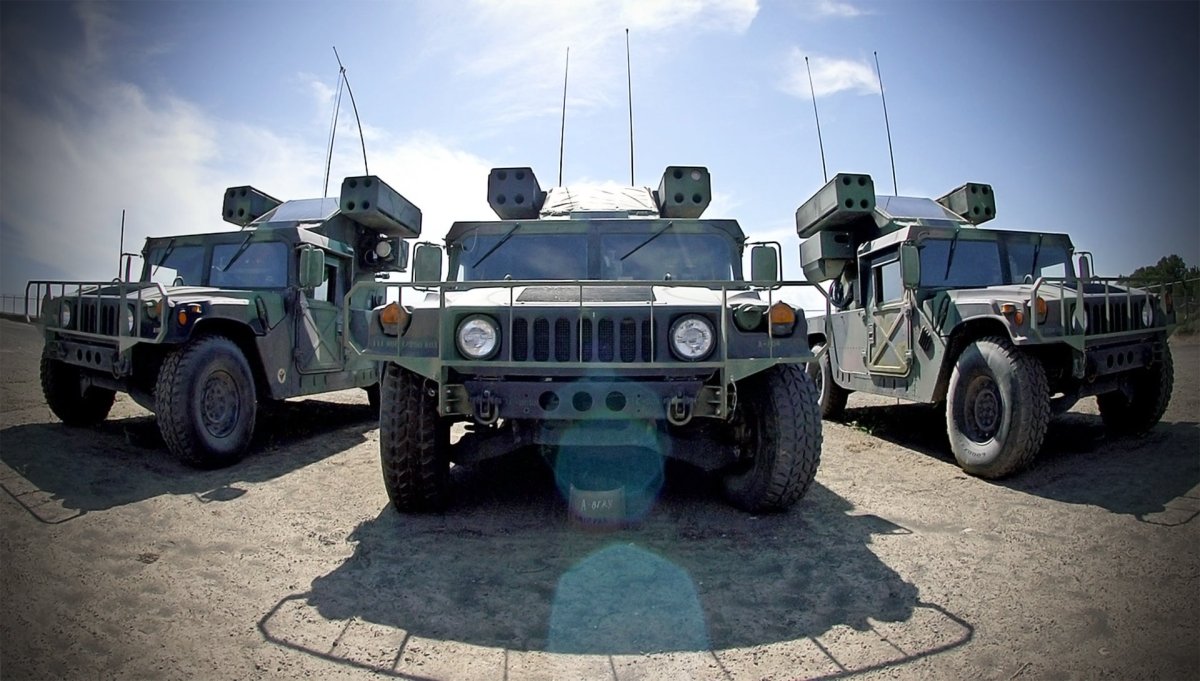
Currently the US Army relies entirely on the FIM-92 Stinger missile slinging and .50 bullet caliber firing AN/TWQ-1 Avenger system. That wasn’t always the case. Systems like the Chaparral SAM system , M6 Linebacker , and the M163 Vulcan Air Defense System —the USMC also had the LAV-AD —once populated the Army’s mechanized ranks. Yet even the aging Avengers have decreased in numbers drastically over the years.
MIM-72A/M48 Chaparral Self-Propelled Surface-to-Air Missile System., US Army
In 2004, there were 26 SHORAD battalions in the Army. Fast forward to today there are just nine. Of these nine, just two of them are active-duty units, the rest are in the National Guard. Now these remaining systems are in huge demand, with a deployment of 50 more Avengers to Europe being announced this week.
The Avenger system still mainly rides in the bed of a HUMVEE, but it can also be installed as a fixed emplacement, as it is on the Capital Mall as part of the integrated air defense system around Washington DC , and most notably, near the White House . The Avenger’s FIM-92 Stinger missile, which is best known for in its shoulder-fired man-portable air defense system (MANPADS) format, remains a fairly capable for short-range engagements, and it has just been certified to knock down drones. Avenger doesn’t carry its own radar, but can be linked into a nearby radar or a integrated air defense system for cueing. Even with its merits, far more capable systems exist. In fact, America’s potential enemies make arguably of the best SHORAD systems in the world.
Russia in particular has taken the SHORAD mission far more seriously than the US, namely because it has not had the luxury of nearly guaranteed air supremacy—or at least it never believed in that idea in the first place. Today, multiple Russian-built mobile point air defense systems are in production. Namely these include the Tunguska , Tor and especially the highly formidable Pantsir-S1 . China has units like the LD-2000 30mm self propelled anti-aircraft gun, and the latest versions of the type also feature missiles. China’s HQ-7 is a clone of the French Crotale point defense SAM system. Other international systems, like the British Rapier and the French Roland are also soldiering on with different militaries around the globe.
The thing is that Avenger could be easily replaced, or at least drastically upgraded. Boeing has built and tested two variations of a new weapons turret that is capable of firing a larger array of weapons than just Stingers. Its primary air defense weapon would be the AIM-9X Sidewinder, which has a much farther reach than the Stinger, is more maneuverable, and has a better seeker system. Block 2 versions of the AIM-9X Sidewinder also feature lock on after launch capability and a data link, which means a radar can guide it to its target in any conditions, and it can fire without locking onto its target first. In fact, the launcher can be pointed in a totally different direction and the missile will still find its target if it is within its reach.
Boeing’s launcher can also sling Stinger, Javelin and Hellfire missiles. The Javelin can strike ground targets and helicopters, while the Hellfire can take out ground-based threats. This means the system can flex to a ground defense capability when there is no aerial threat. The launcher is also configured to accommodate a solid state laser in addiction to multiple missiles, which would be ideal for swatting down small hobby-like drones.
The first iteration of Boeing’s Avenger turret appeared in 2010, then again in 2014, although by then the system was much more compact and refined:
Boeing’s launcher is such a nice concept because it is modular in nature and new weapons can be added to it over time. Not just that, but the weapons it carries can be tailored depending on the threat. If aircraft, cruise missiles and drones are the threat, it can be outfitted with six AIM-9Xs and eventually a laser. If helicopters and ground vehicles are an equal threat it can be equipped with three Sidewinders and three Javelins. If there is no aerial threat aside from low-end unmanned aircraft, it can pack a full load of Hellfires and still have its laser available for countering small drones. A cannon can also be fitted, as seen on the first iteration.
Boeing is now showing off a slew of different vehicle-turret combinations that could be tailored to the Army and the Marine Corps’ unique needs. These include turret equipped Strykers, M-ATVs and Bradley fighting vehicles.
Air defense configured Stryker., Boeing/GDLS
A laser SHORAD component with enough power to rapidly knock down incoming artillery is still a few years off, but vehicle mounted laser systems are already undergoing tests and they can swat down small drones even with lower powered lasers in many conditions. Still, pairing Boeing’s missile turret with a rapid-fire gun system for C-RAM vigilance, and tying them both to an advanced mobile radar unit, could represent the best of both worlds for now. At the very least it would give the guys on the ground a full spectrum and highly mobile SHORAD umbrella in the near term.
Mobile High Energy Laser (MEHEL) has been in testing and has successfully blasted dozens of drones out of the sky., US Army
Centurion is a capable and proven system, but it isn’t designed specifically to operate on the move, so a different gun system may be best for this capability or the Centurion could possibly be modified. On the other hand, the Army could just live with the high cost exchange rate of shooting down $400 rockets with missiles that cost tens of thousands or even hundreds of thousands of dollars.
Army is also working on a road-mobile containerized launch system that can fire a variety of rounds. Think of it as a more complex, higher capacity system than Boeing’s updated Avenger turret launcher.
The so called Multi-Mission Launcher has been developed under the Indirect Fire Protection Capability (IFPC) program. The launcher can spin 360 degrees and has 15 tubes for weapons, including Iron Dome’s Tamir interceptor, AIM-9X, FIM-92, AGM-114 and Miniature Hit-To-Kill projectiles , the former of which is being developed for the C-RAM mission.
It is a much larger system than Boeing’s new Avenger turret, but it could make up the higher-end of a high-low SHORAD mix. The system is built to primarily use a MPQ-64 Sentinel radar , which can be towed or can be vehicle mounted, but it also is intended to be able to leverage a varying network of sensors, which could include other high-mobility radar systems.
As we mentioned earlier, eventually, for short-range C-RAM and small drone engagements, directed energy weapons like lasers and microwave emitters will take over for gun, hit-to-kill, and missile systems. But a launcher for short to intermediate range defense against more robust aerial targets, like fighter aircraft, helicopters and cruise missiles, will still be needed. It could be possible that the Multi-Mission Launcher could even host Israel’s Stunner hit-to-kill missile , which can make the best use range-wise of a networked SHORAD installation with a powerful radar. This would fill help further fill the gap between the MIM-104 Patriot missile system and more traditional shorter-ranged point defense weapons.
Pushing high fidelity air defense sensors to the front
Having easy to deploy advanced sensors that can tie various SHORAD weapons platforms, or “shooters,” together is the “special sauce” at the heart of a modern SHORAD system that will keep troops safe from aerial bombardment of many types. In essence, the sensor that spots the target is just as important, if not more important, than the weapon that engages the target. Bringing broader and higher-fidelity airspace situational awareness right inside a convoy or small forward operating base would be game changing when it comes to the SHORAD mission.
Enter Northrop Grumman’s Highly Adaptable Multi-Mission Radar , or HAMMR for short, which is a refined version of the Ground Based Fighter Radar (GBFR) concept. This system is incredibly logical—take existing and proven components from active electronically scanned array (AESA) radars already flying on fighter aircraft and adapt them for the SHORAD mission. These systems are already built to be light, robust, and multi-role. By using existing hardware and even some software elements, large sums of money can be saved both in terms of research and development costs and via high-volume acquisition of common components. Money can also be saved when it comes to sustaining the systems and upgrading them over time.
HAMMR can be mounted on a vehicle, such as a HUMVEE, a trailer, or it can be arranged to be easily setup at a fixed position—like atop a building. Its powerful and super agile AESA array can detect everything from high-flying fighters, to incoming artillery rounds, to low flying helicopters, cruise missiles and even small drones. This information is data-linked to a command and control interface that is also in contact with various SHORAD weapons platforms nearby, creating a roving air defense network.
HAMMR, and other systems being developed like it, can operate in littoral, desert, jungle, or mountainous terrain. They can even work out at sea. This allows for maximum flexibility. For instance, if you want to setup a forward operating base in a town you can stick one of these on the roof of a building and have high-end aerial surveillance and targeting capabilities in a snap. Want to deploy a modular SHORAD system to a sea base ? Plop one of these down on the deck and a missile launcher nearby. Need an air traffic control radar at a remote forward operating field that can also provide SHORAD capabilities? Drop one of these in.
The Marines are also working on their own highly mobile radar systems, one of which is proving to be quite capable, albeit more ungainly than HAMMR. This system is called the AN/TPS-80 Ground/Air Task Oriented Radar (G/ATOR) and it is in integration testing with other systems now. G/ATOR is a larger spinning AESA array that is trailer mounted and capable of providing short and medium range aerial surveillance and weapons cueing in a similar manner as HAMMR, albeit it remains unclear if C-RAM will eventually be part of its menu of capabilities.
This highly mobile but powerful new class of road-mobile radar systems can also feed information via data link to aircraft in the air and to other far more advanced missile batteries dozens, or even hundreds of miles away. Using net-centric cooperative-like engagement technology, a HAMMR or G/ATOR radar may pick up an enemy aircraft well beyond its SHORAD weapons’ reach. This information is streamed via data link to an Aegis equipped destroyer floating 75 miles away. The ship immediately fires off one of its SM-2 or SM-6 missiles to knock it out of the sky, saving the forward deployed troops and their SHORAD systems a close encounter. Fighter aircraft could also make similar cooperative engagements. So these systems not only facilitate the SHORAD mission, they also put persistent aerial surveillance forward, at, or beyond the front lines, and other friendly assets can exploit the information they gather. Even nearby forward air controllers can use these radars’ data to build a more accurate “picture” of the airspace around them, which will help for organizing close air support and precision fires.
In the end, the Pentagon’s slowly materializing SHORAD solution, which they call “Maneuver SHORAD,” will feature a cocktail of technologies, sensors and weapons platforms, tied together via a common data link and command and control apparatus. But it is also critical that these systems retain their ability to operate independently if need be, with radar and weapons platforms connected directly to one another in a traditional sense. This is especially important in an age of growing cyber and electronic warfare threats. This way, even if communications fail, especially those that require over-the-horizon connectivity, the system will still be able to provide immediate protection for nearby troops and their gear.
Avenger firing a Stinger missile., US Army
Better late than never
It’s better late than never when it comes to the Pentagon’s seemingly sudden rush for SHORAD capabilities, and none of it comes cheap. The missiles and interceptors used by higher-end systems alone will end up being among the most expensive investments when it comes to building up and sustaining a multi-layered and mobile SHORAD umbrella. But a scalable, flexible, and networked SHORAD concept should now be deemed a critical, high-priority capability if the Pentagon intends to fight the way it says it wants to in the future. Without it, thousands of lives and billions worth of equipment would be put at much greater risk during a time of war.
Funding is always a hurdle for any military capability, especially less glamorous ones like SHORAD, but why build a better tank or armored fighting vehicle at great cost if those systems will just be vulnerable to aerial attack? As such, the Army and the USMC need to make SHORAD a top priority and by most indications that is beginning to happen .
Fielding an Avenger upgrade/replacement with a highly mobile and more versatile system, along with a radar to make the most out of it, seems like the best first step. A basic self propelled gun system capable of C-RAM tasks would also be logical. A second phase could include building out a larger more robust air defense layer around systems like the Multi-Mission Launcher and its associated radar systems, with an eye on eventually turning over C-RAM duties to lasers and keeping the launchers and their expensive missiles for higher-end engagements.
The thing is, lower-end SHORAD systems are also needed here at home, something we predicted years ago . The idea that small hobby drones can be fashioned into improvised weapons is not a concept that has boundaries, and a few hundred dollar drone could take out a VIP in transit or even a top of the line fighter jet sitting on the ground.
Just this week, it was announced that the Pentagon has cleared its base commanders to down any threatening drone operating near high value assets or critical military infrastructure. This comes after a drone got dangerously close to F-22 Raptor’s parked on the flightline at Langley AFB.
Speaking to the Air Force Association at a breakfast earlier in the month, Air Combat Command head honcho James Homes stated:
“One day last week I had two small UASs that were interfering with operations… At one base, the gate guard watched one fly over the top of the gate check, tracked it while it flew over the flight line for a little while, and then flew back out and left, and I have no authority given to me by the government to deal with that.”
He went on to describe another incident that happened that same day, this time a near collision while an F-22 was landing on the base. Similar concerns over drones operating near nuclear power facilities and other sensitive infrastructure have been well established .
The reality is that although the DoD’s proclamation allowing base commanders to order the downing of small drones may sound like a powerful move, base security personnel would be nearly powerless in actually executing such a order. The idea that an MP would start firing 5.56 rounds into the air at a tiny drone is unthinkable. That may be ok in a war zone like Mosul, but not at a base in a suburban area. Those rounds travel miles while still packing enough energy to be deadly. Simply put, nobody trained in small arms is going to open fire on something without knowing what’s beyond their intended target.
Other battlefield innovations, like the aforementioned radio frequency jamming “guns” and exotic “drone net” ammunition , maybe even shadowy electromagnetic and microwave pulse weapons, could potentially neutralize a malicious drone—but only if that drone is spotted visually first, and those armed with such systems are quick enough to react to it. Really, a whole slew of other variables make these countermeasures rickety at best. Not to mention suddenly executing jamming or microwave pulse operations at an airport is not really a good idea .
But once again, the key to having any chance of defending a particular site or asset from small drone attack is detecting the drone early on, before it is nearly overhead. Radar systems like HAMMR are one possibility, and other smaller, more rudimentary mobile radar systems have already been developed for this mission—some of which are fielded today, like Israel’s Drone Guard.
Laser weapons will be the best solution for taking down these types of drones even in domestic environments. But being able to reliably differentiate between friend and foe is key to seeing them deployed operationally, as is providing enough automated situational awareness so that the laser does not inadvertently strike any other aircraft passing in its beam’s path. Near and at airports these factors become even more crucial. Once again, the benefit here goes to a system like HAMMR that can paint a bigger situational picture of nearby airspace, and deconflict potential friendly fire incidents automatically. This can include stopping the beam from firing intermittently or not engaging the target at all if it poses a threat to aviation, human life or important infrastructure.
AESA radars themselves may have a latent ability to use their high powered and highly focused RF beams to damage small drones’ delicate electronics, or disrupt their two-way communications, especially at close range. With this capability in mind, a modular domestic SHORAD system could include a HAMMR like radar, and a laser turret with an infrared camera attached for target identification. The radar would first detect, classify and track the target. Once it is deemed potentially hostile, it can attempt to jam or disable it using electronic warfare means. If that doesn’t work it can then provide a laser firing solution that doesn’t affect nearby infrastructure or other aircraft that may pass in the beam’s path.
Small hobby drones can also be detected by the signals they send back to their users via electronic surveillance measures. But this technology may be better used to help with early warning and detection of an unmanned threat than providing fine telemetry for a laser or microwave emitter.
Still, none of this confronts what is an inevitable evolution of the small drone threat—drone swarms. The enemy, either operating from the air or from the ground, will eventually be able to unleash dozens or even hundreds of small drones armed with explosive charges to fly downrange short distances and attack ground units and their material like bees. The Pentagon is already testing such a capability , and a simpler version of it could likely be realized by adapting off the shelf systems.
Being networked together, and being autonomous in nature after being loaded with a target area location, along with other mission parameters, these swarms will be extremely hard to defend against using even the best SHORAD systems in development today. It’s the saturation nature of the attack, the size of the attackers, and the fact that they work as a coordinated swarm, employing dynamic tactics to see as many in their company survive long enough to make their suicidal attack, that make them so deadly. They could even drop micro-munitions and be reused for a later attack. Just the knowledge that such an attack is possible would be psychologically stressful and demoralizing for troops on the ground.
Similar swarming strikes could be unleashed behind the front lines as well, with hugely expensive and low density/high demand combat aircraft being especially vulnerable to this sort of tactic—something General James Holmes alluded to inadvertently while speaking to the Air Force Association, stating:
“Imagine a world where somebody flies a couple hundred of those and flies one down the intake of my F-22s with just a small weapon on it.”
Actually, it would be even easier to just strike the jets as they sit idle and vulnerable on the flight line. One swarm could see a whole squadron of tightly packed fighters destroyed without even having a chance to fight back.
Maybe wide-area electronic warfare could help counter such a threat, at least to some degree. But clearly the best defense of all is to not let the enemy get close enough to launch such an onslaught in the first place. But this is a tough proposition when it comes to defense from such an attack in friendly areas or behind the lines, where even the fastest fighter jets sit stationary on flightlines, the coordinates of which are readily available on Google Earth.
Although it may sound like a page out a science fiction novel, the only thing that could probably counter such a dense swarming attack on ground forces or a garrisoned force would be for those forces to have their own counter-swarm swarms at the ready. This would result in dozens or even hundreds of mini kamikaze dogfights in the sky—a life and death suicide struggle among diminutive hive-minded flying robots.
Suffice it to say the SHORAD challenges of the future will be robust and plentiful. But it’s time we start tackling today’s SHORAD challenges head-on so we can adapt quicker to those of tomorrow. Getting America’s military back in the SHORAD game in a serious way would be a good first step in the right direction.
Contact the author: Tyler@thedrive.com
Comments couldn’t be loaded. Please refresh the page.
更新于美国东部时间2020年7月5日晚上7:16
毫无疑问,美军已经任由其短程防空(SHORAD)能力衰落。似乎美国的空中优势加上上世纪90年代的作战理论,使得地面部队无需具备强大的空中防御能力,尤其是在行进过程中。阿富汗和伊拉克这两场空战环境相对宽松的战争,以及本世纪的预算削减,都对短程防空能力的提升雪上加霜。然而,现代战场的战术现实已经改变,事实证明,陆军,以及海军陆战队,确实需要短程防空能力,而且是迫切需要。
近年来,五角大楼的作战理论发生了巨大变化,地面部队可能需要在无法保证空中优势的对抗环境中作战。美国曾经巨大的空中优势也已大幅缩减,尤其是在远离本土的远征作战中。此外,如今美军所处的战场极其复杂,充斥着众多相互竞争的势力,其中许多势力有着不同的目标,因此,无论从战术层面还是地缘政治层面来看,彻底清除大片空域都已不再可行。
最后,也是最重要的一点,武器化无人机构成的风险已经急剧上升。迄今为止,这种威胁主要来自“伊斯兰国”,这是一支能力参差不齐的非正规武装力量——其中许多人的能力很差——而不是实力相当、专业水平更高、资源更丰富的国家级竞争对手。
激光大赌博
正如我们之前深入探讨过的,即使是那些被改装用于不法用途的低端业余无人机,其构成的威胁也早已显而易见。五角大楼总体上对这个问题避而不谈,只是进行了一些实验性测试,并举办了一些鲜为人知的技术竞赛,以探索如何运用不同的反制措施和战术来应对这些小型空中威胁。但最重要的是,小型无人机成了五角大楼实验性、昂贵、功率相对较低且笨重的固态激光器的靶子,在测试中被它们击落。这些系统功率不足以击落来袭的飞机或导弹,但小型脆弱的无人机却能让它们有事可做。毫无疑问,最终激光武器将成为对抗小型无人机的理想武器——只是最终而已。
本质上,美国国防部决策者们对美国及其海外盟友在短期内可能面临这种威胁的现实可能性保持沉默,往好了说是缺乏想象力,尤其考虑到我们中的一些人多年来一直在为此疾呼。往坏了说,这表明五角大楼的掌权者们愿意暂时承担小型武装无人机带来的风险,寄希望于这种威胁不会在易于部署、结构紧凑、可靠且威力强大的固态激光器成熟之前真正扩散开来。
那次赌博彻底失败了。
摩苏尔战役向世界清楚地表明,这些相对简单、易于购买且价格低廉的武装无人机并非什么新鲜事物。随着有关其恐怖存在的报道开始出现在主流媒体上,一场寻找应对措施的疯狂行动随即展开。
这项搜寻工作至今仍在继续。
简而言之,敌人的行动并不会按照国防部的时间表进行。最终,国防部不得不承认,无人机这种如同业余爱好般的威胁已经到来,并带来了广泛的影响——不仅影响海外战争,也影响国内生活。这一承认在过去一年里催生了一个类似小型产业的衍生品,从干扰枪支到奇特的霰弹枪弹药,再到声波武器,应有尽有——但这些武器本身都并非前景光明。
击落来袭的迫击炮弹、火箭弹和炮弹
反小型无人机近程防空系统(SHORAD)的需求与反火箭炮、炮弹和迫击炮(C-RAM)防御的需求和能力有相当大的重叠。这些传统的间接火力武器也对在战区内或附近作战的友军地面部队构成日益严重的威胁。
如今,反制导弹防御系统涵盖了从基于“密集阵”导弹防御系统的“百夫长”舰炮系统到以色列的“铁穹”地对空拦截系统等各种武器。所有这些系统的核心理念都是在这些武器飞向目标之前,将其击落或使其失效。
在特定情况下,反辐射导弹系统也可用于击落低空飞行的直升机、巡航导弹和飞机。但你无法击落你看不见的目标,而这些防御性武器通常传感器探测范围短,整体态势感知能力也较低。这使得操作人员预警时间更短,反应时间更短,甚至根本没有反应时间,难以成功拦截比迫击炮弹或短程炮弹射程更远的目标。
与小型无人机威胁一样,激光武器凭借其无限的弹药储备和光速般的交战能力,被普遍视为解决C-RAM问题的答案,但它们根本无法应对这种威胁,尤其是在移动战场环境中。
旧威胁焕然一新
需要短程防空系统 (SHORAD) 的危险不仅限于携带简易爆炸装置或来袭炮弹的小型无人机,还包括大型无人机、低空飞行的载人直升机和飞机,甚至巡航导弹。
尤其是大型无人机,未来将对友军构成严重威胁。其中一些无人机具备超视距控制能力,能够向下方部队、车辆和物资投放或发射制导武器。
外国制造的遥控飞行器(RPA)正以惊人的速度扩散,其中中国类似“捕食者”的翼龙无人机非常受欢迎,此外还有许多其他国际设计。伊朗也在生产自己的武装型“沙赫德-129”遥控飞行器,这些飞机曾两次出现在美国及其盟军驻扎在叙利亚的热点地区附近,导致F-15E“攻击鹰”战斗机出动将其击落。
为了应对无人机袭击,时刻保持空中巡逻队在上空盘旋极其昂贵,而且这些飞机还需要用于其他用途。不仅如此,F-15战机的设计也并非旨在击落低速飞行、雷达和红外特征信号小的无人机。尽管如此,击落两架伊朗无人机(其中一架在被F-15“攻击鹰”战机拦截前已投放武器)标志着美国在无人机作战和全面空中优势方面几乎垄断的时代已经结束。
传统的近程防空威胁,例如低空飞行的战斗机、直升机和巡航导弹,也在战术层面重新兴起。这主要是由于五角大楼的新作战理论、敌方在反介入/区域拒止能力方面的投入,以及美国保障空中优势(尤其是在广阔区域上空)的能力下降所致。
如果五角大楼要在太平洋这样竞争激烈、规模庞大的战场环境中实施其如今所宣扬的多域作战和机动作战计划,那么这一切就显得尤为重要。这将包括将盟军部队推进到敌方腹地,进入那些尚未取得空中优势、且在地面停留超过数小时就可能导致整个作战单位损失的区域。换句话说,在未来的战场上,海军陆战队和陆军步兵必须能够在多个层面抵御空中袭击,至少要能够不时地进行防御——而且必须在行进中完成这些防御。不仅如此,任何战斗机或远程遥控地对空导弹都无法击落威胁前沿作战基地或机动步兵纵队的小型无人机或火箭弹。
为了更好地理解这一点,我们可以想象一场发生在亚洲的战争,这场战争需要夺取并控制位于中国反介入/区域拒止“缓冲区”内的岛屿。这些深入争议地区的远征行动需要所有军种的联合行动,包括从太空收集的情报和通信,以及在网络空间进行快速、精准的打击。
这一战略的一部分还包括能够以极快的速度行动,使行动速度超过敌人的决策周期。简而言之,就是在敌人反击之前,或者在敌方进攻到达之前就撤离。否则,你最好能够迅速加固防御工事,以便在多个层面上抵御攻击。
但即使对美军而言,远距离闪电战,尤其是跨越水域的闪电战,也极具挑战性。即使有空中加油机支援,战斗机的航程也将达到极限,在友军上空停留的时间也会非常短暂。海军水面部队也可能需要保持一定距离。因此,地面部队至少需要具备短程点防空能力。这就需要迅速而有力地投资于近程防空能力,以应对从无人机、火箭弹到巡航导弹等各种攻击手段,否则五角大楼就必须大幅缩减其陆地和两栖作战计划的规模。
美国过时且容量有限的近程防空武器库
目前,美国陆军完全依赖FIM-92“毒刺”导弹和AN/TWQ-1“复仇者”.50口径子弹发射系统。但情况并非一直如此。像“查帕拉尔”地空导弹系统、M6“后卫”自行高炮和M163“火神”防空系统(美国海军陆战队也曾装备LAV-AD轻型装甲车)这样的系统,都曾是陆军机械化部队的标配。然而,即使是老旧的“复仇者”系统,近年来其数量也大幅减少。
MIM-72A/M48“响尾蛇”自行地对空导弹系统,美国陆军
2004年,美国陆军共有26个近程防空系统营。而如今,只剩下9个。这9个营中,只有2个是现役部队,其余的都隶属于国民警卫队。现在,这些剩余的系统需求量巨大,本周宣布将向欧洲增派50套“复仇者”近程防空系统。
“复仇者”防空系统目前主要还是搭载在悍马车的车厢内,但也可以作为固定阵地部署,例如在国会大厦广场,它是华盛顿特区周边综合防空系统的一部分,尤其值得一提的是,它还部署在白宫附近。“复仇者”系统使用的FIM-92“毒刺”导弹,以其肩扛式便携式防空导弹系统(MANPADS)而闻名,在近程作战中仍然相当有效,并且最近已获得击落无人机的认证。“复仇者”系统本身不携带雷达,但可以连接到附近的雷达或综合防空系统进行引导。尽管“复仇者”系统有其优点,但目前仍存在性能更强大的系统。事实上,美国的潜在敌人拥有堪称世界上最好的近程防空系统之一。
俄罗斯尤其重视近程防空系统(SHORAD)任务,远胜于美国,这主要是因为俄罗斯没有近乎绝对的制空权——或者至少它从一开始就从未相信过这种说法。如今,俄罗斯自主研发的多种移动式近程防空系统正在生产中,其中包括“通古斯卡”(Tunguska)、“道尔”(Tor)以及威力强大的“铠甲-S1”(Pantsir-S1)。中国拥有诸如LD-2000 30毫米自行高射炮之类的装备,其最新改进型还配备了导弹。中国的HQ-7是法国“响尾蛇”(Crotale)近程防空导弹系统的仿制版本。其他国际系统,例如英国的“长剑”(Rapier)和法国的“罗兰”(Roland),也在世界各国的军队中服役。
问题在于,“复仇者”导弹系统很容易被替换,或者至少可以进行大幅升级。波音公司已经研制并测试了两种新型武器炮塔,其发射能力远超“毒刺”导弹,能够发射更多种类的武器。其主要防空武器将是AIM-9X“响尾蛇”导弹,该导弹射程远超“毒刺”导弹,机动性更强,且拥有更先进的导引头系统。AIM-9X“响尾蛇”导弹的Block 2版本还具备发射后锁定功能和数据链,这意味着雷达可以在任何条件下引导导弹击中目标,即使不事先锁定目标也能发射。事实上,即使发射器指向完全不同的方向,只要目标在其射程之内,导弹仍然能够命中目标。
波音公司的发射器还可以发射毒刺、标枪和地狱火导弹。标枪导弹可以打击地面目标和直升机,而地狱火导弹则可以摧毁地面目标。这意味着在没有空中威胁的情况下,该系统可以灵活地执行地面防御任务。此外,该发射器还可配备固态激光器以及多枚导弹,非常适合用来击落小型业余无人机。
波音公司的复仇者炮塔第一代产品于 2010 年问世,随后在 2014 年再次推出,但到那时,该系统已经更加紧凑和完善:
波音公司的这款发射器设计精妙之处在于其模块化特性,可以随着时间的推移不断添加新型武器。不仅如此,它搭载的武器还可以根据威胁类型进行定制。如果威胁来自飞机、巡航导弹和无人机,它可以配备六枚AIM-9X导弹,最终还可以加装激光制导武器。如果威胁来自直升机和地面车辆,它可以配备三枚响尾蛇导弹和三枚标枪导弹。如果除了低端无人机之外没有其他空中威胁,它可以装载满载地狱火导弹,并且仍然保留激光制导武器用于对抗小型无人机。此外,它还可以加装一门机炮,正如第一代产品所展示的那样。
波音公司目前正在展示一系列不同的车辆炮塔组合,这些组合可以根据陆军和海军陆战队的独特需求进行定制。其中包括配备炮塔的“斯特瑞克”装甲车、M-ATV全地形车和“布雷德利”战车。
配置为防空型的“斯特瑞克”装甲车,波音/通用动力系统公司
功率足以迅速击落来袭炮弹的激光近程防空系统还需要几年时间才能问世,但车载激光系统已经在进行测试,即使在许多条件下使用低功率激光也能击落小型无人机。不过,目前来看,将波音公司的导弹炮塔与用于反辐射导弹防御的速射炮系统相结合,并将其与先进的移动雷达单元连接起来,可能是两全其美的方案。至少在短期内,它能为地面部队提供全方位、高机动性的近程防空保护。
美国陆军的移动式高能激光器(MEHEL)已经过测试,并成功击落了数十架无人机。
百夫长系统性能可靠且久经考验,但它并非专为移动作战而设计,因此或许更适合这种作战能力的火炮系统,或者也可以对百夫长系统进行改装。另一方面,陆军或许可以接受用价值数万甚至数十万美元的导弹击落价值400美元的火箭弹这种高昂的成本交换。
陆军还在研发一种公路机动式集装箱发射系统,可以发射多种弹药。可以把它看作是比波音公司升级版“复仇者”炮塔发射器更复杂、容量更大的系统。
这款所谓的“多任务发射器”是在间接火力防护能力(IFPC)计划下开发的。该发射器可以360度旋转,并有15个武器发射管,可发射包括“铁穹”系统的“塔米尔”拦截弹、AIM-9X、FIM-92、AGM-114和微型碰杀弹在内的多种武器,其中“塔米尔”拦截弹是为C-RAM任务开发的。
这套系统比波音公司新推出的“复仇者”炮塔要大得多,但它可以构成高低速近程防空组合中的高端部分。该系统主要使用MPQ-64“哨兵”雷达,该雷达可以拖曳或车载,但它也旨在能够利用各种传感器网络,其中包括其他高机动性雷达系统。
正如我们之前提到的,最终,对于短程反潜拦截和小型无人机作战,激光和微波发射器等定向能武器将取代火炮、直接命中杀伤系统和导弹系统。但用于防御战斗机、直升机和巡航导弹等更强大的空中目标的中短程防御发射装置仍然必不可少。多任务发射装置甚至有可能搭载以色列的“眩晕”(Stunner)直接命中杀伤导弹,该导弹能够充分利用配备强大雷达的联网近程防空系统,从而进一步缩小MIM-104“爱国者”导弹系统与更传统的短程点防御武器之间的差距。
将高保真防空传感器推向前端
拥有易于部署的先进传感器,能够将各种近程防空武器平台(或称“射手”)连接起来,是现代近程防空系统的核心“秘诀”,它能保护部队免受各种类型的空中轰炸。本质上,发现目标的传感器与打击目标的武器同等重要,甚至更为重要。如果能够将更广泛、更高精度的空域态势感知能力直接传递到车队或小型前沿作战基地内部,对于近程防空任务而言,将具有颠覆性的变革意义。
诺斯罗普·格鲁曼公司推出的高适应性多任务雷达(简称HAMMR)是地面战斗机雷达(GBFR)概念的改进版本。该系统的设计理念非常合理——利用战斗机上已投入使用的有源电子扫描阵列(AESA)雷达的现有成熟组件,并将其改造以适应近程防空(SHOAD)任务。这些系统本身就具备轻量化、高可靠性和多用途的特点。通过利用现有的硬件甚至部分软件组件,可以大幅节省研发成本以及通用组件的批量采购费用。此外,在系统维护和升级方面也能节省资金。
HAMMR 可安装在悍马车、拖车等车辆上,也可轻松固定在建筑物顶部等位置。其强大而灵活的有源相控阵雷达阵列能够探测到从高空战斗机、来袭炮弹到低空直升机、巡航导弹甚至小型无人机等各种目标。这些信息通过数据链接传输至指挥控制界面,该界面还与附近的各种近程防空武器平台保持通信,从而构建一个移动防空网络。
HAMMR以及其他类似系统可在沿海、沙漠、丛林或山区等各种地形运行,甚至可以在海上作业,从而实现最大的灵活性。例如,如果您想在城镇中建立一个前沿作战基地,只需将其中一套安装在建筑物屋顶上,即可迅速获得高端空中监视和目标指示能力。想在海上基地部署模块化近程防空系统?只需将其中一套安装在甲板上,并在附近放置导弹发射器即可。需要在偏远的前沿作战区域部署兼具近程防空能力的空中交通管制雷达?只需安装一套即可。
海军陆战队也在研发自己的高机动性雷达系统,其中一款性能相当出色,尽管比HAMMR略显笨重。该系统名为AN/TPS-80地面/空中任务导向雷达(G/ATOR),目前正在与其他系统进行集成测试。G/ATOR是一款更大的旋转式有源相控阵雷达(AESA),安装在拖车上,能够提供与HAMMR类似的中短程空中监视和武器瞄准功能,但目前尚不清楚C-RAM最终是否会成为其功能的一部分。
这种机动性强、功能强大的新型公路机动雷达系统,可以通过数据链将信息传输给空中飞机以及数十甚至数百英里之外的其他更先进的导弹阵地。利用类似网络中心战的协同作战技术,HAMMR 或 G/ATOR 雷达可以探测到远超其近程防空系统射程的敌机。这些信息通过数据链传输到75英里外的一艘配备宙斯盾系统的驱逐舰。该舰立即发射一枚SM-2或SM-6导弹将其击落,从而避免前沿部署部队及其近程防空系统遭遇近距离交战。战斗机也可以进行类似的协同作战。因此,这些系统不仅有助于近程防空任务的执行,还能在前线或更远的地方持续进行空中监视,其他友军单位可以利用它们收集的信息。甚至附近的空中管制员也可以使用这些雷达数据来构建更精确的周围空域“图像”,这将有助于组织近距离空中支援和精确火力打击。
最终,五角大楼正在逐步完善的近程防空系统解决方案——他们称之为“机动近程防空系统”(Maneuver SHORAD)——将融合多种技术、传感器和武器平台,并通过通用数据链路和指挥控制系统连接起来。但至关重要的是,这些系统在必要时仍能独立运行,雷达和武器平台之间仍能以传统方式直接连接。在网络战和电子战威胁日益严峻的今天,这一点尤为重要。这样,即使通信中断,特别是那些需要超视距通信的通信中断,该系统仍然能够为附近的部队及其装备提供即时保护。
美国陆军复仇者导弹发射毒刺导弹
亡羊补牢,为时未晚
五角大楼看似突然地急于发展近程防空能力,但亡羊补牢,为时未晚,而且这一切都代价不菲。仅高端系统所使用的导弹和拦截器,就将成为构建和维持多层机动近程防空体系中最昂贵的投资之一。然而,如果五角大楼打算按照其宣称的方式在未来作战,那么可扩展、灵活且网络化的近程防空概念现在就应该被视为一项至关重要的优先能力。否则,在战争时期,成千上万的生命和价值数十亿美元的装备将面临更大的风险。
资金始终是任何军事能力发展的一大障碍,尤其是像近程防空系统(SHORAD)这样不太引人注目的能力。但是,如果建造的坦克或装甲战车性能更佳却容易受到空中攻击,那么耗费巨资进行研发又有何意义呢?因此,陆军和海军陆战队必须将近程防空系统列为首要任务,而且种种迹象表明,这种情况正在发生改变。
部署一套机动性更强、用途更广的“复仇者”升级/替代系统,并配备相应的雷达以充分发挥其性能,似乎是最佳的第一步。同时,研发一套能够执行反辐射导弹攻击任务的基本型自行火炮系统也是合乎逻辑的。第二阶段可以包括围绕多任务发射器及其配套雷达系统等系统构建更大、更强大的防空体系,最终目标是将反辐射导弹攻击任务移交给激光武器,而将发射器及其昂贵的导弹保留用于更高端的作战行动。
问题在于,国内也需要低端近程防空系统,这一点我们几年前就预料到了。小型业余无人机可以被改装成简易武器的想法并非没有限制,一架几百美元的无人机就能击落行进中的要员,甚至击落停在地面上的顶级战斗机。
就在本周,五角大楼宣布已授权其基地指挥官击落任何在高价值资产或关键军事基础设施附近活动的威胁性无人机。此前,一架无人机曾危险地接近停放在兰利空军基地飞行线上的F-22猛禽战斗机。
本月初,空战司令部司令詹姆斯·霍姆斯在与空军协会的一次早餐会上发表讲话时表示:
“上周有一天,有两架小型无人机干扰了我们的行动……在一个基地,门卫看到其中一架无人机飞过门卫检查点,跟踪它在跑道上空飞行了一会儿,然后飞了出去,但我没有得到政府的授权来处理这件事。”
他接着描述了当天发生的另一起事件,这次是一架F-22战斗机在基地降落时险些与无人机相撞。人们对无人机在核电站和其他敏感基础设施附近作业的担忧早已得到证实。
事实上,尽管国防部允许基地指挥官下令击落小型无人机的声明听起来似乎是一项强有力的举措,但基地安保人员实际上几乎无力执行此类命令。宪兵向一架小型无人机发射5.56毫米子弹的想法简直不可思议。这在摩苏尔这样的战区或许可以接受,但在郊区基地则完全不可行。这些子弹射程可达数英里,且仍具有致命的能量。简而言之,任何受过轻武器训练的人都不会在不了解目标后方情况的情况下贸然开火。
其他战场创新,例如前文提到的射频干扰“武器”和特殊的“无人机网”弹药,甚至可能是一些隐蔽的电磁脉冲和微波脉冲武器,或许能够有效地阻止恶意无人机——但这只有在无人机被目视发现,且装备这些系统的人员能够迅速做出反应的情况下才有可能。实际上,诸多其他因素使得这些反制措施充其量只能算是勉强有效。更何况,在机场突然发动干扰或微波脉冲攻击绝非明智之举。
但再次强调,要想成功防御特定地点或资产免受小型无人机攻击,关键在于尽早发现无人机,最好是在它接近头顶之前。像HAMMR这样的雷达系统是一种可行的方案,其他一些更小巧、更简易的移动雷达系统也已为此任务研发——其中一些系统目前已投入使用,例如以色列的“无人机卫士”(Drone Guard)系统。
即使在国内环境下,激光武器也将是击落此类无人机的最佳解决方案。但要使其投入实战部署,关键在于能否可靠地区分敌我,以及提供足够的自动化态势感知能力,以避免激光束误击路径上的其他飞行器。在机场附近及机场内,这些因素尤为重要。HAMMR 等系统再次发挥了优势,它可以更全面地了解附近空域的态势,并自动避免潜在的友军误伤事件。例如,如果目标对航空安全、人员生命或重要基础设施构成威胁,系统可以间歇性地停止激光束发射,甚至完全不进行攻击。
AESA雷达本身可能具备利用其高功率、高聚焦射频波束破坏小型无人机精密电子设备或干扰其双向通信的潜在能力,尤其是在近距离作战时。考虑到这种能力,模块化的国产近程防空系统可以包含类似HAMMR的雷达,以及配备红外摄像机的激光炮塔,用于目标识别。雷达首先探测、识别并跟踪目标。一旦判定目标可能为敌对目标,即可尝试使用电子战手段干扰或使其失效。如果电子战无效,雷达还可以提供激光攻击方案,该方案不会影响附近的基础设施或可能经过波束路径上的其他飞机。
小型业余无人机也可以通过电子监控手段,利用其向用户发送的信号进行探测。但这项技术或许更适合用于预警和探测无人威胁,而不是为激光或微波发射器提供精细的遥测数据。
然而,所有这些都未能解决小型无人机威胁不可避免的演变——无人机集群。敌方无论从空中还是地面发起攻击,最终都将能够放出数十架甚至数百架携带爆炸装置的小型无人机,像蜜蜂一样短距离飞行,攻击地面部队及其物资。五角大楼已经在测试这种能力,而且很可能通过改造现有系统就能实现更简单的版本。
这些集群通过网络相互连接,并在加载目标区域位置和其他任务参数后具备自主行动能力,即使是目前最先进的近程防空系统也难以防御。攻击的致命之处在于其饱和性、攻击者的规模,以及它们协同作战、运用动态战术以确保尽可能多的成员存活到发动自杀式攻击的程度。它们甚至可以投放微型弹药,并在后续攻击中重复使用。仅仅是意识到这种攻击的可能性,就足以对地面部队造成巨大的心理压力和士气打击。
类似的蜂群式打击也可以在前线后方发动,而价格昂贵、密度低/需求高的作战飞机尤其容易受到这种战术的攻击——詹姆斯·霍姆斯将军在空军协会的一次讲话中无意间提到了这一点,他说:
“想象一下,如果有人驾驶几百架这样的飞机,然后让其中一架带着小型武器飞进我的 F-22 战斗机的进气口。”
实际上,直接攻击停在跑道上、处于待命状态且毫无防备的战机更为容易。一次攻击就能摧毁一整个密集编队的战斗机中队,让它们连反击的机会都没有。
或许广域电子战能在一定程度上应对这种威胁。但显然,最好的防御措施是从一开始就阻止敌人靠近到足以发动此类猛攻的距离。然而,在友军区域或敌后进行此类防御却困难重重,因为即使是最快的战斗机也只能停在跑道上,而这些跑道的坐标在谷歌地球上就能轻易查到。
虽然这听起来像是科幻小说里的情节,但要想对抗这种密集的蜂群攻击,地面部队或驻防部队恐怕只能依靠自身也拥有反蜂群攻击力量。这将导致空中爆发数十甚至数百场小型自杀式空战——一场小型蜂巢式飞行机器人之间的生死搏斗。
毋庸置疑,未来的近程防空挑战将十分严峻且众多。但现在是时候直面当下的近程防空挑战了,这样我们才能更快地适应未来的挑战。让美国军方认真重返近程防空领域,将是朝着正确方向迈出的重要一步。
联系作者:Tyler@thedrive.com
评论加载失败,请刷新页面。