Poised for growth, Turkish defense firms scramble for new exports土耳其国防企业蓄势待发,竞相拓展新的出口市场
Turkish defense leaders have trumpeted their companies as door openers into markets in the Mideast, Africa, the Balkans and Central and South Asia.
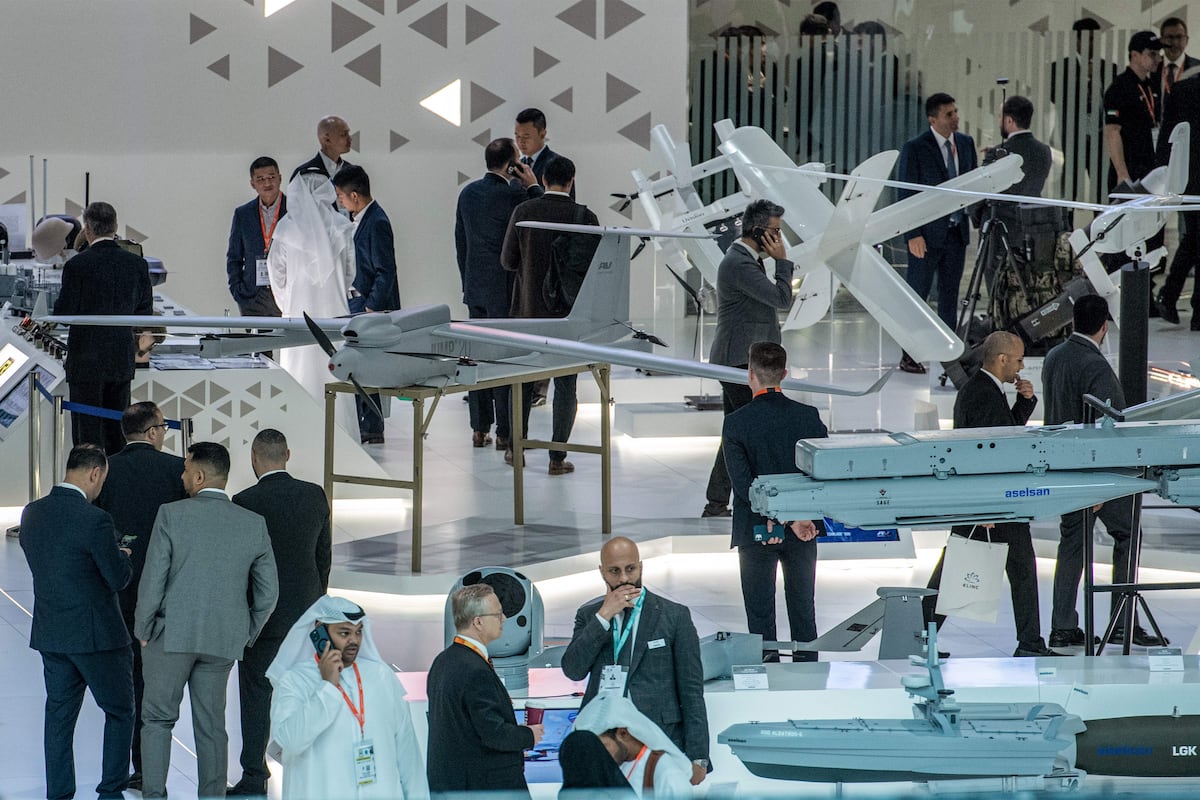
The Defense News Top 100 list of defense companies for 2024 includes five Turkish firms, up from four in 2023, amid rising global demand for Turkish defense products and increasing maturation of the Turkish defense industrial sector in terms of breadth and sophistication. Ranked Turkish companies include:
ASELSAN (42, up from 47 last year): producer of defense electronics, especially communications and sensors. ASELSAN was the first Turkish company to crack the Top 100 in 2008 and has consistently been the leading Turkish defense revenue generator.
Turkish Aerospace Industries (TAI or TUSAS ) (50, up from 58): leader in Turkish defense aerospace joined the Top 100 in 2012 and has been the second-ranked Turkish firm since.
ROKETSAN (71, up from 80): producer of unguided rockets and guided missiles has seen revenues grow in large part due to integration of its products on Turkish unmanned systems
Machine and Chemical Industry ( MKE ) (84, new): producer of small arms, artillery and ammunition; shifted from a state-owned enterprise to a joint stock company in 2022. Has helped meet booming demand for artillery and related munitions.
Military Factory and Shipyard Enterprise ( AFSAT ) (94, new): aircraft, naval and land systems production and overhaul. Major deals with Pakistan (MILGEM) Burkina Faso/Togo (minesweepers).
Several intriguing aspects of this grouping stand out. First, Turkey occupies an elite tier among international arms producers. Only eight countries have more than two companies in the Top 100, and only three — the U.S., U.K. and China — have more Top 100 firms than Turkey.
The U.S. is in a class of its own, but with 25% defense export growth and $5.5 billion revenue in 2023 , the Turks have risen to near the top of the second tier.
Second, arguably the most dynamic sector in the Turkish defense industry — unmanned systems — has yet to produce a Top 100 firm, but seems poised to do so moving forward. BAYKAR , makers of the TB2 Bayraktar and Akinci Unmanned Combat Aerial Vehicles, has become the standard bearer for Turkish defense innovation and operational impact across various global hotspots.
TAI produces high-quality drones as well, and a half-dozen other companies have established Turkey as an innovation and price-performance leader in the field. That five Turkish companies not centered on unmanned systems made the Top 100 makes clear that an understanding of Turkish defense needs to look beyond the headline-generating drones.
Third, such growth could not have happened without an expanding network of clients and partners for the Turkish defense industry; while indigenization has increased the milli ve yerli (locally/nationally produced) portion of domestic defense needs, globally significant firms require foreign markets and partnerships. Turkish defense sector firms — there are over 3,500 total — have built partnerships with Ukraine , the U.K. , Pakistan , Gulf countries and many others .
The Turkish Ministers of Defense (Yasar Guler) and Defense Industry (Haluk Gorgun) addressed a bilateral Defense Industrial Base conference in Washington on the sidelines of the recent NATO summit, and touted the Turkish defense sector as young, dynamic, enjoying unique access in the Mideast, Africa, Balkans, Central and South Asia — and uniquely positioned to partner with U.S. firms.
Guler assessed during the conference that Turkish exports in the first half of 2024 showed continued growth, up 20% year on year.
An interesting bit of context for this year’s Top 100 is the directed efforts in Washington and Ankara to deepen and broaden defense cooperation between the two NATO allies. The Turkish American Business Council (TAIK, headed by Murat Ozyegin) and the American Turkish Business Roundtable (ATBR, led by retired Gen. James Jones) have convened two conferences in 2024 to bring U.S. and Turkish firms together to explore areas for collaboration and cooperation in the defense sector.
With the example of the recently approved F-16 deal and joint venture for 155mm artillery ammunition between Turkish and American firms , we might expect to see many more such joint ventures emerge.
The Turkish defense industry still faces growing pains and dilemmas, though. The International Institute for Strategic Studies noted in a recent study that the Turkish defense industry is at a crossroads: Having increased self-sufficiency and developed significant export capabilities through defense sector indigenization, it has developed a new dependence on sustained exports and defense industrial cooperation for advanced subsystems.
Substantial autonomy does not mean full independence in the defense sector but rather continued complex interdependence. This implies that continued growth will require proactive consultation and mutual compromise between Ankara, Washington and NATO allies in Europe.
Another check on growth has been the Turkish government’s struggles with inflation, which is currently subject to a significant campaign of monetary tightening. Upward pressure on interest rates from the battle against hyperinflation has made domestic bank loans less attractive for developing small firms into major defense industrial players.
One solution has been for such firms to pursue public listing rather than domestic bank or government financing.
Demand remains high in the global market for the solid price-performance balance that has typified Turkish defense products. That augurs well for the continued growth of the five current Top 100-member Turkish firms and those aspiring to join the club.
If 2024 sees progress in Ankara’s efforts to bring down inflation, continued macroeconomic stability and sustained Great Power Competition, this year’s strong performance from the Turkish national defense sector should be reprised or accelerated over the next twelve months.
Richard Outzen is a nonresident senior fellow at the Atlantic Council’s Turkey Program.
《防务新闻》发布的2024年全球百强防务公司榜单中,土耳其公司上榜五家,高于2023年的四家。这主要得益于全球对土耳其防务产品的需求不断增长,以及土耳其国防工业在广度和复杂性方面日益成熟。上榜的土耳其公司包括:
阿塞尔桑(ASELSAN,排名第42位,较去年的第47位有所上升):国防电子产品生产商,尤其擅长通信和传感器领域。阿塞尔桑是2008年首家跻身全球百强企业的土耳其公司,并一直是土耳其国防领域收入最高的企业。
土耳其航空航天工业公司(TAI 或 TUSAS)(排名第 50 位,较上年上升 58 位):土耳其国防航空航天领域的领导者,于 2012 年进入前 100 强,此后一直是排名第二的土耳其公司。
ROKETSAN(71,较上年同期上涨80):这家生产非制导火箭和制导导弹的公司,其收入增长主要得益于其产品与土耳其无人系统的整合。
机械化工(MKE)(84,新股):小型武器、火炮和弹药生产商;2022年从国有企业转变为股份制公司。帮助满足了火炮及相关弹药的旺盛需求。
军工企业及造船厂(AFSAT)(1994年成立):生产和维修飞机、海军及陆地系统。主要业务包括与巴基斯坦(MILGEM)以及布基纳法索/多哥(扫雷艇)的合作。
这个排名有几个引人注目的特点。首先,土耳其在国际武器生产国中占据着精英地位。只有八个国家拥有两家以上企业跻身前100强,而只有三个国家——美国、英国和中国——的百强企业数量超过土耳其。
美国独树一帜,但土耳其凭借 2023 年 25% 的国防出口增长和 55 亿美元的收入,已跻身第二梯队前列。
其次,土耳其国防工业中最具活力的领域——无人系统——目前尚未出现百强企业,但未来似乎有望实现这一目标。TB2 Bayraktar 和 Akinci 无人作战飞行器的制造商 BAYKAR 已成为土耳其国防创新和在全球多个热点地区发挥作战作用的标杆企业。
TAI也生产高质量的无人机,此外还有其他六家公司也使土耳其在该领域确立了创新和性价比领先地位。五家并非专注于无人系统的土耳其公司跻身百强之列,这清楚地表明,要了解土耳其国防,不能仅仅局限于那些频频登上新闻头条的无人机。
第三,如果没有不断扩大的土耳其国防工业客户和合作伙伴网络,这种增长是不可能实现的;虽然国产化提高了国内国防需求中“百万级”(本地/国家生产)的比例,但具有全球影响力的企业需要海外市场和合作伙伴关系。土耳其国防企业——总数超过3500家——已与乌克兰、英国、巴基斯坦、海湾国家以及其他许多国家建立了合作关系。
土耳其国防部长(亚沙尔·居莱尔)和国防工业部长(哈鲁克·戈尔贡)在最近举行的北约峰会期间于华盛顿出席了双边国防工业基地会议,并称赞土耳其国防工业年轻、充满活力,在中东、非洲、巴尔干半岛、中亚和南亚拥有独特的市场准入优势,并且具有与美国公司合作的独特优势。
古勒在会议上评估认为,2024 年上半年土耳其出口将继续增长,同比增长 20%。
今年百强榜单的一个有趣背景是,华盛顿和安卡拉都在积极努力深化和拓展这两个北约盟国之间的防务合作。土耳其裔美国商业理事会(TAIK,由穆拉特·厄兹耶金领导)和美土商业圆桌会议(ATBR,由退役将军詹姆斯·琼斯领导)已决定在2024年召开两场会议,旨在汇聚美土两国企业,共同探讨国防领域的合作方向。
以最近土耳其和美国公司批准的 F-16 交易和 155 毫米火炮弹药合资企业为例,我们或许可以期待看到更多类似的合资企业出现。
尽管如此,土耳其国防工业仍然面临着发展中的阵痛和困境。国际战略研究所最近的一项研究指出,土耳其国防工业正处于十字路口:一方面,土耳其国防工业通过国防领域的自主化提高了自给自足能力并发展了显著的出口能力;另一方面,它也对先进子系统的持续出口和国防工业合作产生了新的依赖。
实质性自主并不意味着国防领域的完全独立,而是指持续的复杂相互依存关系。这意味着,持续发展需要安卡拉、华盛顿和欧洲北约盟国之间积极磋商和相互妥协。
土耳其政府在应对通货膨胀方面面临的另一大制约因素是通胀问题,目前土耳其正大力推行货币紧缩政策。为遏制恶性通货膨胀而推高利率,使得国内银行贷款对小型企业发展成为大型国防工业企业的吸引力下降。
一种解决方案是让这类公司寻求上市,而不是寻求国内银行或政府融资。
全球市场对土耳其国防产品一贯秉持的性价比优势依然需求旺盛。这预示着目前位列全球百强企业榜单的五家土耳其公司以及那些渴望跻身其中的企业将迎来持续增长。
如果安卡拉在降低通货膨胀、保持宏观经济稳定和持续参与大国竞争方面于 2024 年取得进展,那么土耳其国防部门今年的强劲表现应该会在未来十二个月内得到延续或加速发展。
理查德·奥岑是大西洋理事会土耳其项目的非常驻高级研究员。