US, Australia announce additional basing and weapons plans美国和澳大利亚宣布新增军事基地和武器计划
Officials announced several initiatives Tuesday that seek to solidify defense cooperation between the two nations.
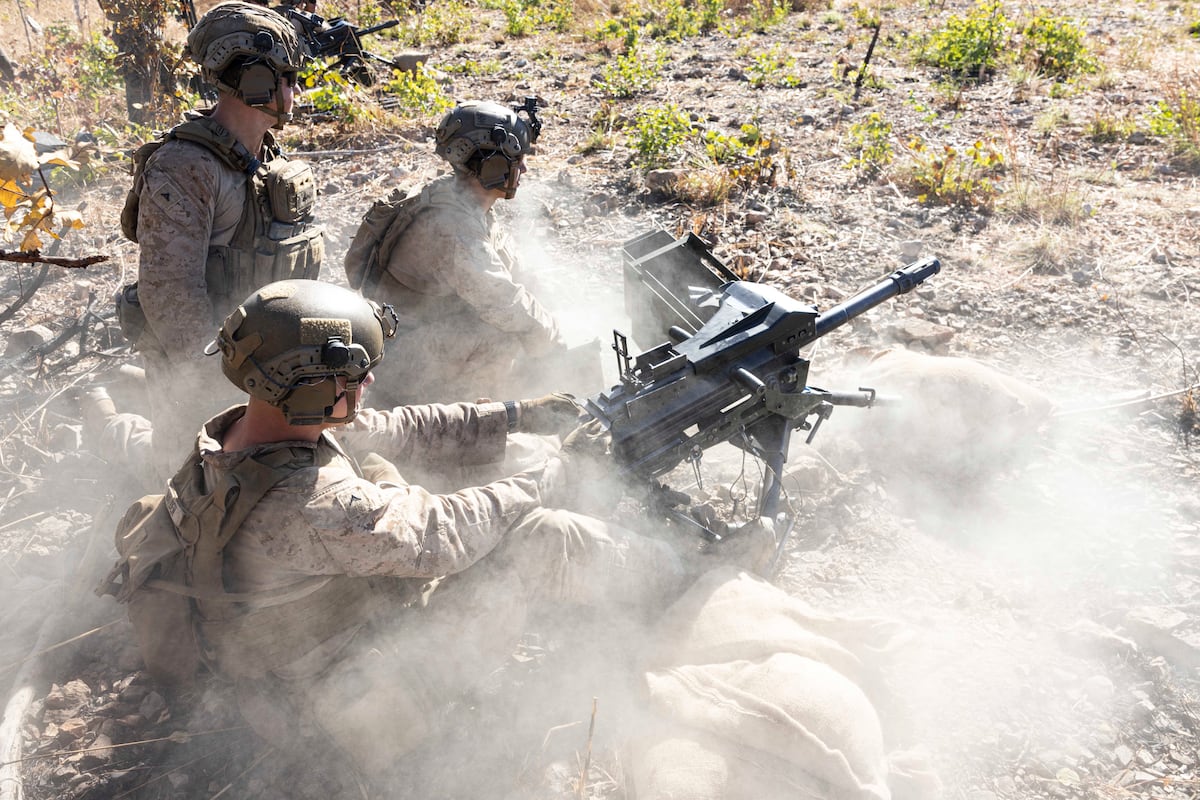
The U.S. and Australia announced new agreements on basing and building weapons together Tuesday, part of an attempt to cement the Biden administration’s strategy in the region.
The first initiative will increase America’s access to bases on Australia’s western and northern coasts. The U.S. has been spending hundreds of millions of dollars on military construction there in recent years, in part because of the area’s proximity to the South China Sea, where Beijing has lately grown more aggressive.
Going forward, the U.S. will now be able to work at Royal Australian Air Force Base Learmonth, on Australia’s western shores, and will also expand its construction work on Scherger and Curtin, two other bases on different ends of the northern coast, according to the Pentagon.
“All of this will mean more a maritime patrol aircraft and reconnaissance aircraft operating from bases across northern Australia,” American Secretary of Defense Lloyd Austin said at a Tuesday press conference.
The two countries will also work to build, sustain and develop weapons more closely together. Most of these will be munitions: either the guided multiple launch rocket system, or GMLRS, or the precision strike missile, known as PrSM.
By December, the two countries will finish plans to assemble the first munition and produce and sustain the second together. To coordinate the work, the U.S. will open a new joint programs office in Huntsville, Alabama, next year.
The two efforts were unveiled following an annual meeting of the countries’ top defense and diplomatic officials at the U.S. Naval Academy in Annapolis, Maryland.
All of this work is riding the coattails of AUKUS, an agreement inked three years ago between the U.S., U.K. and Australia to share nuclear-powered submarines and develop high-tech weapons. That pact has helped loosen each country’s regulations on sharing such technology, particularly tight American restrictions that have long frustrated U.S. allies.
American defense officials described the Australia meeting as the final leg in a race to make their work in Asia more enduring. Austin traveled last week to Japan and the Philippines, where he held similar meetings with his counterparts there. The Annapolis summit would be the end of what a senior U.S. defense official labeled, with a flourish, the “10 most consequential days for U.S. defense ties in the region since the start of the administration.”
“The Biden administration has done a lot to deepen and expand” its alliances, said Eric Sayers, who studies the region at the American Enterprise Institute. “The work now is less on building and more on implementing.”
In the shadow of these meetings, of course, is how long either country has to implement the plans. America’s election in November could make Washington’s foreign policy more transactional if Donald Trump returns to the White House. And Australia’s own elections next September could end in a hung parliament, perhaps empowering parties that are more skeptical of the alliance with America, said Rory Medcalf, an Australian defense analyst.
That said, Washington and Canberra have long been close, despite political change. While Pentagon officials have a nickname for each of their partners in the region, it’s telling that Austin calls U.S.-Australia ties “the unbreakable alliance.”
And the motivating force behind their recent cooperation — a more aggressive and powerful China — isn’t likely to change anytime soon.
“I believe there’s a clear direction of travel for the Australian-American relationship,” said Charles Edel, the Australia chair at CSIS . “The question increasingly is the speed of delivery.”
Noah Robertson is the Pentagon reporter at Defense News. He previously covered national security for the Christian Science Monitor. He holds a bachelor’s degree in English and government from the College of William & Mary in his hometown of Williamsburg, Virginia.
美国和澳大利亚周二宣布了关于共同部署和建造武器的新协议,这是拜登政府巩固该地区战略的举措之一。
第一项举措将增加美国使用澳大利亚西部和北部沿海军事基地的机会。近年来,美国已在该地区投入数亿美元用于军事建设,部分原因是该地区靠近南海,而北京近来在南海的行动日益强硬。
据五角大楼称,今后美国将能够在澳大利亚西海岸的皇家澳大利亚空军基地利尔蒙斯开展工作,并将扩大在北部海岸两端的另外两个基地——谢尔格和柯廷的建设工作。
“所有这些都意味着将有更多的海上巡逻机和侦察机从澳大利亚北部各地的基地起飞作战,”美国国防部长劳埃德·奥斯汀在周二的新闻发布会上说。
两国还将更紧密地合作,共同研发、维护和发展武器。这些武器大多是弹药:包括制导多管火箭炮系统(GMLRS)和精确打击导弹(PrSM)。
到12月,两国将完成首批弹药的组装计划,并共同生产和维护第二批弹药。为了协调这项工作,美国将于明年在阿拉巴马州亨茨维尔设立一个新的联合项目办公室。
这两项举措是在两国最高国防和外交官员于马里兰州安纳波利斯美国海军学院举行年度会议后公布的。
所有这些工作都得益于三年前美国、英国和澳大利亚签署的《奥库斯协议》(AUKUS)。该协议旨在共享核动力潜艇并研发高科技武器。这项协议有助于放宽各国在共享此类技术方面的限制,尤其是美国长期以来令其盟友感到不满的严格限制。
美国国防官员称,此次澳大利亚会晤是其在亚洲开展更持久工作的最后阶段。奥斯汀上周访问了日本和菲律宾,并与当地同行举行了类似的会晤。一位美国高级国防官员盛赞此次安纳波利斯峰会,称其为“本届政府执政以来,对美国在该地区防务关系影响最为深远的十天”。
美国企业研究所研究该地区的埃里克·塞耶斯表示:“拜登政府在深化和扩大其联盟方面做了很多工作。现在的工作重点不再是构建联盟,而是落实联盟。”
当然,这些会晤背后最大的悬念在于两国究竟有多少时间来落实这些计划。如果唐纳德·特朗普重返白宫,11月的美国大选可能会使华盛顿的外交政策更加注重交易。澳大利亚国防分析家罗里·梅德卡夫表示,澳大利亚明年9月的大选可能会出现悬浮议会,这或许会增强那些对美澳联盟持怀疑态度的政党的影响力。
尽管如此,尽管政治风云变幻,华盛顿和堪培拉的关系一直十分密切。五角大楼官员给该地区的每个伙伴都起了个绰号,但值得注意的是,奥斯汀称美澳关系为“牢不可破的联盟”。
而促使他们近期合作的根本原因——一个更加咄咄逼人、实力更强的中国——不太可能很快改变。
“我认为澳美关系的发展方向很明确,”战略与国际研究中心(CSIS)澳大利亚事务主席查尔斯·埃德尔表示,“现在的问题越来越在于实现速度。”
诺亚·罗伯逊是《防务新闻》的五角大楼记者。他此前曾为《基督教科学箴言报》报道国家安全新闻。他拥有弗吉尼亚州威廉斯堡威廉与玛丽学院的英语和政治学学士学位。