Parents say new P1 rules widen school options but disrupt plans for alumni, families who moved homes家长们表示,新的P1规则拓宽了学校选择范围,但打乱了校友和搬家家庭的计划。
The changes weaken the role that residential location currently plays in determining access, say one expert. Read more at straitstimes.com.
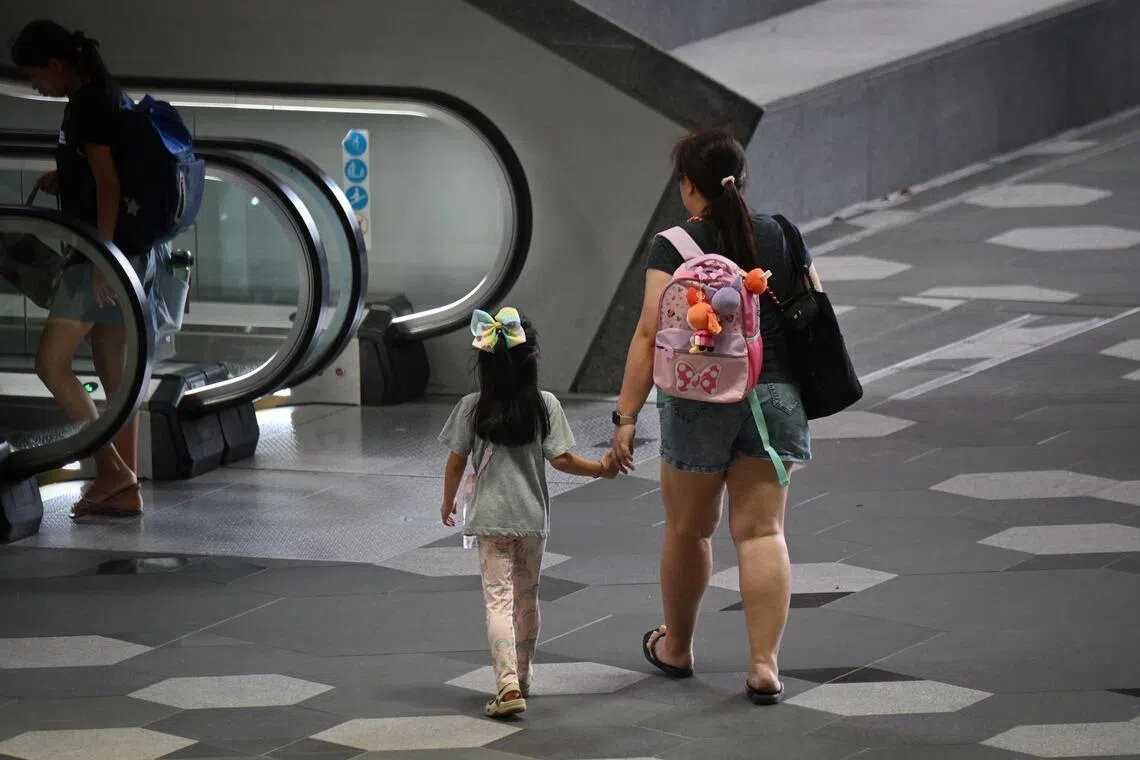
Parents who moved homes to get their children into popular schools said the latest changes have disrupted plans they had made years in advance.
Vanessa Paige Chelvan
Published Sep 11, 2026, 09:05 PM
Updated Sep 11, 2026, 09:05 PM
The Ministry of Education will increase Phase 2C spots from 40 to 60 for schools with 180+ P1 intakes, benefiting families without prior school ties.
A new two-track system will split Phase 2C places at 12 schools, reserving half for children within 2km and half for those farther away, affecting popular Bukit Timah schools.
Parents who moved homes for school proximity feel disrupted, prompting some to reconsider choices or volunteer for priority phases amid concerns over increased competition and balloting.
SINGAPORE - Changes to the Primary 1 registration exercise from 2027 have prompted parents to rethink school choices, with some now considering schools that were previously out of reach.
Families without prior links to schools nearby now stand to benefit from more places, after the Education Ministry announced on Sept 10 that 60 places will be reserved for Phase 2C, up from 40 currently.
The increase in Phase 2C spots applies to schools with intakes of 180 or more P1 pupils.
But parents who had moved homes to get their children into popular schools said the latest changes have disrupted plans they had made years in advance, particularly for those targeting schools in the Bukit Timah area.
For marketing specialist Janice Lim, 40, the increased number of spaces in Phase 2C could help her five-year-old son secure a place in Hong Wen School, a five-minute walk from their home.
The family had applied for the school in the same phase for their daughter in 2025, but were unsuccessful.
“We thought it would be good for our girl given its emphasis on Mandarin. But we were out-balloted at Phase 2C,” she said, adding that her daughter is now studying in another school nearby.
Though the changes do benefit them, Lim and her husband know there could be other roadblocks, as the school has faced balloting in Phase 2C in past years.
“There has been quite a few BTO developments popping up in our estate in recent years, so this change may also be mitigated by a potentially larger pool of applicants who live within 1km of the school,” she said.
A new two-track system for 12 schools, including the popular Nanyang Primary School in Bukit Timah and Tao Nan School in Marine Parade, will also be implemented from the 2027 registration exercise.
Under this scheme, half of the Phase 2C places at these schools will be for children living within 2km of the school, and the other half for those living farther away. These 12 schools were chosen by MOE as they are located in neighbourhoods where public housing makes up less than 40 per cent of homes within 2km of the school.
This is significantly lower than the national average, in which about four in five of Singapore’s resident population live in public housing.
House move a wrong move?
Elizabeth Chan, 35, bought a condominium in Bukit Timah in August 2026 within 2km of Raffles Girls’ Primary School, in preparation to register her three-year-old daughter for Primary 1 in 2029.
Chan said she chose RGPS for its strong academic track record and emphasis on character and holistic development. RGPS is one of the 12 identified schools.
She said the changes came as “a shock”, particularly for families like hers who have no prior ties to the school and had moved in hopes of securing a place through Phase 2C.
In 2026, RGPS had 128 applicants for 137 vacancies in Phase 2C.
Under the new rules, the spots available for families like hers who live within 2km of the school would be halved to 69 spots, possibly resulting in tighter competition.
“I feel quite blindsided,” said Chan, a doctor who works part-time. “If we had known this last month, we may not have bought the property.”
But she noted that the choice of school was not “the single most important factor” in her daughter’s education. The school’s values and environment were also important considerations, she said.
Charmaine Tan, 42, a mom of two girls aged two and four, had planned a similar move. The family had been renting a condominium unit in River Valley for five years and will be moving to a new one in Bukit Timah in October.
She had hoped to live within 1km from the Singapore Chinese Girls’ School (SCGS), also one of the 12 schools to implement the new two-track system.
With places for families living within 2km halved at Phase 2C, she said they would have considered other neighbourhoods like Joo Chiat, where there are more girls’ schools.
Tan, who works part-time at a start up, said she had heard about SCGS through her close friends who are alumni of the school, and whose daughters study there too.
“They all had great things to say about it, especially about the teachers and school leaders,” she said.
To improve her chances of securing a spot for her daughter in the school, Tan said she intends to apply to be a parent volunteer there. If unsuccessful, she will monitor the vacancies available between RGPS and SCGS, before deciding which to apply to in Phase 2C.
For Jasmine Lin, 37, her main priority when applying for a school for her daughter in 2026 was convenience.
Though she is an alumnus of Mee Toh School, which is popular in the Punggol area, it is quite a distance from her home in Hougang. Her daughter eventually secured a place through Phase 2C in Paya Lebar Methodist Girls’ school, located just behind their home.
“School bus fees are very expensive now, and they will keep climbing. Apart from that, I think the commute with my kids in the morning is actually quite precious, especially as they’re growing up,” said Lin, who runs a pre-school.
When her one-year-old son applies for a primary school in the future, she said the family will look for a co-ed school nearby too.
“For us, I think the question is what is the purpose of education. The teachers and schools do play a huge role in educating children, but we believe so much of it also lies on the families,” she said.
More options to consider
Jason Tan, a professor at the National Institute of Education (NIE), said the varied reactions of parents to the changes reflect the difficulty of balancing different criteria, such as social mixing, recognising alumni contributions, convenience for families and giving parents greater choice.
“Some of these objectives may not always be mutually compatible,” he said.
For example, he said giving priority based on distance or alumni ties may, at times, work against greater social mixing, which MOE said was one of the objectives of these changes alongside widening access to schools.
While the impact of the changes will vary across schools, NIE’s Tan said he hoped the changes would not lead to greater parental anxiety or more elaborate strategising.
“Ironically, when you open up more choices, in a way you are asking parents to include even more in their decision making,” he said.
A mother who wanted to be known as Ang, said her husband is an alumni of ACS Primary which will move to Tengah in 2030. The school will be more than 2km away from their current home in Plantation Acres.
The 33-year-old dance teacher said her two-year-old son is due to register for Primary 1 in the same year the school begins operations at its new campus.
The family had hoped to secure a spot through Phase 2A, but with fewer places in earlier phases, Ang said she feels “a little more anxious” about her son’s chances under the phase, which is meant for alumni priority.
Ang also thinks that entry to the school will become more competitive when it becomes co-ed from 2030.
“The pool of children who can apply will naturally become bigger,” Ang said, though the school will have a larger intake as the Tengah campus is bigger.
Still, she understands the need to give more places to Phase 2C applicants. “So for us, it’s a bit of mixed feelings,” she said, adding that the family is also considering Pioneer Primary, a stone’s throw away from their home.
Kelvin Seah, an associate professor from the department of Economics at the National University of Singapore, said the two-track scheme “weakens the strong role that residential location currently plays in determining access”.
One possible effect is that parents may consider a wider range of schools, he said. For the 12 schools under the new scheme, families living beyond 2km will have a more credible chance of admission, Seah said, and some parents who previously would not have considered these schools may decide to enter the applicant pool.
But Seah expects some pushback from alumni parents, parent volunteers and members of affiliated churches or clans, who may face lower chances of admission under earlier phases such as 2A and 2B.
He added that with the reduction of places to make room for 20 more spots in Phase 2C, more schools would have had to ballot .
In the 2026 exercise, 31 schools went through a ballot at Phase 2A. If the new changes had been in place, 27 more schools could have faced the prospect of a ballot.
Chan said she is now reconsidering her choice of RGPS for her daughter. She may consider applying to other schools in the area, if her family is just outside the 2km radius, she said.
“It might actually give us more chance of entering some of the schools,” she said, adding that she plans to watch how the balloting exercise unfolds in 2027 before making a decision with her husband.
Chan is also considering volunteering at a school so that her daughter could qualify for Phase 2B, to give her an earlier chance to secure a place.
While Chan, who said she attended a “neighbourhood school”, understands the rationale behind the changes and agrees that children can benefit from having classmates from diverse backgrounds, she said she still felt disappointed about the impact on families who had made decisions based on the previous system.
Still, she said, the school her daughter attends would not determine her future.
“Family upbringing is still the most important… Wherever she ends up, I hope that she knows that she’ll be okay.”
Additional reporting by Shermaine Ang
Elisha Tushara is a correspondent at The Straits Times, specialising in Singapore’s education landscape.
Vanessa Paige Chelvan is a correspondent at The Straits Times. She writes about all things transport and pens the occasional commentary.
Primary 1 registration
Education and schools
为了让孩子进入热门学校而搬家的家长表示,最新的变化打乱了他们多年前制定的计划。
凡妮莎·佩奇·切尔万
发布于 2026 年 9 月 11 日晚上 9:05
更新于2026年9月11日晚上9:05
教育部将把第二阶段C类名额从40个增加到60个,适用于一年级新生人数超过180人的学校,这将使那些之前没有学校背景的家庭受益。
新的双轨制将把 12 所学校的 2C 阶段学位一分为二,一半留给 2 公里以内的儿童,一半留给更远的儿童,这将影响到热门的武吉知马学校。
一些为了离学校近而搬家的家长感到生活受到影响,这促使一些家长重新考虑他们的选择,或者在担心竞争加剧和抽签的情况下,自愿参加优先阶段的入学。
新加坡——从 2027 年起,小学一年级入学登记制度的改革促使家长们重新考虑择校,一些家长现在开始考虑以前遥不可及的学校。
教育部于 9 月 10 日宣布,第二阶段 C 的入学名额将从目前的 40 个增加到 60 个,这意味着与附近学校没有先前联系的家庭现在可以获得更多入学名额。
第二阶段C类名额的增加适用于招收180名或以上一年级学生的学校。
但一些为了让孩子进入热门学校而搬家的家长表示,最新的变化打乱了他们多年前制定的计划,尤其是那些目标是武吉知马地区学校的家长。
对于 40 岁的市场营销专家 Janice Lim 来说,2C 期增加的学位名额可以帮助她 5 岁的儿子在离家步行 5 分钟的鸿文学校获得一个学位。
该家庭曾在同一阶段为他们的女儿申请了这所学校(2025 年入学),但没有成功。
“我们觉得这所学校注重汉语教学,对我们女儿来说应该不错。但我们在第二期C轮抽签中落选了,”她说道,并补充说她的女儿现在在附近另一所学校就读。
尽管这些变化确实对他们有利,但林和她的丈夫知道可能还有其他障碍,因为该校在过去几年中曾面临 2C 阶段的抽签。
“近年来,我们这片区域涌现出了不少组屋开发项目,因此,居住在学校1公里范围内的申请人数可能会大幅增加,这也有助于缓解这一变化带来的影响,”她说。
从 2027 年的注册工作开始,包括武吉知马的南洋小学和马林百列的道南小学在内的 12 所学校也将实行新的双轨制。
根据这项计划,这些学校第二阶段C期学位的一半将分配给居住在学校2公里范围内的儿童,另一半则分配给居住在更远地区的儿童。教育部之所以选择这12所学校,是因为它们位于公共房屋占比低于40%的社区,这些社区距离学校2公里以内。
这远低于全国平均水平,新加坡约有五分之四的居民居住在公共房屋中。
搬家是个错误决定吗?
35岁的伊丽莎白·陈于2026年8月在武吉知马购买了一套公寓,距离莱佛士女子小学不到2公里,为她三岁的女儿在2029年入学小学一年级做准备。
陈女士表示,她选择RGPS是因为该校拥有卓越的学术成就,并且注重品格培养和全面发展。RGPS是12所获选学校之一。
她说,这些变化“令人震惊”,尤其是对于像她这样的家庭来说,他们之前与这所学校没有任何联系,搬家是为了希望通过 2C 阶段获得一个名额。
2026 年,RGPS 在第二阶段 C 中,有 128 名申请人竞争 137 个空缺职位。
根据新规定,像她家这样住在学校2公里范围内的家庭可获得的学位名额将减半至69个,这可能会导致竞争更加激烈。
“我感觉完全被蒙在鼓里,”兼职医生陈女士说。“如果我们上个月就知道这件事,我们可能就不会买这处房产了。”
但她指出,择校并非女儿教育中“最重要的因素”。她还表示,学校的价值观和环境也是重要的考量因素。
42岁的陈嘉敏(Charmaine Tan)是两个女儿的母亲,女儿分别两岁和四岁,她也计划进行类似的搬家。一家人在里弗谷(River Valley)租住了一套公寓五年,将于10月搬到武吉知马(Bukit Timah)的新家。
她原本希望住在距离新加坡女子中学(SCGS)1公里以内的地方,该校也是实施新的双轨制教育体系的12所学校之一。
她说,由于 2C 期 2 公里范围内的家庭住房数量减少了一半,他们原本会考虑其他社区,例如如切,那里有更多女子学校。
在一家创业公司兼职的谭女士表示,她是通过几位好友了解到新加坡女子中学的,这些好友都是该校的校友,她们的女儿也在那里读书。
她说:“他们都对学校赞不绝口,尤其是对老师和学校领导。”
为了提高女儿入学的几率,谭女士表示她打算申请成为该校的家长志愿者。如果申请失败,她会密切关注RGPS和SCGS的招生名额空缺情况,再决定在第二阶段C期申请哪所学校。
37 岁的 Jasmine Lin 在为女儿申请 2026 年入学的学校时,最优先考虑的是便利性。
虽然她毕业于榜鹅地区颇受欢迎的美都学校,但学校离她位于后港的家相当远。她的女儿最终通过巴耶利峇卫理公会女子学校第二期C阶段的招生,获得了入学资格,这所学校就在她们家后面。
“现在校车费用非常贵,而且还会继续上涨。除此之外,我觉得早上送孩子上学其实很珍贵,尤其是在他们成长的过程中,”经营一家幼儿园的林女士说道。
她说,将来她一岁的儿子申请小学时,他们一家也会在附近找一所男女同校的学校。
“对我们来说,我认为问题在于教育的目的是什么。教师和学校在教育孩子方面确实发挥着巨大作用,但我们相信,家庭也负有很大责任,”她说。
更多可供选择的方案
新加坡国立教育学院 (NIE) 教授 Jason Tan 表示,家长们对这些变化的不同反应反映了平衡不同标准的难度,例如社交互动、认可校友贡献、家庭便利以及给予家长更多选择。
他说:“这些目标中有些可能并不总是相互兼容的。”
例如,他表示,根据距离或校友关系给予优先权有时可能会阻碍社会融合,而教育部表示,社会融合是这些改革的目标之一,另一个目标是扩大入学机会。
尽管这些变化对不同学校的影响会有所不同,但NIE的陈先生表示,他希望这些变化不会导致家长更加焦虑或制定更复杂的策略。
“具有讽刺意味的是,当你提供更多选择时,某种程度上你实际上是在要求父母在做决定时考虑更多因素,”他说。
一位化名Ang的母亲说,她的丈夫是ACS小学的校友,该校将于2030年迁至登加(Tengah)。新校址距离他们目前位于种植园(Plantation Acres)的家超过2公里。
这位 33 岁的舞蹈老师说,她两岁的儿子将在同一年入学小学一年级,而这所学校也将在新校区开始运营。
Ang一家原本希望通过第二阶段A来确保儿子能获得入学名额,但由于前几阶段的名额较少,Ang表示她对儿子在第二阶段(优先考虑校友)的入学机会感到“有些焦虑”。
Ang 还认为,从 2030 年起,这所学校实行男女同校政策后,入学竞争将会更加激烈。
“符合申请资格的孩子人数自然会增加,”Ang说道,尽管由于登加校区规模更大,学校的招生人数也会更多。
不过,她也理解需要给第二阶段C类申请者提供更多名额。“所以对我们来说,心情有点复杂,”她说,并补充道,他们一家也在考虑离家很近的先锋小学。
新加坡国立大学经济系副教授 Kelvin Seah 表示,双轨制方案“削弱了居住地在决定入学机会方面目前发挥的重要作用”。
他表示,一项可能的结果是,家长们可能会考虑更多类型的学校。谢先生说,在新方案涵盖的12所学校中,居住地距离学校2公里以外的家庭将有更大的入学机会,一些以前从未考虑过这些学校的家长可能会决定加入申请行列。
但 Seah 预计会遭到一些校友家长、家长志愿者以及附属教会或宗族成员的反对,因为他们在 2A 和 2B 等早期阶段的录取机会可能会较低。
他还补充说,由于为了在第二阶段C期增加20个名额而减少了名额,更多的学校将不得不进行抽签。
在 2026 年的评估中,第二阶段 A 有 31 所学校进行了投票表决。如果新的改革措施已经实施,那么可能还有 27 所学校需要进行投票表决。
陈女士表示,她正在重新考虑是否让女儿就读RGPS学校。她说,如果她家住在2公里半径范围之外,她可能会考虑申请该地区的其他学校。
“这或许能让我们更有机会进入一些学校,”她说道,并补充说,她计划在2027年观察抽签过程的进展,然后再和丈夫一起做出决定。
陈女士还在考虑到学校做义工,这样她的女儿就可以符合第二阶段B的入学资格,从而更早地获得入学名额。
陈女士表示,她就读于一所“邻里学校”,她理解这些改变背后的理由,也同意孩子们可以从与不同背景的同学一起学习中受益,但她仍然对那些根据旧制度做出决定的家庭所受到的影响感到失望。
不过,她表示,女儿就读的学校并不能决定她的未来。
“家庭教育仍然是最重要的……无论她最终身在何处,我都希望她知道她会没事的。”
Shermaine Ang亦有报道
Elisha Tushara 是《海峡时报》的记者,专门报道新加坡的教育领域。
Vanessa Paige Chelvan是《海峡时报》的记者。她撰写有关交通运输方面的文章,偶尔也撰写评论文章。
小学一年级注册
教育和学校