Rafales on the upswing? French fighter eyes additional Mideast sales阵风战机势头正盛?法国战机瞄准中东市场销售
The Dassault-made warplane stands to fill a gap between Europe's Eurofighter and the American F-35, according to analysts.
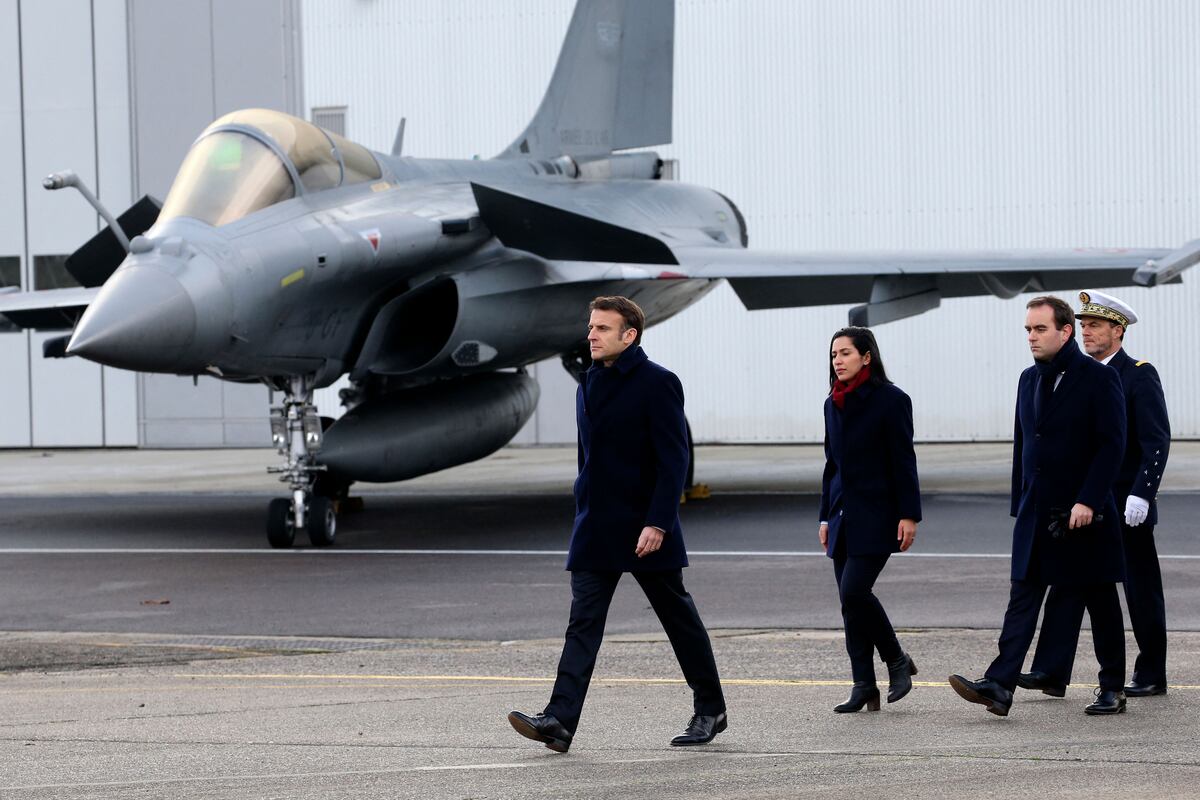
MILAN — The United States’ dominance of the combat aircraft industry could see increased competition as the French hope to bolster their slice of the pie. With a German veto blocking Eurofighter deliveries to Saudi Arabia, and amid Israel’s persistent opposition to any F-35 sale to Qatar, this may be French firm Dassault’s opportunity to further push its fighter in the region.
In July, French Armed Forces Minister Sébastien Lecornu visited Qatar where he met with the emir in hopes of strengthening their strategic partnership through operational and industrial cooperation.
Following the trip, reports emerged that Qatar may opt to purchase an additional 24 Rafale from Dassault, which would bring the country’s fleet to 60, having acquired an initial batch of 24 in 2015 and another 12 in 2017. Although Qatar’s Defense Ministry hasn’t announced its decision, analysts have told Defense News such as sale appears likely.
“That they would come back to the table seeking another order is relatively unsurprising considering they already have the Rafale as well as another French-designed and -built type — the Mirage 2000-5 — in their fighter inventory,” said Dan Darling, the director of military and defense markets at Forecast International.
Qatar would want a fleet of 60 Rafales for two reasons, Darling explained: for stronger deterrence capabilities and for political purposes. There is a political element attached to major defense purchases, he said, where Qatar “buys” influence with the exporting nation and vice versa.
Richard Aboulafia, a managing director at Aerodynamic Advisory who has tracked aircraft programs for more than 30 years, agrees the diplomatic benefits are key.
“They [the Qatari government] view fighter aircraft as an opportunity to purchase a strategic relationship, and given their recent history with Gulf neighbors, these are extremely important for Qatar,” he said, referring to a recent diplomatic crisis that saw several nations accuse Doha of funding terrorist groups. “It isn’t [about] the Rafales.”
Experts, however, diverge over who could be the next customer of the Rafale in the greater Middle East. For Aboulafia, Saudi Arabia appears to be the logical contender, even if the U.S. agrees to sell F-35s to the kingdom.
“They [Saudis] already source F-15s from the U.S. and of course want F-35s. But as they are eager to continue their dual-source decision, they’ll want to buy another aircraft from another provider. Eurofighter tranche 2 is on hold. There’s really nobody else other than France,” he said.
Earlier this summer, while Germany relaxed arms restrictions on Saudi Arabia, it remained firm in blocking deliveries of the Eurofighter to the kingdom. The twin-engine aircraft is made by a consortium of French firm Airbus, British business BAE Systems and Italian company Leonardo.
Germany’s decision appeared to have irked the U.K., given four years ago the British foreign secretary demanded Germany lift its restraints on weapons transfers because they stood to hurt the British defense industry. BAE Systems is one of the largest private sector employers in Saudi Arabia, where it employs 5,300 Saudis — 57% of its total workforce there.
Although Germany’s Eurofighter veto could benefit Dassault in the absence of other competition, Darling said Saudi Arabia may not have a vested interest in the French jet because it fairly recently purchased more than 80 American-made F-15 fighters, upgraded legacy versions, and has expressed interest in buying the F-35 and joining the Global Combat Air Program. The latter is a trilateral effort involving the U.K., Japan and Italy to develop a sixth-generation fighter.
Meanwhile, Saudi Arabia and Iran are trying to improve diplomatic relations, with the latter’s foreign affairs minister visiting the kingdom Aug. 17. However, Gaspard Schnitzler, a research fellow at the French Institute for International and Strategic Affairs, said it’s unlikely this would hinder or stop France from selling the Rafale to Saudi Arabia.
It’s possible pressure from public opinion or potential monetary risks could interfere with such a sale, “but we have to keep in mind that for years now, the Gulf has been one of the major export areas for French weapons,” he added.
A more probable export opportunity for the Rafale, besides in Qatar, would be a top-up order by Egypt in light of the collapsed deal with Russia for Su-35 aircraft that fell through over U.S. sanctions, said Darling. Cairo last placed an order for 30 additional Rafales in 2021, bringing its fleet number to 54.
But no matter how well-placed the Rafale seems, an additional order from Qatar or its neighbors does not necessarily signal a declining demand for the fifth-generation fighter. Aboulafia and and Darling agreed that F-35 interest in the Middle East remains strong.
Several Arab states would indeed purchase the F-35 were it not for Israel’s strict opposition. For instance, Qatar in 2020 reportedly made a formal request for the Lockheed Martin jet, which was closely followed by Israel declaring it would oppose any F-35 sale by the U.S. to the Gulf country. A concrete deal has yet to materialize.
“The main question is whether the U.S. would even be willing to sell the F-35 to Doha. It has been wary about F-35 sales to Arab states, primarily because of its commitment to ensuring Israel’s qualitative military edge over its neighbors and rivals in the region,” Darling said.
The same approach has applied to Saudi Arabia’s interest in the F-35.
“Saudi Arabia would love F-35s, but unless the Biden administration offers them as part of a deal that involves normalized relations with Israel, it won’t happen for a few more years at least,” Aboulafia said. “None of these difficulties are in play in Europe, so European countries can just order F-35s without worry about disapproval.”
Elisabeth Gosselin-Malo was a Europe correspondent for Defense News. She covers a wide range of topics related to military procurement and international security, and specializes in reporting on the aviation sector. She is based in Milan, Italy.
米兰——随着法国希望扩大其在战斗机领域的份额,美国在战斗机行业的统治地位可能会面临更激烈的竞争。由于德国否决了向沙特阿拉伯交付欧洲战斗机的计划,而以色列也一直反对向卡塔尔出售F-35战斗机,这或许是法国达索公司进一步在该地区推广其战斗机的良机。
7 月,法国武装部队部长塞巴斯蒂安·勒科尔努访问卡塔尔,并与埃米尔会面,希望通过作战和工业合作加强两国的战略伙伴关系。
访问结束后,有报道称卡塔尔可能选择从达索公司再购买24架“阵风”战斗机,这将使该国的“阵风”机队规模达到60架。卡塔尔于2015年首次购入24架,2017年又购入12架。尽管卡塔尔国防部尚未宣布这一决定,但分析人士告诉《防务新闻》,这笔交易似乎很有可能。
“考虑到他们已经拥有阵风战斗机以及另一款法国设计和制造的战斗机——幻影2000-5——所以他们再次回到谈判桌寻求另一笔订单并不令人意外,”Forecast International 军事和国防市场总监丹·达林表示。
达林解释说,卡塔尔想要购买60架“阵风”战斗机有两个原因:一是增强威慑能力,二是出于政治目的。他指出,重大国防采购都带有政治因素,卡塔尔可以通过购买战机来提升对出口国的影响力,反之亦然。
空气动力学咨询公司总经理理查德·阿布拉菲亚 (Richard Aboulafia) 追踪飞机项目已有 30 多年,他认为外交上的好处至关重要。
“他们(卡塔尔政府)将战斗机视为建立战略关系的契机,鉴于他们近期与海湾邻国的历史,这些战斗机对卡塔尔至关重要,”他说道,并提及了近期多国指责多哈资助恐怖组织的危机。“这与阵风战斗机无关。”
然而,专家们对于中东地区下一个“阵风”战斗机的客户是谁存在分歧。阿布拉菲亚认为,即使美国同意向沙特阿拉伯出售F-35战斗机,沙特阿拉伯似乎也是最有可能的候选国。
“他们(沙特人)已经从美国采购了F-15战斗机,当然也想要F-35。但由于他们急于继续推行双来源采购策略,他们还会想从其他供应商那里购买另一种战机。欧洲战斗机第二批次的订单目前处于搁置状态。除了法国,真的没有其他选择了。”他说道。
今年夏天早些时候,尽管德国放松了对沙特阿拉伯的武器限制,但仍坚决阻止向沙特交付台风战斗机。这款双引擎战斗机由法国空中客车公司、英国航空航天系统公司(BAE Systems)和意大利莱昂纳多公司组成的联合体制造。
德国的决定似乎激怒了英国,因为四年前英国外交大臣曾要求德国解除对武器转让的限制,理由是这些限制会损害英国国防工业。英国航空航天系统公司(BAE Systems)是沙特阿拉伯最大的私营企业雇主之一,在沙特雇佣了5300名沙特籍员工,占其在沙特员工总数的57%。
尽管德国否决欧洲战斗机项目可能在缺乏其他竞争的情况下使达索公司受益,但达林表示,沙特阿拉伯可能对这款法国战机没有既得利益,因为沙特不久前刚刚购买了80多架美国制造的F-15战斗机,并对老款机型进行了升级,而且沙特还表示有兴趣购买F-35战斗机并加入全球空中作战计划(Global Combat Air Program)。后者是由英国、日本和意大利三国共同参与的第六代战斗机研发项目。
与此同时,沙特阿拉伯和伊朗正努力改善外交关系,伊朗外交大臣于8月17日访问了沙特阿拉伯。然而,法国国际与战略事务研究所的研究员加斯帕德·施尼茨勒表示,这不太可能阻碍或阻止法国向沙特阿拉伯出售“阵风”战斗机。
公众舆论的压力或潜在的货币风险可能会干扰这笔交易,“但我们必须记住,多年来,海湾地区一直是法国武器的主要出口地区之一,”他补充道。
达林表示,除了卡塔尔之外,阵风战斗机更可能的出口机会是埃及追加订单。此前,埃及与俄罗斯的苏-35战斗机交易因美国制裁而告吹。开罗最近一次订购阵风战斗机是在2021年,当时订购了30架,使其机队规模达到54架。
但无论“阵风”战斗机的市场地位看起来多么稳固,卡塔尔或其邻国的额外订单并不一定意味着对这款第五代战斗机的需求正在下降。阿布拉菲亚和达林都认为,中东地区对F-35战斗机的兴趣依然浓厚。
如果不是以色列的强烈反对,一些阿拉伯国家确实会购买F-35战机。例如,据报道,卡塔尔在2020年正式提出购买洛克希德·马丁公司生产的这款战机的请求,随后以色列立即宣布反对美国向这个海湾国家出售任何F-35战机。目前,尚未达成任何具体协议。
达林表示:“主要问题是美国是否愿意向多哈出售F-35战机。美国一直对向阿拉伯国家出售F-35战机持谨慎态度,主要是因为美国致力于确保以色列在军事上对邻国和该地区的竞争对手保持优势。”
同样的道理也适用于沙特阿拉伯对 F-35 的兴趣。
阿布拉菲亚表示:“沙特阿拉伯非常想要F-35战机,但除非拜登政府将其作为与以色列关系正常化协议的一部分,否则至少在未来几年内都无法实现。欧洲不存在这些困难,因此欧洲国家可以放心订购F-35,不必担心遭到反对。”
伊丽莎白·戈斯林-马洛曾任《防务新闻》欧洲通讯员。她的报道涵盖军事采购和国际安全等广泛领域,尤其擅长航空领域的报道。她常驻意大利米兰。