Campaigning at the top of the world: The Arctic and homeland defense在世界之巅展开战役:北极与国土防御
It is becoming increasingly apparent that competitors, such as Russia and China, desire to influence international norms and alter the behaviors of allies, partners and Arctic-focused countries for the benefit of these competitor nations.
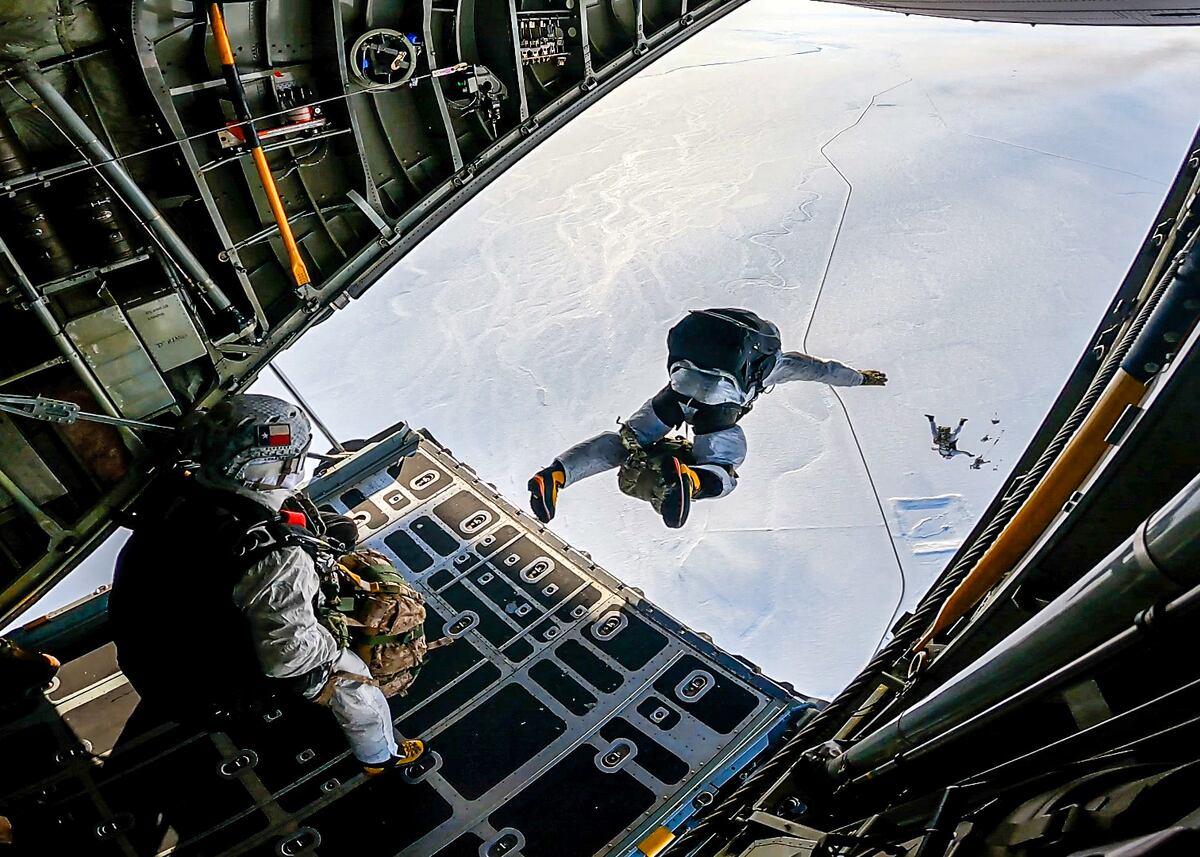
The 2022 National Defense Strategy outlines defending the homeland as priority No. 1. To ensure homeland defense, North American Aerospace Defense Command and U.S. Northern Command require credible capability to deter strategic competitor actions across the whole of our area of operations and responsibility, including the Arctic . While some may challenge the importance of the Arctic to U.S. national security, Russia and the People’s Republic of China have clearly made long-term Arctic investments in the region.
Increasing access to the Arctic due to warming conditions will likely result in more frequent economic and military competition with these nations, which will have homeland defense ramifications. To deter malign activities in the region, ensure the defense of North America, and realize a stable and secure Arctic, we must demonstrate a commensurate commitment to the region.
It is becoming increasingly apparent that competitors, such as Russia and the People’s Republic of China, desire to influence international norms and alter the behaviors of allies, partners and Arctic-focused countries for the benefit of these competitor nations. Russia and the PRC have made their intentions for the region clear through the promulgation of strategic documents that underline their commitment to the Arctic.
The Arctic is a top priority for Russia. Russia is aggressively militarizing the region while proclaiming intent to infringe upon freedom of navigation in the Northern Sea Route. Russia will likely continue enhancing its military capabilities and developing the region’s resources and infrastructure. These enhancements will strengthen Russian air and coastal defense capabilities, expand its nuclear deterrent credibility, and increase its ability to place North America at risk.
Russia’s geographic proximity to North America makes it the most acute security concern to U.S. interests in the Arctic; however, Russia’s irresponsible behavior in Ukraine highlights reasons why all Arctic nations should be concerned with Russian activities.
As a self-declared “near-Arctic nation,” the PRC is endeavoring to establish a foothold in the northern latitudes . The PRC has consistently increased its scientific, economic and military activities in the Arctic over the last five years, working toward increasing influence through economic exploitation to gain access to vital natural resources. The PRC is applying all instruments of national power to enhance its Arctic influence, including expanding initiatives such as the Polar Silk Road.
As competitors invest in military infrastructure and Arctic capabilities in such close proximity to the U.S., allies and partners, they bring the threat even closer to home. Ultimately, the advanced threat capabilities that Russia and the PRC can bring to the Arctic region reduces key leadership decision space and erodes credible deterrence options.
The northern lights glow above an Avenger air defense system during the Arctic Edge exercise at Eielson Air Force Base, Alaska, on March 11, 2022. (Staff Sgt. Dylan Murakami/U.S. Air Force)
The actions taken by strategic competitors in the Arctic necessitate a response. The National Defense Strategy outlines the importance of campaigning to strengthening deterrence capabilities and attaining military advantages through enhancing joint force capabilities. Both of these elements are essential toward achieving the National Defense Strategy’s goal of a stable Arctic region where threats to the U.S. homeland are deterred.
The purpose of Arctic campaigning is to deter strategic competitors and shape their behavior in order to remain in competition and avoid crisis and conflict. One prominent example of Arctic campaigning is exercises that demonstrate capability, readiness and the will to operate in the northern latitudes. Executing large-scale joint and multinational force exercises under Arctic conditions exhibits credible deterrence while broadcasting robust U.S. defense capabilities. These demonstrations, when messaged appropriately, have a profound deterrent effect on competitors, molding perceptions and shaping their actions.
Campaigning also entails collaborating with likeminded nations, organizations and institutions in pursuit of shared objectives. We will realize a key collaboration milestone this month with the official opening of the Ted Stevens Center for Arctic Security Studies — the Department of Defense’s newest regional center. The Ted Stevens Center will focus on building strong networks with domestic and international Arctic-minded security leaders, and conducting focused analytical research, all aimed toward advancing the department’s priorities in the Arctic.
Aligned under NORTHCOM, the center will advance awareness on Arctic issues, address the implications of environmental change and emphasize the importance of maintaining a rules-based order in the region. The institutional capabilities that the Ted Stevens Center brings will help promote the Arctic as a peaceful and stable region, where international cooperation based on shared values is paramount.
Ceding the Arctic to competitors will result in accepting unnecessary risk to North America. The changing Arctic environment and increasing competitor activities in the region should invoke a sense of urgency in all of us. Efforts to develop and demonstrate Arctic capabilities, as well as establishing or strengthening multilateral organizations to address Arctic concerns, are clear indicators of progress.
More work remains, however, to effectively deter malign competitor activities, while also working together with likeminded nations to ensure an Arctic region governed by a rules-based international order.
U.S. Air Force Gen. Glen D. VanHerck leads North American Aerospace Defense Command and U.S. Northern Command. In this latter role, he serves as the Defense Department’s Arctic capabilities advocate.
2022年《国防战略》将保卫国土列为首要任务。为确保国土安全,北美防空司令部和美国北方司令部需要具备可靠的能力,以威慑战略竞争对手在整个作战和责任区(包括北极地区)的行动。尽管有人质疑北极对美国国家安全的重要性,但俄罗斯和中华人民共和国显然已在该地区进行了长期的北极投资。
由于气候变暖,进入北极地区的通道日益增多,这很可能导致与这些国家之间更频繁的经济和军事竞争,进而对国土安全产生影响。为了遏制该地区的恶意活动,确保北美安全,并实现北极的稳定与安全,我们必须展现出对该地区相应的承诺。
越来越明显的是,俄罗斯和中华人民共和国等竞争对手企图影响国际规范,并改变盟友、伙伴和北极相关国家的行为,以谋取自身利益。俄罗斯和中国已通过发布战略文件,明确表达了其对该地区的意图,这些文件强调了它们对北极的承诺。
北极是俄罗斯的重中之重。俄罗斯正积极推进该地区的军事化,并宣称意图侵犯北方航道的航行自由。俄罗斯很可能继续增强其军事能力,并开发该地区的资源和基础设施。这些举措将提升俄罗斯的空中和海岸防御能力,增强其核威慑力,并提高其威胁北美的能力。
俄罗斯与北美地理位置接近,这使其成为美国在北极地区利益面临的最紧迫的安全威胁;然而,俄罗斯在乌克兰的不负责任的行为凸显了所有北极国家都应该关注俄罗斯活动的原因。
作为自诩的“近北极国家”,中华人民共和国正努力在北纬地区建立立足点。过去五年,中华人民共和国持续加大在北极地区的科研、经济和军事活动力度,力图通过经济开发获取关键自然资源,从而扩大其影响力。中华人民共和国正动用一切国家力量来增强其在北极的影响力,包括扩大“极地丝绸之路”等项目。
随着竞争对手在距离美国、盟友和伙伴如此之近的地区投资军事基础设施和北极能力,他们将威胁带到了更近的地方。最终,俄罗斯和中国能够向北极地区提供的先进威胁能力,缩小了关键领导层的决策空间,并削弱了可信的威慑选项。
2022年3月11日,在阿拉斯加艾尔森空军基地举行的“北极边缘”演习中,北极光在“复仇者”防空系统上方闪耀。(美国空军参谋军士迪伦·村上摄)
战略竞争对手在北极地区的行动必须予以回应。《国防战略》强调了通过加强联合作战能力来强化威慑能力和获取军事优势的重要性。这两个要素对于实现《国防战略》的目标至关重要,即建立一个稳定的北极地区,从而有效遏制对美国本土的威胁。
北极战略行动的目的是威慑战略竞争对手,并引导其行为,从而维持竞争优势,避免危机和冲突。北极战略行动的一个显著例子是开展演习,以展示在北极地区作战的能力、战备状态和意愿。在北极条件下进行大规模联合多国部队演习,既能展现可信的威慑力,又能传递美国强大的国防实力。这些演习,如果信息传递得当,会对竞争对手产生深远的威慑作用,塑造其认知并影响其行动。
开展行动也包括与志同道合的国家、组织和机构合作,以实现共同目标。本月,我们将迎来一项重要的合作里程碑——泰德·史蒂文斯北极安全研究中心正式启用,这是美国国防部最新的区域中心。泰德·史蒂文斯中心将致力于与国内外关注北极安全的领导人建立紧密的联系,并开展重点分析研究,所有这些都旨在推进国防部在北极地区的优先事项。
该中心隶属于美国北方司令部,将致力于提升公众对北极问题的认识,探讨环境变化的影响,并强调维护该地区基于规则的秩序的重要性。泰德·史蒂文斯中心所带来的机构能力将有助于推动北极成为一个和平稳定的地区,在这个地区,基于共同价值观的国际合作至关重要。
将北极拱手让给竞争对手,将使北美承担不必要的风险。北极环境的变化以及竞争对手在该地区日益频繁的活动,应当唤起我们所有人的紧迫感。努力发展和展示北极能力,以及建立或加强旨在解决北极问题的多边组织,都是取得进展的明确标志。
然而,要有效遏制恶意竞争对手的活动,还有更多工作要做,同时还要与志同道合的国家共同努力,确保北极地区在以规则为基础的国际秩序下运作。
美国空军上将格伦·D·范赫克领导北美防空司令部和美国北方司令部。在后者职位上,他担任国防部北极能力倡导者。