China, South Korea clash over THAAD anti-missile system中韩就“萨德”反导系统发生冲突
The differences between South Korea and China underscored a reemerging rift between the countries just a day after their top diplomats met in eastern China and expressed hope that the issue wouldn’t become a “stumbling stone” in relations.
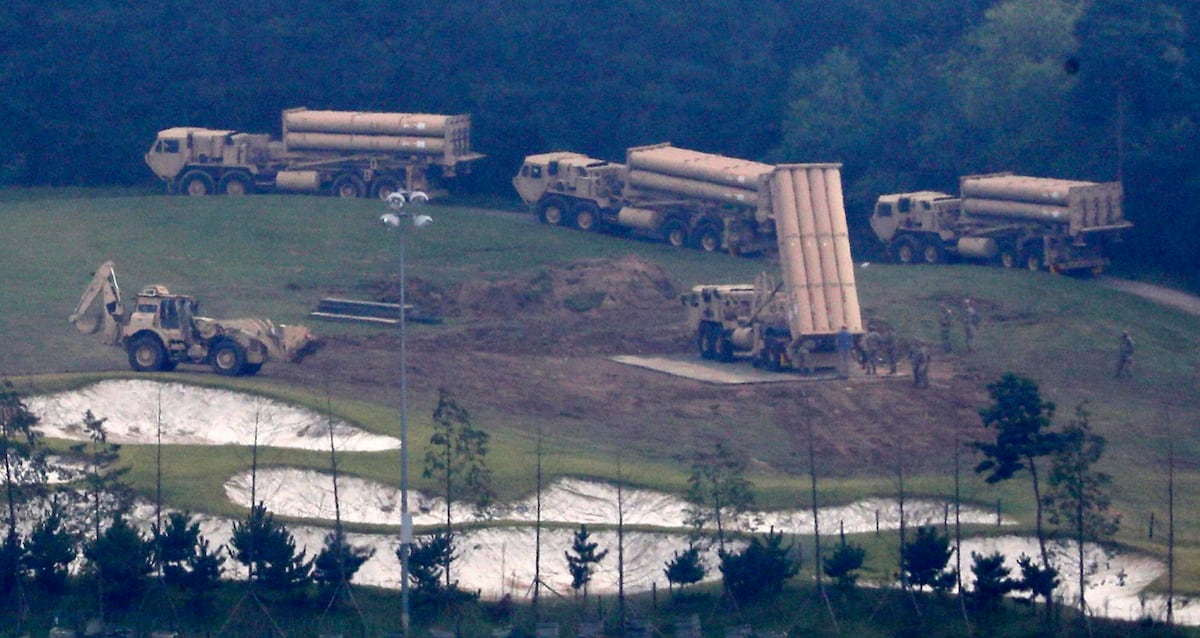
SEOUL, South Korea — South Korea’s government stressed Wednesday it will make its own decisions in strengthening its defenses against North Korean threats, rejecting Chinese calls that it continue the polices of Seoul’s previous government that refrained from adding more U.S. anti-missile batteries that are strongly opposed by Beijing.
The differences between South Korea and China underscored a reemerging rift between the countries just a day after their top diplomats met in eastern China and expressed hope that the issue wouldn’t become a “stumbling stone” in relations.
Bilateral ties took a significant hit in 2017 when South Korea installed a missile battery employing the U.S. Terminal High-Altitude Area Defense system , or THAAD, in response to nuclear and missile threats from North Korea.
The decision drew an angry reaction from China, which said the anti-missile system could be reconfigured to peer into its territory. Beijing retaliated by suspending Chinese group tours to South Korea and obliterating the China business of South Korean supermarket giant Lotte, which had provided land for the missile system.
South Korea’s previous president, Moon Jae-in, a liberal who pursued engagement with North Korea, tried to repair relations with Beijing by pledging the “Three Nos” — that Seoul wouldn’t deploy any additional THAAD systems; wouldn’t participate in U.S.-led missile defense networks; and wouldn’t form a trilateral military alliance with Washington and Tokyo.
Moon’s dovish approach has been discarded by his conservative successor, Yoon Suk Yeol, who has vowed stronger security cooperation with Washington and expressed a willingness to acquire more THAAD batteries to counter accelerating North Korean efforts to expand its nuclear weapon and missile programs.
Commenting on Tuesday’s meeting between Chinese Foreign Minister Wang Yi and his South Korean counterpart, Park Jin, Chinese Foreign Ministry spokesperson Wang Wenbin in a briefing Wednesday reaffirmed Beijing’s stance that the THAAD system in South Korea undermines its “strategic security interests.”
He added that Seoul had committed to a policy of “Three Nos and One Limit,” the latter apparently referring to a pledge to limit the operations of the THAAD battery already in place, something Seoul has never publicly acknowledged.
“The two foreign ministers had another in-depth exchange of views on the THAAD issue, making clear their respective positions and enhancing mutual understanding,” Wang said. He said the minsters agreed to “attach importance to each other’s legitimate concerns and to continue to handle and control the issue prudently” to prevent it from becoming a “stumbling stone” in bilateral relations.
South Korea’s Foreign Ministry said in a statement that it understands that Wang was referring to the policies of the Moon government with the “Three Nos and One Limit” remark.
It said the Yoon government has maintained that THAAD is a defensive tool for protecting South Korean lives and property , and that it’s a national security matter that Seoul isn’t willing to negotiate with Beijing. It also insisted that the “Three Nos” were never a formal agreement or promise.
“During the meeting, both sides confirmed their differences over the THAAD matter, but also agreed that the issue should not become an obstacle that influences relations between the countries,” the ministry said.
South Korea, a longtime U.S. ally, has struggled to strike a balance between the United States and the increasingly assertive foreign policy of Chinese President Xi Jinping’s government.
Deepening conflicts between Washington and Beijing over a broad range of issues including Taiwan, Hong Kong, trade, and Chinese claims to large sections of the South China and East China Seas have increased fears in Seoul that it would become squeezed between its treaty ally and largest trading partner.
During his meeting with Park, Wang Yi said the countries should be “free from external interference” and shouldn’t interfere in each other’s domestic affairs, an apparent jab at Seoul’s tilt toward Washington.
Wang also called for the countries to work together to maintain stable industrial supply chains, a possible reference to fears that Chinese technology policy and U.S. security controls might split the world into separate markets with incompatible standards and products, slowing innovation and raising costs. South Korea is facing pressure from the Biden administration to participate in a U.S.-led semiconductor alliance involving Taiwan and Japan which China opposes.
Associated Press video producer Liu Zheng in Beijing contributed to this report.
韩国首尔——韩国政府周三强调,韩国将自行决定如何加强防御以应对朝鲜的威胁,拒绝了中国要求其继续执行首尔前政府政策的呼吁。前政府的政策是避免增加更多美国反导系统,而北京强烈反对这些系统。
就在韩国和中国高级外交官在中国东部会晤并表示希望该问题不会成为两国关系中的“绊脚石”的第二天,两国之间的分歧凸显了两国之间再次出现的裂痕。
2017 年,韩国为应对朝鲜的核导弹威胁,部署了采用美国“萨德”末段高空区域防御系统的导弹防御系统,双边关系因此受到严重打击。
这一决定激起了中国的强烈不满,中方称该反导系统可能被重新配置,用于窥视中国领土。北京方面随即采取报复措施,暂停了中国赴韩旅游团,并关闭了为该反导系统提供土地的韩国超市巨头乐天集团在中国的业务。
韩国前总统文在寅是一位奉行与朝鲜接触政策的自由派人士,他曾试图通过承诺“三不”来修复与北京的关系——首尔不会部署任何额外的萨德系统;不会参与美国主导的导弹防御网络;也不会与华盛顿和东京结成三边军事联盟。
文在寅的鸽派立场已被其保守的继任者尹锡烈所抛弃。尹锡烈誓言要加强与华盛顿的安全合作,并表示愿意购买更多“萨德”系统,以应对朝鲜加速扩大其核武器和导弹计划的努力。
中国外交部发言人汪文斌在周三的例行记者会上评论了周二中国外交部长王毅与韩国外长朴镇的会晤,重申了北京的立场,即韩国部署的萨德系统损害了中国的“战略安全利益”。
他还补充说,首尔已承诺奉行“三个不和一个限制”的政策,后者显然是指限制已部署的萨德系统行动的承诺,而首尔从未公开承认这一点。
王毅表示,“两国外长就萨德问题再次深入交换意见,明确了各自立场,增进了相互了解。” 他说,双方同意“重视彼此的合理关切,继续审慎处理和管控这一问题”,防止其成为双边关系的“绊脚石”。
韩国外交部在一份声明中表示,据了解,王毅所说的“三个不和一个限制”指的是文在寅政府的政策。
声明称,尹锡悦政府一直坚持认为“萨德”系统是保护韩国人民生命财产安全的防御工具,这是国家安全问题,首尔不愿与北京就此进行谈判。声明还强调,“三不”原则从未成为正式协议或承诺。
“会晤期间,双方确认了在萨德问题上的分歧,但也一致认为该问题不应成为影响两国关系的障碍,”外交部表示。
韩国作为美国的长期盟友,一直努力在美国和中国国家主席习近平领导的政府日益强硬的外交政策之间寻求平衡。
华盛顿和北京在包括台湾、香港、贸易以及中国对南海和东海大片海域的主权声索等一系列问题上的冲突日益加深,这加剧了首尔的担忧,即它将被夹在条约盟友和最大贸易伙伴之间。
王毅在与朴槿惠会晤时表示,两国应该“不受外部干涉”,不应该干涉彼此的内政,这显然是在暗讽首尔倾向于华盛顿。
王毅还呼吁各国共同努力维护稳定的产业供应链,这可能暗示他担心中国的科技政策和美国的安全管控措施可能会将世界分裂成标准和产品不兼容的独立市场,从而减缓创新并推高成本。韩国正面临来自拜登政府的压力,要求其加入由美国主导、台湾和日本参与的半导体联盟,而中国对此表示反对。
美联社驻北京视频制作人刘铮对本报道亦有贡献。