China appears to wind down military drills near Taiwan中国似乎正在逐步停止在台湾附近的军事演习。
China reaffirmed its threat to use military force to bring self-governing Taiwan under its control, amid threatening Chinese military exercises.
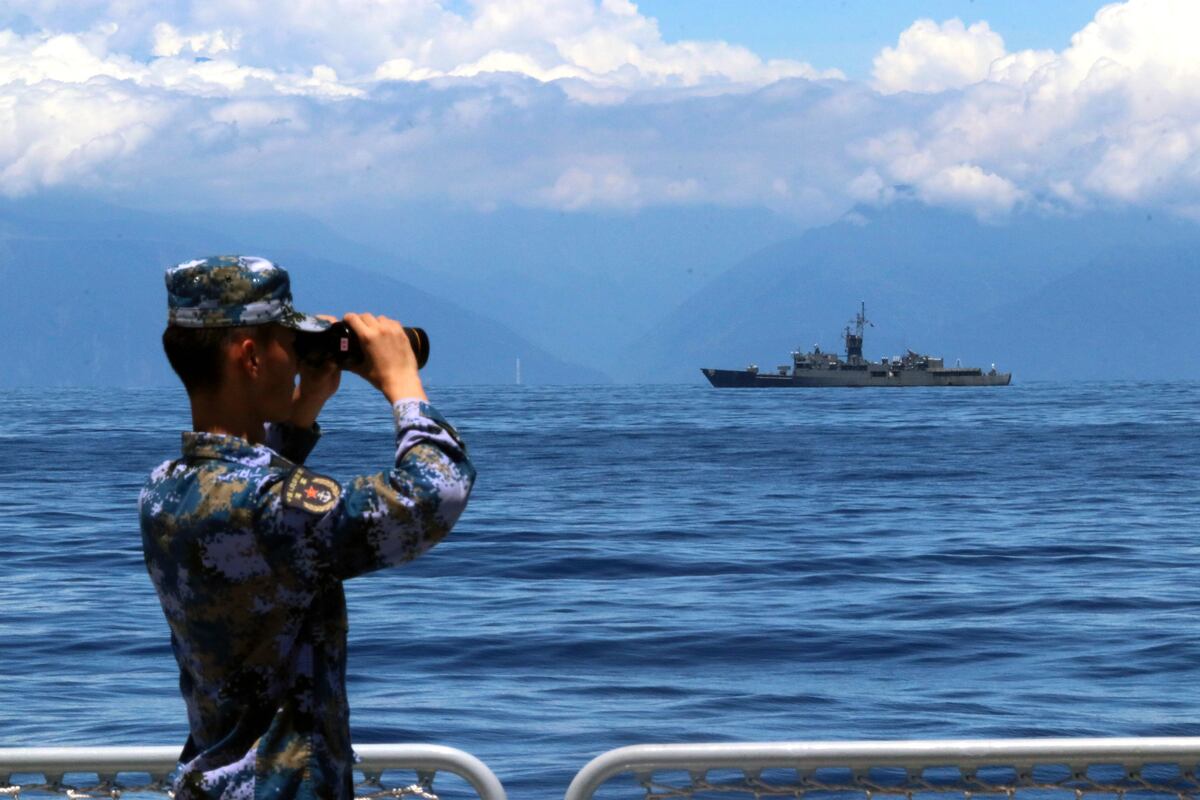
BEIJING — China on Wednesday repeated military threats against Taiwan while appearing to wind down wargames near the self-governing island it claims as its own territory that have raised tensions between the two sides to their highest level in years.
The message in a lengthy policy statement issued by the Cabinet’s Taiwan Affairs Office and its news department followed almost a week of missile firings and incursions into Taiwanese waters and airspace by Chinese warships and air force planes.
The actions disrupted flights and shipping in a region crucial to global supply chains, prompting strong condemnation from the U.S., Japan and others.
An English-language version of the Chinese statement said Beijing would “work with the greatest sincerity and exert our utmost efforts to achieve peaceful reunification.”
“But we will not renounce the use of force, and we reserve the option of taking all necessary measures. This is to guard against external interference and all separatist activities,” it said.
“We will always be ready to respond with the use of force or other necessary means to interference by external forces or radical action by separatist elements. Our ultimate goal is to ensure the prospects of China’s peaceful reunification and advance this process,” it said.
China says its threatening moves were prompted by a visit to Taiwan last week by U.S. House Speaker Nancy Pelosi, but Taiwan says such visits are routine and that China used her trip merely as a pretext to up its threats.
In an additional response to Pelosi’s visit, China said it was cutting off dialogue on issues from maritime security to climate change with the U.S., Taiwan’s chief military and political backer.
Taiwan’s foreign minister warned Tuesday that the Chinese military drills reflect ambitions to control large swaths of the western Pacific , while Taipei conducted its own exercises to underscore its readiness to defend itself.
Beijing’s strategy would include controlling the East and South China seas via the Taiwan Strait and imposing a blockade to prevent the U.S. and its allies from aiding Taiwan in the event of an attack, Joseph Wu told a news conference in Taipei.
Beijing extended the ongoing exercises without announcing when they would end, although they appeared to have run their course for the time being.
China’s Defense Ministry and its Eastern Theater Command both issued statements saying the exercises had achieved their targets of sending a warning to those favoring Taiwan’s formal independence and their foreign backers.
Taiwan President Tsai Ing-wen and her Democratic Progressive Party administration are “pushing Taiwan into the abyss of disaster and sooner or later will be nailed to the pillar of historical shame!” Defense Ministry spokesperson Col. Tan Kefei was quoted as saying in a statement on the ministry’s website.
Troops taking part in the exercises had “effectively tested integrated joint combat capabilities,” the Eastern Theater Command said on its Twitter-like Weixin microblog.
“The theater troops will monitor changes in the situation in the Taiwan Strait, continue to conduct military training and preparations, organize regular combat readiness patrols in the Taiwan Strait, and resolutely defend national sovereignty and territorial integrity,” spokesperson Col. Shi Yi was quoted as saying.
Taiwan split with the mainland amid civil war in 1949, and its 23 million people overwhelmingly oppose political unification with China while preferring to maintain close economic links and de facto independence.
Through its maneuvers, China has pushed closer to Taiwan’s borders and may be seeking to establish a new normal in which it could eventually control access to the island’s ports and airspace.
Along with lobbing missiles into the Taiwan Strait , the nearly week-long drills saw Chinese ships and planes crossing the center line in the strait that has long been seen as a buffer against outright conflict.
The U.S., Taipei’s main backer, has also shown itself to be willing to face down China’s threats. Washington has no formal diplomatic ties with Taiwan in deference to Beijing, but is legally bound to ensure the island can defend itself and to treat all threats against it as matters of grave concern.
That leaves open the question of whether Washington would dispatch forces if China attacked Taiwan. U.S. President Joe Biden has said repeatedly the U.S. is bound to do so — but staff members have quickly walked back those comments.
Beyond the geopolitical risks, an extended crisis in the Taiwan Strait — a significant thoroughfare for global trade — could have major implications for international supply chains at a time when the world is already facing disruptions and uncertainty in the wake of the coronavirus pandemic and the war in Ukraine.
In particular, Taiwan is a crucial provider of computer chips for the global economy, including China’s high-tech sector.
In response to the drills, Taiwan has put its forces on alert, but has so far refrained from taking active countermeasures.
On Tuesday, its military held live-fire artillery drills in Pingtung County on its southeastern coast.
Australia’s recent change of government is a chance to “reset” its troubled relationship with China, but the new administration must “handle the Taiwan question with caution,” a Chinese envoy said Wednesday.
China has brushed aside foreign criticism of its actions, and its ambassador to Australia said he was “surprised” that Australia had signed a statement with the United States and Japan that condemned China’s firing of missiles into Japanese waters in response to Pelosi’s visit.
Xiao Qian told the National Press Club that China wanted to resolve the situation peacefully, but “we can never rule out the option to use other means.”
“So when necessary, when compelled, we are ready to use all necessary means,” Xiao said. “As to what does it mean by ‘all necessary means?’ You can use your imagination.”
In London, the British government summoned Chinese Ambassador Zheng Zeguang to the Foreign Office on Wednesday to demand an explanation of “Beijing’s aggressive and wide-ranging escalation against Taiwan” following Pelosi’s visit.
“We have seen increasingly aggressive behavior and rhetoric from Beijing in recent months, which threaten peace and stability in the region,” said Foreign Secretary Liz Truss. “The United Kingdom urges China to resolve any differences by peaceful means, without the threat or use of force or coercion.”
Associated Press writer Jill Lawless in London contributed to this report.
北京——周三,中国再次对台湾发出军事威胁,同时似乎正在逐步停止在台湾附近举行的军事演习。中国声称台湾是其领土的一部分,而这些演习已使双方的紧张关系升至多年来的最高水平。
在国务院台湾事务办公室及其新闻处发表的一份冗长的政策声明中,传达了上述信息。此前近一周,中国军舰和空军飞机一直在台湾海域和空域进行导弹发射和入侵。
这些行动扰乱了对全球供应链至关重要的地区的航班和航运,引发了美国、日本和其他国家强烈谴责。
中国声明的英文版称,北京将“以最大的诚意和最大的努力,为实现和平统一而努力”。
声明称:“但我们不会放弃使用武力,并保留采取一切必要措施的选项。这是为了防范外部干涉和一切分裂活动。”
声明称:“对于外部势力干涉或分裂分子激进行径,我们将始终准备好以武力或其他必要手段予以回应。我们的最终目标是确保中国和平统一的前景,并推进这一进程。”
中国称其采取威胁行动是由于美国众议院议长南希·佩洛西上周访问台湾所致,但台湾方面表示,此类访问是例行公事,中国只是利用佩洛西的访问作为借口来加大威胁力度。
针对佩洛西的访问,中国进一步表示,将切断与美国(台湾的主要军事和政治支持者)在从海上安全到气候变化等问题上的对话。
台湾外交部长周二警告称,中国的军事演习反映出其控制西太平洋大片地区的野心,而台北方面也举行了自己的演习,以强调其保卫自身的准备。
吴钊燮在台北举行的新闻发布会上表示,北京的战略将包括通过台湾海峡控制东海和南海,并实施封锁,以阻止美国及其盟友在台湾遭受攻击时向其提供援助。
北京方面延长了正在进行的演习,但没有宣布何时结束,尽管目前看来演习似乎已经接近尾声。
中国国防部和东部战区均发表声明称,此次演习达到了向支持台湾正式独立的势力及其外国支持者发出警告的目的。
台湾国防部发言人谭克非上校在国防部网站上发表声明称:“台湾总统蔡英文及其民进党政府正在将台湾推向灾难深渊,迟早会被钉在历史的耻辱柱上!”
东部战区在其类似推特的微博平台上表示,参加演习的部队“有效检验了联合作战能力”。
发言人石义上校表示:“战区部队将密切关注台湾海峡局势的变化,继续进行军事训练和准备,在台湾海峡组织定期战备巡逻,坚决捍卫国家主权和领土完整。”
台湾在 1949 年内战中与大陆分裂,其 2300 万人口绝大多数反对与中国进行政治统一,而更倾向于保持紧密的经济联系和事实上的独立。
中国通过一系列举措,不断向台湾边境推进,并可能寻求建立一种新的常态,最终控制台湾的港口和空域。
除了向台湾海峡发射导弹外,在近一周的演习中,中国舰船和飞机还越过了长期以来被视为防止公开冲突的海峡中心线。
美国作为台北的主要支持者,也已表明愿意应对中国的威胁。出于对北京的尊重,华盛顿与台湾没有正式外交关系,但依法有义务确保台湾拥有自卫能力,并将所有针对台湾的威胁视为严重关切事项。
这就引出了一个问题:如果中国攻击台湾,华盛顿是否会派遣军队?美国总统乔·拜登曾多次表示美国一定会这样做,但他的幕僚很快就收回了这些言论。
除了地缘政治风险之外,台湾海峡(全球贸易的重要通道)危机的持续可能会对国际供应链产生重大影响,而此时世界已经因冠状病毒大流行和乌克兰战争而面临混乱和不确定性。
尤其值得一提的是,台湾是全球经济(包括中国的高科技产业)重要的计算机芯片供应地。
针对此次演习,台湾已将部队置于戒备状态,但迄今为止尚未采取积极的反制措施。
周二,该国军队在其东南沿海的屏东县举行了实弹炮兵演习。
澳大利亚最近换届政府是“重置”其与中国紧张关系的契机,但中国特使周三表示,新政府必须“谨慎处理台湾问题”。
中国对外国对其行动的批评不予理睬,其驻澳大利亚大使表示,他对澳大利亚与美国和日本签署声明,谴责中国向日本水域发射导弹以回应佩洛西访问一事感到“惊讶”。
肖谦在国家新闻俱乐部表示,中国希望和平解决问题,但“我们永远不能排除使用其他手段的可能性”。
“所以,必要时,迫不得已,我们准备采取一切必要手段,”肖说。“至于‘一切必要手段’是什么意思?你们可以自己想象。”
周三,英国政府在伦敦召见中国驻英国大使郑泽光到外交部,要求其解释佩洛西访问台湾后“北京对台湾采取的咄咄逼人且范围广泛的升级行动”。
英国外交大臣利兹·特拉斯表示:“近几个月来,我们看到北京方面日益咄咄逼人的行为和言论,这威胁到该地区的和平与稳定。英国敦促中国以和平方式解决任何分歧,避免使用武力威胁或胁迫。”
美联社驻伦敦记者吉尔·劳利斯对本报道亦有贡献。