The Alarming Case of the USAF’s Mysteriously Missing Unmanned Combat Air Vehicles美国空军无人作战飞行器神秘失踪案令人震惊
The USAF has them but isn't telling us they do, or they don't. Either way we are in trouble. Here's why.
新闻视频
Updated Jul 2, 2020 2:58 PM EDT
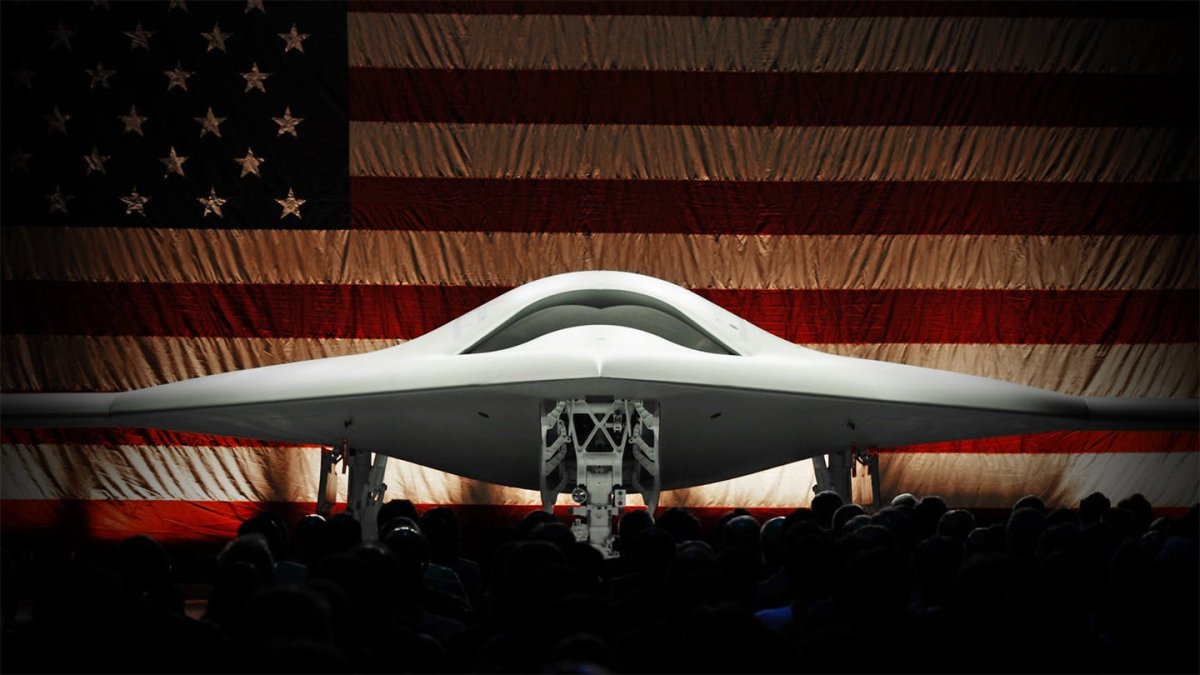
The United States Air Force appears to have passed on the greatest leap in air combat capability since the advent of the jet engine—or at least that’s how it looks.
Unmanned military capabilities are all the rage these days, with concepts ranging from insect-sized flying drones , to unmanned sub-hunting patrol boats , to notional pilotless hypersonic aircraft . Yet for some reason, the Air Force seems interested in nearly every application of unmanned warfare but the most relevant one of all, the type that could effectively and efficiently replace budget-busting tactical fighter aircraft while also leapfrogging our potential enemies when it comes to air combat capabilities for decades to come.
The concept in question is not nearly as exotic as some may want you to believe. In defense terms, it is a relatively simple proposition: Build a stealthy, flying-wing unmanned aircraft similar in size to current manned fighters and design them to strike fixed targets deep inside highly defended airspace.
Beyond this rudimentary but critical capability, these aircraft should also be designed to interact with one another and sense the battlefield around them using existing sensor technology, communications concepts and computing power. This will allow them to react to unplanned threats and even work as a team to avoid or destroy these threats and other targets of opportunity with inhuman efficiency. This package of capabilities is commonly referred to as an Unmanned Combat Air Vehicle, or UCAV.
Before we dive in, let’s define a critical set of terms relevant to unmanned military vehicles:
Man-in-the-Loop — A person is actively controlling the vehicle via a direct control interface. Examples of this concept are Predator and Reaper unmanned aircraft, which have pilots looking at a screen showing the aircraft’s forward view and flying it in a traditional sense. Navigational and tactical choices are made by the vehicle’s human controllers entirely.
Semi-autonomous — The vehicle works on autopilot and follows commands that are pre-programmed or given to the vehicle via a desktop computer-like interface. The vehicle may have a certain amount of artificalintelligence, but it will ask for approval or direction before making key decisions. The RQ-4 Global Hawk is a semi-autonomous vehicle.
Autonomous — The vehicle goes about its mission without any real-time human direction. Navigational and tactical decisions are made solely by the vehicle based on preprogrammed software and mission parameters. Such a system could find, fix and finish a target without external direction by a human controller.
The Very Public Birth of the Modern UCAV
You may think truly pilotless robotic flying machines—ones that can replace manned fighter and attack aircraft—sound fantastical. You would be wrong. In fact, this basic capability was proven over a decade ago in the guise of a Boeing Phantom Works and DARPA-led program that centered on a pair of technology demonstrator aircraft, designated X-45A.
These unmanned aircraft looked alien at the time, but they are actually similar in appearance to the UCAV designs emerging today. The X-45A was a tailless aircraft with cranked stub wings and a trapezoid-shaped fuselage. The aircraft had low observable (stealth) features and weapons bays that would allow them to drop small GPS guided munitions during testing. Overall the X-45s were smaller than what a production model UCAV would look like, but as technology demonstrators used to prove that the networked UCAV concept could work, they were far beyond adequate.
Both X-45As, Photo by David McNew/Getty Images
The idea behind the program was not just to fly a stealthy drone remotely via a semi-autonomous command and control interface, but to prove these jets could work together with minimal direction, reacting as a team to their combat environment and surviving to fight another day after completing their objectives.
Instead of a being flown by a pilot in front of a console, like the MQ-1 Predator and MQ-9 Reaper, the X-45s would run via a point-and-click desktop interface, and in some cases, without any human commands at all. The X-45s would be told to perform various tasks, head to a certain area or enter into certain modes. The vehicles themselves could ask for permission to perform certain critical actions or to respond to a particular situation, and the threshold for the aircraft’s own artificial intelligence level and decision making authority could be set according to each mission’s goals.
Boeing’s control software for the X-45s was called DICE, or Decision Mission-Control Software. The software allowed ground operators to guide the X-45’s mission from anywhere in the world, and it allowed both X-45A aircraft to work as a team to accomplish their mission via leveraging a set of algorithms, onboard sensors and communications data links.
Boeing’s semi-autonomous UCAV workstation running DICE softwarer , Boeing
Chapter 2: Introduc ing
The first X-45 flight took place at Edwards Air Force Base on May 22nd, 2002, and the second example flew six months later. The aircraft themselves were impressive, but the DICE software Boeing built to control them was even more so. Together, they were the first publicly disclosed operational progenitor of the flying UCAV “swarm” concept as we know it today. This is where multiple unmanned aircraft interact together autonomously to accomplish tasks at incredible speeds via a cloud-like “collective” computer mind. The concept has become a common one in defense circles today, but in the early 2000s it was still the realm of science fiction.
During testing, the X-45s quickly proved they could not only fly together as a single formation with a high level of autonomy, but that they could strike targets while doing so. By early 2005, the pair were executing mock combat missions as a single integrated unit. As testing progressed, program managers at Boeing and DARPA were sure they were on the precipice of a new era in air combat, one of untold bounds and incredible marketability. The idea was that if the X-45s could prove their mettle in challenging tests, throngs of full-sized UCAVs could be flying operationally by the turn of the decade. A move that would shatter the decades-long development times of much more costly manned fighter and attack aircraft.
X-45A with weapons bay door open, DARPA
On the program’s 50th test flight, the aircraft were slated to prove just how promising their new capabilities are. The X-45s were flown over a simulated enemy battlefield with autonomous control and decision making largely there own. Suddenly, a simulated threat radar activated. The pair of networked UCAVs immediately classified the threat and executed a plan to destroy it based on the position of each X-45 in relation to the target, what weapons were available, what each drone’s fuel load was and the nature of the target itself. The calculations happened in a blink of an eye.
One X-45 immediately changed heading to attack the virtual SAM site while asking for permission to do so from the ground operator monitoring the mission. The attack was approved, and the X-45 obliterated the simulated threat with GPS-guided bombs. Then, another threat—one tougher to detect than the first—popped up and was successfully prosecuted with great prejudice by the flying robotic duo.
Both X-45As at Edwards AFB, Boeing
The test proved that unmanned semi-autonomous tactical aircraft could not only react successfully to unplanned circumstances, but they could do so in such a manner that was in some ways superior to their manned counterparts. Additionally, this test included just two aircraft. Dozens, or even hundreds, of UCAVs could leverage this same cooperative decision making. The potential implications of this new technology were massive.
The crazy thing is that this test happened over a decade ago. Think of what your cell phone looked like in 2005, or your television, and compare that to what they look like now.
While the future looked blindingly bright for UCAVs, against all logic, the great UCAV revolution would be buried without explanation, and with it the promise of an operational and devestating unmanned swarm.
Chapter 3: UCAVs Disppear Into Oblivion
So what happened to the X-45 program? Having ramped up in the early 2000s, it quickly morphed into a joint initiative called the Joint Unmanned Combat Air System, or J-UCAS for short. The Navy had been running its own, albeit less advanced UCAV technology demonstrator program with the Northrop Grumman X-47A. With J-UCAS, both programs were brought under the same umbrella and would be forced to share some information, although each team was able to go about achieving their own distinct goals. Still, a fly-off between the two defense giants for a single full-scale, joint service UCAV was on the horizon.
X-47A Pegasus, DARPA
By 2005, two years after the J-UCAS program launched and the same year Boeing proved just what its X-45s could do as a team, DARPA exited the effort. The J-UCAS program was then transferred entirely to the USAF and the Navy. This made some sense, as a supposed fly-off for a full sized UCAV would be administered by the two services jointly, with the hopes that a single operational UCAV design could be procured for both services toward the end of the decade.
Then in 2006 this Navy-Air Force consortium suddenly imploded, with the USAF dropping out of the program entirely. This was an incredibly peculiar move as the technology clearly had a wide array of applications that could have huge game-changing impacts on the modern battlefield. The strangest thing about the USAF’s sudden exit is that they did not proceed to start their own UCAV development program afterwards. From this point on it was almost as if the technology did not exist in the Air Force’s eyes.
How could the USAF turn its back on such a monumental advance in warfare? It seems nearly unthinkable if not downright reckless. Was this move a result of the success of the X-45 team and the resulting threat that this new capability posed not just to the USAF’s historically insular fighter pilot culture, but also to the service’s massive strike-fighter program that was just spinning up, the F-35? Or was the USAF’s burial of a UCAV initiative the result of the fact that something else very similar already existed in the classified world?
It is quite possible that either or even both possibilities were true.
X-47B N-UCAS demonstrator, Northrop Grumman
Chapter 4: The Navy’s UCAV Initiative Soldiers On
The Navy proceeded with its own UCAV program after the demise of J-UCAS, but only as a larger technology demonstration program known as N-UCAS. Boeing would compete with Northrop Grumman for this contract, and eventually Northrop Grumman would win the bid. This gave birth to the now famous full-scale X-47Bs test aircraft.
These aircraft would go on to prove themselves as capable of amazing feats, including landing, launching and operating from the deck of an aircraft carrier in 2013 as well as refueling autonomously in mid-air in 2015.
These series of hugely successful tests has set the Navy up to field its first operational unmanned aircraft aboard its aircraft carriers in the not so distant future. This aircraft will be known as the MQ-25 Stingray or the Carrier-Based Aerial Refueling System (CBARS ). The Navy’s move to field a less ambitious unmanned aircraft concept, one more focused on aerial refueling and working as a sensor platform than an advanced deep-striking UCAV is a misguided one, but that is a whole other story. Still, at the very least CBARS is a step in the right direction for the Navy.
The fact is that the Navy has been more conservative than the USAF when it comes to its tactical aircraft fleet in recent decades. The Navy’s flying branch has taken a “platform” approach to air power, focusing on efficiency, affordability, multi-role utility and commonality for its tactical aircraft fleet over a focus on top-of-the-line capabilities. Hence the F/A-18 Hornet’s nests that are modern American supercarriers. The Super Hornet has become a one-size-fits-all solution for the Navy, who still has not introduced a stealthy airframe to its carrier air wings till this very day. The F-35C is slated to finally provide this capability some 25 years after it was originally promised to the Navy in the form of the long-defunct A-12 Avenger.
There are also the unique challenges that come with operating unmanned systems from the bustling deck of a supercarrier that large airfield-based unmanned systems don’t have to contend with. Still, in the long run UCAVs are ideally suited for the carrier environment and mission as much, if not more so, than any other. Yet in the nearer-term, the USAF was a much more logical candidate to field advanced UCAVs in large numbers early on than the Navy.
Chapter 5: A Skunk Works S urprise
A year after the USAF dropped out of J-UCAS, seemingly without a replacement, a strange thing happened. In 2007, a stealthy flying wing unmanned aircraft was spotted operating at Kandahar Airfield in Afghanistan. This mystery aircraft was originally dubbed the “Beast of Kandahar” by the defense press.
At the time, it wasn’t hard to figure out its overtly logical purpose. There is no need for a stealth drone to operate in uncontested airspace like that above battlefield Afghanistan. No, this shadowy aircraft was built to spy over enemy and even semi-friendly countries alike, such as Iran and Pakistan—and that was exactly what it was doing.
Although details were slow were emerge, this aircraft was eventually unmasked as the RQ-170 Sentinel , a Lockheed Martin Skunk Works product used by the CIA and the USAF. Years later, the aircraft would become famous for spying on Iran’s nuclear facilities, helping to locate Osama Bin Laden, secretly watching him from on high as he paced around his prison-like yard at his Abbottabad compound , as well as for falling into Iranian hands almost completely intact.
It was quite peculiar that Lockheed Martin had been seemingly totally absent, at least publicly, from the Pentagon’s UCAV initiatives during the early and mid-2000s. Yet we now know that they not only had flown a UCAV sized, deep penetrating, stealthy flying wing unmanned reconnaissance aircraft, but that it was fully operational and flying over some of the most highly defended places in the world during this same period of time. Additionally, by 2007 it was doing so in broad daylight with little regard for secrecy or operational security.
You can read all about the likely origins of the RQ-170 here and here , but its exact history is less important than the fact that it exists at all. While Northrop and Boeing were publicly giving birth to the modern UCAV concept, and battling over high-profile testing contracts in hopes of supplying the Navy and Air Force with hundreds of UCAVs one day, the Skunk Works had not only tested similar systems, but had at least one of them fully operational and doing work in some of the nastiest airspace on the planet.
As far as we know, the RQ-170 is only equipped with sensors, and even if it had a weapons bay it would be a very small one. But that doesn’t mean another variant of this design, either the same size or larger, could have also been built and at least tested. In fact, it is pretty absurd to think otherwise. Remember, at its very least, a UCAV’s core mission would be flying to a set of coordinates, dropping a GPS guided bomb or two, and then fly back to its base. This is a far simpler mission than penetrating enemy airspace, persisting there for hours while directing various sensors to spy on specific locales on the earth below, and returning home safely to do it again another day.
RQ-170, or a variant of it, apparently made it to Guam in 2011. This aircraft is different in certain ways than the RQ-170 that fell into Iranian hands. It’s exact capabilities remain unclear., DoD via War Is Boring
With this in mind, retrofitting basic UCAV capabilities into an existing stealthy flying wing surveillance drone design like that of the RQ-170 seems like a glaringly logical move. In fact, the Skunk Works agrees with this as they have put forward an enlarged Sentinel design called the Sea Ghost in an attempt to fulfill the Navy’s UCAV needs . There has also been rumors of “Super Sentinels” already existing which could be an operational UCAV evolution of the RQ-170, and the missing link between the navalized Sea Ghost concept and its more diminutive spying progenitor.
Lockheed’s Sea Ghost naval UCAV concept which is based directly on the smaller RQ-170 Sentinel design., Lockheed Martin
Chapter 6: The F-117 Nighthawk retires without a successor
Another interesting event that occurred around the same time as the first sightings of the RQ-170 was the somewhat ambiguous retirement of the F-117 Nighthawk, America’s first stealth strike aircraft. Even at the time of its retirement in 2008, no other known stealthy tactical aircraft existed that could drop heavy-hitting 2,000-pound precision guided bombs.
Some officials said that the F-22 would take over a piece of the Nighthawk’s mission, but the Raptor is limited to just a pair of the smaller 1,000-pound Mk83/GBU-32 JDAMs. Only the B-2, of which just a handful are available for combat at any given time, can match and exceed the F-117’s destructive power while surviving deep over enemy territory. In that sense, the F-117 program represented a unique and proven capability, one that seems far too important for the USAF to just give up. This is especially considering that the decision was made during the height of the Bush Administration defense spending splurge. Maybe the oddest part about the F-117’s retirement was that the USAF never even complained.
The F-117’s mission was deep precision strike. For the vast majority of its career it accomplished this via the use of laser guided bombs. F-117 “Bandits” (pilots) ability to navigate to their targets at night, without radar, and employ the jet’s pair of 2,000-pound laser-guided bombs was an artform prior to the introduction of GPS.
During the tail-end of its career, the F-117 force was able to drop GPS-guided Joint Direct Attack Munitions. With this new upgrade the F-117s could simply fly to a point and release these weapons with a high degree of accuracy, regardless of the weather conditions. Once again, this is the rudimentary mission of UCAVs, and it begs the question: Was the F-117 replaced by a small fleet of stealthy operational UCAVs that existed in the classified world much like the F-117 did for nearly a decade before its eventual disclosure? The F-117 program would have been an ideal model on which to base a clandestine UCAV program, and since UCAVs don’t require constant training flights like a similar manned system does, they can stay hidden much easier.
Since its retirement the F-117 fleet has been maintained in a regenerative state, and even occasionally flown at the shadowy Tonopah Air Force Base , which is also the likely operational home of a pocket UCAV force—if it were to exist. Maybe the F-117s were kept in such a state to hedge against what was still a very new, evolving and untested technology. Now, nearly a decade later, with the largely mummified F-117 force potentially getting scrapped once and for all , will a disclosure of a small UCAV fleet follow? The F-117 was first disclosed along a similar timeline in 1989.
Chapter 7: The Ramifications of the Unknown
With all this in mind, it is possible that the UCAV revolution happened in the depths of the “black projects” world even before it happened in the unclassified world. If this is true, Lockheed’s Skunk Works were almost certainly the dark shepherds that brought forth this new and devestating technology.
On one hand, this would seem like a dramatic example of how isolated the classified weapons development world is from the non-classified one, and of how many billions of dollars are needlessly wasted developing parallel capabilities. On the other, if the USAF had chosen to watch parallel capabilities develop, Lockheed’s classified stealth unmanned aircraft developments could have acted as an independent control variable against UCAV developments occuring in the unclassified world. Once one effort had pulled ahead in its capabilities, a down-select would likely have been made. In this case, that selection would have been whatever was going on outside of the public’s, and to a large degree Washington DC’s eyes.
Could this situation have been the catalyst for the USAF’s dropping out of J-UCAS in 2006, just a year before the RQ-170 suddenly emerged? Did the USAF continue to invest in the UCAV space via the Skunk Works, albeit in the realm of deep classification, to a point that would justify the F-117s retirement?
The question remains: Why hide the existence of even a pocket force of operational UCAVs, considering that the world has watched the Navy’s X-47B not only fly, but operate from a carrier and even refuel autonomously? Additionally, the X-45s proved the UCAV concept for the entire world to see years prior. With the B-2, the USAF has the ability to strike with 2,000-pound and even heavier-hitting weapons deep into defended territory. so it’s not like hiding a small force of stealthy UCAVs would make the enemy feel as if well defended targets were not already at risk of attack by US forces.
Then agian, maybe the USAF wasn’t primarily hiding the UCAVs from the enemy at all, but instead from the government and taxpayers who paid for them in the first place.
Classifying such a game-changing and relevant capability doesn’t just distort the important and very expensive weapon system procurement choices being made by Congress, the White House and the Pentagon. It also skews America’s defense strategy as a whole and all the long-term force planning that goes along with it.
It doesn’t seem like an uncommon practice for the powers that be to classify programs in order to protect inferior non-classified programs from having direct competition. Some weapons programs are also hidden in the classified world to prevent special interests from trying to cancel them in favor of other non-classified programs—ones that are less capable but more lucrative. Either way, the losers in such practices are America’s ability to get the best force for its money, and the warfighter’s chances of success in a conflict. That is, if you think the primary goal of America’s armed forces is to fight and win wars, not create jobs or to support particular industries.
Clearly, if UCAVs were flying even in smaller numbers, and their networked hive mind could be proven on a larger and more advanced scale than what the X-45 proved over a decade ago, such a system would hugely threaten the F-35 Joint Strike Fighter. The F-35’s primary missions include deep strike, surveillance and “destruction of enemy air defenses,” or DEAD. These are the exact same as those of a UCAV. In many ways, the UCAV could execute these missions far more efficiently and ferociously than their costly manned counterparts.
Chapter 8: The Potential Advantages of UCAVs
The USAF’s fighter aircraft age catastrophe and pilot shortage crisis , as well as the tactical challenges that the force faces on the battlefields of tomorrow, could largely be solved by a UCAV force. Even the USAF’s failing fighter budget could be cured by procuring, at least partially, UCAVs instead of expensive and inflexible manned systems that represent a half century-long financial and strategic commitment.
It may be uncannily unpopular to the USAF’s pilot dominant culture, and even to military and aviation aficionados, but UCAVs have a laundry list of potential advantages over manned fighters and attack aircraft. In fact, they could revolutionize the very idea of what an Air Force looks like, how it trains, how it fights, and the money needed to sustain its capabilities.
Here are some of the major potential benefits of stealthy UCAVs based on general concepts that have coalesced in recent years:
– They have lower acquisition prices than modern fighters:
You can build many more UCAVs for the same price of an advanced stealthy manned fighter. A four-to-one or even six-to-one ratio has been floated depending on how advanced the UCAV is. Doing so would break the cycle of ever increasingly expensive fighters eating up the DoD’s budget and add greater end-strength to the rapidly shrinking Air Force’s tactical jet inventory.
This issue has morphed into an absolute crisis , with a recent Pentagon report stating that the USAF will not be able to afford its fighter jet fleet by the year 2021, just five years from now. In many ways UCAVs offer both a quantitative and qualitative advantage at the same time.
– UCAVs could be rapidly adapted to perform various missions, and a flight of UCAVs can “share” expensive sensors:
With UCAV swarms you do not have to equip every UCAV with the same expensive sensors and subsystems as you have to with manned fighters. Using adaptable open architecture and “plug and play” design philosophies, a group of UCAVs can be outfitted for a particular mission or mission set. By adapting a single airframe for various roles via a series of unique configurations, great cost savings can be realized without greatly hampering the effectiveness of the swarm as a whole.
In a single swarm “package” of UCAVs, you can have some airframes outfitted with advanced radars, some carrying networking, data-fusion and communications hardware, while others can carry highly sensitive electronic emissions sensing gear. Another set can carry bombs and missiles, while others can be outfitted with directed energy weapons (lasers) or advanced jamming equipment. Additionally, some can carry combinations of these capabilities. Because a package of UCAVs can act as a networked swarm and are constantly linked together via data link, each UCAV can share its sensor information with all the other UCAVs in its swarm and in real-time. When all this data is combined, a high-fidelity picture of the battlefield is rendered for the whole swarm to exploit. In other words, a UCAV that has no radar at all, can benefit from other UCAVs outfitted with such systems as if it were its own.
Even working as a small swarm of say six UCAVs, three could be optimized as simple munitions mules, two can operate as sensor craft, and one can be outfitted as an aerial tanker and jamming support platform. Although the munitions mules may not be equipped with a radar or other targeting and situational awareness sensors, they are virtually equipped with them as the swarm’s collecting brain can “see” a fused “picture” of all the UCAV’s sensor information combined.
For missions where you need maximum redundancy, the swam could be made up of all fully outfitted UCAVs with all the bells and whistles, similar to how fighters types are equipped equally today. Not only does such a concept save money while lowering the fiscal risks of combat, but it also allows for new systems to be more easily integrated into an ever changing UCAV force.
Boeing’s X-45C, a full sized operational test aircraft that flew in the late 2000s. Although it was very promising and built on lessons learned from the X-45A J-UCAS program, the USAF had little interest in it., Boeing
– They possess far greater range and loitering time than their manned fighter jet counterparts:
UCAV concepts generally have double to quadruple the combat radius of their manned progenitors. This is due in part to their lower kinetic and maneuverability requirements, their flying wing designs, and the fact that they don’t have valuable space and payload taken up by a cockpit and life support systems. Considering the anti-access and area-denial issues we face against potential enemies today , this greatly increased range alone makes procuring UCAV technology on a large scale essential.
The F-35A has a combat radius of about 590 miles, which means a vulnerable tanker will have to get within 590 miles of the F-35A’s target to provide gas, or even more of an issue, the jet will have to be based within that distance of its target. In actuality, under real combat conditions the F-35A’s combat radius will likely be further reduced, since the 590-mile figure is a “brochure” metric.
Our potential enemies’ large arsenals of ballistic and cruise missiles means that land-basing F-35s within 590 miles of the enemy’s borders is a non-starter in a real shooting war. China’s long-range strike-fighter, the J-20, is designed to fly out long distances to go after America’s vulnerable flying force multipliers, including tankers and AWACS aircraft. This strategy, which I pointed out right after the J-20 was first photographed, makes total sense for the Chinese. Why take on fighters when you can take them out simply by downing the tankers they are so dependent on or blind them partially by blasting their AWACS out of the sky?
Even the Russia’s next SAM system, the S-500, will have a supposed range of 375 miles, and follow-on versions will only see its engagement envelope even further extended. Thus the F-35’s 590 mile combat radius has a shrinking margin of success against a well-armed peer-state competitor. Seeing as the F-35 is supposed to serve for many decades to come, with the last examples going out of service in 2070 , the idea that short-ranged fighters will even be tactically relevant in a decade or two is highly debatable.
The F-35A’s striking distance can be increased by a couple hundred miles via the use of standoff weaponry, but that also somewhat defeats the point of theF-35’s stealthiness to some degree, especially as a conflict progresses, and there are limited stockpiles of these types of highly expensive weapons on-hand at any given time. Additionally, the more very expensive fighter jets the US buys, the less standoff weaponry it can afford to have lying around. Even America’s stockpiles of much less expensive guided bombs and short-range air-to-ground missiles cannot sustain the ongoing limited air campaign against ISIS!
In the end, these factors can put the F-35A, and other fighters for that matter, out of the fight on day one. A UCAV with a range of double or even triple that of the F-35A, while carrying the same payload, does not have this problem.
The ability to loiter very near or even over enemy territory for long periods of time, and survive, has become an invaluable intelligence gathering capability. Aerial reconnaissance in now far more focused on capturing a period of time (RQ-170) instead of a moment in time (SR-71). When it comes to striking targets of opportunity, the same trend has emerged. Staying over a place and waiting for the enemy to expose themselves, and punishing them for doing so, has become a more in-demand service than simply striking fixed targets. Flying-wing UCAVs, with their large fuel loads, aerodynamic efficiency and fuel miserly turbofan powerplants allows them to stay on the scene for hours, not minutes, before needing to be refueled.
Finally, because UCAVs have much longer range they require less tanker support. Less tanker support means less tankers and a smaller overall USAF tanker program, saving billions. In fact, UCAVs could provide their own tanker support via buddy refueling. Doing so would just mean committing more UCAVs, some configured as tankers, in order to take out a particular target set without external tanker support.
-They are more disposable:
You don’t have to build a UCAV to fly 8,000 hours as with manned fighter aircraft, a requirement that adds significantly to an aircraft’s unit and development costs. Instead UCAVs can be designed to last a fraction of that flight time.
The reason for this is that these aircraft don’t have to fly anywhere near as much as their manned counterparts. Nobody really has to train to fly them at all. Computer simulations and modelling, a strong centralized test and development effort and intermittent large-scale air combat exercises will be essential in proving new UCAV tactics and to certify the systems as effective, but beyond that these things can largely sit in a hangar and wait for combat. The days of putting hundreds of hours on a tactical jet airframe a year would be over. As a result, a UCAV could be designed to last a couple thousands hours of flight time or even far less.
X-47B airframe undergoes stress and fatigue testing, Northrop Grumman via Alert5.com
-They are expendable:
UCAVs can be ordered to fly into the most dangerous airspace in the world without the potential loss of aircrew being a factor, which can have huge political ramifications both abroad and at home. This also means commanders can take greater risks with greater potential rewards during conflicts and can more freely strike at the heart of the enemy’s ability to wage war.
For instance, instead of very slowly breaking down the bad guys’ area denial and anti-access capabilities from long-ranges using expensive standoff munitions , massive swarms of UCAVs can execute direct attacks on key anti-air warfare targets.
UCAV’s far lower unit cost and simpler manufacturing process, one that can make the most of large composite structures and 3D printing, also means they can be replaced more efficiently than manned aircraft. In other words, UCAVs can speed up an air campaign’s intended results compared to manned systems, while doing so at far lower risk.
-They don’t require pilots:
Sure, this is the most obvious feature of UCAVs, but there is more to it than just not risking aircrews in combat. Because UCAVs don’t require pilots, the USAF would need to train less of them. This could not only be a solution to the USAF’s increasingly dire shortage of pilots but it could also mean that the service’s entire fleet of fast-jet and primary training aircraft could be significantly downsized. Such a move would equate to enormous savings when it comes to personnel and aircraft procurement, sustainment and operational costs.
Look at the USAF’s pending replacement program for the T-38C Talon, dubbed the T-X. If the USAF procured UCAVs aggressively how many billions would be saved on new training aircraft purchases simply because they won’t be needed? In fact, there may be no need for a T-X program at all, at least for a couple more decades, as the T-38 fleet could be consolidated and the its life stretched for many more years.
This also underscores how a secret UCAV program, one that could be drastically expanded in the coming years if it were declassified, would make investing into an expensive new jet trainer program a monumental waste of money in the near term.
The truth is that a front-line fighter jet will spend the vast majority of its flying life honing pilot skills, not flying combat missions. This takes massive amounts of fuel, maintenance man hours and parts, and a gargantuan backend support infrastructure. The fact that a UCAV requires none of this really is the concept’s biggest savings opportunity. Simply put, flying skills are not required to be a part of a UCAV’s command and control cadre. There are simply no pilots to train.
Lockheed’s T-X candidate, the T-50A, which is based on the KAI/Lockheed Golden Eagle, took its first flight on June 6th. You can see video of it here. Whoever wins the contract is slated to produce hundreds of trainers for the USAF., YouTube Screencap
Considering that the lowest cost per flight hour estimates for the F-35 are $32,000, with this number likely being far larger in reality, not having to fly a vehicle regularly at all is a very big deal. Beyond maintenance test flights and limited training and tactics certification exercises, UCAVs can remain in storage until they are needed for combat.
UCAVs also don’t require combat search and rescue forces. If a UCAV is shot down, dozens of combat search and rescue and support aircraft don’t have to attempt a daring rescue of a downed aircrew. This also means less CSAR assets will be needed in inventory. This is a big deal considering the USAF has struggled for well over a decade to fund a new CSAR helicopter . And of course the potential ramifications of more lives being put in danger to rescue a downed aircrew behind enemy lines become a non-factor with UCAVs.
Tyler Rogoway/Author
The thing is, the USAF really doesn’t have a good answer when it comes to providing combat search and rescue capability for aircrews that fly aircraft like the F-35, F-22 and B-2. These jets can penetrate hundreds or even thousands of miles (in the B-2’s case) deep into highly contested airspace. Flying CSAR helicopters and their escorts (HH-60s or CV-22s and MC-130s) into such a situation would be ridiculously perilous proposition to say the least. With UCAVs this tactical conundrum vanishes.
-UCAV design and procurement can rapidly adapt to changing tactical realities:
Since they don’t have to have an 8,000 plus flight hour lifespan that will be spread over many decades, new UCAVs with enhanced design features and better low observable qualities can be bought on a regular basis. Such a concept also has the potential to greatly smooth the USAF’s notoriously disgraceful and unsustainable big-ticket weapons procurement process.
Instead of buying an entirely new fighter jet every couple of decades, the service can constantly buy far cheaper UCAV designs in tranches of ever increasing capabilities tailored to match emerging threats in near real-time. This type of procurement concept allows for a far more nimble response to changing tactical challenges, and in doing so it puts America’s potential enemies at a drastically greater disadvantage when it comes to trying to counter our own capabilities.
As UCAVs evolve, older units can be re-roled to perform non “tip of the spear” but still essential duties. These include tanking, acting as communication relays, flying data fusion centers, surveillance platforms and acting as arsenal ships for troops on the ground in lower-threat combat environments . In other words, commanders can use their newest, most updated UCAVs for kicking down the enemy’s door while also using older systems to fulfil other critical but less risky missions where a UCAV’s persistence is still a big plus.
In the end, a UCAV, no matter how stealthy or advanced it is, is still capable of staying aloft for hours with a relatively large payload. As such, older designs will have many uses even after their “first day of war” utility is degraded by the passage of time.
– In many high-risk combat situations a swarm of UCAVs may be far more effective than a large strike package made up of manned aircraft:
A networked swarm of UCAVs has the potential to react to changes on the battlefield at microprocessor speeds. This allows them to totally outpace the enemy’s ability to employ countering tactics and even make decisions. Unlike humans, the swarm has few limits on how much information it can digest at a time and each node (UCAV) within a swarm adds to the quality of its overall situational awareness and effectiveness on the battlefield.
Highly advanced tactics can be employed by the swarm to confuse the enemy and disrupt their ability to defend themselves. This can be done without any traditional radio communications. A directional line-of-sight data-link, such as one similar to the F-35’s stealthy “daisy chain” data-link concept known as Multifunction Advanced Data Link, or MADL for short, could facilitate robust and highly-secure data flow throughout a swarm and even back into friendly territory and then to satellites up above.
Introducing a high-flying connectivity node , an aircraft-based data fusion center and rebroadcasting system, could allow many smaller swarms to be linked together over a vast distance, creating a super-swarm running on what would be akin to a hive mind. Such an increase in communications capability could greatly expand the geographical range, data-exchange capabilities and size of a swarm.
Regardless of its networking scheme, the swarm concept takes the X-45’s DICE software and UCAV autonomy to a whole other level, although the basic nuts and bolts remain the same as they were a decade ago. With a swarm of dozens, or even hundreds of networked UCAVs fighting all at 100 percent efficiency at all times, the enemy is faced with the monumental task of defending themselves against such an efficient, agile and persistent foe.
Advanced tactics, such as multi-vector attacks replete with decoys and jamming, could be executed by the swarm’s best available assets to solve a tactical problem, even an unplanned one. Based on pre-programmed directives, the swarm can instantly vector the right pairing of assets to take out a particular threat or perform a certain task at hand. If that threat is an advanced surface-to-air missile battery, maybe the swarm assigns a pair of Small-diameter Bomb slinging UCAV strikers, one UCAV equipped with electronic jamming systems, and two more to make a decoy attack from high altitude. If the SAM site is less threatening in nature, maybe the swarm sends a single UCAV nearby to drop a JDAM on it, or the swarm avoids it entirely.
There is no magic behind this capability; the swarm’s software would have pre-loaded responses to various stimuli and situations with a certain amount of AI built in to cope with complex scenarios. In a fully autonomous fashion, the swarm will make the decision of how to deal with the threat based on its programming without a human interrupting its onslaught. If they are running in a semi-autonomous fashion they will ask for permission or even direction from a human operator before executing certain tasks. The filer of what task is worthy of asking permission can be set by mission planners before the mission is executed.
For instance, changing a route to avoid an enemy SAM site autonomously may be allowed, while attacking that same site may need permission from a human operator. This method, although maybe politically more accommodating, handicaps the true crushing offensive potential of the swarm. We will talk more about this in a moment.
Redundancy is also a major potential feature of UCAV swarms. If one UCAV gets shot down or malfunctions the swarm just continues on using the assets it has available to achieve the maximum possible effects based on the mission at hand. The loss may degrade the overall fidelity of the swarm’s situational awareness and battlefield “picture,” but it will continue on making the best of the existing resources at hand. In other words, the system is constantly trying to achieve the highest possible efficiency based on its programming and the assets it has available at its disposal. And all of this is done automatically, without traditional communications and human-to-human coordination.
-Air-To-Air may be the swarm’s greatest trick:
For so long UCAVs have been seen as strictly deep strike and surveillance platforms, but when networked together, they could offer an incredible counter-air capability.
Even the subsonic and less than highly maneuverable but very stealthy flying-wing UCAV configurations that we know of today could be absolutely devastating when it comes to sanitizing enemy airspace. The same swarm technology applies to the air-to-air realm as it does to attacking pop-up SAM sites. In fact, under certain circumstances enemy fighters may be an easier threat for UCAVs to deal with than those emanating from the ground.
Enemy aircraft would have a very hard time remaining undetected in airspace that an operational swarm of UCAVs is operating in. Its cloud-like mind will leverage feeds from the multitude of sensors carried by its individual UCAVs, all spread over a wide area. In essence, the swarm acts as is its own virtual AWACS, although in some cases it is far superior as it is forward deployed, can carry a diverse set of sensors spread over a wide area, and the data it collects can be enacted upon instantaneously.
If a potential enemy aircraft is detected, even just for a brief moment, multiple sensors aboard multiple UCAVs can instantly and seamlessly steer their sensors (radar, infrared etc) from multiple angles onto the single piece of sky where the aircraft was. Anti-stealth detection tactics can then be employed, aimed at collectively detecting an aircraft well enough to build a weapons-grade engagement track of it. Working as a team, the swarm can then engage the target in question.
Once a track is established, the best UCAV or UCAVs positioned to deal with it can be assigned the task of doing so, making long-range coordinated missile shots at the bad guy. Instead of using their own radars alone to guide their missile shots, they can use the swarm’s common “picture” to do so.
In other words, the UCAV firing on the enemy aircraft does not even have to use its own sensors to do so as it sees all the other UCAV’s sensor pictures fused together and can use that data instead. This means certain UCAVs, such as those closest to the threat aircraft, can operate “silent,” not emanating any electromagnetic energy. Combined with the UCAV’s wide-band stealthy shape, low infrared signature and radar-absorbent coatings, it is unlikely the target will detect the attacking UCAVs at all. Well at least until their missiles go “pitbull” and lock onto the aircraft during the terminal phase of their attacks, which is likely far too late.
Possessing an extreme level of stealth, both in the radio and infrared spectrum, and having near perfect situational awareness, the UCAV swarm is really a flying pack of telepathic robotic wolves that are all working together to kill the bad guy in a coordinated manner. Having a UCAV even sacrifice itself for the greater good can be programmed as a viable tactical choice.
When it comes to the within-visual-range air combat environment, the current types of UCAVs could never turn successfully with a modern fighter jet. Yet with the latest block of AIM-9X Sidewinder missiles, which are capable of making greater than 180 degree snap turns and locking onto an enemy aircraft after being launched from an internal weapons bay, the UCAV may not have to maneuver aggressively at all.
Then again, avoiding marauding fighters or attacking them with so called “non-kinetic” weaponry would also leverage the UCAV’s unique capabilities. Instead of launching missiles, parts of the swarm could jam and change course to keep themselves outside of the detection range of enemy aircraft. Or they could send pinpoint electronic attacks and pencil-sized high-power beams of electromagnetic energy chirped off by their onboard AESA radars directly at the enemy fighters’ radars and radar-guided missile seekers, blinding, disabling, or destroying them in the process. Even the ability to swat incoming missiles out of the sky with directed energy weapons is clearly on the horizon.
Finally, a fully air-to-air optimized UCAV design may be the most awe-inspiring of all UCAVs as such an aircraft’s maneuverability would not be limited by the crushing gravitational forces a human pilot can endure. As such, a UCAV designed to absolutely rule the air-to-air realm could be able to sustain unheard of G forces, making shooting it down with missiles, or trying to parry it in the within-visual-range air combat realm, nearly useless.
-The ability to leverage common command and control software and human interfaces:
Just as UCAVs can evolve over time via open architecture design and more agile construction concepts, so can their human interfaces and operating software. Strictly speaking, although new UCAV designs may change the look of the swarm, its cloud brain (command logic and acritical intelligence) can continue to evolve linearly. Think of it as buying a new desktop computer but running the same operating system on that is constantly upgraded.
Some of the most expensive and perilous elements of building a new strike-fighter are software development and “back-end” infrastructure related . The nice thing about UCAVs is that its software and command and control elements can evolve over time and can be applied to multiple unmanned airframes used for a whole array of unique missions. These disparate unmanned systems can also have their capabilities more easily interwoven since they run on a common software and control platform.
As a common software suite evolves, the system’s stability, security, and overall capabilities will only increase. This operating system that controls an autonomous swarm can be tweaked and tailored over years, or even over decades, and it can adapt to new threats, tactics and technologies as a whole without having to adapt a series of discreet control systems for separate aircraft designs.
For instance, the same mission software and command and control interface could possibly be used by a large high-flying stealthy surveillance drone made by one manufacturer, while at the same time also used for a swarm of UCAVs made by another. In doing so, these systems could work together seamlessly and flexibly even though their missions and even their manufacturers are different.
One scenario may have that high-flying stealthily drone acting as a super-server and communications relay system that will enable and enhance the awareness and interoperability of a swarm of tactical UCAVs fighting below it. In another scenario, that same high-altitude unmanned aircraft may provide many UCAV swarms, say of six UCAVs each, with moving ground targets it sees on radar to attack from hundreds of miles away. Meanwhile, the same software and interface system could direct low-end unmanned supply drones toward Special Forces units deep in enemy territory , with UCAVs being instantly assigned to protect them on their way.
This “sandbox” like approach could give mission planners and strategists both a mission planning system and a command and control suite for a whole slew of unmanned aircraft all in one neat and ever evolving package.
Think of it as a common operating system that can constantly be improved on and used by new and existing hardware alike. Not only is this concept cost effective and developmentally efficient, but it can greatly enhance the combat capability and flexibility of all the hardware it supports. For mission planning purposes and for being able to leverage the super nimble swarm mentality even further by integrating small numbers of dissimilar and specialized force multiplying unmanned aircraft into it, a common software platform, data-link waveform and command interface will add to the lethality of the swarm as a whole exponentially.
Chapter 9: Hacking and Autonomy Misconceptions
Now that we have discussed many of the potential advantages of UCAVs, let’s talk about their major downside; at least as some see it.
We often hear that hacking and the fear of giving robotic weaponry any level of autonomy is a barrier to widespread UCAV procurement. In some cases these issues are paired together with Terminator like hyperbole that really does sound frightening. The fact is that autonomy will become a reality far sooner than most think it will, regardless of if we like it or not. The simple reason is that autonomy unlocks the UCAVs true potential; being able to act quicker than any human could, especially while working as part of a swarm.
America has been spoiled by picking its wars on its own terms since the latter half of the 20th Century. In the future it is highly unlikely we will be so fortunate. If a conflict were to erupt between the US and a near-peer state competitor, the last thing we will be worrying about is if a UCAV hit the wrong target accidently or not. That may sound callous, but the stakes will be far too high for holding back winning capabilities due to fears over not having a human directly approving ever target a UCAV hits.
There are also many levels of autonomy. At its most basic level, UCAVs could be used to hit fixed targets deep in enemy territory, with the only decisions made by the aircraft itself being how to evade enemy air defenses on its way to and from the target. This type of capability is on par with the current “smart” cruise missile technology of a medium capability level, the big difference being that you can reuse the UCAV and it can hit multiple targets on a single mission. As such, the fear that a human is not “in the loop” controlling a UCAV on such a basic mission is irrelevant as the same arguments can be made about cruise missiles that have been in used for decades.
As you move up the autonomy and mission complexity ladder, you hit the point where the UCAV is not going after fixed targets but is actually deciding to prosecute targets of opportunity on its own. This starts with taking out air defense-related threats that put the vehicle or its swarm in danger.
At its most rudimentary level this is initiated by external stimulus, such as a SAM site’s radar, or air defense node’s electromagnetic emissions being detected by UCAV. The UCAV can classify and triangulate these signals just as the F-22 or F-35 can, and a swarm can do it with exceptional ease and precision due to the wide geographic spacing between each node and the swarm’s data-fusion capabilities. Algorithms pre-programmed into the UCAV’s brain (or brains in the swarm’s case) would theoretically allow it or them to decide whether to avoid, deploy electronic attacks to blind or confuse the threat system, or to destroy it using kinetic weaponry. Factors such as the swarm’s primary mission, intended targets, flight path, stores and fuel state of each UCAV, mission timing and the type of threat being detected can all go into the automated decision making process as to how to best deal with the situation. All this happens in an instant of course and with maximum efficiency as we have mentioned before.
The next step in UCAV autonomy is to not just respond independently in a reactionary manner to unplanned threats that emit threatening electromagnetic energy, but to pursue targets that may not threaten the UCAV or its swarm at all. Using synthetic aperture radar, multi-spectral optical and infrared sensors, ground moving target indication (GMTI) radar and external sensor feeds from non-swarm aircraft, a UCAV or a UCAV swarm can hunt for targets of opportunity on their own.
Image and 3D object matching can be used to identify and classify valid targets that the UCAV or swarm detects. This data is stored in the UCAV itself and/or in the swarm’s cloud-like data library. After it classifies the target as valid, and it exists in an area pre-selected as a free fire zone by mission planners, the UCAV swarm could then select the best munition and asset to destroy it. Imaging and 3D model matching is already used on advanced cruise missiles successfully today , and it will be increasingly a staple of other modern air-to-ground munitions. With this in mind, and regardless of what some may tell you, it is not as if these things (UCAVs) would just being released on their own accord to blast away at any blips on a radar screen, there is much more to it than that.
Under the semi-autonomous concept of operations, the UCAV would have to ask a human operator if it can attack the target it found on its own. At the very least, radar, infrared or optical imagery of the target and its location would have to be transmitted to the operator as part of the attack approval process. This may be fine for medium and lower threat environments, but for high-threat ones, where two-way communications could open the UCAV, and the swarm for that manner, up to detection and electronic attacks, such a concept could be problematic.
One theoretical solution to this issue would be a daisy chain-like line-of-sight data-link that passes information between UCAVs operating deep in enemy airspace and back over the horizon to less contested territory. Once there, the swarm’s data can be sent to satellites and replies can be sent back down and be passed forward along the same chain of communications. This means the swarm would not be emitting data to anything but its own kind using very hard to intercept or jam directional data-link. By using the daisy chain concept, and the UCAV’s long loitering capabilities, the swarm could still benefit from two-way communications to controllers around the globe without putting themselves at elevated risk of being detected, jammed or even hacked.
Another theoretical solution would be to data-link this info up to a high-flying unmanned aircraft that can then use advanced satellite, or long-range direct communications capabilities to send it wherever it needs to go. Still, either method slows down and handicaps the swarm’s ability to rapidly bring devastation on the enemy.
Under the fully autonomous concept of UCAV operations, the UCAVs will not ask anyone if they can attack a target or not. They will decide on their own based on the software they are operating with. This allows the swarm to work at blistering speed, overwhelming and shattering the enemy’s decision cycle. It sounds scary, but remember that these craft are built to dismantle the enemy’s ability to fight on the first days of war, and once again, to some degree autonomous targeting is already being used by advanced land-attack and anti-ship cruise missiles.
As far as network security goes, a closed network that only broadcasts directionally to other UCAVs within line-of-sight, once again the daisy chain method is thought to be very secure and has a very low probability of detection or intrusion. This is why it is being used for the F-35’s data-link. It also allows for a higher quality of situational awareness even when satellite communications over enemy territory are denied.
If for whatever reason the swarm’s network is shattered or degraded, the individual UCAV components can default to accomplishing their mission by breaking into smaller swarms with more stable, closer-range communications or going it alone with the information they have available. In fact, UCAVs, whether in a swarm or not, will benefit from external third-party targeting and surveillance information just like manned fighters increasingly do. This comes in the form of data-link feeds from standoff surveillance systems including AWACS, JSTARS, and ground-based and sea-based radar systems. In receive only mode, stealthy UCAVs can benefit from this information without opening themselves up to sending out emissions that could be detected. F-22s and F-35s can benefit from this one-way data link concept as well. In fact, the F-22 does today as it can see Link16 information, it just can’t broadcast its own sensor picture without help from an external data-fusion gateway.
The truth is that UCAVs don’t have to talk to anyone at all. If need be, and under the simplest concept of operations, they can fly to a certain point outside enemy territory, and shut off two-way communications entirely, crossing into enemy territory emissions silent. They then go about their missions, reacting to threats around them via passive detection systems. Once they have left enemy airspace, they can once again communicate with their human masters via satellite unencumbered.
This “go it alone in silence” concept is absurdly secure from am electronic attack and hacking standpoint, and the UCAVs can be programmed to only open up communications during their mission under certain conditions that are programmed internally. These can include reporting loss of engine power or other serious malfunctions. But once again, during their time near enemy territory they can be totally firewalled from the outside world, just as the F-117 had been during its combat operations in the Middle East and Europe. Sure they won’t be able to benefit from being integrated into a swarm, but when maximum network security is warranted, this method of operation is available.
The great thing about UCAVs is that a single vehicle could be built to operate semi-autonomously, autonomously, as part of a swarm or all alone depending on their mission and the threat environment they will be operating in. So separate vehicles would not have to be built for these separate modes of operation.
For operations over a third world country with a medium quality air defense system and a low chance of network disruption, UCAVs could work as a swarm and/or in semi-autonomous fashion. For the opening strikes on a highly capable foe they can degrade the enemy’s ability to fight by hitting only fixed targets while fully firewalled from the outside world, and then move to autonomous, fully networked swarm operations to wreak maximum havoc on the enemy once their electronic warfare abilities have been degraded. Because they would likely use a similar concept of communications, and are both heavily reliant on automation, a swarm is likely to be just as resilient to cyber attack as the F-35.
Chapter 10: Tethering is not a replacement for the swarm
There is lots of talk about “tethering” unmanned air combat aircraft with manned aircraft , where a unmanned combat drone basically works as a manned fighter or bomber’s robotic wingman. This just moves the semi-autonomous control of the unmanned component from a ground station halfway around the globe to a cockpit right over the battlefield. This concept has its merits, but it is no replacement for an autonomous swarm, not even close.
Such an idea, where an aircrew assigns an unmanned combat aircraft that is paired to them to go do this and to fly there, or to attack this target or jam that one, would be very useful for the crew that is directing it. Yet the man-in-the-loop operating concept still limits the UCAVs potential just as it would if the operator were sitting in a ground control station three thousand miles away. The only thing that changes is that the communications could be much harder to detect, jam or attack because a directional line-of-sight data-link could be used instead of satellite communications. Additionally, the drone would be slaved to the aircrew’s needs, not part of a larger coordinated swarm.
Simply put, the utility of such a UCAV concept is discreetly different than an all-unmanned concept, and it is a good route to explore. The nice thing is you can built a fully autonomous UCAV that can just as easily be used for a semi-autonomous tethered mission one day and fly as part of an autonomous swarm the next.
Surely tethering unmanned systems to manned fighter and attack aircraft is a big force multiplier. It means more tactical flexibility, more weapons at an aircrew’s disposal and less risk to them for certain combat tasks. But it is not a technological game-changer like an autonomous UCAV swarm would be. So no, the ideas are not interchangeable but they are definitely complimentary.
But once again, the nice thing is that a UCAV swarm can do its thing on its own for the opening days of an air campaign, and then once manned fighters are introduced into the conflict, UCAVs can join them as dynamic wingmen or just a weapons mule. You only have to buy one UCAV to do both things and the concept will lend itself well when it comes supporting close air support missions after the UCAV swarms have kicked down the enemy’s front door.
Chapter 11: The USAF comes up with another UCAV initiative and quickly drops it with prejudice
Following the USAF’s sudden abandonment of the J-UCAS program, years of nothing followed. Eventually an initiative for what seemed to be a very basic UCAV capability was softly launched by the USAF under the moniker of MQ-X. This program never even made it past the requirements stage and was cancelled with prejudice in 2012.
During this same timeframe, Boeing, which held onto its UCAV dreams into the current decade, built a full sized UCAV demonstrator, dubbed the X-45C Phantom Ray, to continue on proving the UCAV concept. This was largely an internally funded affair, with the aircraft flying for the first time in 2011. Although the vehicle seemed promising, the USAF seems to have shown no interested in it at all. With Northrop Grumman haven flown the X-47Bs on their high-profile test missions for the Navy, and Lockheed at least having the RQ-170 under its belt and who knows what else, Boeing, whose X-45A demonstrators and DICE software were so promising a decade ago, seems to be left out in the cold when it comes to anything UCAV related, at least for now.
At the time the MQ-X cancellation was announced, Lt. General Larry James stated the following :
“Given the requirement set, given what’s going on in the world out there with the Reaper fleet, that we can upgrade those as we need to, to meet the demand signals, to meet the requirements that are going to be out there in the future… The Navy is developing some capability in the UAV domain, we want to see how that play out before we make any decisions on any next-generation platform capability… So as I said, in the near term, right now, there is no intent to pursue that MQ-X program.”
So what happened here? Was the MQ-X an initiative for the USAF to procure a lower-end, more openly deployable UCAV than a more highly advanced one that already exists in the black program world? Was it a cover of some type? Or even worse, was it an indication of where the USAF actually stands developmentally when it comes to deploying operational UCAVs, which is seemingly nowhere, at least publically. Maybe the strandgest thing is that according to General James, we are supposed to believed that the USAF actually chose to follow the Navy in regard to UCAV development, which is almost a laughable proposition to say the least. Then again, maybe the USAF is in total denial of what this technology represents.
Chapter 12: If we don’t dominate this space someone else will, and soon
The fact is that if we don’t aggressively field this technology our potential enemies, who give far less consideration when it comes to the morality of robotic warfare, will. In fact, Russia and China both have ongoing UCAV program s, and although they remain in a fairly immature state and their sub-systems and low-observable designs are likely quite far behind American capabilities, they will steadily improve. Additionally, quantity is a quality all its own when it comes to UCAV swarms. Just because a foe can’t build the best UCAV imaginable doesn’t mean a large force of inferior types is not a potentially very deadly threat to say the least.
Right now, by all indicators the US is leading in the unmanned aircraft department and especially in the low observable (stealth) one. Yet European consortiums have begun to let the UCAV genie out of the battle , with the highly promising BAE Taranis and the Dassault-led nEURon program rapidly evolving , the US has a grand but limited window of opportunity to pull away fully from the pack when it comes to this technology. And this won’t happen keeping the technology buried in the black world or not pursuing it really at all.
BAE Systems Taranis UCAV demonstratorr , YouTube
Chapter 13: The truth hurts either way
The idea that the USAF has chosen not to procured UCAV technology in any sort of meaningful scale at all, beyond maybe some classified technology demonstrators, even a decade after the UCAV’s potential was so brilliantly demonstrated by the X-45s, sounds so troubling it borders on shameful. Yet the USAF has, to put it far too nicely, struggled greatly when it comes to integrating unmanned programs into its flyboy dominated culture.
The idea that an unmanned system could make at least some of the USAF’s manned tactical aircraft totally obsolete, even before they are built, strikes right at the heart of the USAF’s fighter pilot cabal. With this in mind, could the Air Force brass have stubbornly kept UCAVs at bay in order to protect the role of aircrews within the flying service? Especially considering that this new technology could directly threaten not only the biggest weapons program of all time, the F-35, but the last manned fighter the USAF may ever actually buy.
Given the evidence, or lack thereof, It seems possible.
Such a move would be incredibly near-sighted. Considering America’s dulling combat advantage, especially in the aerial warfare department, not pursuing UCAV technology may have mortgaged national security for the personal and professional biases of key Pentagon power brokers, along with an overwhelming cultural norm that may be incompatible with the idea of fully unpiloted combat aircraft.
The fact is that there has never been a more critical time for the US military to leapfrog its potential enemies technologically than right now, and UCAVs could do just that. We continue to stubbornly run the same old fighter development race with our potential foes, which is one expensive game to play. The sad part is that UCAVs offer America a great opportunity to disrupt the strategic paradigm instantly by starting to play an entirely game altogether, one that our potential foes are far less prepared to play, at least for the foreseeable future.
The USAF could flex a sizeable portion of its resources into advanced UCAV development and procurement, throwing our peer state competitors down the developmental cliff in the process. To put it simply, if we are no longer enjoying vast superiority in manned tactical aircraft capabilities vis-à-vis our potential foes, than why continue down that path when we have the ability to leap in another direction completely?
So there you have it. Either the USAF has a secret UCAV capability, but only in relatively tiny numbers, which handicaps many of the concept’s innate advantages, or the alternative is even worse; the USAF has not pursued the technology to any significant degree at all. Even if the better of these two possible realities is true, the veil of secrecy surrounding such a classified UCAV program has likely resulted in highly skewed procurement and strategic decisions that we may not be able to recover from for many decades.
In the end both theories result in a nation that is less well defended than it would be with a large-scale and disclosed UCAV program underway and the longer this game-changing technology remains buried or undeveloped for whatever reason, the worse off America will be.
Contact the author Tyler@thedrive.com
Comments couldn’t be loaded. Please refresh the page.
更新于美国东部时间2020年7月2日下午2:58
美国空军似乎错过了自喷气式发动机问世以来空中作战能力的最大飞跃——至少表面上看起来是这样。
如今,无人军事能力炙手可热,各种概念层出不穷,从昆虫大小的飞行无人机,到无人反潜巡逻艇,再到设想中的无人高超音速飞机,不一而足。然而,不知何故,空军似乎对几乎所有无人作战应用都感兴趣,唯独对其中最关键的一种——能够有效且高效地取代预算庞大的战术战斗机,并在未来几十年内,在空战能力方面超越潜在敌人的无人作战——却不感兴趣。
这个概念远没有某些人想象的那么奇特。从国防角度来看,它其实很简单:制造一种隐形飞翼无人机,尺寸与现有的有人驾驶战斗机相仿,并将其设计用于打击高防御空域深处的固定目标。
除了这项基础但至关重要的能力之外,这些飞机还应设计成能够彼此交互,并利用现有的传感器技术、通信概念和计算能力感知周围战场环境。这将使它们能够应对突发威胁,甚至协同作战,以超乎寻常的效率规避或摧毁这些威胁及其他机会目标。这种能力组合通常被称为无人作战飞行器(UCAV)。
在深入探讨之前,让我们先定义一些与无人军用车辆相关的关键术语:
人机回路(Man-in-the-Loop)——指人通过直接控制界面主动控制飞行器。例如,捕食者(Predator)和死神(Reaper)无人机就采用了这种概念,飞行员通过屏幕观察飞行器的前方景象,并以传统方式进行操控。导航和战术选择完全由飞行器的操控人员做出。
半自主飞行器——这种飞行器依靠自动驾驶系统运行,并执行预先编程或通过类似台式电脑的界面输入的指令。飞行器可能具备一定程度的人工智能,但在做出关键决策前会请求批准或指示。RQ-4“全球鹰”就是一款半自主飞行器。
自主——车辆无需任何实时人工指挥即可执行任务。导航和战术决策完全由车辆根据预先设定的软件和任务参数自行做出。这样的系统无需人工控制即可发现、定位并完成目标。
现代无人作战飞机的公开诞生
你或许会觉得真正无人驾驶的机器人飞行器——能够取代有人驾驶战斗机和攻击机的飞行器——听起来像是天方夜谭。但你错了。事实上,早在十多年前,波音幻影工厂和美国国防高级研究计划局(DARPA)联合开展的一项以两架技术验证机(代号X-45A)为核心的项目就已证明了这种基本能力。
这些无人机在当时看起来十分奇特,但实际上它们的外观与如今涌现的无人作战飞行器(UCAV)设计颇为相似。X-45A 是一款无尾飞机,采用曲柄短翼和梯形机身。该机具备低可探测性(隐身)特性,并配备武器舱,可在测试期间投放小型 GPS 制导武器。总体而言,X-45 的尺寸小于量产型 UCAV,但作为用于验证联网 UCAV 概念可行性的技术验证机,它们的性能已远远超出预期。
两架X-45A,图片来源:David McNew/Getty Images
该计划背后的理念不仅仅是通过半自主指挥控制界面远程操控隐形无人机,而是要证明这些战机能够在极少的指令下协同作战,像一个团队一样对作战环境做出反应,并在完成目标后能够继续战斗。
与MQ-1“捕食者”和MQ-9“死神”无人机由飞行员在控制台前操控不同,X-45无人机通过点击式桌面界面运行,在某些情况下甚至完全无需人工指令。X-45无人机可以执行各种任务、前往特定区域或进入特定模式。无人机本身可以请求执行某些关键操作或应对特定情况的许可,而无人机自身的人工智能水平和决策权限的阈值可以根据每个任务的目标进行设定。
波音公司为X-45战机开发的控制软件名为DICE,即决策任务控制软件。该软件允许地面操作人员从世界任何地方指挥X-45的任务,并使两架X-45A战机能够协同工作,通过利用一系列算法、机载传感器和通信数据链路完成任务。
波音公司的半自主无人作战飞行器工作站运行DICE软件,波音
第二章:引言
首架X-45于2002年5月22日在爱德华兹空军基地试飞,第二架则在六个月后首飞。飞机本身就令人印象深刻,但波音公司为其开发的DICE控制软件更是技惊四座。它们共同构成了我们今天所知的飞行无人作战飞机(UCAV)“集群”概念的首个公开实战原型。在这种概念下,多架无人机通过类似云端的“集体”计算机系统自主协作,以惊人的速度完成任务。如今,这一概念在国防领域已司空见惯,但在21世纪初,它还只是科幻小说中的场景。
在测试过程中,X-45 无人机迅速证明,它们不仅能够以高度自主的方式编队飞行,而且还能在编队飞行的同时打击目标。到 2005 年初,这两架无人机已经能够作为一个整体执行模拟作战任务。随着测试的推进,波音公司和美国国防高级研究计划局 (DARPA) 的项目经理们确信,他们正站在空战新时代的门槛上,一个拥有无限潜力和巨大市场价值的时代。他们设想,如果 X-45 无人机能够在严苛的测试中证明自身实力,那么到本世纪末,大量全尺寸无人作战飞行器 (UCAV) 就能投入作战使用。这将打破耗资巨大的有人驾驶战斗机和攻击机长达数十年的研发周期。
X-45A,武器舱门打开,DARPA
在项目第50次试飞中,这些飞机旨在验证其新能力的卓越前景。X-45无人机在模拟敌方战场上空飞行,主要依靠自主控制和决策。突然,模拟威胁雷达启动。两架联网的无人作战飞机立即对威胁进行分类,并根据每架X-45相对于目标的位置、可用武器、每架无人机的燃料载荷以及目标本身的特性,执行摧毁威胁的计划。所有计算都在瞬间完成。
一架X-45战机立即改变航向,攻击虚拟地空导弹阵地,同时向负责监控任务的地面操作员请求攻击许可。攻击获得批准后,X-45战机使用GPS制导炸弹摧毁了模拟威胁。随后,另一个威胁——比第一个更难探测——出现,并被这对飞行机器人搭档成功且彻底地摧毁。
爱德华兹空军基地的两架X-45A飞机,波音公司
测试证明,无人半自主战术飞机不仅能够成功应对突发情况,而且在某些方面甚至优于有人驾驶飞机。此外,此次测试仅使用了两架飞机。数十架甚至数百架无人作战飞机都可以利用同样的协同决策机制。这项新技术的潜在影响巨大。
令人难以置信的是,这项测试发生在十多年前。想想你2005年的手机或电视机是什么样子,再和它们现在的样子比较一下。
尽管无人作战飞行器的未来看起来一片光明,但出乎所有人意料的是,伟大的无人作战飞行器革命将被无故埋葬,随之而来的还有可操作且威力巨大的无人集群的希望。
第三章:无人作战飞行器消失于历史长河中
那么X-45项目后来怎么样了?该项目在21世纪初迅速发展,之后很快演变为一项名为“联合无人作战空中系统”(简称J-UCAS)的联合计划。海军此前也一直在运行自己的无人作战飞行器(UCAV)技术验证项目,该项目由诺斯罗普·格鲁曼公司研发的X-47A完成,尽管技术水平略逊于X-45。J-UCAS将这两个项目整合到同一框架下,并要求共享部分信息,但每个团队仍然可以各自独立地实现其目标。然而,两大国防巨头之间围绕一款全规模联合军种无人作战飞行器的竞争已在酝酿之中。
X-47A“飞马”战斗机,DARPA
2005年,在联合无人作战航空系统(J-UCAS)项目启动两年后,也是波音公司证明了其X-45战机团队作战能力的同一年,美国国防高级研究计划局(DARPA)退出了该项目。随后,J-UCAS项目完全移交给了美国空军和海军。这在某种程度上是合理的,因为原本计划由两军联合进行的全尺寸无人作战飞行器(UCAV)试飞,旨在最终在十年末期为两军采购一款通用的UCAV设计方案。
2006年,海军和空军的联合项目突然瓦解,美国空军彻底退出。这令人匪夷所思,因为这项技术显然具有广泛的应用前景,能够对现代战场产生颠覆性的影响。美国空军突然退出最令人费解的是,他们之后并没有启动自己的无人作战飞行器(UCAV)研发项目。从那时起,这项技术在空军眼中仿佛就不存在了。
美国空军怎能对如此意义重大的战争技术进步置之不理?这简直令人难以置信,甚至可以说是鲁莽至极。此举是否源于X-45团队的成功,以及这项新技术不仅对美国空军历来封闭的战斗机飞行员文化构成威胁,也对当时正在蓬勃发展的F-35大型攻击战斗机项目构成威胁?或者,美国空军搁置无人作战飞行器(UCAV)项目,是因为在机密领域已经存在非常相似的技术?
这两种可能性都很有可能是真的,甚至两种可能性都是真的。
X-47B N-UCAS 验证机,诺斯罗普·格鲁曼公司
第四章:海军无人作战飞行器计划继续前进
在J-UCAS项目终止后,海军继续推进自己的无人作战飞行器(UCAV)项目,但该项目只是一个规模更大的技术验证项目,名为N-UCAS。波音公司与诺斯罗普·格鲁曼公司竞标该项目,最终诺斯罗普·格鲁曼公司中标。由此诞生了如今著名的全尺寸X-47B测试飞机。
这些飞机后来证明了自己能够完成惊人的壮举,包括在 2013 年从航空母舰甲板上着陆、起飞和操作,以及在 2015 年在空中自主加油。
这一系列极其成功的测试为海军在不久的将来将其首架作战无人机部署到航空母舰上奠定了基础。这架无人机将被命名为MQ-25“黄貂鱼”或舰载空中加油系统(CBARS)。海军选择部署一款目标相对保守的无人机,更侧重于空中加油和作为传感器平台而非先进的纵深打击型无人作战飞机,这或许是一个错误的决定,但这又是另一个话题了。不过,至少CBARS对海军而言是朝着正确方向迈出的一步。
事实上,近几十年来,海军在战术飞机机队方面比空军更为保守。海军的飞行力量采取了“平台”战略,其战术飞机机队更注重效率、经济性、多用途性和通用性,而非追求顶尖性能。因此,F/A-18“大黄蜂”战斗机得以部署在现代化的美国超级航母上。“超级大黄蜂”已成为海军的“万能”解决方案,而海军至今仍未在其航母舰载机联队中配备隐形战机。F-35C战斗机预计将在25年后最终提供这一能力,而这一能力最初是以早已退役的A-12“复仇者”攻击机的形式承诺给海军的。
在繁忙的超级航母甲板上操作无人系统,会带来一些独特的挑战,而大型机场无人系统则无需面对这些挑战。尽管如此,从长远来看,无人作战飞行器(UCAV)非常适合航母环境和任务,甚至比其他任何飞行器都更胜一筹。然而,就近期而言,美国空军比海军更适合尽早大规模部署先进的无人作战飞行器。
第五章:臭鼬工厂的惊喜
在美国空军退出联合无人作战系统(J-UCAS)项目一年后,似乎没有找到替代方案,这时发生了一件奇怪的事情。2007年,一架隐形飞翼无人机在阿富汗坎大哈机场被发现。这架神秘的飞机最初被国防媒体称为“坎大哈之兽”。
当时,它的用途显而易见,不难理解。像阿富汗战场上空那样没有争议的空域,根本没必要让隐形无人机执行任务。不,这架神秘的飞机是为侦察敌国乃至半友好国家(例如伊朗和巴基斯坦)而建造的——而它也的确执行了这项任务。
尽管细节披露缓慢,但这架飞机最终被揭晓为RQ-170“哨兵”无人机,是洛克希德·马丁公司臭鼬工厂的产品,曾被美国中央情报局和美国空军使用。多年后,这架飞机因监视伊朗核设施、协助定位奥萨马·本·拉登而闻名。它曾秘密地从高空监视本·拉登在其位于阿伯塔巴德的住所(如同监狱般的院落)内踱步,并且几乎完好无损地落入伊朗人手中。
令人颇感奇怪的是,在2000年代初期和中期,洛克希德·马丁公司似乎完全缺席了五角大楼的无人作战飞行器(UCAV)计划,至少在公开场合是如此。然而,我们现在知道,他们不仅已经研制出一种UCAV大小、具有纵深穿透能力、隐形的飞翼式无人侦察机,而且该机当时已全面投入使用,并在世界上一些防御最为严密的地区上空飞行。此外,到2007年,该机甚至在光天化日之下执行任务,几乎完全无视保密性和行动安全。
你可以在这里和这里阅读关于RQ-170可能起源的全部内容,但它的确切历史远不如它的存在本身重要。当诺斯罗普和波音公司公开提出现代无人作战飞行器(UCAV)概念,并为了争夺备受瞩目的测试合同而展开激烈竞争,希望有朝一日能为海军和空军提供数百架UCAV时,臭鼬工厂不仅测试了类似的系统,而且至少有一套系统已经完全投入运行,并在地球上一些最恶劣的空域执行任务。
据我们所知,RQ-170 仅配备了传感器,即使有武器舱,容量也非常小。但这并不意味着不可能制造出尺寸相同或更大的其他型号,并进行过测试。事实上,这种想法相当荒谬。要知道,无人机的核心任务至少是飞往指定坐标,投掷一两枚 GPS 制导炸弹,然后返回基地。这比侵入敌方领空、持续数小时操控各种传感器侦察地面特定区域,然后安全返回基地执行后续任务要简单得多。
一架RQ-170或其衍生型号显然于2011年抵达关岛。这架飞机与落入伊朗手中的RQ-170在某些方面有所不同。其具体性能尚不清楚。(美国国防部通过“战争很无聊”网站发布)
鉴于此,将基本的无人作战飞行器(UCAV)能力改装到现有的隐形飞翼侦察无人机(例如RQ-170)设计中,似乎是一个显而易见的合理之举。事实上,臭鼬工厂也认同这一点,他们提出了一种名为“海幽灵”(Sea Ghost)的放大版“哨兵”(Sentinel)设计,试图满足海军的UCAV需求。此外,还有传言称“超级哨兵”(Super Sentinel)已经存在,这可能是RQ-170的作战型UCAV升级版,也是海军版“海幽灵”概念与其小型间谍原型之间的缺失环节。
洛克希德·马丁公司的“海幽灵”海军无人作战飞行器概念直接基于较小的RQ-170“哨兵”无人机设计。
第六章:F-117“夜鹰”战斗机退役,没有后续机型
与RQ-170首次被发现大致同时发生的还有一件有趣的事情:美国第一款隐形攻击机F-117“夜鹰”战斗机以一种略显含糊的方式退役。即使在2008年它退役的时候,也没有其他已知的隐形战术飞机能够投掷威力巨大的2000磅精确制导炸弹。
一些官员表示,F-22将接替F-117“夜鹰”的部分任务,但“猛禽”只能携带两枚较小的1000磅Mk83/GBU-32联合直接攻击弹药(JDAM)。只有B-2轰炸机(任何时候都只有少数几架可用于作战)才能在敌方领空深处生存下来,同时还能达到甚至超越F-117的破坏力。从这个意义上讲,F-117项目代表了一种独特且久经考验的能力,对于美国空军来说,放弃这项能力似乎太过重要。尤其考虑到这项决定是在布什政府国防开支大幅增加的时期做出的。或许F-117退役最令人费解的地方在于,美国空军竟然从未对此表示过任何不满。
F-117 的任务是进行纵深精确打击。在其服役生涯的大部分时间里,它都是通过使用激光制导炸弹来完成这项任务的。在 GPS 出现之前,F-117“匪徒”(飞行员)能够在夜间无雷达的情况下导航至目标,并投放两枚 2000 磅重的激光制导炸弹,这堪称一门艺术。
在服役生涯末期,F-117 部队能够投放 GPS 制导的联合直接攻击弹药 (JDA)。经过这项升级,F-117 只需飞到指定地点,即可高精度地投放这些武器,且不受天气条件限制。这正是无人作战飞行器 (UCAV) 的基本任务,不禁令人发问:F-117 是否被一支小型隐形作战 UCAV 机队所取代?这支 UCAV 机队是否像 F-117 一样,在秘密领域存在了近十年之久,最终才被公开?F-117 项目本应是秘密 UCAV 项目的理想蓝本,而且由于 UCAV 不像类似的有人驾驶系统那样需要持续的训练飞行,因此更容易保持隐蔽。
自退役以来,F-117机队一直处于维护保养状态,甚至偶尔会在神秘的托诺帕空军基地进行飞行训练。该基地很可能也是一支小型无人作战飞行器(UCAV)部队的作战基地——如果这支部队真的存在的话。或许,F-117之所以保持这种状态,是为了防范当时仍处于发展阶段且未经充分测试的新兴技术。如今,近十年过去了,这支几乎被封存的F-117机队可能最终会被彻底拆解,那么,一支小型无人作战飞行器部队的存在是否会随之曝光呢?F-117最早于1989年以类似的时间线被披露。
第七章:未知带来的影响
考虑到以上种种,无人作战飞行器(UCAV)革命很可能早在公开领域出现之前,就已经在“秘密项目”的深处悄然发生。如果真是如此,那么洛克希德·马丁公司的臭鼬工厂几乎可以肯定就是这项全新且极具破坏性技术的幕后推手。
一方面,这似乎是一个典型的例子,说明机密武器研发领域与非机密领域有多么隔绝,以及数十亿美元被不必要地浪费在开发平行能力上。另一方面,如果美国空军选择观察平行能力的发展,洛克希德公司机密的隐形无人机研发项目就可以作为独立对照变量,与非机密领域中无人作战飞行器(UCAV)的研发形成对比。一旦某个项目在能力上领先,很可能会进行筛选。在这种情况下,筛选出的就是公众视线之外,很大程度上华盛顿特区也看不到的那些项目。
这种情况是否是导致美国空军在2006年退出联合无人作战航空系统(J-UCAS)项目的催化剂?而就在一年后,RQ-170突然出现。美国空军是否继续通过臭鼬工厂(Skunk Works)在无人作战飞行器(UCAV)领域进行投资,尽管这些投资属于高度机密,但其规模足以成为F-117退役的理由?
问题依然存在:鉴于全世界都已目睹海军的X-47B不仅能够飞行,还能从航母上起飞作战,甚至进行自主空中加油,为何还要隐瞒哪怕是一小队作战型无人作战飞行器的存在?此外,X-45早在几年前就已向全世界证明了无人作战飞行器的概念。凭借B-2轰炸机,美国空军能够携带2000磅甚至更重的武器深入敌方防御区域进行打击。因此,隐藏一支小型隐形无人作战飞行器部队并不会让敌人觉得那些防御严密的目标不会受到美军的攻击。
那么,或许美国空军主要不是为了躲避敌人而隐瞒无人作战飞机,而是为了躲避当初为之买单的政府和纳税人。
将这种具有变革意义且至关重要的能力归类,不仅会扭曲国会、白宫和五角大楼正在进行的重要且极其昂贵的武器系统采购选择,还会扭曲美国的整体国防战略以及与之相关的所有长期部队规划。
为了保护那些能力较弱但利润更高的非机密项目免受直接竞争,当权者对某些项目进行保密似乎并非罕见做法。一些武器项目也被列为机密,以防止特殊利益集团试图取消这些项目,转而支持其他非机密项目——那些能力较弱但利润更高的项目。无论如何,这种做法的受害者是美国无法以最少的投入获得最强大的军队,以及作战人员在冲突中获胜的几率。当然,前提是你认为美国军队的首要目标是打赢战争,而不是创造就业机会或扶持特定产业。
显然,即使无人作战飞行器(UCAV)的数量较少,而且其联网的“蜂巢思维”能够以比十多年前X-45所展示的更大规模、更先进的方式得到验证,那么这样的系统将对F-35联合攻击战斗机构成巨大威胁。F-35的主要任务包括纵深打击、侦察和“摧毁敌方防空系统”(DEAD)。这些任务与无人作战飞行器的任务完全相同。在许多方面,无人作战飞行器执行这些任务的效率和杀伤力都远胜于成本高昂的有人驾驶战机。
第八章:无人作战飞行器的潜在优势
美国空军战斗机老化和飞行员短缺危机,以及该部队在未来战场上面临的战术挑战,很大程度上可以通过无人作战飞行器(UCAV)部队得到解决。即使是美国空军捉襟见肘的战斗机预算,也可以通过采购(至少部分采购)无人作战飞行器来缓解,从而取代那些耗资巨大且缺乏灵活性的有人作战系统——后者代表着长达半个世纪的财政和战略投入。
虽然美国空军飞行员主导的文化,甚至军事和航空爱好者,都可能对无人作战飞行器(UCAV)持怀疑态度,但UCAV相比有人驾驶战斗机和攻击机,确实拥有诸多潜在优势。事实上,它们甚至可能彻底改变空军的面貌、训练方式、作战方式以及维持其作战能力所需的资金。
以下是近年来逐渐形成的一些隐蔽式无人作战飞行器的主要潜在优势:
– 它们的购置价格比现代战斗机低:
用建造一架先进隐形有人驾驶战斗机的成本,可以建造更多的无人作战飞行器(UCAV)。根据UCAV的先进程度,这种比例可能达到四比一甚至六比一。这样做可以打破战斗机造价不断攀升、蚕食国防部预算的恶性循环,并显著增强空军日益萎缩的战术喷气机库存实力。
这个问题已经演变成一场彻底的危机。五角大楼最近的一份报告指出,到2021年,也就是五年后,美国空军将无力承担其战斗机机队的开支。在许多方面,无人作战飞行器(UCAV)都同时具备数量和质量上的优势。
– 无人作战飞行器可以快速改装以执行各种任务,而且多架无人作战飞行器可以“共享”昂贵的传感器:
使用无人作战飞机集群,无需像有人驾驶战斗机那样为每架飞机配备昂贵的传感器和子系统。凭借适应性强的开放式架构和“即插即用”的设计理念,可以根据特定任务或任务组合对一组无人作战飞机进行配置。通过一系列独特的配置,使单一机身能够胜任各种角色,从而在不显著影响集群整体效能的前提下,大幅降低成本。
在一个无人机集群中,一些无人机可以配备先进雷达,一些可以搭载网络、数据融合和通信硬件,还有一些可以搭载高灵敏度的电子辐射探测设备。一部分无人机可以携带炸弹和导弹,而另一些则可以配备定向能武器(激光)或先进的干扰设备。此外,一些无人机还可以同时具备上述多种能力。由于无人机集群可以作为一个网络化的集群运行,并通过数据链路持续连接,因此每架无人机都可以实时地与集群中的其他无人机共享传感器信息。当所有这些数据整合在一起时,就能为整个集群生成高保真度的战场图像,供其利用。换句话说,即使一架无人机本身没有雷达,它也可以像自身一样,从其他配备雷达系统的无人机中获益。
即使以六架无人机组成的小型集群作战,其中三架可以优化为简单的弹药运输机,两架可以作为传感器飞行器,一架可以改装成空中加油机和干扰支援平台。虽然弹药运输机可能没有配备雷达或其他目标定位和态势感知传感器,但由于集群的中央处理器可以“看到”所有无人机传感器信息的融合“图像”,因此它们实际上也具备这些功能。
对于需要最大冗余度的任务,无人机群可以由所有装备齐全、功能强大的无人作战飞机组成,就像如今战斗机一样,所有飞机都配备相同的装备。这种方案不仅能节省成本、降低作战的财政风险,还能让新系统更容易地集成到不断变化的无人机部队中。
波音公司的X-45C是一款全尺寸作战测试飞机,于2000年代后期试飞。尽管它前景光明,并吸取了X-45A联合通用空中作战系统(J-UCAS)项目的经验教训,但美国空军对此兴趣寥寥。
– 与有人驾驶战斗机相比,它们的航程和滞空时间要大得多:
无人作战飞行器(UCAV)的作战半径通常是有人驾驶飞行器的两到四倍。这部分归功于其较低的动能和机动性要求、飞翼式设计,以及无需占用驾驶舱和生命维持系统等宝贵空间和有效载荷。考虑到我们目前面临的反介入和区域拒止问题,仅凭作战半径的显著提升,大规模采购无人作战飞行器技术就显得至关重要。
F-35A的作战半径约为590英里,这意味着脆弱的加油机必须飞到距离F-35A目标590英里以内才能为其提供加油,更糟糕的是,F-35A本身也必须部署在距离目标590英里以内。实际上,在实战条件下,F-35A的作战半径很可能会进一步缩短,因为590英里只是一个“宣传资料”上的数据。
我们潜在敌人的庞大弹道导弹和巡航导弹库意味着,在真正的战争中,将F-35部署在距离敌方边境590英里以内的陆基基地是行不通的。中国的远程攻击战斗机歼-20的设计目标是远距离攻击美国脆弱的空中力量倍增器,包括加油机和预警机。我在歼-20首次被拍摄到后就指出了这一战略,这对中国来说完全合理。既然可以通过击落他们赖以生存的加油机或摧毁他们的预警机来部分削弱他们的作战能力,为什么还要费力去对抗战斗机呢?
即使是俄罗斯下一代防空导弹系统S-500,其射程也仅为375英里,后续型号的作战半径只会进一步扩大。因此,F-35 590英里的作战半径在面对装备精良的同级对手时,其优势正在逐渐缩小。考虑到F-35预计将服役数十年,最后一批将于2070年退役,短程战斗机在未来一二十年内是否仍具有战术意义,这一点非常值得商榷。
通过使用防区外武器,F-35A的打击距离可以增加数百英里,但这在某种程度上也削弱了F-35的隐身性能,尤其是在冲突升级的情况下,因为这类高价武器的储备量有限。此外,美国购买的昂贵战斗机越多,就越难以负担备用的防区外武器。即使是美国储备的那些价格低廉得多的制导炸弹和短程空地导弹,也无法支撑目前针对ISIS的有限空袭行动!
最终,这些因素可能导致F-35A以及其他战斗机在第一天就失去战斗力。而航程是F-35A两倍甚至三倍的无人作战飞行器,在携带相同有效载荷的情况下,则不存在这个问题。
能够在敌方领土附近甚至上空长时间盘旋并生存下来,已成为一项极其宝贵的情报收集能力。如今,空中侦察的重点已从捕捉某个瞬间(SR-71)转向捕捉一段时间(RQ-170)。在打击机会目标方面,也出现了同样的趋势。在目标区域上空盘旋,等待敌人暴露位置并予以惩罚,这种作战方式比单纯打击固定目标更为抢手。飞翼式无人作战飞机凭借其大容量燃料、优异的空气动力效率和节油的涡扇发动机,能够在空中停留数小时而非数分钟才需要加油。
最后,由于无人作战飞机航程更远,所需的加油机支援更少。加油机支援减少意味着加油机数量减少,美国空军加油机项目整体规模缩小,从而节省数十亿美元。事实上,无人作战飞机可以通过伙伴加油提供自身加油支援。这样做只需投入更多无人作战飞机(其中一些需要改装成加油机)即可在没有外部加油支援的情况下摧毁特定目标。
-它们更容易被丢弃:
与有人驾驶战斗机不同,无人作战飞行器无需像战斗机那样设计成飞行8000小时,这大大增加了飞机的单机成本和研发成本。相反,无人作战飞行器可以设计成飞行时间仅为有人驾驶战斗机飞行时间的一小部分。
原因在于,这些无人作战飞机无需像有人驾驶飞机那样频繁飞行。实际上,它们几乎不需要任何飞行员训练。计算机模拟和建模、强大的集中式测试和研发工作以及间歇性的大规模空战演习对于验证新型无人作战飞机的战术和认证其有效性至关重要,但除此之外,这些飞机基本上可以停放在机库中等待实战。每年让战术喷气式飞机飞行数百小时的时代将一去不复返。因此,无人作战飞机的设计寿命可以控制在几千小时甚至更低。
据 Alert5.com 报道,诺斯罗普·格鲁曼公司正在对 X-47B 机身进行应力和疲劳测试。
-它们是可消耗的:
无人作战飞行器(UCAV)可以被命令飞入世界上最危险的空域,而无需担心机组人员伤亡,这可能对国内外产生巨大的政治影响。这也意味着指挥官在冲突中可以承担更大的风险,从而获得更大的潜在回报,并能更自由地打击敌方作战能力的核心。
例如,与其使用昂贵的防区外弹药从远距离缓慢地削弱坏人的区域拒止和反介入能力,不如使用大量的无人作战飞行器直接对关键的防空作战目标进行攻击。
无人作战飞行器(UCAV)的单位成本远低于有人驾驶飞机,且制造工艺更为简单,能够充分利用大型复合材料结构和3D打印技术,这意味着它们的更换效率也高于有人驾驶飞机。换句话说,与有人驾驶系统相比,无人作战飞行器能够更快地达成空中作战的预期目标,同时风险也低得多。
-它们不需要飞行员:
当然,无人作战飞行器最显而易见的特点就是无需飞行员参与战斗,但它的优势远不止于此。由于无人作战飞行器不需要飞行员,美国空军需要训练的飞行员数量也会相应减少。这不仅可以缓解美国空军日益严峻的飞行员短缺问题,还意味着空军的整个快速喷气式战斗机和初级教练机机队规模可以大幅缩减。此举将在人员和飞机采购、维护和运营成本方面节省巨额开支。
看看美国空军即将推出的T-38C“鹰爪”教练机替代项目,代号TX。如果美国空军大力采购无人作战飞机(UCAV),仅仅因为不再需要这些飞机,就能节省多少用于购买新教练机的资金?事实上,至少在未来几十年内,TX项目可能根本就没有必要,因为T-38机队可以进行整合,其使用寿命可以延长很多年。
这也凸显了这样一个事实:一个秘密的无人作战飞行器 (UCAV) 项目,如果被解密,未来几年可能会大幅扩展,那么在短期内投资昂贵的新型喷气式教练机项目将是巨大的资金浪费。
事实上,一架一线战斗机飞行生涯的大部分时间都将用于磨练飞行员技能,而非执行作战任务。这需要消耗大量的燃料、维护工时和零部件,以及庞大的后勤保障体系。而无人作战飞行器(UCAV)完全不需要这些,这正是其最大的成本节约点。简而言之,成为UCAV指挥控制团队的一员并不需要飞行技能。因为根本就不需要训练飞行员。
洛克希德公司的T-50A教练机(基于KAI/洛克希德金鹰教练机)于6月6日首飞。您可以在这里观看首飞视频。中标者将为美国空军生产数百架教练机。(YouTube截图)
考虑到F-35战机每飞行小时的最低成本估算为32,000美元(实际成本可能远高于此),完全无需定期飞行意义重大。除了维护测试飞行和有限的训练及战术认证演习外,无人作战飞行器可以一直处于封存状态,直到需要投入战斗为止。
无人作战飞行器(UCAV)也不需要战斗搜救部队。如果一架UCAV被击落,数十架战斗搜救和支援飞机无需冒险营救被击落的机组人员。这也意味着库存中所需的战斗搜救资源将会减少。考虑到美国空军十多年来一直难以筹集资金研发新型战斗搜救直升机,这一点意义重大。当然,使用UCAV也避免了因营救敌后被击落的机组人员而可能造成的更多生命危险。
泰勒·罗戈韦/作者
问题在于,对于驾驶F-35、F-22和B-2等战机的机组人员而言,美国空军在提供战斗搜救能力方面确实缺乏有效的解决方案。这些战机能够深入数百甚至数千英里(以B-2为例)高度敌对的空域。在这种情况下,派遣战斗搜救直升机及其护航机(HH-60、CV-22和MC-130)进入空域,无疑是极其危险的。而无人作战飞行器(UCAV)则能完美解决这一战术难题。
-无人作战飞行器(UCAV)的设计和采购能够快速适应不断变化的战术现实:
由于新型无人作战飞行器无需像传统无人机那样拥有超过8000小时的飞行寿命(且使用寿命可跨越数十年),因此可以定期采购设计更精良、低可探测性更强的新型无人作战飞行器。这种模式还有望大大简化美国空军臭名昭著且不可持续的大型武器采购流程。
与其每隔几十年就购买全新的战斗机,美国空军可以持续不断地分批采购价格更低廉、性能不断提升的无人作战飞行器(UCAV),这些飞行器能够根据近乎实时出现的新威胁进行定制。这种采购模式能够使美国空军对不断变化的战术挑战做出更加灵活的反应,从而使美国的潜在敌人在试图对抗美国自身能力时处于极其不利的地位。
随着无人作战飞行器(UCAV)的演进,老旧机型可以重新定位,执行非“尖刀”但仍然至关重要的任务。这些任务包括提供火力支援、充当通信中继、作为飞行数据融合中心、作为监视平台,以及在低威胁作战环境中为地面部队提供武器库。换句话说,指挥官可以使用最新、最先进的无人作战飞行器来攻破敌方防线,同时也可以使用老旧系统来执行其他关键但风险较低的任务,在这些任务中,无人作战飞行器的持久作战能力仍然是一大优势。
最终,无论无人机多么隐蔽或先进,它仍然能够携带相对较大的有效载荷在空中停留数小时。因此,即使随着时间的推移,老式无人机的“首战效能”有所下降,它们仍然有很多用途。
– 在许多高风险的战斗情况下,一群无人作战飞机可能比由有人驾驶飞机组成的大型打击编队更有效:
由无人机组成的联网集群能够以微处理器的速度对战场变化做出反应。这使得它们能够完全超越敌人采取反制战术的能力,甚至抢占先机做出决策。与人类不同,集群能够同时处理的信息量几乎没有限制,集群中的每个节点(无人机)都能提升其整体态势感知能力和战场效能。
集群可以运用高度先进的战术来迷惑敌人,削弱其防御能力。这一切都无需任何传统无线电通信。一种定向视距数据链,例如类似于F-35隐形“菊花链”数据链概念的多功能先进数据链(简称MADL),可以促进集群内部以及友方领空乃至高空卫星之间稳健且高度安全的数据传输。
引入高空连接节点——一种基于飞机的融合中心和转播系统——可以将许多小型集群远距离连接起来,从而创建一个类似蜂巢思维的超级集群。通信能力的这种提升将极大地扩展集群的地理覆盖范围、数据交换能力和规模。
无论采用何种联网方案,集群作战概念都将X-45的DICE软件和无人作战飞机(UCAV)自主性提升到了一个全新的水平,尽管其基本原理与十年前并无二致。数十架甚至数百架联网的UCAV组成集群,始终以100%的效率投入战斗,敌人将面临一项艰巨的任务:如何防御如此高效、敏捷且持续的攻击。
集群可以利用其最优秀的可用资源执行诸如多向量攻击(包含诱饵和干扰)等先进战术,以解决战术难题,即使是突发情况也不例外。根据预先设定的指令,集群可以立即调配合适的资源组合,摧毁特定威胁或执行特定任务。例如,如果威胁是先进的地对空导弹阵地,集群可能会派出两架小型炸弹投掷无人机进行攻击,一架配备电子干扰系统的无人机,以及另外两架从高空进行诱饵攻击。如果地对空导弹阵地的威胁较小,集群可能会派遣一架无人机在附近投掷联合直接攻击弹药(JDAM),或者干脆避开该目标。
这种能力背后并没有什么魔法;蜂群的软件预先加载了针对各种刺激和情况的响应,并内置了一定程度的人工智能来应对复杂场景。蜂群能够完全自主地根据其程序决定如何应对威胁,无需人类干预。如果以半自主方式运行,它们会在执行某些任务之前请求人类操作员的许可甚至指令。哪些任务需要请求许可,可以由任务规划人员在任务执行前设定。
例如,允许自主改变航线以避开敌方防空导弹阵地,但攻击同一阵地则可能需要人工操作员的许可。这种方法虽然在政治上可能更易于接受,但却限制了集群作战的真正强大进攻潜力。我们稍后会详细讨论这一点。
冗余也是无人作战飞机集群的一项重要潜在特性。即使一架无人作战飞机被击落或发生故障,集群也能继续利用现有资源,根据当前任务尽可能地发挥最大效能。损失可能会降低集群整体态势感知和战场态势图的准确性,但它仍能最大限度地利用现有资源。换句话说,该系统会根据其程序设定和可用资源,不断尝试实现最高效率。而这一切都是自动完成的,无需传统的通信和人际协调。
空对空攻击可能是蜂群最厉害的绝招:
长期以来,无人作战飞行器一直被视为纯粹的纵深打击和侦察平台,但当它们联网后,可以提供令人难以置信的反空能力。
即使是目前我们所知的亚音速、机动性稍逊但隐身性能极佳的飞翼式无人作战飞行器(UCAV),在清除敌方空域方面也可能具有毁灭性的打击能力。这种集群技术同样适用于空对空作战,正如它能够攻击临时架设的防空导弹阵地一样。事实上,在某些情况下,敌方战斗机对无人作战飞行器而言可能比地面攻击更容易应对。
在作战无人机群所在的空域,敌机很难不被发现。无人机群的“云端”智能系统能够利用其各个无人机携带的众多传感器的数据,这些传感器分布在广阔的区域内。本质上,无人机群就像一个虚拟预警机,尽管在某些情况下,它的性能远超预警机,因为它可以前沿部署,携带分布在广阔区域的各种传感器,并且能够即时处理收集到的数据。
如果探测到潜在敌机,哪怕只是短暂的一瞬,多架无人作战飞机上的多个传感器也能立即无缝地从多个角度将雷达、红外等传感器对准敌机所在的同一片空域。随后即可采用反隐身探测战术,旨在协同探测到目标,从而建立起足以进行武器级攻击的跟踪数据。最终,这群飞机将协同作战,对目标发起攻击。
一旦锁定目标,就可以指派最适合执行该任务的无人机群执行远程协同导弹攻击。这些无人机不再仅仅依靠自身雷达来引导导弹,而是可以利用集群的共同“图像”进行制导。
换句话说,攻击敌机的无人作战飞机甚至无需使用自身传感器,因为它能够看到所有其他无人作战飞机的传感器图像融合在一起,并直接使用这些数据。这意味着某些无人作战飞机,例如距离目标最近的那些,可以“静默”运行,不发出任何电磁能量。再加上无人作战飞机的宽带隐身外形、低红外特征和雷达吸波涂层,目标几乎不可能探测到攻击中的无人作战飞机。当然,至少在导弹进入攻击末段并锁定目标之前是如此,而那时可能已经为时过晚。
无人机群拥有极高的隐蔽性,无论是在无线电波段还是红外波段,都具备近乎完美的态势感知能力。它们就像一群会心灵感应的飞行机器人狼,协同作战,共同消灭敌人。甚至让无人机为了大局牺牲自己,也可以被编程为一种可行的战术选择。
在视距内空战环境中,目前的无人作战飞行器(UCAV)根本无法与现代战斗机进行有效转弯。然而,随着最新一代AIM-9X“响尾蛇”导弹的问世,这种导弹能够进行超过180度的快速转弯,并在从内部弹舱发射后锁定敌机,UCAV或许根本无需进行任何激进的机动。
此外,躲避来袭战斗机或使用所谓的“非动能”武器攻击它们,也能充分发挥无人作战飞行器(UCAV)的独特能力。集群中的部分无人机无需发射导弹,即可干扰敌机并改变航向,从而保持在敌机探测范围之外。或者,它们还可以利用机载有源相控阵雷达(AESA)发射精确的电子攻击和铅笔粗细的高功率电磁波束,直接攻击敌方战斗机的雷达和雷达制导导弹导引头,使其失明、瘫痪或摧毁。甚至使用定向能武器击落来袭导弹的能力也指日可待。
最后,一款完全针对空对空作战优化的无人作战飞机(UCAV)设计或许是最令人叹为观止的,因为这种飞机的机动性不会受到人类飞行员所能承受的巨大重力限制。因此,一款旨在绝对主宰空对空领域的无人作战飞机能够承受前所未有的过载,使得用导弹将其击落或在视距内进行空战几乎毫无意义。
-能够利用通用的指挥控制软件和人机界面:
正如无人作战飞行器(UCAV)可以通过开放式架构设计和更灵活的建造理念不断发展演进一样,它们的人机界面和操作系统也可以如此。严格来说,尽管新的UCAV设计可能会改变集群的外观,但其云端大脑(指挥逻辑和关键智能)可以继续线性发展。这就像购买一台新的台式电脑,但运行的操作系统却始终在不断升级一样。
建造新型攻击战斗机最昂贵、风险最高的环节之一是软件开发和“后端”基础设施相关部分。无人作战飞行器(UCAV)的优势在于,其软件和指挥控制系统可以随着时间的推移而不断发展,并可应用于执行各种独特任务的多种无人机机型。由于这些不同的无人系统运行在通用的软件和控制平台上,因此它们的功能也更容易整合。
随着通用软件套件的不断发展,系统的稳定性、安全性和整体性能只会不断提升。这种控制自主集群的操作系统可以经过数年甚至数十年的调整和改进,并且能够整体适应新的威胁、战术和技术,而无需针对不同的飞机设计分别定制一系列独立的控制系统。
例如,同一套任务软件和指挥控制界面既可以用于一家制造商生产的大型高空隐形侦察无人机,也可以同时用于另一家制造商生产的无人机群。如此一来,即使任务不同,甚至制造商不同,这些系统也能无缝、灵活地协同工作。
一种设想是,高空隐形无人机充当超级服务器和通信中继系统,增强下方作战的战术无人作战飞机群的感知能力和互操作性。另一种设想是,同一架高空无人机可以为多个无人作战飞机群(例如每个机群由六架无人机组成)提供雷达探测到的移动地面目标,以便从数百英里外发起攻击。同时,同一软件和界面系统还可以引导低端无人补给无人机前往敌方纵深的特种部队,并立即指派无人作战飞机为其提供护航。
这种类似“沙盒”的方法可以为任务规划人员和战略家提供一个任务规划系统以及一套适用于大量无人机的指挥控制套件,所有这些都集成在一个简洁且不断发展的软件包中。
可以将其视为一个通用操作系统,它可以不断改进,并可供新旧硬件共同使用。这种理念不仅成本效益高、开发效率高,还能极大地提升其支持的所有硬件的作战能力和灵活性。为了便于任务规划,并能通过将少量不同类型、专业化的增援无人机集成到集群中,进一步发挥超灵活的集群作战优势,通用的软件平台、数据链波形和指令接口将使整个集群的杀伤力呈指数级增长。
第九章:黑客攻击与自主性的误解
既然我们已经讨论了无人机的许多潜在优势,那么让我们来谈谈它们的主要缺点;至少在某些人看来是这样。
我们经常听到这样的说法:黑客攻击以及赋予机器人武器任何程度的自主性都是无人作战飞行器(UCAV)广泛采购的障碍。在某些情况下,这些问题还伴随着类似《终结者》电影中夸张的描述,听起来确实令人恐惧。但事实是,无论我们是否喜欢,自主性都将比大多数人想象的更快成为现实。原因很简单:自主性能够释放无人作战飞行器的真正潜力;使其行动速度远超人类,尤其是在集群作战时。
自20世纪下半叶以来,美国一直享有自主选择战争的权利,这让我们变得得意忘形。未来,我们恐怕很难再有这样的好运。如果美国与实力接近的竞争对手爆发冲突,我们最不应该担心的就是无人作战飞行器(UCAV)是否误击了错误目标。这听起来或许有些冷酷无情,但事关重大,我们绝不能因为担心无人作战飞行器击中的每一个目标都没有人为直接批准而放弃制胜能力。
无人作战飞行器(UCAV)的自主性也分为多个层次。最基本的自主性体现在:它可以用于打击敌方纵深的固定目标,飞行器自身只需在往返目标的途中如何规避敌方防空系统。这种能力与目前中等能力水平的“智能”巡航导弹技术相当,主要区别在于UCAV可以重复使用,并且可以在一次任务中打击多个目标。因此,担心在执行如此基础的任务时无人作战飞行器缺乏人为控制是毫无根据的,因为同样的论点也适用于已经使用了几十年的巡航导弹。
随着自主性和任务复杂度的提升,无人作战飞行器(UCAV)会达到这样一个阶段:它不再执行固定目标,而是自主决定攻击机会目标。这首先要从清除那些对飞行器或其集群构成威胁的防空系统相关目标开始。
最基本的层面上,这种机制由外部刺激触发,例如无人作战飞机(UCAV)探测到地空导弹阵地的雷达或防空节点的电磁辐射。UCAV 可以像 F-22 或 F-35 战斗机一样对这些信号进行分类和三角定位,而集群由于节点间地理距离广以及集群的数据融合能力,能够以极高的效率和精度完成这项工作。预先编程到 UCAV 大脑(或集群中的多个大脑)中的算法,理论上可以使其决定是规避、部署电子攻击以干扰或迷惑威胁系统,还是使用动能武器将其摧毁。集群的主要任务、目标、飞行路线、每架 UCAV 的弹药和燃料状态、任务时间以及探测到的威胁类型等因素,都会被纳入自动决策过程,以确定最佳应对方案。当然,所有这一切都在瞬间完成,并且如前所述,效率极高。
无人作战飞行器自主性的下一步发展,不仅在于能够独立、被动地应对发射威胁性电磁能量的突发威胁,更在于能够主动追击那些可能根本不会对自身或其集群构成威胁的目标。利用合成孔径雷达、多光谱光学和红外传感器、地面移动目标指示(GMTI)雷达以及来自非集群飞机的外部传感器数据,无人作战飞行器或无人作战飞行器集群可以自主搜索机会目标。
图像和三维物体匹配可用于识别和分类无人作战飞机(UCAV)或集群探测到的有效目标。这些数据存储在UCAV自身和/或集群的云端数据库中。在将目标分类为有效目标,且该目标位于任务规划人员预先选定的自由射击区域内后,UCAV集群可以选择最佳弹药和装备将其摧毁。图像和三维模型匹配技术目前已成功应用于先进巡航导弹,并将日益成为其他现代空地弹药的标配。考虑到这一点,无论某些人怎么说,这些无人机(UCAV)并非随意部署,随意攻击雷达屏幕上的任何目标,其用途远不止于此。
在半自主作战概念下,无人作战飞机必须向操作员请求是否可以攻击其自主发现的目标。至少,攻击授权流程的一部分是将目标的雷达、红外或光学图像及其位置信息传输给操作员。这在中低威胁环境下或许可行,但在高威胁环境下,双向通信可能会使无人作战飞机及其集群更容易被探测和遭受电子攻击,因此这种概念可能会存在问题。
解决此问题的一种理论方案是采用类似菊花链的视距数据链路,在敌方空域纵深作战的无人作战飞机(UCAV)之间传递信息,并飞越地平线到达对抗较少的区域。到达该区域后,机群的数据可以发送到卫星,回复信息可以沿同一通信链路返回地面并继续传递。这意味着机群只会向同类飞机发送数据,而且使用的是难以拦截或干扰的定向数据链路。通过采用菊花链概念以及无人作战飞机的长时间盘旋能力,机群仍然可以与全球各地的控制人员进行双向通信,而无需增加自身被探测、干扰甚至黑客攻击的风险。
另一种理论上的解决方案是将这些信息通过数据链传输到高空无人机,然后由无人机利用先进的卫星通信或远程直接通信能力将其发送到所需地点。然而,这两种方法都会减慢并削弱蜂群快速摧毁敌人的能力。
在无人作战飞行器(UCAV)完全自主作战理念下,UCAV无需询问任何人是否可以攻击目标,它们会根据自身运行的软件自行决定。这使得集群能够以惊人的速度作战,压制并瓦解敌人的决策周期。这听起来或许令人担忧,但请记住,这些飞行器旨在战争初期就瓦解敌人的作战能力。而且,先进的陆攻和反舰巡航导弹在某种程度上已经采用了自主目标瞄准技术。
就网络安全而言,这种仅向视距内其他无人作战飞机定向广播的封闭网络,再次强调了菊花链式连接方式的安全性,认为其被探测或入侵的概率极低。正因如此,F-35 的数据链才采用了这种方式。即使在敌方领土上空的卫星通信受阻的情况下,它也能提供更高质量的态势感知。
如果由于任何原因导致集群网络中断或性能下降,各个无人作战飞行器(UCAV)组件可以选择解散成更小的集群,通过更稳定、更近距离的通信完成任务,或者利用现有信息独立行动。事实上,无论是否处于集群状态,UCAV 都将像有人驾驶战斗机一样,受益于外部第三方目标定位和监视信息。这些信息以数据链的形式来自远程监视系统,包括预警机(AWACS)、联合监视目标攻击雷达系统(JSTARS)以及陆基和海基雷达系统。在仅接收模式下,隐形 UCAV 可以利用这些信息,而无需发出可能被探测到的信号。F-22 和 F-35 战斗机也能从这种单向数据链概念中受益。事实上,F-22 目前就能够接收 Link16 数据链的信息,只是在没有外部数据融合网关的帮助下,它无法广播自身的传感器图像。
事实上,无人作战飞行器(UCAV)完全不需要与任何人通信。如有必要,在最简单的作战方案下,它们可以飞到敌方领空外的某个特定地点,彻底关闭双向通信,悄无声息地进入敌方领空。然后,它们执行任务,通过被动探测系统对周围威胁做出反应。一旦离开敌方领空,它们就可以再次通过卫星与人类指挥者进行畅通无阻的通信。
这种“静默单飞”的理念从电子攻击和黑客入侵的角度来看极其安全,无人机可以被编程为仅在任务期间的特定条件下开启通信,这些条件是预先设定的。这些条件包括报告发动机动力损失或其他严重故障。此外,当它们接近敌方领土时,可以像F-117在中东和欧洲作战期间那样,完全与外界隔绝。当然,它们无法像集群作战那样发挥作用,但在需要最高网络安全保障的情况下,这种作战方式是可行的。
无人作战飞行器(UCAV)的优势在于,根据任务和所处威胁环境的不同,单架飞行器可以实现半自主、自主、集群作战或独立作战。因此,无需为不同的作战模式建造不同的飞行器。
对于防空系统中等水平且网络中断风险较低的第三世界国家,无人作战飞机(UCAV)可以以集群或半自主模式执行作战任务。在对高水平敌方发起首轮打击时,它们可以先通过完全与外界隔绝、仅攻击固定目标来削弱敌方作战能力;待敌方电子战能力下降后,再转为自主、完全联网的集群作战模式,对敌方造成最大程度的破坏。由于它们可能采用类似的通信方式,并且都高度依赖自动化,因此集群作战的抗网络攻击能力可能与F-35相当。
第十章:系留并不能取代集群
目前有很多关于将无人作战飞机与有人驾驶飞机“系留”的讨论,在这种模式下,无人作战无人机基本上可以作为有人驾驶战斗机或轰炸机的机器人僚机。这只是将无人部件的半自主控制权从地球另一端的地面站转移到了战场上空的驾驶舱。这种概念有其优点,但它远不能取代自主集群作战,甚至相差甚远。
这种设想——即机组人员指派一架与其配对的无人作战飞机执行特定任务、飞往特定地点、攻击特定目标或干扰特定目标——对于指挥机组人员来说非常有用。然而,这种“人机回路”操作模式仍然限制了无人作战飞机的潜力,就像操作员身处三千英里外的地面控制站一样。唯一的区别在于,由于可以使用定向视距数据链而非卫星通信,通信将更难被探测、干扰或攻击。此外,无人机将完全受制于机组人员的需求,而不是成为更大规模协同作战集群的一部分。
简而言之,这种无人作战飞行器(UCAV)概念的实用性与完全无人概念截然不同,而且值得探索。它的优势在于,你可以制造出一架完全自主的UCAV,它既可以今天用于半自主系留任务,明天又可以作为自主集群的一部分飞行。
将无人系统系泊到有人驾驶战斗机和攻击机上无疑能极大地提升作战效能。这意味着更大的战术灵活性,机组人员可使用的武器种类更多,并且在某些作战任务中自身面临的风险也更低。但这并非像自主无人作战飞机集群那样具有颠覆性的技术变革。因此,这两种理念并非可以互换,但它们绝对是互补的。
但再次强调,无人机群的优势在于,在空战初期,无人机群可以独立执行任务;一旦有人驾驶战斗机投入战斗,无人机就可以作为灵活的僚机或武器运输工具加入战斗。只需购买一架无人机即可完成这两种任务,而且这种理念在无人机群攻破敌方防线后,执行近距离空中支援任务时尤为适用。
第十一章:美国空军提出了另一项无人作战飞行器计划,但很快就毫不犹豫地放弃了。
在美军突然放弃联合无人作战航空系统(J-UCAS)项目后,此后多年杳无音讯。最终,美军悄然启动了一项名为MQ-X的计划,旨在开发一种看似非常基础的无人作战飞行器(UCAV)能力。然而,该项目甚至未能通过需求分析阶段,并于2012年被彻底取消。
在同一时期,波音公司一直坚持其无人作战飞行器(UCAV)的梦想,并建造了一架名为X-45C“幻影射线”的全尺寸UCAV验证机,以继续验证UCAV概念。该项目主要由波音公司内部出资,飞机于2011年首飞。尽管该飞行器看起来很有前景,但美国空军似乎对此毫无兴趣。诺斯罗普·格鲁曼公司已经完成了X-47B为海军执行的高规格测试任务,洛克希德·马丁公司至少拥有RQ-170无人机,而且未来可能还会有其他成果。相比之下,十年前曾凭借X-45A验证机和DICE软件展现出巨大潜力的波音公司,在UCAV领域似乎被冷落了,至少目前如此。
在宣布取消MQ-X项目时,拉里·詹姆斯中将发表了以下声明:
“鉴于目前的需求,以及‘死神’无人机机队的现状,我们可以根据需要对其进行升级,以满足需求信号,满足未来的需求……海军正在无人机领域发展一些能力,我们希望在对任何下一代平台能力做出任何决定之前,先观察其发展情况……所以正如我所说,在近期内,目前我们没有推进MQ-X项目的计划。”
那么,这究竟是怎么回事?MQ-X是美国空军为了采购一款比已存在于秘密项目中的更先进的无人作战飞行器(UCAV)更低成本、更易于公开部署的机型而推出的?它是否是一种掩护?或者更糟糕的是,它是否表明了美国空军在部署作战型UCAV方面的实际研发水平——至少在公开层面上,他们似乎毫无进展?或许最令人匪夷所思的是,根据詹姆斯将军的说法,我们竟然要相信美国空军在UCAV研发方面选择了效仿海军的做法,这简直荒谬至极。当然,也可能美国空军完全否认这项技术所代表的意义。
第十二章:如果我们不主导这个领域,其他人就会主导,而且很快就会发生。
事实是,如果我们不积极部署这项技术,我们的潜在敌人就会这样做,而他们对机器人战争的道德性考虑远不如我们。实际上,俄罗斯和中国都在进行无人作战飞行器(UCAV)项目,尽管它们仍处于相当不成熟的阶段,其子系统和低可探测性设计可能远远落后于美国的能力,但它们会稳步改进。此外,就无人作战飞行器集群而言,数量本身就是一种优势。仅仅因为敌人无法制造出最先进的无人作战飞行器,并不意味着一支由性能较差的机型组成的庞大部队就不构成潜在的致命威胁。
目前,从各方面来看,美国在无人机领域,尤其是在低可探测性(隐形)无人机领域,都处于领先地位。然而,欧洲的联合研发机构已经开始在无人机领域崭露头角,其中BAE Taranis项目前景广阔,达索公司牵头的nEURon项目也在快速发展。美国在这个技术领域拥有一个绝佳但有限的机会窗口,可以彻底拉开与其他竞争对手的差距。而如果继续将这项技术束之高阁,或者根本不去研发,这一切都将无从谈起。
BAE Systems Taranis UCAV演示器,YouTube
第十三章:真相无论如何都会伤人
美国空军在X-45无人机出色地展现了无人作战飞行器(UCAV)的潜力十年之后,仍然选择不以任何有意义的规模采购UCAV技术,或许除了少数机密技术验证机之外,这听起来令人不安,甚至近乎耻辱。然而,说得委婉些,美国空军在将无人项目融入其以飞行员为主导的文化方面,一直举步维艰。
无人系统可能使美国空军至少部分有人驾驶战术飞机在建造之前就彻底过时,这种想法直击美国空军战斗机飞行员核心利益。考虑到这一点,空军高层是否为了维护飞行员在空军中的地位而顽固地抵制无人作战飞行器(UCAV)的研发?尤其考虑到这项新技术不仅可能直接威胁到史上规模最大的武器项目——F-35,甚至可能威胁到美国空军最终采购的最后一款有人驾驶战斗机。
鉴于现有证据(或缺乏证据),这似乎是有可能的。
这样的举动未免目光短浅。考虑到美国日益削弱的作战优势,尤其是在空中作战领域,放弃发展无人作战飞机技术,或许是为了满足五角大楼关键人物的个人和职业偏见,以及根深蒂固的、可能与完全无人作战飞机理念格格不入的文化观念,而牺牲了国家安全。
事实上,美国军方现在比以往任何时候都更需要超越其潜在敌人的技术,而无人作战飞行器(UCAV)恰好可以做到这一点。我们仍然固执地与潜在敌人进行着老一套的战斗机研发竞赛,这是一场代价高昂的游戏。令人遗憾的是,无人作战飞行器为美国提供了一个绝佳的机会,使其能够立即颠覆现有的战略格局,开始玩一种全新的游戏——至少在可预见的未来,我们的潜在敌人对此准备不足。
美国空军可以将相当一部分资源投入到先进无人作战飞机(UCAV)的研发和采购中,从而将我们的同级竞争对手推入研发的悬崖。简而言之,如果我们不再拥有相对于潜在对手的有人战术飞机能力上的巨大优势,那么当我们有能力彻底转向另一个方向时,为什么还要继续走这条路呢?
所以,情况就是这样。要么美国空军拥有秘密的无人作战飞行器(UCAV)能力,但数量相对较少,这限制了该概念的许多固有优势;要么情况更糟:美国空军根本没有认真研发这项技术。即便这两种可能性中较好的一种属实,围绕着这样一个机密UCAV项目的保密面纱也可能导致采购和战略决策出现严重偏差,而这种偏差可能在未来几十年内都难以弥补。
最终,这两种理论都会导致一个国家的防御能力不如一个大规模、公开的无人作战飞行器(UCAV)计划正在进行的国家。而且,无论出于何种原因,这项改变游戏规则的技术被埋没或未开发的时间越长,美国的处境就越糟糕。
联系作者:Tyler@thedrive.com
评论加载失败,请刷新页面。