This Mysterious Military Spy Plane Has Been Flying Circles Over Seattle For Days这架神秘的军用间谍飞机已在西雅图上空盘旋数日。
Nobody seems to know who specifically the aircraft belongs to or what it is up to, but based on its configuration, its capabilities are pretty clear.
新闻视频
By Tyler Rogoway and Joseph Trevithick
Updated Jul 5, 2020 7:17 PM EDT
A very unique USAF surveillance aircraft has been flying highly defined circles over Seattle and its various suburbs for nine days now. Nobody at the DoD seems to know who the aircraft belongs to or what exactly it is doing flying so many missions over the Seattle area. But based on its visibly exotic configuration, and information collected by open source flight tracking websites, we can get a good idea of its capabilities and guess as to what it’s up to.
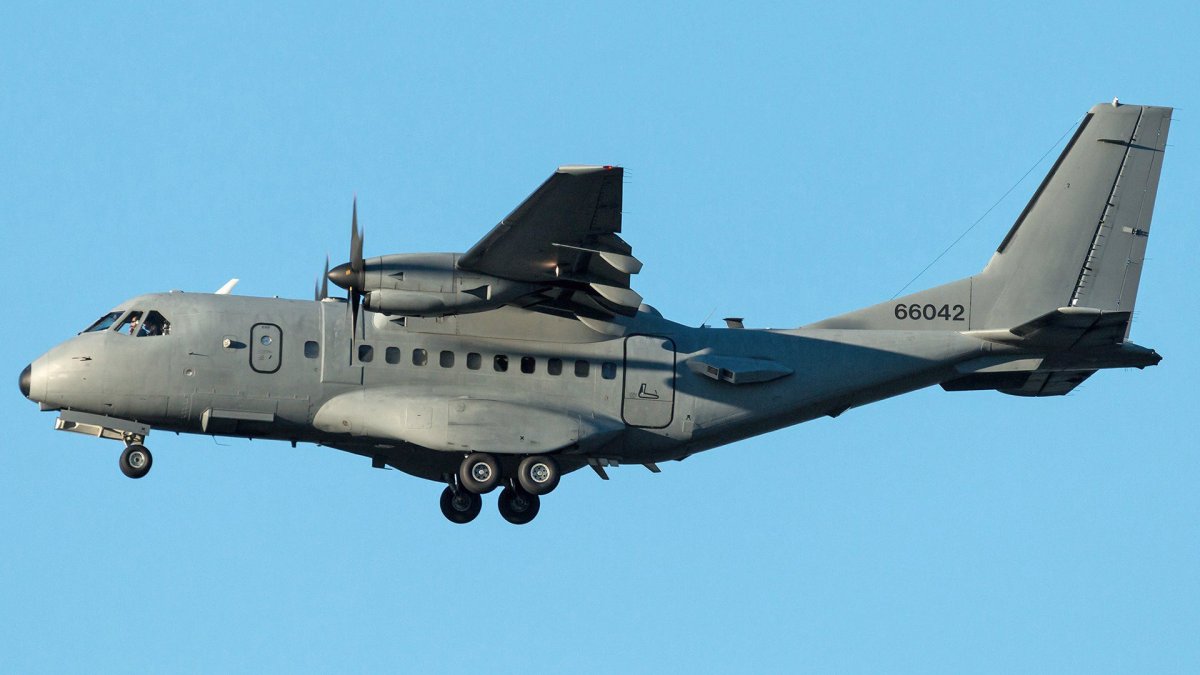
The aircraft, which goes by the callsign “SPUD21” and wears a nondescript flat gray paint job with the only visible markings being a USAF serial on its tail, is a CASA CN-235-300 transport aircraft that has been extensively modified for the surveillance mission. You can see more pictures of the aircraft here .
SPUD21 has flown roughly a dozen patrols over the Seattle area since arriving there on July 24th. The aircraft still remains at Boeing Field at the time of publishing., Flightaware.com
It is covered in a dizzying array of blisters, protrusions, humps and bumps. These include missile approach warning detectors and large fairings on its empennage for buckets of forward-firing decoy flares, as well as both microwave —the dome antenna behind the wing and flat antenna modification in front of the wing—and ultra high-frequency satellite communications —the platter-like antenna behind the dome antenna. A communications intelligence suite also appears to be installed on the aircraft, with the antenna farm on the bottom of its fuselage being a clear indication of such a capability.
But what’s most interesting is the aircraft’s apparent visual intelligence gathering installation. It is placed in a fixed position, on the left side of the aircraft, below the plane’s forward emergency door. The rectangle structure has a sliding door that covers the system’s sensors when not in use.
On the lower end of the capabilities spectrum, the system installed could be similar to the DB110 reconnaissance system , which can provide very high fidelity imagery of a target area from standoff “slant” ranges. The system, which is popular among F-16 operators in a podded version, can be acquired in varying configurations. Some have multi-spectral fusion capability , where electro-optical and infrared imagery is combined to bring out unique details that neither can see alone. An additional wider angle camera is also available as well, along with an assortment of data-link options that can send the system’s imagery to analysts and “customers” on the ground for rapid exploitation. In this case, the analysts could fly inside the aircraft, eliminating the requirement—or at least the outright need—for such a feature.
The DB-110 pod uses a very similar sliding door installation about the same size as the one installed on the CN-235. , UTC Brochure
On the higher end of the capability spectrum, the aperture could be filled with a wide area aerial surveillance (WAAS) camera system that can view a large area—the size of a town—continuously at one time. This technology, which allows for tagging of vehicles and other moving objects, and can even be used retroactively to trace someone’s movements over time, is among the biggest surveillance game-changers of our time. You can read all about how it works and its great potential to change everything from how we survey the battlefield to how we solve crimes here at home in this past feature .
WAAS camera systems have rapidly evolved over the last decade and have gone from the battlefield to the commercial market here at home. They also now come in all different sizes and capability classes—as well as a variety of interesting sounding names to go with them such as “Gorgon Stare,” “Hawkeye” and “ARGUS” to name a few. In fact, WAAS payloads, which were once the domain of larger aircraft like the MQ-9 Reaper drone and King Air twin turboprop, are now deployable on small tactical drones, such as the “Red Kite” sensor mounted on RQ-21 Blackjack used by Insitu , a Pacific Northwest company that is now owned by Boeing.
RQ-21 fitted with WAAS “Red Kite” sensor., INSITU
Some WAAS sensors require the aircraft to fly tight overhead orbits, while others work at a slant angle in relation to the ground. Considering the mounting location and aperture size on the CN-235 in question, this kind of “slant” setup would likely be the case. Also, the counterclockwise orbits the aircraft flies, between roughly six and twelve miles across, at altitudes from 17,000 to 22,000 feet, also indicate such a setup.
A sampling of tracks from SPUD21 missions around the Seattle area. , Flightaware.com
Above all else, these types of surveillance systems are especially good at capturing and monitoring so called “patterns of life” over and around a target area. This is an especially useful tool when collecting intelligence on an enemy target or group of targets over time and can open up new possibilities when it comes to the process of finding, fixing and finishing the enemy.
Simply put, instead of recording a snapshot in time such as what a satellite can furnish, persistent airborne surveillance sensors capture massive amounts of exploitable information over hours and days. So if a picture is akin to a thousand words, this persistent type of wide area aerial surveillance is equivalent to an entire novel or even a series of novels.
When paired with communications intelligence gathering, such as intercepting radio communications and mobile and satellite phone chatter, a high fidelity “picture” of a targeted area and how specific targets in that area operate can be compiled in a relatively short period of time, all using a single relatively economical asset. Also, the aircraft’s extensive communications suite can take this information, including streaming video, and send it to a command center around the world or relay it to regional ground stations. As such, it can likely provide high-fidelity overwatch of ongoing special operations mission, and relay that video and/or audio to commanders in real time.
Now that we have at least some idea of what this aircraft is likely capable of, the big question is what is it doing over Seattle and its suburbs? And maybe even more important—who is operating it?
Aside from what appears to be a weekend off in Portland, Oregon, the aircraft flies its missions out of Boeing Field, and it is operating out of Clay Lacy Aviation, the local fixed based operator (FBO) at Boeing Field, not from Boeing’s military ramp. It is totally common for military aircraft—from fighters to transports—to use local FBOs when traveling away from home. In fact, aircrews often prefer the amenities and ease of access of a high-end private jet center over a nearby military base.
Clay Lacy Aviation in relation to the Boeing military flight test ramp at KBFI., Google Maps
In Seattle at Boeing Field, Clay Lacy Aviation is famous for its seemingly constant stream of visiting military aircraft—but those aircraft aren’t usually executing highly peculiar surveillance missions over nearby urban areas for days on end. And the fact that the aircraft is not operating from the Boeing military ramp is a very good indication that its mission does not involve the aerospace giant. As such, this also largely eliminates the possibility of Boeing doing some sort of systems integration testing on the aircraft which could have explained some of its strange behavior.
As to who sent the aircraft and who even takes ownership of it, those details have turned out to be incredibly tough to pin down. Though it seems indisputable that the aircraft is or at least was U.S. government property at one point based on its Air Force-style serial number, none of the obvious U.S. military organizations claim they are aware of the CN-235 or its activities.
Public affairs officers at U.S. Northern Command (NORTHCOM), which oversees American military activities in North America, and its subordinate Joint Task Force-North (JTF-N), both said they weren’t tracking the aircraft or its mission. JTF-N is responsible for handling requests from domestic civilian agencies, such as Customs and Border Patrol, for military support, including contractor-operated surveillance aircraft .
The U.S. Air Force Special Operations Command (AFSOC) had similarly not been able to determine if the aircraft belonged to one of its units. U.S. Special Operations Command (SOCOM) forwarded yet another query on the issue back to AFSOC.
In an attempt to simply establish basic ownership, we reached out to the public affairs office at Wright-Patterson Air Force Base, home of the Air Force Life Cycle Management Center, which keeps tabs on all of the service’s aircraft. After speaking with a number of individuals by phone and email on the subject, they decided to send our query to the Pentagon’s main public affairs office.
The CASA CN-235 is a favorite of militaries and mercenaries around the world. This example was operated in Afghanistan by the US mercenary firm popularly known as Blackwater . , DoD
Taken together, these responses would seem to point to what many observers might have already speculated immediately, that this was a mission or training exercise in support of the secretive Joint Special Operations Command (JSOC) or a civilian agency such as the Central Intelligence Agency. This particular CN-235, with the serial 96-6042, is one of six that researchers commonly associated with the Air Force’s top secret 427th Special Operations Squadron. Recent pictures of the other aircraft show they are all in relatively similar configurations at present.
The 427th occupies the same space with a host of other “black” U.S. military aviation elements, most of which are affiliated to some degree with JSOC and the Intelligence Community. The War Zone has previously explored what is publicly known about these units in great detail.
Of course, the idea of the federal government employing a military aircraft to conduct surveillance within the United States would involve very complex and often controversial legal requirements. Far too complicated to go into detail here, we recommend taking a dive into Lawfare’s extensive writings on the National Security Agency’s domestic surveillance activities and related issues, which are tangential and touch on many of the same debates, though are not necessarily directly related to aerial spying. In 2016, BuzzFeed News also wrote an in-depth feature about airborne surveillance programs within the Department of Homeland Security and the Federal Bureau of Investigation that gets into many of these questions.
In short, if the military placed the aircraft under civilian control to some degree and with an appropriate legal justification, the U.S. military could possibly fly it in support of a domestic operation or one focused on a foreign suspect or organization operating within the United States. SOCOM and JSOC both have had connections to an “alphabet soup” of counter-terrorism elements that may have domestic components since at least 2008 .
Official documents refer to organizations like SOCOM-National Capital Region (SOCOM-NCR), the Joint Interagency Task Force-National Capital Region (JIATF-NCR), or simply the Interagency Task Force (IATF), which may or may not be related to each other. Just what these organizations do or whether they are just staffs that coordinate with other U.S. government agencies in Washington or an actual operational headquarters has been unclear—and not just to us.
The National Defense Authorization Act for the 2014 fiscal year specifically withheld funding from SOCOM-NCR until the Secretary of Defense submitted a report to the House and Senate Armed Services Committees that explained, among other things, “the purpose of” and “the activities to be performed by USSOCOM-NCR,” according to a Congressional Research Service report . The official $10 million budget request to establish this particular entity said it would send “liaison officers and Special Operations Support Teams to other federal agencies.”
It’s also entirely possible, if not probable, that the aircraft could be involved in a realistic training exercise rather than an actual operation, akin to the annual JADE HELM special operations drill. The special operations community in general has a unique interest in being able to operate in complex urban terrain. Some think these areas will be the primary battlefields of the future . Still, the public is at least tacitly informed about these drills before they begin. NORTHCOM runs its own complex multinational and interagency counter-terrorism exercise each year called Vital Archer. In 2015, the scenario reportedly involved a nuclear or radiological attack .
With all this in mind, maybe the CN-235 is part of a secretive set of drills involving terrorists smuggling themselves and their weaponry into the United States via Seattle’s sea or airport facilities. The area could have simply provided a suitable urban area to test existing or new surveillance technologies, too, though this could spark serious privacy concerns if true.
Whatever the aircraft has been doing in the Seattle skies, it seems curious that it’s been using civilian airports for the job. But so far, the plane does appear to be doing a good job of hiding in plain sight with no one able to say who even owns it.
We will keep you updated if we find out more on this mystery plane and its mission.
Update: August 6th, 2017:
AFSOC contacted us again stating the aircraft does indeed belong to them and that it is doing “training.” They would not elaborate or did not know what unit the aircraft belonged to specifically or exactly what type of training it was doing and who else was involved.
Contact the authors: Tyler@thedrive.com and joe@thedrive.com
A big thanks to our good aviation photographer friend Russell Hill for providing the picture of the CN-235 surveillance aircraft. Make sure to check out all his awesome work here , you won’t be disappointed.
Comments couldn’t be loaded. Please refresh the page.
作者:泰勒·罗戈韦和约瑟夫·特雷维西克
更新于美国东部时间2020年7月5日晚上7:17
一架非常独特的美国空军侦察机已经连续九天在西雅图及其周边地区上空盘旋。国防部似乎无人知晓这架飞机的所属部门,也不清楚它在西雅图地区执行如此频繁的任务究竟是为了什么。但根据其独特的配置以及开源飞行追踪网站收集的信息,我们可以大致了解它的性能,并推测它的行动意图。
这架呼号为“SPUD21”的飞机,机身涂装为不起眼的哑光灰色,唯一可见的标识是尾翼上的美国空军序列号。它是一架CASA CN-235-300运输机,经过大量改装以执行侦察任务。您可以在这里查看更多飞机图片。
自7月24日抵达西雅图以来,SPUD21已在该地区进行了大约十几次巡逻飞行。截至发稿时,该飞机仍停留在波音机场。(Flightaware.com)
机身表面布满了令人眼花缭乱的凸起、突起、隆起和凸起。这些包括导弹逼近告警探测器、尾翼上用于装载大量前射诱饵弹的大型整流罩,以及微波通信设备(机翼后方的圆顶天线和机翼前方的平面天线)和超高频卫星通信设备(圆顶天线后方的盘状天线)。此外,该机似乎还安装了一套通信情报系统,机身底部的天线阵列便是这一能力的明确标志。
但最引人注目的是飞机上疑似安装的视觉情报收集装置。它固定在飞机左侧,位于前部紧急舱门下方。这个矩形结构带有一个滑动门,不用时可以盖住系统的传感器。
在性能较低的情况下,所安装的系统可能类似于DB110侦察系统,该系统能够从远距离“斜向”观测范围内提供目标区域的高保真图像。该系统吊舱式版本在F-16战斗机用户中广受欢迎,并且可以配置多种不同。一些配置具备多光谱融合能力,可以将光电图像和红外图像结合起来,从而展现出单独两种图像都无法看到的独特细节。此外,该系统还可选配广角摄像头以及各种数据链选项,可以将系统图像发送给地面分析人员和“用户”以便快速分析。在这种情况下,分析人员可以待在飞机内,从而无需——或者至少不再需要——此类功能。
DB-110吊舱采用的滑动门装置与CN-235吊舱上的装置非常相似,尺寸也大致相同。(UTC宣传册)
在能力范围的高端,这个孔径可以被广域空中监视(WAAS)摄像系统填满,该系统可以同时连续监控一个城镇大小的大片区域。这项技术可以标记车辆和其他移动物体,甚至可以回溯追踪某人的行踪,堪称当今监控领域最具变革性的技术之一。您可以在之前的专题报道中了解其工作原理以及它带来的巨大潜力,从战场侦查到国内破案,它将彻底改变我们生活的方方面面。
过去十年间,广域增强系统(WAAS)摄像系统发展迅猛,已从战场走向国内商业市场。如今,它们拥有各种尺寸和性能等级,以及一系列引人入胜的名称,例如“Gorgon Stare”、“Hawkeye”和“ARGUS”等等。事实上,WAAS有效载荷曾经只能搭载于MQ-9“死神”无人机和King Air双涡轮螺旋桨飞机等大型飞机上,如今也能够部署在小型战术无人机上,例如Insitu公司(一家位于美国西北太平洋地区的公司,现已被波音公司收购)使用的RQ-21“黑杰克”无人机上搭载的“红风筝”传感器。
RQ-21 配备 WAAS“红风筝”传感器。
一些广域增强系统(WAAS)传感器需要飞机沿近地轨道飞行,而另一些则以与地面成一定角度倾斜的方式工作。考虑到CN-235的安装位置和孔径尺寸,很可能就是这种“倾斜”安装方式。此外,该飞机沿逆时针方向飞行,轨道直径约为6至12英里,飞行高度在17000至22000英尺之间,这也表明了这种安装方式。
以下是SPUD21任务在西雅图地区飞行时的部分航迹样本。(Flightaware.com)
最重要的是,这类监视系统尤其擅长捕捉和监控目标区域及其周边所谓的“生活模式”。这对于长期收集敌方目标或目标群的情报尤为有用,并能在发现、锁定和消灭敌人的过程中开辟新的可能性。
简而言之,与卫星只能提供瞬间快照不同,持续性机载监视传感器能够在数小时甚至数天内捕获海量可利用信息。因此,如果说一张照片胜过千言万语,那么这种持续性广域空中监视就相当于一部完整的小说,甚至是一系列小说。
当与通信情报收集(例如截获无线电通信以及移动和卫星电话通话)相结合时,只需使用一种相对经济的设备,即可在相对较短的时间内构建出目标区域及其特定目标行动方式的高保真“图像”。此外,该飞机强大的通信系统能够接收这些信息(包括视频流),并将其发送到全球各地的指挥中心或转发至区域地面站。因此,它很可能能够对正在进行的特种作战任务进行高保真监视,并将视频和/或音频实时传输给指挥官。
既然我们至少对这架飞机可能具备的能力有了一些了解,那么最大的问题是它在西雅图及其郊区上空做什么?或许更重要的是——是谁在操控它?
除了似乎在俄勒冈州波特兰市度过一个周末之外,这架飞机一直从波音机场起飞执行任务,并且使用的是波音机场当地的固定基地运营商(FBO)克莱·莱西航空(Clay Lacy Aviation)的服务,而不是波音公司的军用停机坪。军用飞机——从战斗机到运输机——在远离基地执行任务时使用当地的FBO是完全常见的做法。事实上,机组人员通常更喜欢高端私人飞机中心的便利设施和便捷的交通,而不是附近的军事基地。
克莱·莱西航空与KBFI的波音军用飞行测试坡道有关。(谷歌地图)
在西雅图的波音机场,克莱·莱西航空公司以其络绎不绝的军用飞机而闻名——但这些飞机通常不会连续数日在附近城区执行极其特殊的监视任务。而且,这架飞机并非从波音公司的军用停机坪起飞,这有力地表明它的任务与这家航空航天巨头无关。因此,这也基本排除了波音公司对该飞机进行某种系统集成测试的可能性,而这种测试或许可以解释其一些异常行为。
至于是谁派送了这架飞机,以及它的所有权归谁所有,这些细节至今仍难以查明。虽然根据其空军风格的序列号来看,这架飞机曾经或现在是美国政府的财产似乎毋庸置疑,但没有任何一家知名的美国军方机构声称他们了解CN-235飞机及其活动。
负责监督美国在北美军事活动的美国北方司令部(NORTHCOM)及其下属北方联合特遣部队(JTF-N)的公共事务官员均表示,他们并未追踪这架飞机及其任务。北方联合特遣部队负责处理国内民事机构(例如海关和边境保护局)提出的军事支援请求,包括由承包商运营的侦察机。
美国空军特种作战司令部(AFSOC)同样无法确定这架飞机是否属于其下属部队。美国特种作战司令部(SOCOM)就此问题再次向AFSOC提出了询问。
为了明确所有权归属,我们联系了赖特-帕特森空军基地的公共事务办公室。该基地是空军生命周期管理中心所在地,负责监管空军所有飞机。在就此事与多位人员通过电话和电子邮件沟通后,他们决定将我们的问询转交给五角大楼的主要公共事务办公室。
CASA CN-235 是世界各地军队和雇佣兵的首选装备。这架 CN-235 曾由美国雇佣兵公司黑水公司在阿富汗使用。
综合来看,这些回应似乎印证了许多观察人士的猜测,即这是一次任务或训练演习,旨在支援神秘的联合特种作战司令部(JSOC)或中央情报局等民事机构。这架序列号为96-6042的CN-235是研究人员普遍认为与空军绝密第427特种作战中队相关的六架飞机之一。其他飞机的近期照片显示,它们目前的配置都大致相同。
第427航空联队与众多其他“秘密”的美国军事航空部队占据着相同的地位,其中大多数都与联合特种作战司令部(JSOC)和情报机构有着某种程度的联系。《战区》杂志此前曾详细探讨过这些部队的公开信息。
当然,联邦政府动用军用飞机在美国境内进行监视的想法,会牵涉到非常复杂且往往充满争议的法律问题。由于情况过于复杂,无法在此详述,我们建议您深入阅读Lawfare网站上关于国家安全局国内监视活动及相关问题的详尽文章。这些文章虽然与空中间谍活动并非直接相关,但与本文主题虽有关联,也涉及许多相同的争论。2016年,BuzzFeed News也曾发表一篇深度报道,探讨了国土安全部和联邦调查局的空中监视项目,其中也涉及了许多此类问题。
简而言之,如果军方在一定程度上将飞机置于民用控制之下,并具备适当的法律依据,那么美军或许可以驾驶该飞机执行国内行动,或针对在美国境内活动的外国嫌疑人或组织执行行动。特种作战司令部(SOCOM)和联合特种作战司令部(JSOC)至少从2008年起就与一系列反恐机构保持联系,这些机构可能包含国内行动。
官方文件中提及的机构包括特种作战司令部国家首都地区分部(SOCOM-NCR)、联合跨部门特遣部队国家首都地区分部(JIATF-NCR)或简称为跨部门特遣部队(IATF),这些机构之间可能存在关联,也可能没有关联。这些机构的具体职能,以及它们仅仅是与华盛顿其他美国政府机构协调的机构,还是实际的作战总部,一直都不明确——而且不仅仅是我们对此感到困惑。
根据国会研究服务处的一份报告,2014财年的《国防授权法案》明确规定,在国防部长向众议院和参议院军事委员会提交一份报告之前,暂缓向特种作战司令部-国家首都地区司令部(SOCOM-NCR)拨款。该报告需解释SOCOM-NCR的“宗旨”和“其将开展的活动”。这份为设立该机构而提交的1000万美元正式预算申请称,该机构将向其他联邦机构派遣“联络官和特种作战支援小组”。
飞机很可能参与的是模拟实战训练,而非实际作战行动,类似于每年举行的“翡翠头盔”(JADE HELM)特种作战演习。特种作战部队普遍对在复杂城市地形中作战的能力有着特殊的兴趣。一些人认为,这些地区将成为未来的主要战场。不过,公众至少会在演习开始前得到一定的知情。美国北方司令部每年都会举行名为“关键射手”(Vital Archer)的复杂多国跨部门反恐演习。据报道,2015年的演习模拟了核或放射性袭击。
考虑到以上种种,CN-235或许是某项秘密演习的一部分,该演习旨在模拟恐怖分子通过西雅图的海路或机场设施将自身及其武器走私进入美国。该地区也可能仅仅是为测试现有或新型监控技术提供了一个合适的城市环境,但如果属实,这可能会引发严重的隐私担忧。
无论这架飞机在西雅图上空执行什么任务,它选择使用民用机场着实令人费解。但到目前为止,这架飞机似乎成功地隐藏了起来,至今无人知晓它的所有者是谁。
如果我们对这架神秘飞机及其任务有更多了解,我们会及时通知您。
更新:2017年8月6日:
空军特种作战司令部再次联系我们,声称这架飞机确实属于他们,并且正在进行“训练”。他们拒绝透露更多细节,也不清楚这架飞机具体属于哪个部队,或者正在进行何种类型的训练,以及还有哪些其他人员参与其中。
联系作者:Tyler@thedrive.com 和 joe@thedrive.com
非常感谢我们优秀的航空摄影师朋友 Russell Hill 提供 CN-235 侦察机的照片。一定要去看看他所有精彩的作品,绝对不会让你失望。
评论加载失败,请刷新页面。