Lithuania tests firearms, Swedish missiles against high-speed drones立陶宛测试枪支,瑞典导弹测试高速无人机
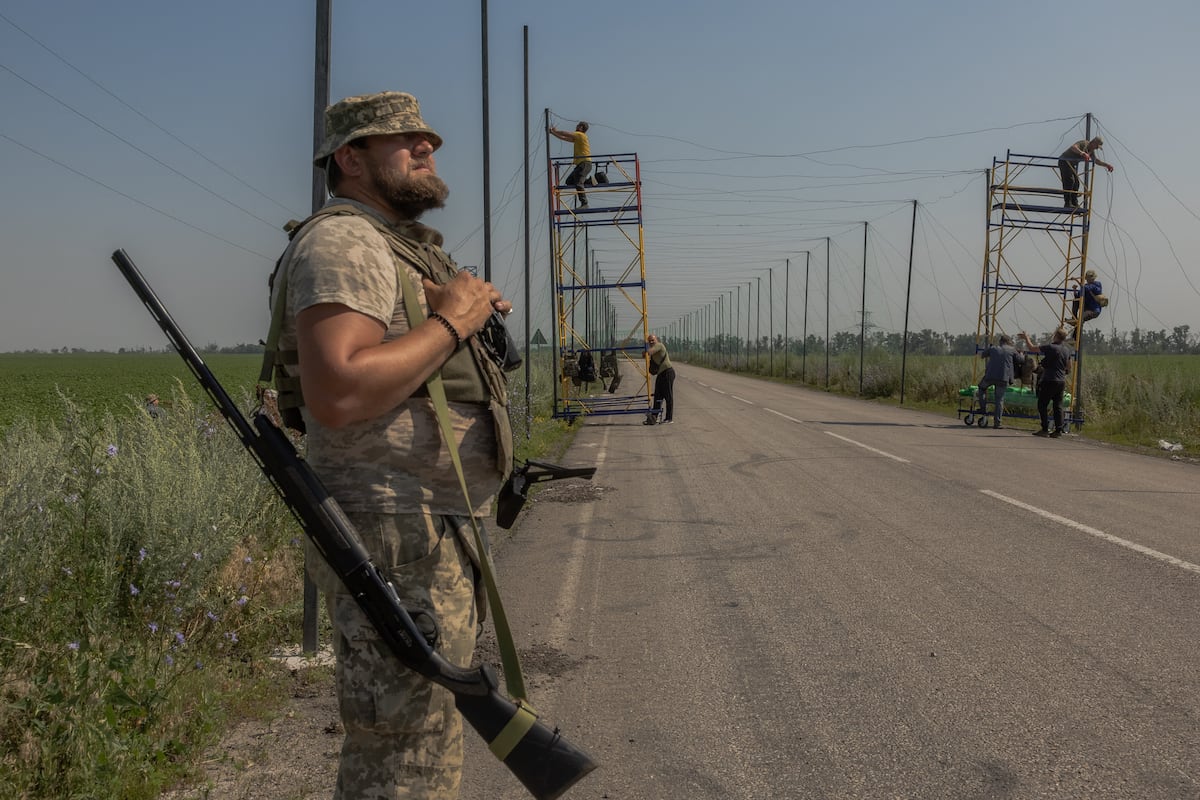
The use of light weapons such as shotguns against drones in Ukraine has gained a lot of attention, grabbing the curiosity of some Western forces, too.
MILAN — The Lithuanian Army has tested heavy machine guns and Swedish-designed surface-to-air missiles against high-speed drones, as more militaries are exploring the potential of firearms as drone countermeasures of last resort.
In a video released this week by the Lithuanian armed forces, air defense artillery units are seen training with large-caliber machine guns and launching the Saab-made RBS 70 NG missiles against target drones.
Armored vehicles equipped with machine guns can also be observed in the footage, which was filmed at a training range located less than ten kilometers away from the Belarus border.
“Testing of weapon systems (heavy machine guns, RBS, FPV drones) against drones at the General Silvestras Žukauskas training ground – some work the first time, some don’t. But that’s why we test and weapon crews train to attack this type of target,” the Lietuvos kariuomenė, the country’s armed forces, said in a post on their social media platform.
This drill comes only a few weeks after the Baltic country adopted a new law that grants the military the authority to shoot down hostile drones, allowing it to react faster in the event of airspace violations.
Lithuanian President Gitanas Nausėda said on the evening of Oct. 23 that Russian military planes briefly violated Lithuania’s airspace in what he called “a blatant breach of international law and territorial integrity.”
The use of light weapons such as shotguns against drones in Ukraine has gained a lot of attention in recent months, grabbing the curiosity of some Western militaries as well.
One of Ukraine’s latest drone countermeasures involves a new ammunition round for rifles that simultaneously fires five moving projectiles in a cloud-shaped pattern to hit incoming targets. Introduced over the summer, Ukraine’s government-backed defense technology cluster, Brave1, reports that it can effectively hit drones at distances of up to 50 meters.
It was designed so that infantry soldiers would not need to carry two different weapons; instead, they could rapidly substitute magazines depending on whether they are engaging an enemy drone or personnel.
Another military organization evaluating shotguns to safeguard against drones is the British Army’s Experimentation and Trials Group, which is responsible for testing activities across the service.
A recent report published by the Center for European Policy Analysis argues that guns paired with interceptor drones, rather than missiles, will be the cheap answer that militaries are looking for to defeat swarms of low-cost drones.
“What happens if Russia becomes capable of sending 1,000, 2,000, or even 4,000 drones in one night? These figures are achievable with modern production methods, and Ukraine would run out of missiles very quickly,” the report notes.
It proposes that the alternative will be “modern-day flak, married with interceptor drones,” pointing out that systems such as the German Gepard Flakpanzer can carry 640 rounds, or that the Rheinmetall Skyranger 35 can hold 220 rounds in a single turret and quickly re-target.
Elisabeth Gosselin-Malo was a Europe correspondent for Defense News. She covers a wide range of topics related to military procurement and international security, and specializes in reporting on the aviation sector. She is based in Milan, Italy.
米兰——立陶宛军队测试了重机枪和瑞典设计的地对空导弹对抗高速无人机,越来越多的国家的军队正在探索使用枪支作为无人机反制措施的潜力。
本周立陶宛武装部队发布的一段视频显示,防空炮兵部队正在使用大口径机枪进行训练,并向萨博公司制造的 RBS 70 NG 导弹射击靶机。
视频中还可以看到配备机枪的装甲车,该视频是在距离白俄罗斯边境不到十公里的训练场拍摄的。
立陶宛武装部队在其社交媒体平台上发帖称:“在西尔维斯特拉斯·茹考斯卡斯将军训练场进行的武器系统(重机枪、RBS、FPV无人机)对抗无人机的测试——有些一次成功,有些则失败。但这正是我们进行测试以及武器操作人员训练攻击此类目标的原因。”
就在几周前,这个波罗的海国家通过了一项新法律,赋予军方击落敌方无人机的权力,使其能够在空域受到侵犯时更快地做出反应。
立陶宛总统吉塔纳斯·瑙塞达于 10 月 23 日晚表示,俄罗斯军机短暂侵犯了立陶宛领空,他称之为“公然违反国际法和领土完整的行为”。
近几个月来,乌克兰使用霰弹枪等轻型武器对抗无人机的事件引起了广泛关注,也引起了一些西方军队的好奇。
乌克兰最新的无人机反制措施之一是研发一种新型步枪弹药,该弹药可同时发射五枚呈云状排列的飞行弹丸,以打击来袭目标。据乌克兰政府支持的国防技术集群Brave1报告,这种弹药于今年夏季推出,可在50米范围内有效击落无人机。
它的设计目的是让步兵士兵不必携带两种不同的武器;相反,他们可以根据攻击目标是敌方无人机还是敌方人员而快速更换弹匣。
另一个正在评估霰弹枪以防范无人机的军事组织是英国陆军实验与试验小组,该小组负责全军的测试活动。
欧洲政策分析中心最近发布的一份报告认为,用火炮配合拦截无人机,而不是导弹,将是军方正在寻找的击败大量低成本无人机的廉价解决方案。
报告指出:“如果俄罗斯能够在一夜之间派出1000架、2000架甚至4000架无人机,会发生什么?以现代生产方式,这些数字是可以实现的,乌克兰的导弹很快就会耗尽。”
它提出另一种方案是“现代防空炮与拦截无人机相结合”,并指出德国猎豹防空坦克等系统可以携带 640 发炮弹,或者莱茵金属 Skyranger 35 可以在单个炮塔中容纳 220 发炮弹并快速重新瞄准。
伊丽莎白·戈斯林-马洛曾任《防务新闻》欧洲通讯员。她的报道涵盖军事采购和国际安全等广泛领域,尤其擅长航空领域的报道。她常驻意大利米兰。