US, Europe fly the same jets, but can’t always fix each other’s: Rand美国和欧洲都使用同款喷气式飞机,但却不能总是互相维修:兰德
Variants within the same plane model, incompatible support equipment and a lack of shared data create barriers to interoperability, a Rand report warns.
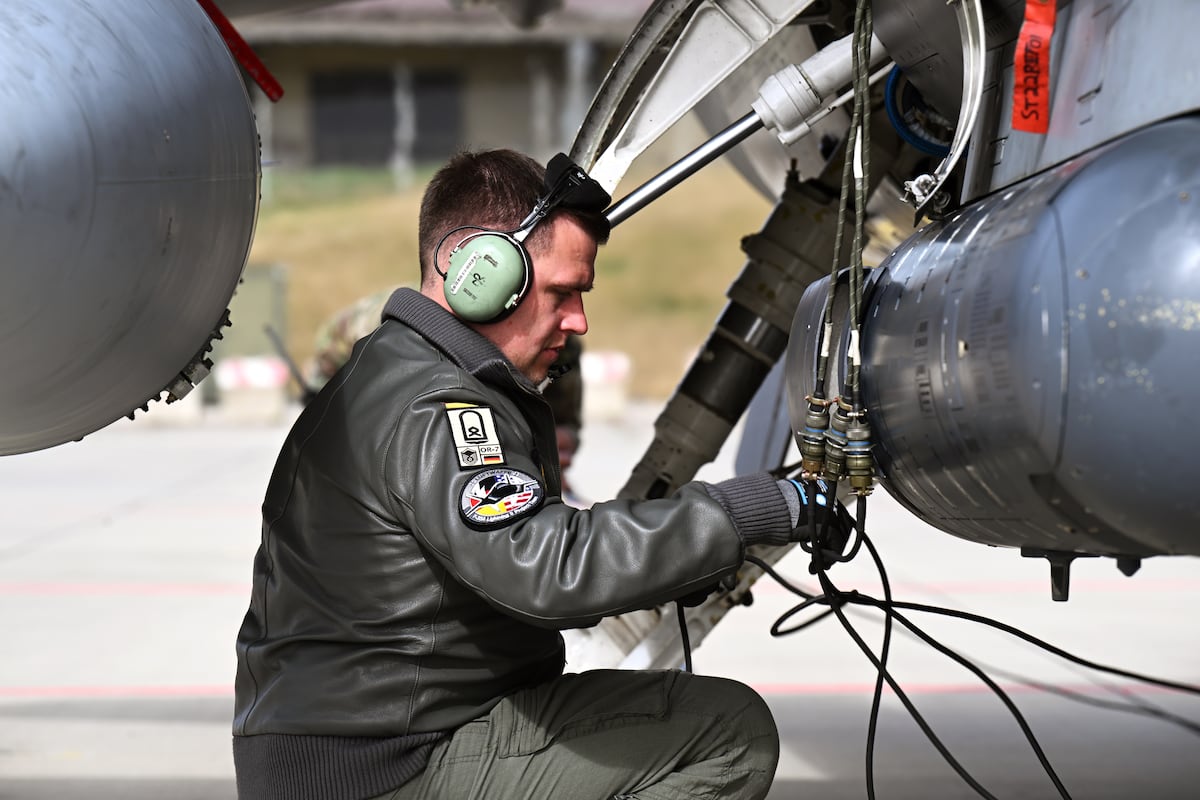
In theory, the fact that the United States and Europe fly many of the same jets should be a blessing. Common aircraft models — such as the F-35 and F-16 — should mean common spare parts, ground support equipment and mechanics who can fix similar planes from different nations.
But the reality is more complicated. Different variants within the same model, incompatible support equipment and a lack of shared data and procedures create barriers to interoperability, researchers with the Rand Corporation think tank warned in a September report .
For example, there are nearly 600 F-16s in Europe flown by non-U.S. nations , spread across a half-dozen blocks that may have differing engine types, oxygen systems and analog versus digital controls.
The picture is even worse for ground equipment.
“Some nations use U.S.-standard SE [support equipment], while others develop their own, which may only be partially compatible,” the report notes. “Adding to this complexity, some NATO members — such as Poland, Slovakia, and Bulgaria — have historically operated Soviet-era fighters like the MiG-29, with SE that is not designed for Western aircraft.”
The problem is more than logistical. The U.S. Air Force’s Agile Employment Concept , or ACE, calls for fighter squadrons to operate from dispersed airbases, which requires mobility and flexibility. Rather than hauling ground crews and support equipment from base to base, it would be simpler if U.S. military planes could be serviced on Dutch or Polish airfields by local mechanics.
The Air Force commissioned the Rand study in 2024 because it was concerned about ACE and interoperability.
“If U.S. aircraft can be serviced at partner airbases using local personnel and equipment — without requiring dedicated U.S. maintenance teams — ACE operations become more agile and scalable,” the report reads.
The study began with questions over cross-servicing between nations that fly the F-35. But after the U.S. changed its policies to ease F-35 cross-servicing, the study expanded to include the F-16 and then the support equipment used by European partners.
Cross-servicing between European nations themselves can be considerable. The Rand report cites an example where Portuguese F-16s deploy to Lithuania almost 1,700 miles away, which would likely involve aerial refueling. But if those jets can stop to refuel at airbases in other nations along the way — and receive quick mandatory inspections after each landing — then they can reach their destinations rapidly without needing tankers.
To some extent, the U.S. is responsible for interoperability issues, the report found. Security concerns limit the ability of allied nations to cross-service F-35s (operational planners should “be aware of this,” the report warns). Different U.S. fighter wings have different policies regarding use of allied support equipment.
And information and lessons learned are not being shared, the report said.
“USAFE’s [U.S. Air Forces in Europe–Air Forces Africa’s] efforts to enhance interoperability face a fundamental challenge: poor communication among key stakeholders, including USAFE wings, HQ USAFE, and enterprise entities like AFLCMC [Air Force Life Cycle Management Center],” according to the report.
A parallel study by Rand in September found issues, such as lack of coordination, with partner nations regarding aircraft arresting systems for landings, fire and emergency services, force protection of airbases and repairing bases after an attack.
Rand recommends that the U.S. Air Force establish units to oversee interoperability with allies. This would be a “a dedicated, echelon-above-wing organization or coordination cell focused specifically on partner interoperability,” the report notes.
The interoperability units “need not be large to be effective,” the report argues. “What they require is a clear mandate, regular interaction with both headquarters and wings, and access to relevant data, planning documents, and decision-makers.”
Solving these problems could reap enormous benefits for the U.S. and NATO air forces, according to Patrick Mills, who co-authored the two Rand studies. Interoperability would make “European airpower far more agile and confident in crisis,” Mills told Defense News.
“Fighter operations are enormously resource-intensive, drawing on base support and skilled maintainers that each nation and operating location has to replicate,” Mills said. “Threats to airfields and the small size of most European fleets mean each nation bears high costs to sustain limited capability. If allied fleets and bases could truly interoperate and integrate, that fragility would largely disappear.”
Michael Peck is a correspondent for Defense News and a columnist for the Center for European Policy Analysis. He holds an M.A. in political science from Rutgers University. Find him at theuncommondefense.com. His email is mikedefense1@gmail.com.
理论上讲,美国和欧洲使用许多相同的战机应该是一件好事。像F-35和F-16这样的通用机型意味着可以共用备件、地面保障设备和维修技师,从而能够维修来自不同国家的类似飞机。
但实际情况更为复杂。兰德公司智库的研究人员在9月份的一份报告中警告说,同一型号的不同变体、不兼容的配套设备以及缺乏共享数据和程序,都造成了互操作性的障碍。
例如,欧洲有近 600 架 F-16 战斗机,由非美国国家驾驶,分布在六个不同的批次中,这些批次的发动机类型、氧气系统以及模拟控制与数字控制可能各不相同。
地面设备的情况更加糟糕。
报告指出:“一些国家使用美国标准的支援设备,而另一些国家则自行研发,这些设备可能只有部分兼容。更复杂的是,一些北约成员国——例如波兰、斯洛伐克和保加利亚——历史上曾使用过苏联时代的战斗机,例如米格-29,这些战斗机的支援设备并非为西方飞机设计。”
问题不仅仅在于后勤保障。美国空军的“敏捷部署概念”(ACE)要求战斗机中队从分散的空军基地作战,这就要求部队具备机动性和灵活性。与其将地勤人员和支援设备从一个基地运送到另一个基地,不如让当地的机械师在荷兰或波兰的机场为美军飞机提供维修服务,这样会更加便捷。
空军于 2024 年委托兰德公司进行这项研究,因为它对 ACE 和互操作性感到担忧。
报告指出:“如果美国飞机可以在伙伴空军基地使用当地人员和设备进行维修,而无需专门的美国维修团队,ACE 的运作将更加灵活和可扩展。”
该研究最初是关于使用 F-35 战斗机的国家之间进行交叉维护的问题。但在美国改变政策以简化 F-35 交叉维护后,该研究扩大到包括 F-16 战斗机,然后又包括欧洲伙伴使用的支援设备。
欧洲各国之间的跨区域服务规模可能相当可观。兰德公司的报告举例说明,葡萄牙的F-16战机部署到近1700英里外的立陶宛,这很可能需要空中加油。但如果这些战机能够在途中经停其他国家的空军基地加油,并在每次着陆后接受快速的强制性检查,那么它们就可以迅速抵达目的地,而无需加油机。
报告指出,美国在一定程度上应对互操作性问题负责。安全方面的考量限制了盟国间F-35战机的通用性(报告警告称,作战规划人员应“意识到这一点”)。美国不同的战斗机联队在使用盟军支援设备方面也存在不同的政策。
报告称,信息和经验教训没有得到分享。
报告称,“美国驻欧洲空军-非洲空军为增强互操作性所做的努力面临着一个根本性的挑战:关键利益相关者之间沟通不畅,包括美国驻欧洲空军各联队、美国驻欧洲空军总部以及空军生命周期管理中心等企业实体。”
兰德公司9月份进行的一项平行研究发现,在飞机着陆阻拦系统、消防和应急服务、空军基地的部队保护以及袭击后基地的修复等方面,与伙伴国家缺乏协调等问题。
兰德公司建议美国空军设立专门机构,负责监督与盟友的互操作性。报告指出,这将是一个“专门的、高于联队层级的组织或协调机构,专注于伙伴互操作性”。
报告指出,互操作性小组“无需规模庞大即可发挥作用”。“它们需要的是明确的授权、与总部和各部门的定期互动,以及获取相关数据、规划文件和决策者的权限。”
兰德公司两份研究报告的合著者帕特里克·米尔斯表示,解决这些问题将为美国和北约空军带来巨大的好处。米尔斯告诉《防务新闻》,互操作性将使“欧洲空军在危机中更加灵活自信”。
米尔斯表示:“战斗机作战需要耗费大量资源,依赖于基地支持和熟练的维护人员,而每个国家和作战地点都必须建立相应的保障体系。机场面临的威胁以及大多数欧洲机队规模较小,意味着每个国家都必须承担高昂的成本来维持有限的作战能力。如果盟军机队和基地能够真正实现互操作和一体化,这种脆弱性将大大降低。”
迈克尔·佩克是《防务新闻》的通讯员,也是欧洲政策分析中心的专栏作家。他拥有罗格斯大学政治学硕士学位。您可以在theuncommondefense.com找到他。他的邮箱是mikedefense1@gmail.com。