Japan sprinkles fresh missiles across its islands to fend off would-be attackers日本在其岛屿上部署了大量导弹,以抵御潜在的攻击者。
Japan’s standoff capability buildup includes deploying homegrown missiles and acquiring Tomahawk cruise missiles to be launched from Aegis destroyers.
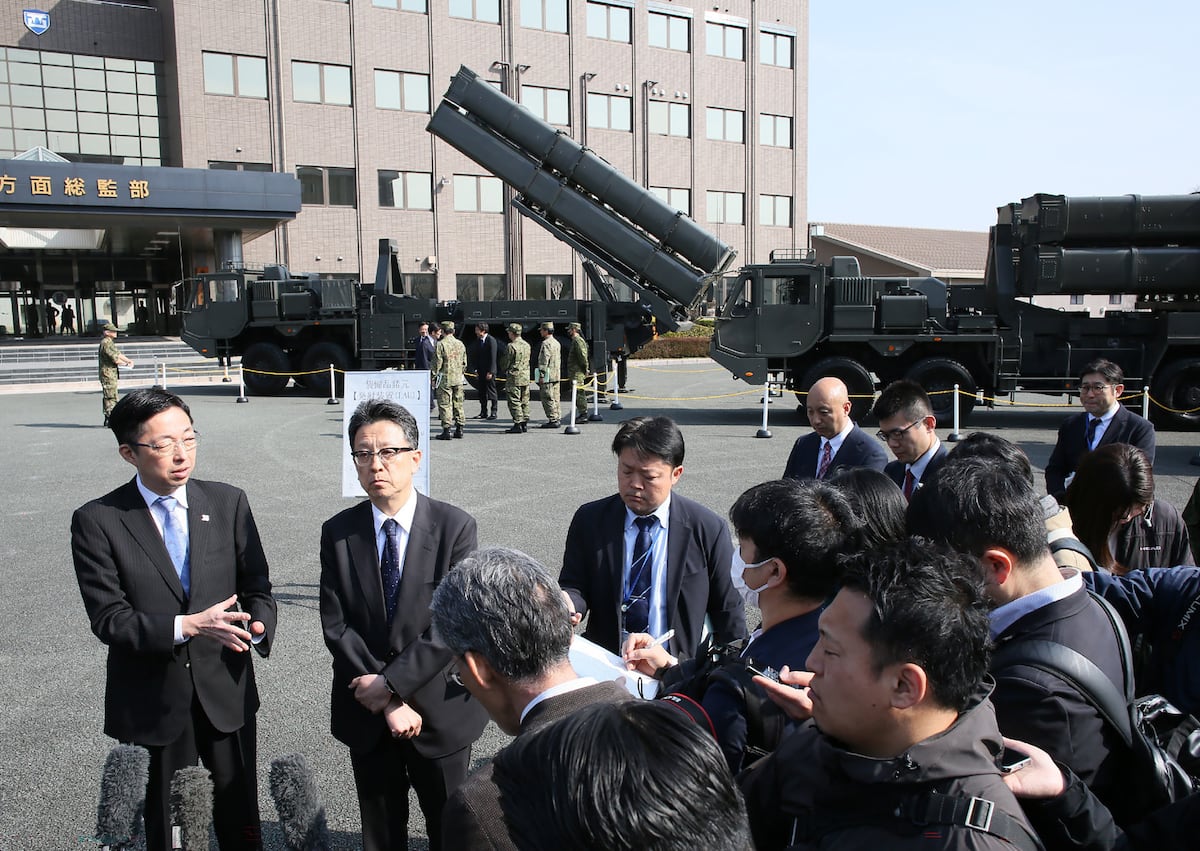
MANILA, Philippines — Japan has deployed advanced missiles across various strategic locations amid what the government considers a volatile and complex security environment.
The Ministry of Defense had begun transporting upgraded versions of the Type 12 anti-ship guided missiles to the Japan Ground Self-Defense Forces’ Kengun Camp in central Kyushu Island as early as March 9, with troop deployment set for March 31.
The Type 12 surface-to-ship missiles are an upgraded variant of a shorter-range Type 12, which has been deployed since 2019. The new Type 12 SSMs can reach approximately 1,000 kilometers and have enhanced stealth capabilities.
The missiles form the core of Japan’s air and missile defense strategy. Japan’s standoff capability buildup includes deploying homegrown missiles and acquiring Tomahawk cruise missiles to be launched from modified Aegis destroyers.
Defense Minister Shinjiro Koizumi said the missiles were intended to thwart “and eliminate invading enemy ships and landing forces at an early and far distance.”
Aside from the Type 12s, the ministry has scheduled the deployment of another indigenous missile system on March 31. The defense ministry will begin fielding the new hyper velocity gliding projectile (HVGP) in Camp Fuji, a training facility shared between the Ground Self-Defense Force and the U.S. Marine Corps, some 100 kilometers west of Tokyo.
The HVGP is a mobile, ground-launched supersonic weapon that flies in irregular trajectories, making it difficult to intercept. The defense ministry said the system will be stationed in the camp but will be deployed to different areas for various missions in the future, including deployment to remote islands to counter invading threats.
Koizumi said earlier this week that the live-fire exercises and the troop training at the Higashi Fuji Training Ground, the GSDF’s main training area, “are of great significance for improving the deterrence and resilience of the Japan-U.S. alliance.”
Apart from sending a unit to Camp Fuji, Japan also intends to deploy the HVGPs to Camp Kamifurano in Hokkaido in the country’s north, and Camp Ebino on the southeastern Kyushu Island.
The JGSDF is also deploying ground-to-ship missiles to Minamitorishima Island, an isolated coral atoll in the northwestern Pacific, for live-fire drills and electronic warfare training as early as June. Officials said the island is being prepared ahead of planned exercises this year.
Japan plans to develop a hypersonic version of the HVGP with U.S. support. The U.S. State Department approved the foreign military sale of equipment and services worth $340 million for the HVGP program on March 25, a week after Prime Minister Sanae Takaichi met with President Donald Trump in Washington.
Leilani Chavez is an Asia correspondent for Defense News. Her reporting expertise is in East Asian politics, development projects, environmental issues and security.
菲律宾马尼拉——日本在政府认为动荡复杂的安全环境下,在多个战略要地部署了先进导弹。
早在 3 月 9 日,防卫省就开始向位于九州岛中部的日本陆上自卫队军官营地运送升级版的 12 型反舰导弹,部队部署定于 3 月 31 日进行。
12型舰对舰导弹是12型短程导弹的升级版,后者自2019年开始部署。新型12型舰对舰导弹射程可达约1000公里,并具有增强的隐身能力。
这些导弹构成了日本防空和导弹防御战略的核心。日本的远程打击能力建设包括部署国产导弹以及采购可从改装后的宙斯盾驱逐舰上发射的战斧巡航导弹。
防卫大臣小泉进次郎表示,这些导弹旨在“及早远距离挫败并消灭入侵的敌舰和登陆部队”。
除了12型导弹外,防卫省还计划于3月31日部署另一种国产导弹系统。防卫省将在富士营地开始部署新型超高速滑翔弹(HVGP)。富士营地是陆上自卫队和美国海军陆战队共用的训练基地,位于东京以西约100公里处。
HVGP是一种机动式陆基超音速武器,其飞行轨迹不规则,难以拦截。国防部表示,该系统将部署在营地内,但未来将部署到不同区域执行各种任务,包括部署到偏远岛屿以应对入侵威胁。
小泉本周早些时候表示,在陆上自卫队主要训练场——东富士训练场进行的实弹演习和部队训练“对于提高日美同盟的威慑力和韧性具有重要意义”。
除了向富士营地派遣一个单位外,日本还计划向位于该国北部北海道的上富良野营地和位于东南部九州岛的海老野营地部署HVGP。
日本陆上自卫队也计划最早于6月在西北太平洋的偏远珊瑚环礁南鸟岛部署地对舰导弹,用于实弹演习和电子战训练。官员表示,该岛正在为今年计划的演习做准备。
日本计划在美国的支持下研发HVGP的高超音速版本。3月25日,美国国务院批准了价值3.4亿美元的HVGP项目设备和服务对外军售,此前一周,日本首相高市早苗在华盛顿与美国总统唐纳德·特朗普会晤。
莱拉尼·查韦斯是《防务新闻》的亚洲记者。她的报道专长是东亚政治、发展项目、环境问题和安全。