NATO’s Europe commander sees growing Russian, Chinese threat in Arctic北约欧洲司令认为俄罗斯和中国在北极的威胁日益加剧
“It’s not for peaceful purposes,” U,S, Air Force Gen. Alexus Grynkewich said. “They’re not studying the seals and the polar bears."
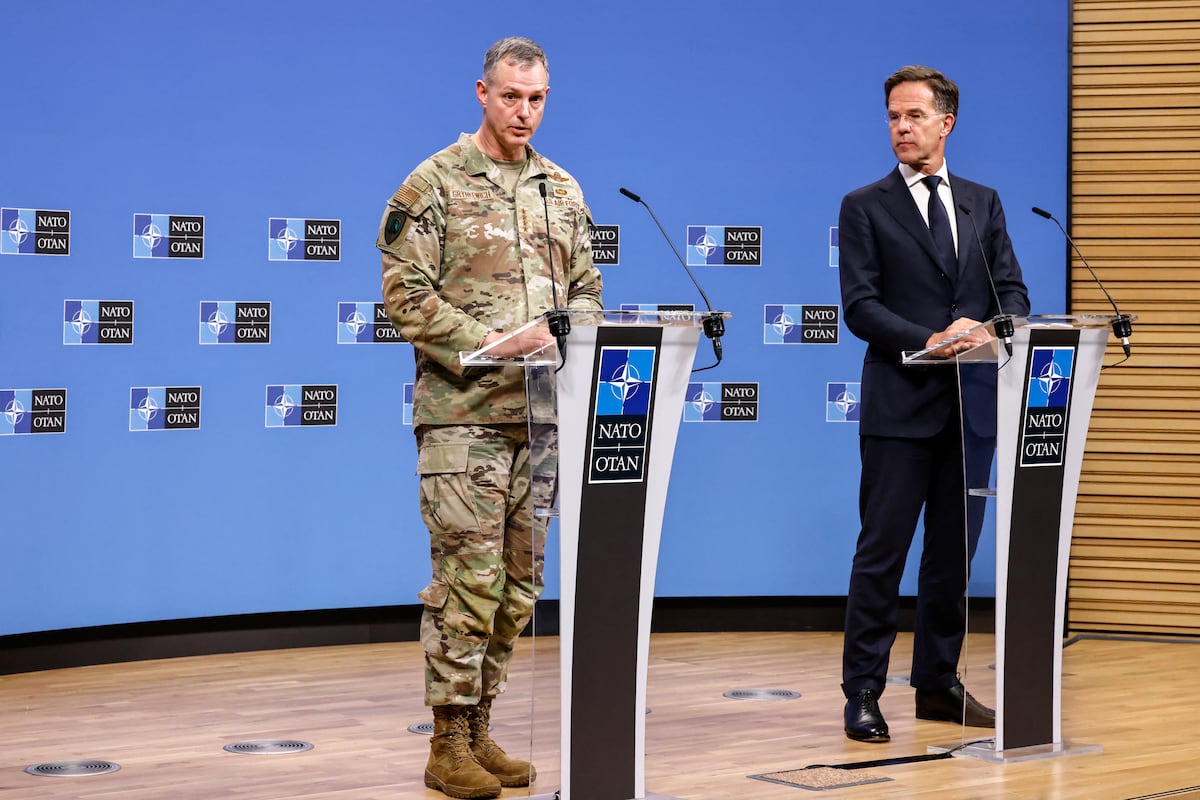
PARIS — Russia and China are increasingly working together in the Arctic region , and their presence there will be a growing threat to NATO allies, said Gen. Alexus Grynkewich, the Supreme Allied Commander Europe, speaking at a Swedish national security conference on Sunday.
As Arctic ice recedes and access to the region improves, Russia and China are cooperating with joint patrols not only on the north coast of Russia, but also north of Alaska and near Canada, Grynkewich said at this year’s National Conference organized by Sweden’s Folk och Förvars.
“It’s not for peaceful purposes,” Grynkewich said. “They’re not studying the seals and the polar bears. They’re out there doing bathymetric surveys and trying to figure out how they can counter NATO capabilities on and under the sea. So that’s something that could grow very quickly, and we need to be mindful of it and ready for it.”
U.S. President Donald Trump has cited the presence of Russia and China around Greenland to justify a claim to the Arctic island, an autonomous territory of Denmark where the U.S. has a military base.
The U.K. has reportedly been in talks with NATO allies about how to beef up security in the Arctic to counter threats from Russia and China.
Grynkewich said Russia, China, Iran, North Korea and others increasingly cooperate in opposition to Western countries. The NATO commander said that includes Ukraine, where China continues to fund the Russian war effort, Iran supplies technology and weapons, while North Korean combat troops remain in Russia on the border with Ukraine.
“In the Arctic and the high north, we see a similar trend,” Grynkewich said. “Russian and Chinese vessels are conducting more and more joint patrols. Chinese icebreakers and research vessels are in Arctic waters, and their research is not for peaceful purposes. It’s to gain a military advantage.”
Russia meanwhile continues to test advanced capabilities in the Barents Sea, he said, without providing details.
As new shipping routes emerge and new resources are discovered, the Arctic will only become more strategically important, according to the American general. This comes as NATO faces an increasing hybrid threat, with airspace violations, navigation satellite interference, and the shadow fleet in the Baltic Sea threatening underwater infrastructure, according to Grynkewich.
“In short, the Arctic and Northern Europe, by extension, has become a front line for strategic competition,” the commander said.
Grynkewich said he doesn’t seen an immediate threat to NATO territory right now, one reason being that Russia’s forces are tied up in Ukraine, and its war economy dedicated to that effort.
NATO Allied Command Operations has strengthened its deterrent posture, including with the Baltic Sentry operation to defend underwater infrastructure in the Baltic Sea, according to Grynkewich. He said Joint Force Command Norfolk last month brought all NATO activities in the Arctic under one command, “allowing us to better defend all allies in Europe, in the Arctic and the strategic approaches to North America.”
NATO plans to expand its Arctic intelligence, surveillance and reconnaissance capabilities, improve infrastructure and logistics for military mobility and to strengthen its presence with Arctic capable forces, including those in Sweden, according to the commander.
“With seven of eight Arctic nations inside the alliance, the other one being Russia, we will and we can get this right,” Grynkewich said.
Rudy Ruitenberg is a Europe correspondent for Defense News. He started his career at Bloomberg News and has experience reporting on technology, commodity markets and politics.
巴黎——欧洲盟军最高司令阿莱克西斯·格林克维奇将军周日在瑞典举行的国家安全会议上表示,俄罗斯和中国在北极地区的合作日益密切,它们在那里的存在将对北约盟国构成越来越大的威胁。
格林克维奇在今年由瑞典人民与保护协会组织的全国会议上表示,随着北极冰层的消退和进入该地区的通道改善,俄罗斯和中国不仅在俄罗斯北部沿海地区,而且在阿拉斯加北部和加拿大附近地区开展联合巡逻合作。
格林克维奇说:“这并非出于和平目的。他们不是在研究海豹和北极熊,而是在进行水深测量,试图找出对抗北约在海上和水下能力的方法。所以,这种情况可能会迅速发展,我们需要对此保持警惕并做好准备。”
美国总统唐纳德·特朗普以俄罗斯和中国在格陵兰岛周边的存在为由,为其对该北极岛屿的主权声索辩护。格陵兰岛是丹麦的自治领土,美国在该岛设有军事基地。
据报道,英国一直在与北约盟国商讨如何加强北极地区的安全,以应对来自俄罗斯和中国的威胁。
格林克维奇表示,俄罗斯、中国、伊朗、朝鲜和其他一些国家在对抗西方国家方面合作日益密切。这位北约指挥官指出,这其中就包括乌克兰,中国继续资助俄罗斯在乌克兰的战争行动,伊朗提供技术和武器,而朝鲜的作战部队则驻扎在俄罗斯与乌克兰的边境地区。
格林克维奇说:“在北极和高纬度地区,我们也看到了类似的趋势。俄罗斯和中国的船只正在进行越来越多的联合巡逻。中国的破冰船和科考船出现在北极水域,他们的研究并非出于和平目的,而是为了获取军事优势。”
他表示,与此同时,俄罗斯继续在巴伦支海测试先进能力,但没有提供细节。
据这位美国将军称,随着新航线的开辟和新资源的发现,北极的战略重要性只会日益凸显。格林克维奇表示,与此同时,北约正面临日益严峻的混合威胁,包括侵犯领空、干扰导航卫星以及波罗的海的影子舰队对水下基础设施的威胁。
“简而言之,北极和北欧地区已经成为战略竞争的前线,”这位指挥官说道。
格林克维奇表示,他目前没有看到对北约领土的直接威胁,其中一个原因是俄罗斯的军队被牵制在乌克兰,其战争经济也致力于此。
格林克维奇表示,北约盟军作战司令部加强了其威慑态势,包括开展“波罗的海哨兵”行动以保护波罗的海的水下基础设施。他还表示,诺福克联合部队司令部上个月将北约在北极的所有行动纳入同一指挥之下,“使我们能够更好地保卫在欧洲、北极以及通往北美的战略要道上的所有盟友。”
据指挥官称,北约计划扩大其在北极的情报、监视和侦察能力,改善军事机动的基础设施和后勤保障,并加强其在北极地区的存在,包括在瑞典的部队。
格林克维奇说:“北极联盟中有八个国家中的七个是联盟成员,另一个是俄罗斯,我们能够把这件事做好。”
鲁迪·鲁伊滕贝格是《防务新闻》的欧洲记者。他的职业生涯始于彭博新闻社,拥有报道科技、大宗商品市场和政治方面的经验。