Senate passes Ukraine, Israel, Taiwan aid amid Trump-fueled opposition在特朗普煽动的反对声中,参议院通过了对乌克兰、以色列和台湾的援助法案。
The Senate passed Biden's aid request for Ukraine, Israel and Taiwan. But it faces strong headwinds in the House amid opposition from Trump.
The Senate on Tuesday passed the president’s $95 billion foreign aid spending request for Ukraine, Israel and Taiwan following an all-night session, wrapping up nearly a week of debate on the bill.
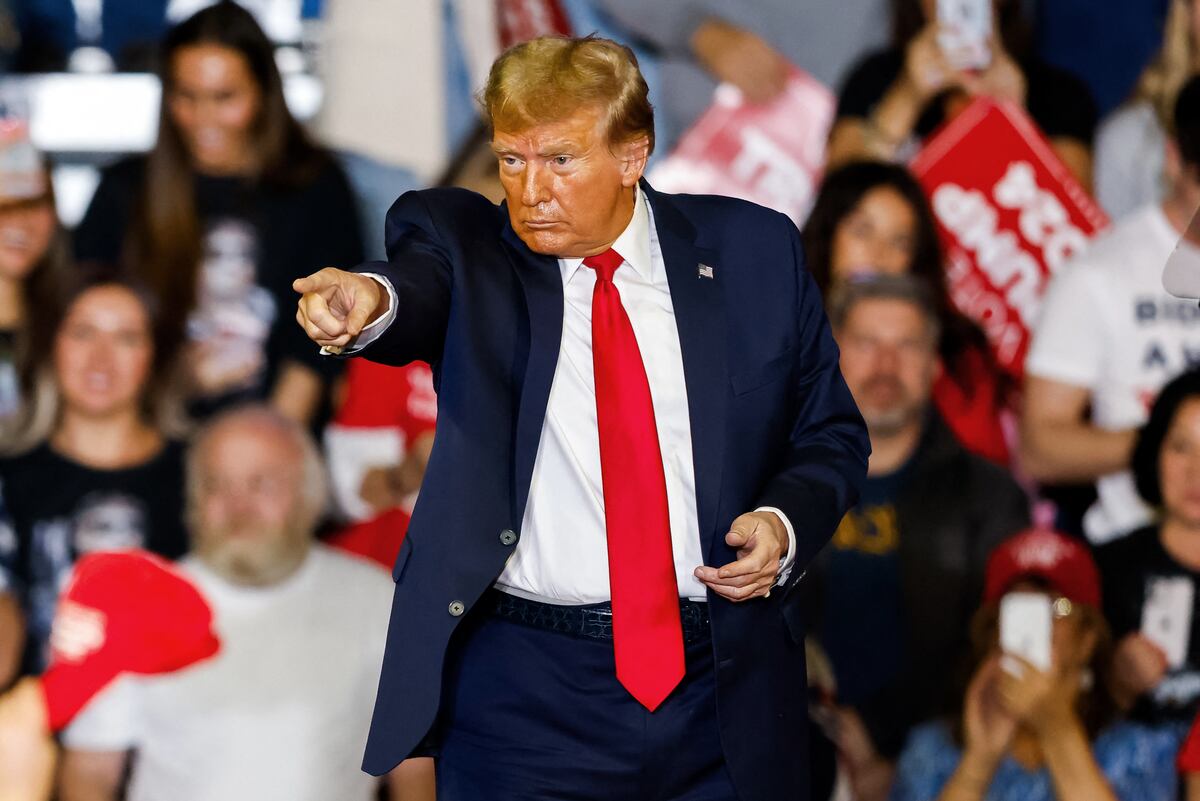
The legislation, which passed in the chamber 70-29, faces an uphill battle in the House amid opposition from former President Donald Trump, the leading candidate in the Republican presidential primary. House Republicans are increasingly resistant to additional assistance for Ukraine — and foreign aid more generally.
“Today we make [Russian President] Vladimir Putin regret the day he questioned America’s resolve, and we make clear to others like China’s President Xi [Jinping] not to test our determination,” Senate Majority Leader Chuck Schumer, D-N.Y., said on the floor after the vote. “And we send a clear, bipartisan message of resolve to our allies in NATO.”
But House Speaker Mike Johnson, R-La., reiterated his opposition in a statement on Monday mere hours before the Senate moved forward with its final vote.
“The mandate of national security supplemental legislation was to secure America’s own border before sending additional foreign aid around the world,” Johnson wrote in a statement. “In the absence of having received any single border policy change in the Senate, the House will have to continue to work its own will on these important matters.”
President Joe Biden’s foreign aid request stalled for two months in the Senate after Republicans held up a procedural vote in December, demanding immigration policy changes in exchange for their support. This led to two months of negotiations, only for Trump to disparage the deal after Senate Democrats agreed to immigration restrictions. Senate Republicans then backtracked on the deal and moved forward with a bill solely focused on foreign aid.
Trump also demanded Saturday on his social media network, Truth Social, that the foreign aid bill be “done as loan, not just a give away.” He said at a South Carolina rally that same day he “would encourage [Russia] to do whatever the hell they want” to NATO members who do not spend enough on defense.
The European Union earlier this month passed $54 billion in economic support for Ukraine after Hungary dropped its opposition.
The Senate bill includes another $60 billion in security and economic aid for Ukraine, $48.4 billion of which is for military support through the Pentagon.
The military support includes $19.9 billion for the Pentagon to backfill weapons sent to Ukraine through U.S. stockpiles and $13.7 billion for the Ukraine Security Assistance Initiative, allowing the Defense Department to ink longer-term contracts to send weapons to Kyiv. There’s also $1.6 billion in foreign military financing, allowing Ukraine and European countries impacted by Russia’s invasion to use the money to buy weapons from U.S. defense contractors.
Sen. Lindsey Graham, R-S.C., called on the House to implement Trump’s idea of turning “the supplemental aid package into a loan instead of a grant,” though it’s unclear how that would work for the majority of military aid in the bill, which is allocated for Pentagon contracts. Graham adamantly called for a defense spending supplemental last year to circumvent the $886 billion national security spending cap in the debt ceiling deal.
The House failed to pass a stand-alone Israel aid bill last week amid opposition from Biden and Democrats unhappy with the lack of Ukraine assistance in the package.
Meanwhile, three members of the Senate Democratic caucus voted against the foreign aid package Tuesday over concerns about the humanitarian crisis in Gaza and the high civilian death toll amid Israel’s monthslong offensive against Hamas.
“One the one hand, I strongly support aid to Ukraine,” Sen. Jeff Merkley, D-Ore., said in a statement before voting against the bill. “On the other hand, I strongly oppose sending more offensive military aid to Israel at a time when they are using American weapons in what President Biden has called an ‘indiscriminate’ campaign of bombing.”
Sens. Bernie Sanders, I-Vt., and Peter Welch, D-Vt., also voted against the Senate bill.
The bill includes $10.6 billion for the Defense Department to continue providing munitions and other weapons to Israel. That amount includes $4 billion for the Iron Dome and David’s Sling air defense systems as well as $1.2 billion to procure the Iron Beam laser system to counter short-range rocket threats. There’s also another $3.5 billion in foreign military financing for Israel to buy more military equipment with cash grants.
Another $2 billion in foreign military financing from the bill would go to Taiwan and other Indo-Pacific security partners. Additionally, the bill has $1.9 billion for the Defense Department to backfill weapons sent to Taiwan from U.S. stockpiles, providing the Pentagon’s long-requested funding that will allow it to use presidential drawdown authority to quickly transfer weapons to Taipei .
The U.S. hopes to deter a possible Chinese invasion of Taiwan in the coming years by positioning as much materiel on the island as possible.
U.S. Indo-Pacific Command would get another $542 million to respond to its fiscal 2024 unfunded priorities list . Another $2.4 billion in the bill would go to U.S. Central Command to resupply munitions it used in response to the ongoing attacks from Iran-backed proxies in the Middle East since the Israel-Hamas war began in October 2023.
The bill also includes $3.3 billion to get the submarine-industrial base on course for the AUKUS agreement with Australia and Britain.
Bryant Harris is the Congress reporter for Defense News. He has covered U.S. foreign policy, national security, international affairs and politics in Washington since 2014. He has also written for Foreign Policy, Al-Monitor, Al Jazeera English and IPS News.
经过通宵会议,参议院周二通过了总统提出的向乌克兰、以色列和台湾提供 950 亿美元对外援助的请求,结束了对该法案近一周的辩论。
这项法案在众议院以70票赞成、29票反对获得通过,但由于共和党总统初选领跑者、前总统唐纳德·特朗普的反对,在众议院的推进将面临重重阻力。众议院共和党人越来越反对向乌克兰提供更多援助,以及更广泛意义上的对外援助。
“今天,我们让普京总统为他质疑美国决心的那一天感到后悔,我们也向包括中国国家主席习近平在内的其他国家明确表示,不要试探我们的决心,”参议院多数党领袖查克·舒默(纽约州)在投票结束后在参议院发言时说道。“我们向北约盟友发出了清晰的、两党共同支持的决心信息。”
但众议院议长、路易斯安那州共和党人迈克·约翰逊周一发表声明,重申了他的反对意见,而就在几个小时后,参议院将进行最终投票。
约翰逊在一份声明中写道:“国家安全补充法案的任务是在向世界各地提供更多对外援助之前,确保美国自身边境的安全。由于参议院没有就边境政策做出任何修改,众议院将不得不继续自行处理这些重要问题。”
拜登总统的对外援助请求在参议院搁置了两个月,原因是共和党人在12月阻挠了一项程序性投票,并要求以移民政策改革作为支持交换条件。这导致了两个月的谈判,但参议院民主党人同意实施移民限制后,特朗普却对该协议表示不满。随后,参议院共和党人反悔了该协议,转而推进一项仅关注对外援助的法案。
特朗普周六还在他的社交媒体平台Truth Social上要求,对外援助法案“应该以贷款的形式进行,而不是直接赠予”。当天,他在南卡罗来纳州的一次集会上表示,他“会鼓励(俄罗斯)对那些国防开支不足的北约成员国为所欲为”。
本月初,在匈牙利放弃反对后,欧盟批准了向乌克兰提供540亿美元的经济援助。
参议院的法案还包括向乌克兰提供 600 亿美元的安全和经济援助,其中 484 亿美元将通过五角大楼提供军事支持。
军事援助包括向五角大楼提供199亿美元,用于补充通过美国库存运往乌克兰的武器;以及向乌克兰安全援助计划提供137亿美元,使国防部能够签署更长期的武器供应合同。此外,还有16亿美元的外国军事融资,使乌克兰和受俄罗斯入侵影响的欧洲国家能够利用这笔资金从美国国防承包商处购买武器。
南卡罗来纳州共和党参议员林赛·格雷厄姆呼吁众议院采纳特朗普的提议,将“补充援助方案从拨款改为贷款”,但目前尚不清楚该方案将如何适用于法案中拨给五角大楼的大部分军事援助款项。格雷厄姆去年曾强烈呼吁增加国防开支,以规避债务上限协议中8860亿美元的国家安全支出上限。
上周,由于拜登的反对以及民主党人对该方案中缺乏对乌克兰的援助感到不满,众议院未能通过一项单独的以色列援助法案。
与此同时,由于对加沙人道主义危机以及以色列对哈马斯长达数月的攻势中大量平民死亡的担忧,参议院民主党党团的三名成员周二投票反对对外援助方案。
“一方面,我强烈支持向乌克兰提供援助,”俄勒冈州民主党参议员杰夫·默克利在投票反对该法案前发表声明说。“另一方面,我强烈反对在以色列使用美国武器进行拜登总统所称的‘无差别’轰炸行动之际,向以色列提供更多进攻性军事援助。”
参议员伯尼·桑德斯(独立人士,佛蒙特州)和彼得·韦尔奇(民主党,佛蒙特州)也投票反对参议院的这项法案。
该法案包括拨款106亿美元给国防部,用于继续向以色列提供弹药和其他武器。这笔款项包括40亿美元用于“铁穹”和“大卫投石器”防空系统,以及12亿美元用于采购“铁束”激光系统以应对短程火箭威胁。此外,还有35亿美元的外国军事援助资金,用于以现金赠款的形式向以色列购买更多军事装备。
该法案中另有20亿美元的对外军事援助资金将用于援助台湾和其他印太安全伙伴。此外,该法案还拨款19亿美元给国防部,用于从美国库存中补充运往台湾的武器,这笔资金满足了五角大楼长期以来的资金需求,使其能够动用总统的撤军授权,迅速向台北转移武器。
美国希望通过在台湾部署尽可能多的物资,来阻止中国在未来几年可能对台湾发动的入侵。
美国印太司令部将获得额外5.42亿美元拨款,用于应对其2024财年未获拨款的优先事项清单。法案中另有24亿美元将拨给美国中央司令部,用于补充其自2023年10月以色列-哈马斯战争爆发以来,为应对伊朗支持的中东代理人持续袭击而使用的弹药。
该法案还包括 33 亿美元,用于使潜艇工业基地走上与澳大利亚和英国达成的 AUKUS 协议轨道。
布莱恩特·哈里斯是《防务新闻》的国会记者。自2014年以来,他一直在华盛顿报道美国外交政策、国家安全、国际事务和政治。他还曾为《外交政策》、《Al-Monitor》、《半岛电视台英语频道》和IPS新闻撰稿。