US Navy updating tactics for sensors, weapons based on Houthi attacks美国海军正在更新针对胡塞武装袭击的传感器和武器战术。
Navy warfighting development commands are already churning out new tactics for training and operations in the Middle East based on ongoing Houthi attacks.
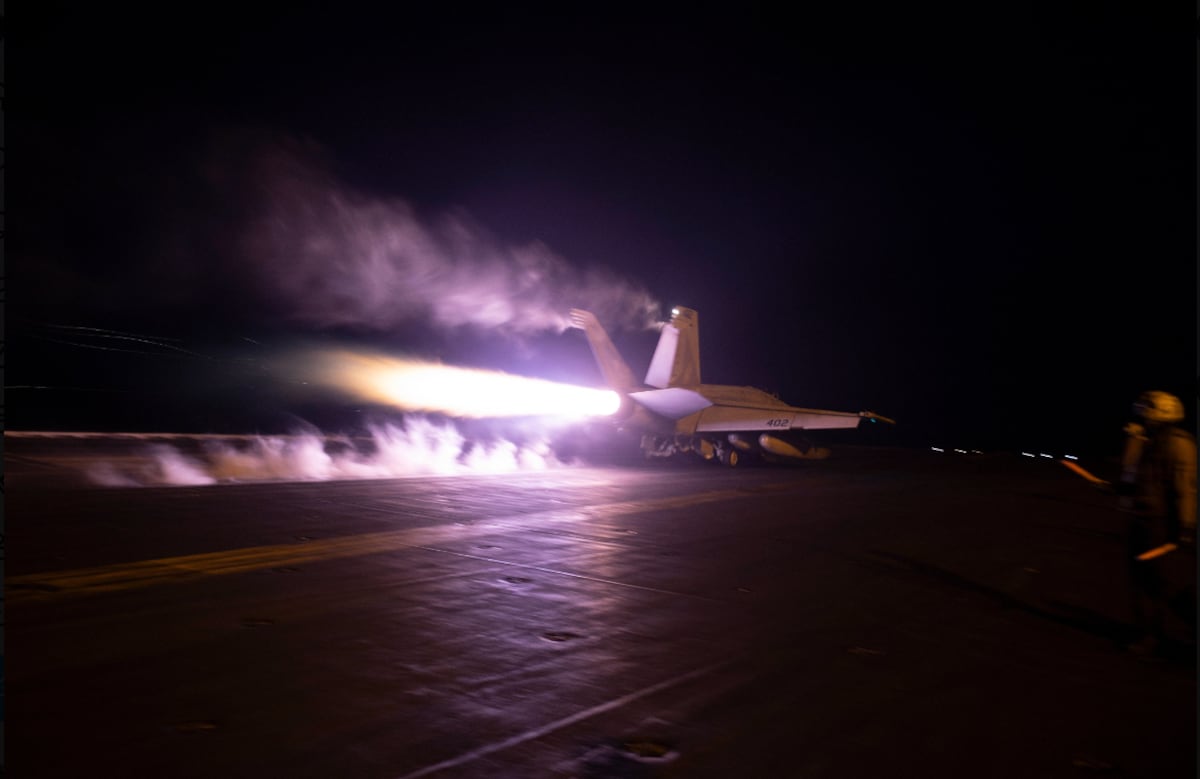
SAN DIEGO — The U.S. Navy is incorporating lessons learned from its Red Sea engagements with Houthi missiles and drones, and are using them to improve tactics for seeing and eliminating threats, service leaders said Tuesday.
Vice Adm. Brendan McLane, the commander of Naval Surface Forces, said U.S. ships in the Red Sea are sending data about their engagements with Houthi threats back to the Naval Surface and Mine Warfighting Development Center, for the experts there to share ideas for how to best tune radars to optimize performance, as an example.
Those recommendations and updated tactics from SMWDC are already reflected in pre-deployment training events such as Surface Warfare Advanced Tactical Training and Composite Training Unit exercises on both coasts, he said.
McLane, who spoke on a panel at the WEST 2024 conference in San Diego hosted by the U.S. Naval Institute and AFCEA International, said the nature of the threat is changing, and as such, SMWDC continues to monitor and push out updated tactics and techniques.
When Houthi forces ashore in Yemen first started shooting at naval and merchant ships in the Red Sea on Oct. 19, McLane said, those early engagements “were drones and land-attack cruise missiles that were shot at long distance. Some of the more recent engagements are anti-ship cruise missiles and anti-ship ballistic missiles, for the first time, which have a much shorter reaction time for our ships.”
Elizabeth Nashold, the deputy commander of Naval Information Forces, said during the same panel that Arleigh Burke-class destroyer Carney “was ready on Day 1″ when the missiles began flying, due to its training and focus on battlespace awareness, assured command and control, and integrated fires.
She said the Naval Information Warfighting Development Center, much like its surface counterpart, is poring over data from the Houthi missile and drone shoot-downs and has pushed out updated tactics for those areas the information warfare community is responsible for.
This includes increasing battlespace awareness so a ship commander has as much time as possible to react to an incoming threat — though McLane said that, due to the confined geography in the Red Sea and the quick speeds of the anti-ship cruise and ballistic missiles, there might only be 60 to 90 seconds between when the Houthis launch a missile and the destroyer has to shoot it down.
Despite the ongoing and challenging threats, McLane said the force has what it needs, though he’d like to see industry speed development of energy weapons so the ships can shoot down missiles and drones without expending their expensive Standard Missiles and other munitions.
“A layered defense across the strike group is the way to go for now, and then hopefully with industry’s acceleration of directed energy in all forms, lasers and microwaves, we will be able to get something sooner onto our ships,” McLane said.
Megan Eckstein is the naval warfare reporter at Defense News. She has covered military news since 2009, with a focus on U.S. Navy and Marine Corps operations, acquisition programs and budgets. She has reported from four geographic fleets and is happiest when she’s filing stories from a ship. Megan is a University of Maryland alumna.
圣地亚哥——美国海军领导人周二表示,美国海军正在吸取在红海与胡塞武装的导弹和无人机交战中学到的经验教训,并利用这些经验教训来改进发现和消除威胁的战术。
海军水面部队司令布伦丹·麦克莱恩中将表示,在红海的美国舰艇正在将与胡塞武装威胁交战的数据传回海军水面和水雷作战发展中心,以便那里的专家分享如何最好地调整雷达以优化性能的想法。
他表示,SMWDC 的这些建议和更新的战术已经体现在部署前的训练活动中,例如在东西海岸举行的水面作战高级战术训练和综合训练部队演习。
麦克莱恩在圣地亚哥举行的 WEST 2024 会议上发表了讲话,该会议由美国海军学会和国际航空通信协会 (AFCEA International) 主办。他表示,威胁的性质正在发生变化,因此,SMWDC 将继续监测并推出更新的战术和技术。
麦克莱恩说,10月19日,当胡塞武装在也门登陆后首次开始向红海的军舰和商船开火时,早期的交火“使用的是无人机和远距离陆攻巡航导弹。而最近的一些交火则是首次使用了反舰巡航导弹和反舰弹道导弹,这些导弹对我方舰艇的反应时间要短得多。”
海军信息部队副司令伊丽莎白·纳肖尔德在同一小组会议上表示,由于阿利·伯克级驱逐舰“卡尼”号在导弹开始发射的第一天就做好了准备,这得益于其训练和对战场感知、可靠的指挥控制以及综合火力的重视。
她说,海军信息战发展中心与水面舰艇信息战发展中心一样,正在仔细研究胡塞武装击落导弹和无人机的数据,并针对信息战部门负责的领域推出了更新的战术。
这包括提高战场态势感知能力,以便舰艇指挥官有尽可能多的时间对来袭威胁做出反应——尽管麦克莱恩表示,由于红海地形狭窄,反舰巡航导弹和弹道导弹速度很快,胡塞武装发射导弹到驱逐舰将其击落之间可能只有 60 到 90 秒的时间。
尽管面临持续不断的挑战性威胁,麦克莱恩表示,该部队拥有所需的一切,但他希望看到工业界加快能量武器的研发,以便舰艇能够在不消耗昂贵的标准导弹和其他弹药的情况下击落导弹和无人机。
麦克莱恩说:“目前来看,在整个打击群中部署多层防御是正确的做法,然后希望随着工业界加速发展各种形式的定向能技术,包括激光和微波技术,我们能够更快地将一些技术应用到我们的舰艇上。”
梅根·埃克斯坦是《防务新闻》的海军作战记者。自2009年以来,她一直从事军事新闻报道,主要关注美国海军和海军陆战队的行动、采购项目和预算。她曾报道过四个不同地理区域的舰队,最喜欢在舰艇上进行新闻报道。梅根毕业于马里兰大学。