PM Wong warns economic frustrations can deepen social, racial divisions in Singapore黄之锋总理警告称,经济困境可能加剧新加坡的社会和种族分裂。
Prime Minister Lawrence Wong says Singapore is not immune to such pressures, pointing to racist comments online and divisions between foreigners and Singaporeans.
Prime Minister Lawrence Wong says Singapore is not immune to such pressures, pointing to racist comments online and divisions between foreigners and Singaporeans.
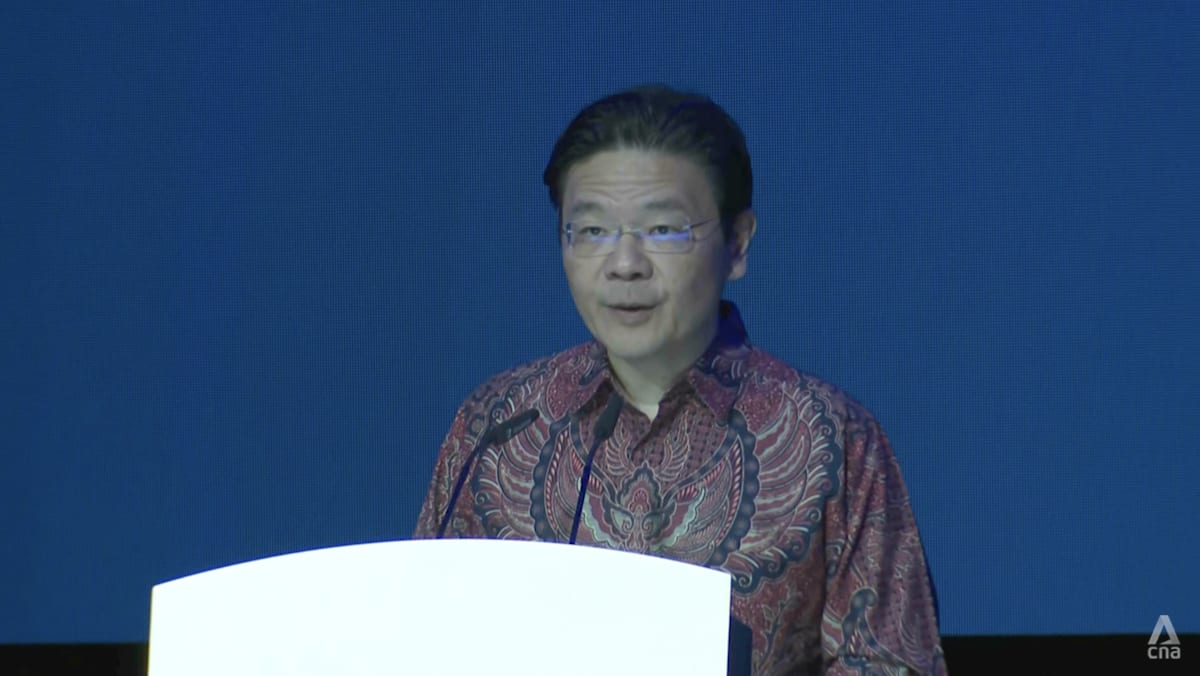
Prime Minister Lawrence Wong speaks at an event celebrating the 85th anniversary of the Singapore Kadayanallur Muslim League (SKML) on Sep 12, 2026. (Image: CNA)
This audio is generated by an AI tool.
SINGAPORE: Economic challenges can deepen social and racial divisions, said Prime Minister Lawrence Wong on Saturday (Sep 12).
Singapore is not immune to these challenges, he warned, pointing to racist comments that surfaced online recently when investments in India were discussed.
Mr Wong's remarks, made at the Singapore Kadayanallur Muslim League's (SKML) 85th anniversary dinner, come a week after Minister for Home Affairs K Shanmugam said police were looking into "shameful" racist and xenophobic online comments about Singapore Airlines' (SIA) investment in Air India, as well as the Nepal-Tibet disaster.
Police have since identified and interviewed five people over online comments relating to the two matters. Investigations are ongoing.
CNA Games Guess Word Crack the word, one row at a time Buzzword Create words using the given letters Mini Sudoku Tiny puzzle, mighty brain teaser Mini Crossword Small grid, big challenge Word Search Spot as many words as you can Show More Show Less While Singapore is generally harmonious and stable, Mr Wong said people may still draw lines between foreigners and Singaporeans, as well as between local-born and naturalised Singaporeans, and along racial and religious lines. "These challenges are real," he said. Mr Wong said societies around the world were becoming more fragmented, divided and polarised. Part of this was due to economic challenges, he said. Not everyone achieves the same outcomes, and those who do not do as well may become disappointed and frustrated. But the challenge goes beyond economic issues when these problems feed into a sense of identity, belonging and perceived unfairness, he said. "That is when divisions really start to become more entrenched, and people start to build walls between – us versus them," Mr Wong said.
While Singapore is generally harmonious and stable, Mr Wong said people may still draw lines between foreigners and Singaporeans, as well as between local-born and naturalised Singaporeans, and along racial and religious lines.
"These challenges are real," he said.
Mr Wong said societies around the world were becoming more fragmented, divided and polarised.
Part of this was due to economic challenges, he said. Not everyone achieves the same outcomes, and those who do not do as well may become disappointed and frustrated.
But the challenge goes beyond economic issues when these problems feed into a sense of identity, belonging and perceived unfairness, he said.
"That is when divisions really start to become more entrenched, and people start to build walls between – us versus them," Mr Wong said.
BUILDING TRUST AND BRIDGES
Mr Wong said the government would continue improving policies to tackle concerns over cost pressures and jobs, and to make sure every Singaporean gets a share in the nation's progress.
At the same time, Singapore must keep working on relationships and strengthening the bonds of trust that hold society together, he said.
Government policies can help create the conditions for cohesion, but ultimately, that cohesion is built through people, Mr Wong said.
"It depends on all our communities being confident in their identities, and at the same time being willing to reach out, build bridges and develop trust with one another," he said.
Mr Wong said Singapore had worked deliberately to build a multiracial and multireligious society, where every community has its place and can practise its faith, speak its language and celebrate its culture and traditions.
At the same time, common spaces and shared experiences in schools, neighbourhoods, workplaces and National Service allow Singaporeans from different backgrounds to mix, socialise and build friendships, he said.
SKML'S ROLE AS A BRIDGE
SKML can play an important role in strengthening connections across different Indian organisations and serve as a bridge between Singapore's Indian and Muslim communities, Mr Wong said.
He pointed to a new initiative led by Minister of State Dinesh Vasu Dash to strengthen connections across Indian organisations, and said SKML could also play a role in the M3+ initiative.
Mr Wong said SKML had remained deeply rooted in the Indian Muslim community while expanding its partnerships with organisations such as MUIS, MENDAKI and SINDA.
These partnerships have addressed practical needs, including through Mendaki's Community Leaders Forum on digital literacy and scam awareness.
SKML has also worked with stakeholders to develop people and leaders through its involvement with the Indian Muslim Professionals Network, and to preserve and share the community's history, Mr Wong said.
Mr Wong said SKML's journey mirrored the larger Singapore story, where people's sense of belonging had widened over the generations.
In Singapore's early years, people relied on those closest to them and organised around hometown, kinship, language, race or religion, he said.
But as generations put down roots, people from different backgrounds became neighbours, schoolmates, colleagues and friends, and developed a larger sense of belonging, not only to their individual communities, but also to Singapore and one another as fellow Singaporeans.
Mr Wong said SKML had similarly widened its sense of "our own" beyond the Indian Muslim community, while remaining rooted in and continuing to serve the community.
"In many ways, this is our Singapore story. We always look after our own. But we have also widened the circle of whom we regard as our own," he said.
"Our own" no longer meant those from the same family, language or faith, he added.
"Our own means Singaporeans regardless of race, language or religion," Mr Wong said.
"Because whatever our different roots and backgrounds, we are all Singaporeans, and Singapore is our country and our home."
Get our pick of top stories and thought-provoking articles in your inbox
Stay updated with notifications for breaking news and our best stories
Join our channel for the top reads for the day on your preferred chat app
新加坡总理黄循财表示,新加坡也无法免受此类压力的影响,他指出网络上存在种族主义言论,以及外国人与新加坡人之间的分歧。
2026年9月12日,总理黄循财在庆祝新加坡卡达亚纳鲁穆斯林联盟(SKML)成立85周年的活动上发表讲话。(图片:CNA)
这段音频由人工智能工具生成。
新加坡:总理黄循财周六(9月12日)表示,经济挑战可能会加深社会和种族分裂。
他警告说,新加坡也无法免受这些挑战的影响,并指出最近在讨论对印度的投资时,网上出现了种族主义言论。
黄先生在新加坡卡达亚纳鲁尔穆斯林联盟(SKML)85周年晚宴上发表上述言论,此前一周,内政部长尚穆根表示,警方正在调查有关新加坡航空公司(SIA)投资印度航空以及尼泊尔-西藏空难的“可耻的”种族主义和仇外网络评论。
警方已就这两起事件相关的网络评论锁定并讯问了五人。调查仍在进行中。
CNA游戏 猜词游戏 逐行破解单词 流行词游戏 用给定的字母组成单词 迷你数独 小谜题,脑力挑战 迷你填字游戏 小方格,大挑战 单词搜索 尽可能多地找出单词 显示更多 显示更少 黄先生表示,虽然新加坡总体上和谐稳定,但人们仍然可能在外国人与新加坡人之间、本地出生的新加坡人与入籍新加坡人之间,以及种族和宗教方面划清界限。“这些挑战是真实存在的,”他说。黄先生表示,世界各地的社会正变得越来越分裂、分化和两极化。他说,部分原因是经济挑战。并非每个人都能取得同样的成就,那些成就不佳的人可能会感到失望和沮丧。但他表示,当这些问题影响到身份认同、归属感和感知到的不公平时,挑战就超越了经济问题。“那时,分歧才会真正开始变得更加根深蒂固,人们开始在彼此之间筑起高墙——我们与他们,”黄先生说。
黄先生表示,虽然新加坡总体上和谐稳定,但人们仍然可能在外国人与新加坡人之间、本地出生的新加坡人与入籍新加坡人之间,以及在种族和宗教方面划清界限。
“这些挑战是真实存在的,”他说。
黄先生表示,世界各地的社会正变得越来越分裂、分化和两极分化。
他表示,部分原因是经济挑战造成的。并非每个人都能取得同样的成果,那些成果不佳的人可能会感到失望和沮丧。
他说,当这些问题影响到身份认同感、归属感和不公平感时,挑战就不仅仅是经济问题了。
黄先生说:“正是在那时,分歧开始变得更加根深蒂固,人们开始在彼此之间筑起高墙——我们与他们。”
建立信任和桥梁
黄先生表示,政府将继续完善政策,以应对成本压力和就业问题,并确保每个新加坡人都能分享国家发展的成果。
他表示,与此同时,新加坡必须继续努力改善人际关系,加强维系社会团结的信任纽带。
黄先生表示,政府政策可以帮助创造凝聚力的条件,但归根结底,这种凝聚力是通过人民建立起来的。
他说:“这取决于我们所有社区对自己身份的自信,同时也要愿意伸出援手,搭建桥梁,彼此建立信任。”
黄先生表示,新加坡一直致力于建设一个多种族、多宗教的社会,让每个社群都能拥有自己的一席之地,可以践行自己的信仰,说自己的语言,庆祝自己的文化和传统。
他表示,与此同时,学校、社区、工作场所和国民服役中的公共空间和共同经历,让来自不同背景的新加坡人能够交流、社交和建立友谊。
SKML作为桥梁的角色
黄先生表示,SKML 可以在加强不同印度组织之间的联系方面发挥重要作用,并成为新加坡印度裔和穆斯林社区之间的桥梁。
他指出,国务部长迪内什·瓦苏·达什牵头发起了一项新倡议,旨在加强印度各组织之间的联系,并表示SKML也可以在M3+倡议中发挥作用。
黄先生表示,SKML在印度穆斯林社区扎根很深,同时不断扩大与MUIS、MENDAKI和SINDA等组织的合作关系。
这些合作关系解决了实际需求,包括通过 Mendaki 的社区领袖论坛开展数字素养和防诈骗意识方面的活动。
黄先生表示,SKML还通过参与印度穆斯林专业人士网络,与利益相关者合作培养人才和领导者,并保存和分享社区的历史。
黄先生表示,SKML 的发展历程反映了新加坡的整体发展历程,即人们的归属感在几代人的时间里不断增强。
他说,在新加坡建国初期,人们依靠身边最亲近的人,并围绕家乡、亲属关系、语言、种族或宗教组织起来。
但随着一代又一代人在这里扎根,来自不同背景的人们成为了邻居、同学、同事和朋友,并逐渐培养出更强烈的归属感,不仅是对他们各自的社区,也是对新加坡以及彼此作为新加坡同胞的归属感。
黄先生表示,SKML也同样扩大了其“我们自己人”的概念,使其不再局限于印度穆斯林社区,同时仍然扎根于该社区并继续为该社区服务。
“从很多方面来说,这就是我们的新加坡故事。我们总是照顾自己人。但我们也扩大了我们视为自己人的范围,”他说。
他补充说,“我们自己人”不再指来自同一家庭、语言或信仰的人。
黄先生说:“我们自己人指的是新加坡人,无论种族、语言或宗教信仰。”
“因为无论我们有着不同的根源和背景,我们都是新加坡人,新加坡是我们的国家,是我们的家园。”
订阅我们的邮件,即可获取精选热点新闻和引人深思的文章。
订阅通知,第一时间获取突发新闻和精彩报道。
加入我们的频道,即可在您常用的聊天应用上获取当日热门文章。