I don't have much money. Do I really need financial education?我没多少钱,真的需要接受理财教育吗?
Financial education cannot make up for insufficient income. But it can help people navigate difficult trade-offs and make the most of what they have, writes Jacqueline Loh, CEO of charity Aidha, which helps migrant workers and other low-income earners.
Financial education cannot make up for insufficient income. But it can help people navigate difficult trade-offs and make the most of what they have, writes Jacqueline Loh, CEO of charity Aidha, which helps migrant workers and other low-income earners.
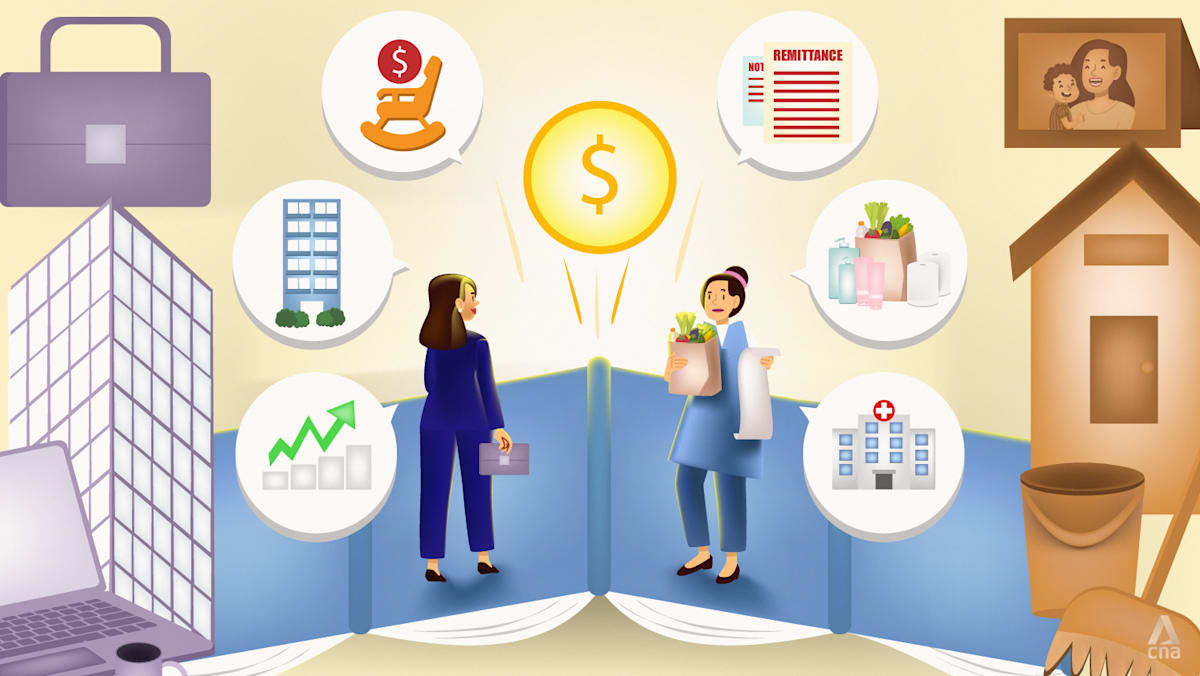
Financial education can be even more important when someone has little margin for error, writes Jacqueline Loh. (Illustration: CNA/Teha Muhamad)
This audio is generated by an AI tool.
In my work providing financial education to lower-income Singaporeans, a participant in one of my courses once asked point-blank: "How can I save for an emergency when every month is an emergency?"
It was a difficult but very real question.
When you're the main breadwinner and unexpected expenses keep coming up, it can feel like that for many of the people we work with, including migrant domestic workers .
There was no quick tip on budgeting or lesson on how to better distinguish needs from wants that could adequately address the reality of her situation.
CNA Games Guess Word Crack the word, one row at a time Buzzword Create words using the given letters Mini Sudoku Tiny puzzle, mighty brain teaser Mini Crossword Small grid, big challenge Word Search Spot as many words as you can Show More Show Less This was someone doing everything she could just to keep her household afloat. We often talk about good financial habits as something that begins with a surplus. Conventional wisdom tells us to build up a savings buffer, however small, that allows us to make better money moves – build an emergency fund, for example, or start investing early. But what if basic monthly expenses already require you to scrimp and save every dollar? MUST I HAVE LOTS OF MONEY TO BE GOOD WITH MANAGING IT? For households operating on razor-thin margins, an unexpected medical bill or a broken appliance is not simply an inconvenience. It can mean having to decide which other expense, however critical, has to wait. In fact, the less room you have in your budget, the more consequential each financial decision can become. This is precisely why we should question a common assumption about financial education: that it becomes relevant only when you have more money to manage. When there is a healthy financial cushion, a poor decision can be absorbed. When there is almost none, that poor decision can reverberate for months, or even years. When we think about being "good with money", we often think about making money work harder: comparing mortgage rates, maximising credit-card rewards, learning investment strategies and calculating whether we are putting enough aside for retirement. But for someone on a modest or low income, financial literacy serves a different, more immediate purpose. It can help you: Understand what a loan will really cost before taking it Decide which obligations to prioritise when everything feels important Recognise when an attractive financial offer is too good to be true Find ways, however small, to stop every dollar from being spoken for before the next payday. The question, then, is not simply how to make your money grow, but rather, how to make the choices available to you count.
This was someone doing everything she could just to keep her household afloat.
We often talk about good financial habits as something that begins with a surplus. Conventional wisdom tells us to build up a savings buffer, however small, that allows us to make better money moves – build an emergency fund, for example, or start investing early.
But what if basic monthly expenses already require you to scrimp and save every dollar?
MUST I HAVE LOTS OF MONEY TO BE GOOD WITH MANAGING IT?
For households operating on razor-thin margins, an unexpected medical bill or a broken appliance is not simply an inconvenience. It can mean having to decide which other expense, however critical, has to wait.
In fact, the less room you have in your budget, the more consequential each financial decision can become.
This is precisely why we should question a common assumption about financial education: that it becomes relevant only when you have more money to manage.
When there is a healthy financial cushion, a poor decision can be absorbed. When there is almost none, that poor decision can reverberate for months, or even years.
When we think about being "good with money", we often think about making money work harder: comparing mortgage rates, maximising credit-card rewards, learning investment strategies and calculating whether we are putting enough aside for retirement.
But for someone on a modest or low income, financial literacy serves a different, more immediate purpose.
Understand what a loan will really cost before taking it
Decide which obligations to prioritise when everything feels important
Recognise when an attractive financial offer is too good to be true
Find ways, however small, to stop every dollar from being spoken for before the next payday.
The question, then, is not simply how to make your money grow, but rather, how to make the choices available to you count.
Being financially savvy is not just about making a surplus grow, but also about knowing how to prioritise expenses and avoid costly decisions when money is tight, says the writer. (Photo: iStock)
HOW FINANCIAL LITERACY MAKES A DIFFERENCE, EVEN IN SCARCITY
If you have only S$200 (US$158) but need to cover S$350 worth of obligations, the issue isn't a simple arithmetic problem, but a high-stress decision-making puzzle – and every choice comes with a consequence.
Do you miss an instalment and incur late fees? Delay paying an insurance premium and risk losing that coverage? Or borrow the difference, knowing that the interest on that loan could leave you with an even bigger shortfall next month?
These are not simple questions to answer.
Take borrowing, for example. For people with limited incomes and little financial buffer, the decision is not simply whether to take a loan to make ends meet.
It can mean weighing an urgent need against the cost of borrowing, considering whether repayments can be sustained alongside everyday expenses, and grappling with fees or terms that may not be obvious at first.
When money is already tight, scarcity can make these trade-offs even harder to assess.
Behavioural economists sometimes call this a "scarcity tax", where immediate financial pressures consume mental bandwidth that could otherwise go to planning or more strategic decisions.
In this state, financial literacy isn't about magically finding another S$150 to plug the gap.
What it can do is help you decide how to use the S$200 in a way that minimises the longer-term damage.
It also provides the analytical framework to compare these competing pressures, reducing cognitive overload so you can better decide which option is likely to leave you least badly off.
FINDING ROOM IN A TIGHT BUDGET
A key step is understanding exactly where your money is going.
At Aidha, in our work with migrant domestic workers and low-income Singaporean women, we have found that something as simple as expense tracking can reveal patterns that are hard to notice if you consider only each expense on its own.
For example, many of our migrant domestic worker students regularly send a fixed amount home to their families. But throughout the month, they may also receive requests to send "top-ups" of an extra S$50 or S$100, sometimes more, to their children.
Some of these top-ups are discretionary, such as extra allowance for social activities with friends or a new phone, but many are harder to avoid, including school-related expenses such as field trips, out-of-town events and extra-curricular activities.
Each stand-alone top-up may seem manageable at the time. But it is only after tracking them over time that some of them realise how much these ad hoc payments add up to.
For these women, the lesson is not necessarily to stop supporting their families altogether.
Instead, it is taking proactive steps that will allow them to see the total spent in black and white, allowing them to make a more deliberate decision about how much they can afford to remit each month and how to respond to additional requests without jeopardising their own financial goals.
More importantly, seeing the numbers on paper provides clarity. It transforms money from a source of constant anxiety into something structured and manageable.
The same principle can be applied to other expenses. A few dollars spent here and there may or may not be something you want to cut.
The point of tracking is to first see what those choices cost you collectively, so you can decide whether the money is going toward what matters most to you.
This can be especially consequential when the amounts available to save are small.
Among the beneficiaries we work with, their average monthly savings can be close to S$200, so finding even S$20 or S$30 that can be redirected to their rainy-day funds can make a meaningful difference over time.
MAKING THE MOST OF WHAT YOU HAVE
So, do you really need financial education if you aren't rich? I would argue that it matters even more when money is tight.
The skills gained from financial education benefit people at all income levels, especially those facing the greatest financial constraints.
To be clear, financial literacy is not a magic wand. It cannot fix insufficient income, cure structural inequality, or create more money out of thin air when the clock is ticking and you're coming up short.
What it can do is help you decide what to do with the funds you already do have.
It tells you which expenses to prioritise, which financial choices could cost you more in the long run, where you might have room to adjust, and when to seek help rather than take on debt you cannot afford.
It can also give you greater financial agency by helping you understand your spending habits, plan for the longer term and make more informed choices, whether your starting point is scarcity or abundance.
Financial education should therefore not be seen as something only for the affluent. It should be accessible to people across all income levels, especially those with the least room for financial mistakes.
Being good with money does not mean just knowing how to grow your savings. It is also about making the best possible choices with what you have.
Jacqueline Loh is chief executive officer of Aidha, a registered charity that champions financial literacy for Singapore's migrant domestic workers.
Get our pick of top stories and thought-provoking articles in your inbox
Stay updated with notifications for breaking news and our best stories
Join our channel for the top reads for the day on your preferred chat app
金融教育无法弥补收入不足,但它可以帮助人们应对艰难的权衡取舍,并最大限度地利用他们所拥有的资源。慈善机构Aidha的首席执行官Jacqueline Loh写道,该机构致力于帮助外来务工人员和其他低收入者。
杰奎琳·洛写道,对于容错空间很小的人来说,金融教育就显得尤为重要。(插图:CNA/Teha Muhamad)
这段音频由人工智能工具生成。
在我为新加坡低收入人群提供金融教育的工作中,一位学员曾在我的课程中直截了当地问我:“每个月都像是紧急情况,我该如何存钱以备不时之需呢?”
这是一个棘手但又非常现实的问题。
当你是家里的主要经济支柱,却不断有意想不到的开支时,我们接触的许多人,包括外籍家政工人,都会有这种感觉。
没有关于预算编制的快速技巧,也没有关于如何更好地区分需求和欲望的课程能够充分解决她目前的实际情况。
CNA游戏 猜词游戏 逐行破解单词 流行词游戏 用给定的字母组成单词 迷你数独 小谜题,脑力挑战 迷你填字游戏 小方格,大挑战 单词搜索 尽可能多地找出单词 显示更多 显示更少 这位女士竭尽全力维持家庭生计。我们常说,良好的理财习惯始于盈余。传统观念告诉我们,无论金额大小,都要建立一定的储蓄缓冲,以便更好地进行理财决策——例如,建立应急基金或尽早开始投资。但如果每月的基本开支已经让你不得不精打细算呢?我必须有很多钱才能善于理财吗?对于捉襟见肘的家庭来说,意外的医疗账单或损坏的电器不仅仅是不方便。这可能意味着你必须决定哪些其他开支,无论多么重要,都必须推迟。事实上,你的预算越紧张,每一个财务决策就越重要。正因如此,我们应该质疑一个关于理财教育的常见假设:它只有在你拥有更多资金时才显得重要。当拥有充足的财务缓冲时,一个糟糕的决定可以承受。而当几乎没有缓冲时,这个糟糕的决定可能会持续数月甚至数年。当我们想到“理财有道”时,我们通常想到的是让钱生钱:比较抵押贷款利率、最大化信用卡奖励、学习投资策略以及计算退休储蓄是否充足。但对于收入不高或中等收入的人来说,理财知识有着不同的、更直接的用途。它可以帮助你:在贷款前了解贷款的真实成本;在感觉所有事情都很重要时,决定哪些义务应该优先处理;识别出看似诱人的金融优惠是否好得令人难以置信;找到各种方法,哪怕再小,也能在下次发薪日之前避免每一分钱都被花光。因此,问题不仅仅是如何让你的钱增值,而是如何让你的每一个选择都发挥作用。
她为了维持生计,已经竭尽全力了。
我们常说,良好的理财习惯始于盈余。传统观点认为,无论金额大小,都应该建立一定的储蓄缓冲,以便更好地进行理财决策——例如,建立应急基金或尽早开始投资。
但如果每月的基本开支已经让你不得不精打细算,省吃俭用呢?
我一定要有很多钱才能善于理财吗?
对于捉襟见肘的家庭来说,突如其来的医疗账单或家电故障不仅仅是生活上的不便,更意味着他们不得不做出艰难的抉择:究竟哪项开支,即便再重要,也必须延后处理。
事实上,预算空间越少,每一项财务决策就越重要。
正因如此,我们应该质疑关于金融教育的一个常见假设:即只有当你有更多的钱需要管理时,金融教育才变得重要。
如果经济状况允许,即使做出错误的决定也能承受。但如果经济拮据,错误的决定可能会持续数月甚至数年,造成深远的影响。
当我们想到“善于理财”时,我们通常会想到让钱更好地为你工作:比较抵押贷款利率、最大化信用卡奖励、学习投资策略以及计算我们是否为退休攒够了钱。
但对于收入不高或偏低的人来说,金融知识则有着不同的、更直接的目的。
在贷款之前,务必了解贷款的实际成本。
当所有事情都感觉很重要时,要决定优先处理哪些义务。
要懂得分辨哪些诱人的财务报价好得令人难以置信。
想方设法,哪怕是很小的方法,也要阻止每一分钱在下次发薪日之前就被预定出去。
因此,问题不在于如何让你的钱增值,而在于如何让你的每一个选择都发挥作用。
作者指出,理财之道不仅在于如何增加盈余,还在于如何在资金紧张时合理安排支出,避免做出代价高昂的决定。(图片:iStock)
即使在资源匮乏的情况下,金融知识也能发挥作用
如果你只有 200 新元(158 美元),但需要偿还 350 新元的债务,那么这不是一个简单的算术问题,而是一个压力很大的决策难题——而且每个选择都会带来后果。
您是否错过分期付款而产生滞纳金?延迟支付保险费而面临失去保险保障的风险?或者借钱来弥补差额,却知道贷款利息可能会让您下个月的资金缺口更大?
这些问题并不容易回答。
以借贷为例。对于收入有限、缺乏经济缓冲的人来说,他们面临的决定不仅仅是是否贷款来维持生计。
这可能意味着要权衡紧急需求与借贷成本,考虑能否在日常开支之外维持还款,以及应对起初可能并不明显的费用或条款。
当资金本就紧张时,稀缺性会使这些权衡取舍更加难以评估。
行为经济学家有时称之为“稀缺税”,即眼前的经济压力会占用原本可以用于规划或更具战略意义的决策的精力。
在这种情况下,金融素养并不是凭空变出 150 新元来填补缺口。
它可以帮助你决定如何使用这 200 新元,从而最大限度地减少长期损失。
它还提供了分析框架来比较这些相互冲突的压力,从而减少认知负荷,以便您更好地决定哪种选择最有可能让您受到的伤害最小。
如何在预算紧张的情况下找到房间
关键一步是了解你的钱究竟花在了哪里。
在 Aidha,我们在与外籍家庭佣工和新加坡低收入女性的合作中发现,像费用跟踪这样简单的事情可以揭示出一些模式,而这些模式如果只考虑每笔费用本身,就很难注意到。
例如,我们许多外籍家庭佣工学生会定期寄固定金额回家给家人。但他们在这个月里也可能会收到家人的请求,要求他们额外寄50新元或100新元,有时甚至更多,给孩子“充值”。
有些额外支出是可自由支配的,例如与朋友进行社交活动的额外零用钱或购买新手机,但很多支出难以避免,包括与学校相关的费用,例如实地考察、外地活动和课外活动。
每次单独充值当时看起来似乎不大。但只有长期追踪这些充值记录后,有些人才会意识到这些零星的付款加起来金额有多大。
对于这些女性来说,得到的教训未必是要完全停止供养家庭。
相反,它正在采取积极措施,让他们能够清楚地看到支出总额,从而让他们能够更审慎地决定每月可以支付多少款项,以及如何在不危及自身财务目标的情况下回应额外的请求。
更重要的是,把数字写在纸上能让人思路清晰。它能把金钱从持续的焦虑源泉变成结构化、可控的东西。
同样的道理也适用于其他开支。零零碎碎的几块钱,你或许想削减,或许不想。
追踪的目的是首先了解这些选择总共会给你带来哪些损失,这样你才能决定这些钱是否用在了对你来说最重要的事情上。
当可储蓄金额较少时,这可能会造成特别严重的后果。
在我们帮助的受益人中,他们的平均每月储蓄接近 200 新元,因此,即使找到 20 新元或 30 新元可以转入他们的应急基金,随着时间的推移也能产生显著的影响。
充分利用你所拥有的资源
所以,如果你不富裕,真的需要接受理财教育吗?我认为,在经济拮据的时候,理财教育反而更加重要。
通过金融教育获得的技能能够使各个收入阶层的人受益,尤其是那些面临最大经济困难的人。
需要明确的是,金融知识并非万能灵药。它无法解决收入不足的问题,无法消除结构性不平等,也无法在时间紧迫、资金短缺时凭空变出更多钱来。
它可以帮助你决定如何处理你已有的资金。
它会告诉你应该优先考虑哪些支出,哪些财务选择从长远来看可能会让你付出更多代价,哪些方面你可能有调整的空间,以及何时应该寻求帮助而不是承担你负担不起的债务。
它还可以帮助你了解自己的消费习惯,制定长期计划,并做出更明智的选择,从而增强你的财务自主权,无论你的起点是匮乏还是富裕。
因此,金融教育不应被视为富裕人群的专属。它应该面向所有收入阶层的人,尤其是那些最没有财务容错空间的人。
善于理财不仅仅意味着懂得如何增加储蓄,更重要的是懂得如何利用现有资源做出最佳选择。
Jacqueline Loh 是 Aidha 的首席执行官,Aidha 是一家注册慈善机构,致力于提高新加坡外籍家庭佣工的金融素养。
订阅我们的邮件,即可获取精选热点新闻和引人深思的文章。
订阅通知,第一时间获取突发新闻和精彩报道。
加入我们的频道,即可在您常用的聊天应用上获取当日热门文章。