Temiar facial art tradition embraces a modern touch while preserving its heritage泰米亚尔面部彩绘传统在保留其历史精髓的同时,也融入了现代元素。
GUA MUSANG, Sept 13 — Lipstick and face powder may have replaced charcoal and limestone paste in the beauty routines of the Orang Asli from the Temiar tribe, but modernisation...
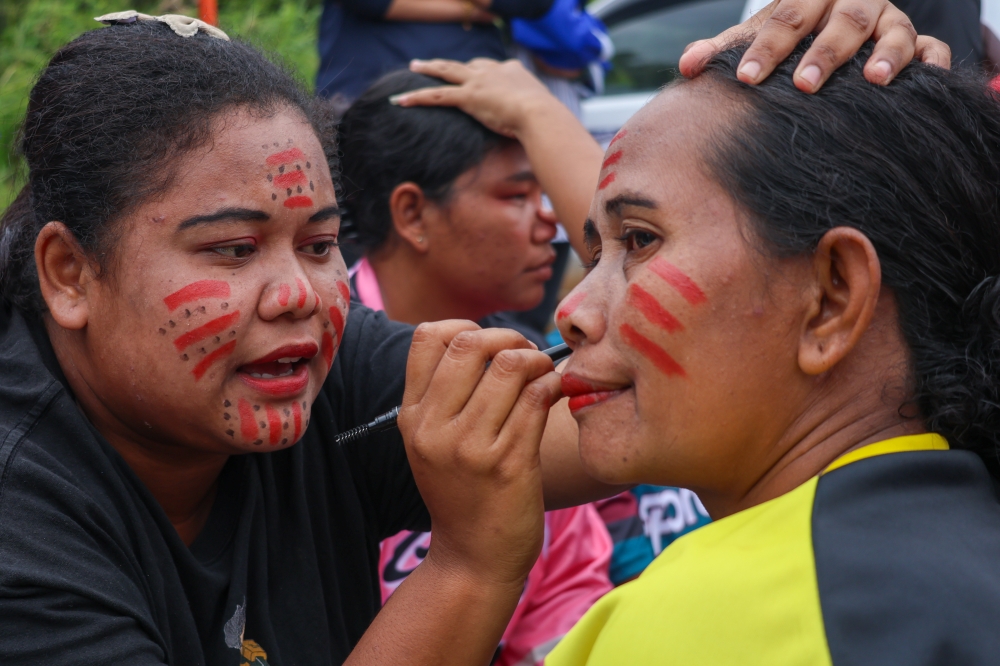
The Temiar tribe of the Orang Asli in Gua Musang continues its tradition of facial adornment, substituting difficult-to-source natural materials with modern cosmetics like lipstick and eyeliner, without losing the cultural and spiritual significance of the motifs.
Despite the method change, the tradition is preserved, with each pattern maintaining its ancestral meaning and connection to nature.
The use of modern cosmetics is seen positively as it allows for the continuation of cultural heritage while appealing to younger generations.
Efforts to maintain this tradition are supported by cultural organizations, ensuring its relevance and preservation as part of Orang Asli identity.
GUA MUSANG, Sept 13 — Lipstick and face powder may have replaced charcoal and limestone paste in the beauty routines of the Orang Asli from the Temiar tribe, but modernisation has not erased the centuries-old tradition of facial adornment passed down through generations.
Endah Angah, 37, said the practice of painting geometric motifs, including long and wavy lines and dots, on the face remained deeply cherished by her community as an enduring symbol of its cultural heritage.
She said the growing difficulty of sourcing traditional beauty ingredients such as kesumba seeds had led her community to increasingly rely on modern cosmetics, which were easier to obtain than having to venture into the forest in search of the natural materials.
“In the past, these natural ingredients were easy to find, so we didn’t have to go deep into the forest to look for them. But now, they’re getting harder to find.
“Using modern cosmetics is much easier for us. The red and black colours from lipstick and eyeliner also make the patterns on our faces look neater and brighter, and they last longer too,” the housewife told Bernama recently.
Rahimah Punai, 39, said modern cosmetics might have changed the way the facial motifs were created, but their spiritual meaning and connection to their ancestral heritage remained intact.
“We make sure every horizontal and wavy line, as well as every dot, is drawn carefully because each one has its own meaning. The lines represent the river, while the dots symbolise our connection to nature.
“Nothing has changed, except that we now use modern cosmetics. We have to follow what our ancestors passed down to us and keep it the same to preserve our customs and heritage. So, we cannot just add streaks to the forehead, nose or cheeks,” she said.
Abong Busu, 55, said the custom remained deeply rooted among the Temiar tribe and continued to be practised during religious ceremonies such as the sewang and at community gatherings.
“This is how we introduce the tradition to the younger generation. The children are very interested and often ask us a lot of questions about it,” she said.
Meanwhile, Kelantan State Department for Culture and Arts (JKKN) director Rohaniza Abdullah said the use of modern cosmetics, while retaining the original facial motifs, represented a new way of preserving and continuing the traditional heritage practice.
She said creativity in producing modern-style facial decorations was a way to keep the heritage relevant while preserving its originality and aesthetic value as an important part of Orang Asli identity and socio-cultural life.
“The use of modern cosmetics is a positive development for the community because the traditional facial motifs can still be recreated while retaining their original patterns and colours. This also helps preserve the tradition for future generations.
“Preserving this tradition for the next generation is important, so efforts by various parties, especially to engage young people, must continue,” she said.
Rohaniza added that the uniqueness and symbolism behind the facial motifs could make the traditional art an iconic representation of Orang Asli culture. — Bernama
From dishwasher in Melbourne to heading the kitchen at Gilda in George Town, a Malaysian (food) love story
Social media overtakes TV, news websites as Malaysians’ main source of news
Sarawak police close final chapter as Long Lellang crash victims return to families
瓜拉姆桑的特米亚尔原住民部落延续了面部装饰的传统,用现代化妆品(如口红和眼线笔)代替了难以获得的天然材料,但并没有失去图案的文化和精神意义。
尽管方法有所改变,但传统得以保留,每一种图案都保持着其古老的意义和与自然的联系。
现代化妆品的使用被视为积极的,因为它既能延续文化遗产,又能吸引年轻一代。
文化组织支持维护这一传统的努力,以确保其作为原住民身份认同的一部分而具有现实意义并得以保存。
瓜拉姆桑,9月13日讯——口红和粉底可能已经取代了特米亚族原住民的木炭和石灰膏,成为他们美容护肤的原料,但现代化并没有抹去代代相传的、有着数百年历史的面部装饰传统。
37 岁的 Endah Angah 表示,在脸上绘制几何图案(包括长波浪线和点)的做法,仍然被她的社区深深珍视,被视为其文化遗产的永恒象征。
她说,由于获取传统美容成分(如 kesumba 种子)的难度越来越大,她的社区越来越依赖现代化妆品,因为现代化妆品比冒险进入森林寻找天然材料更容易获得。
“过去,这些天然原料很容易找到,所以我们不必深入森林去寻找它们。但现在,它们越来越难找到了。”
“使用现代化妆品对我们来说方便多了。口红和眼线的红色和黑色也能让我们的脸看起来更整洁、更明亮,而且妆效也更持久,”这位家庭主妇最近告诉马新社。
39 岁的拉希玛·普奈 (Rahimah Punai) 表示,现代化妆品可能改变了面部图案的创作方式,但它们的精神意义以及与祖先传承的联系仍然完好无损。
“我们确保每一条水平线、波浪线以及每一个点都经过精心绘制,因为它们各自都有其意义。线条代表河流,而点则象征着我们与自然的联系。”
“除了现在使用现代化妆品之外,其他一切都没有改变。我们必须遵循祖先传承下来的传统,保持原样,才能保护我们的习俗和文化遗产。所以,我们不能随意在额头、鼻子或脸颊上画条纹,”她说。
55 岁的阿邦·布苏表示,这种习俗在特米亚部落中根深蒂固,并在诸如塞旺节之类的宗教仪式和社区聚会中继续实行。
“我们就是这样把这项传统介绍给年轻一代的。孩子们非常感兴趣,经常问我们很多相关的问题,”她说。
与此同时,吉兰丹州文化艺术局局长罗哈尼扎·阿卜杜拉表示,在保留原有面部图案的同时使用现代化妆品,代表了一种保护和延续传统遗产习俗的新方式。
她表示,在制作现代风格的面部装饰时融入创造力,既能保持文化遗产的相关性,又能保留其原创性和美学价值,这是原住民身份和社会文化生活的重要组成部分。
“现代化妆品的使用对社区来说是一件好事,因为它可以保留传统面部图案的原始样式和颜色,从而更好地再现这些图案。这也有助于将这一传统传承给子孙后代。”
“将这一传统传承给下一代非常重要,因此各方,特别是让年轻人参与进来的努力,必须继续下去,”她说。
罗哈尼扎补充说,面部图案的独特性和象征意义,可能使这种传统艺术成为原住民文化的标志性代表。——马新社
从墨尔本的洗碗工到乔治市Gilda餐厅的主厨,一段马来西亚(美食)情缘。
社交媒体取代电视和新闻网站,成为马来西亚人获取新闻的主要来源。
砂拉越警方结束了对龙勒朗车祸遇难者家属的调查,案件告一段落。