The Air Force Desperately Needs A Stealth Tanker空军急需隐形加油机
Fielding a stealthy tanker would go a long way to remedy the USAF’s near-sighted practice of betting heavily on relatively short-ranged stealth fighters, but it won’t come cheap.
Updated Jul 3, 2020 3:49 AM EDT
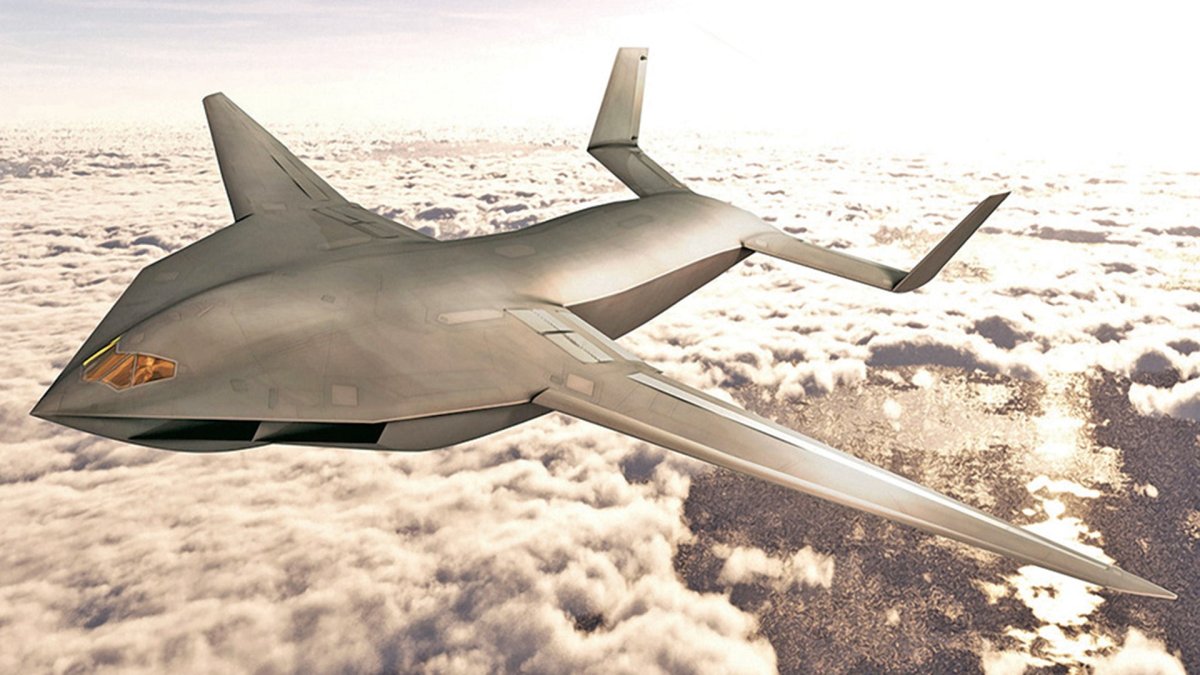
Sitting on the table at Lockheed Martin’s booth at this year’s American Institute of Aeronautics And Astronautics Sci Tech Forum in Texas was a large model of a plane that looked as if it was ripped right from Hollywood’s latest science fiction war epic. And although its design surely includes loads of science, the need for such a machine is anything but fictional—a hard truth that the USAF seems to be finally coming to terms with, albeit slowly.
@LockheedMartin stealthy tanker concept #aiaascitech – aimed at @usairforce requirement beyond @Boeing KC-46A pic.twitter.com/CaUCBLgbFi — Graham Warwick (@TheWoracle) January 11, 2017
@LockheedMartin stealthy tanker concept #aiaascitech – aimed at @usairforce requirement beyond @Boeing KC-46A pic.twitter.com/CaUCBLgbFi
@LockheedMartin tanker based on hybrid wing-body HWB concept adapted for stealth – eg embedded engines #aiaascitech pic.twitter.com/jSZpRSwA9Q — Graham Warwick (@TheWoracle) January 11, 2017
@LockheedMartin tanker based on hybrid wing-body HWB concept adapted for stealth – eg embedded engines #aiaascitech pic.twitter.com/jSZpRSwA9Q
The USAF’s great capabilities mismatch
The term “stealth tanker” just sounds frivolous doesn’t it? Like something out of a Transformer’s movie—nice mil-tech eye candy, but not much logic behind it. Yet the reality is the concept is anything but frivolous, especially now, and the logic behind it is undeniable. The problem lies in the fact that the Air Force has dumped massive amounts of resources into developing and procuring relatively short-ranged but very high-tech and grossly expensive stealth fighter aircraft—aka the F-35 and the F-22.
In past decades, the US has fought against countries of limited geographic size and military resources. These conflicts also featured prevalent nearby basing for allied air power that was relatively safe from large-scale attacks. In fact, in the last 18 years the US has operated almost entirely in uncontested airspace. At the same time, near peer state competitors have been investing heavily in next generation integrated air defense systems , ones that have far greater range, sensor fidelity and data fusion abilities than those that came before. The “layered” nature of these new air defenses, their mobility, and their increasingly networked means of operations also means they are far more resilient than their simpler and often fixed-position progenitors.
So what the USAF has ended up with is a glaring mismatch between the combat capabilities of its most advanced and most numerous tactical assets, and their ability to fly far enough to actually strike enemy targets that necessitate their extreme and high-cost abilities. It is an issue we have touched on many times before—the fact is that anti-access/area-denial (A2/AD) capabilities , including these new air defense systems, will increasingly push America’s fighters out too far from their targets to be effective in most peer state conflict scenarios.
Combat radius conundrum
The F-35A, with a combat radius of roughly 600 miles, will have to rely on fuel from a tanker or basing no further than the distance from the targets it is tasked with striking. In reality this distance will often be decreased considerably when fuel for contingencies and unique mission flight profile demands are concerned.
Fighters like the F-35 and F-22 may be stealthy, but their support assets, namely their tankers—KC-135R, KC-10A, and soon the KC-46A —are anything but. This leaves them vulnerable to detection and attack. Not just by increasingly long-range surface-to-air missiles, both those based on ships and on land, but by long-range fighter-interceptors— some of which are of the stealthy variety —carrying very long-range air-to-air missiles . America’s potential enemies know this, especially China , and plan on exploiting it to the max during a time of war. Not just that, but nearby basing, even within many hundreds (and even thousands) of miles from the front lines will likely not be achievable for allied aircraft due to the ballistic and cruise missile capabilities of America’s most capable enemies.
When it comes to providing close air support and counter-air patrols over ground troops operating in contested areas, something the USAF says it will have to provide in the future, doing so with fifth generation fighters supported by traditional tankers may be impossible. Loitering over an area of the battlefield to provide cover for troops below burns a lot of gas and takes a lot of assets to achieve in a persistent manner. Today, F-16s can stay on station for less than an hour without requiring fuel from a tanker operating in relatively close proximity. The F-35 won’t be drastically different in this respect, and the F-22 is already known to be quite tanker dependent with a fairly short combat radius, especially when using its supercruise capability for extended dashes.
So basically, the USAF has fighters that have been built at great cost to be able to fight in contested airspace, but only if that airspace is in close proximity to a tanker. Yet once again, the problem is that a tanker may be pushed out many hundreds of miles from an enemy’s borders in order to be safe from SAM attacks, and even then enemy naval vessels and fighters could still post a serious threat. Couple this with the fact that America’s most capable foes have large land masses, and key targets may be located hundreds, or even thousands of miles from the country’s border or shoreline. This means that an F-35A’s combat radius may be 600 miles, but that may only give it a hundred or two hundred miles of penetrating range into the enemy’s territory, due to the distance its flying fuel source has to stand off from the country’s border. For persistent operations like combat air patrols, armed reconnaissance and close air support, any flight of fifth generation fighters may have just a few minutes over their target area before having to make the long trip back to the tanker for gas.
USAF planners have built a force than can technologically fight the enemy in its own backyard, but does not have the gas to do it effectively against a major peer state competitor in most theatres. Clearly the USAF has a big problem here, and as enemy A2/AD capabilities increase, and the safe operating distance for existing tanker aircraft increases, it will only get worse.
Am armada of fighters and tankers seen during the opening days of Desert Storm:
Red Flag may be one of the best examples of this. For two or three weeks a few times a year the Air Force’s largest set of wargames takes place north of Las Vegas. Weekdays see two major launches and recoveries each day (known individually for each aircraft as “Vuls” or vulnerability periods), one at night and one during the day. During any one of these large force employment missions over the Nevada Test and Training Range complex , F-22s, F-16s, F-15s and all the rest of tactical fighter cadre needs to get gas from tankers about halfway through the three-hour long air battle. The entire range complex where this air combat takes place equates to about 12,000 square miles of airspace—akin to an 80 mile by 145 mile area—and a good portion of that is not always used for the exercise or is restricted for other purposes ( like Area 51’s box ). This airspace begins less than 100 miles north of the base where almost all the participants in the exercise launch out of—Nellis AFB.
This relatively tiny patch of sky—huge as far as ranges go but infinitesimal compared to fighting in an A2/AD environment like the Pacific—that sits just minutes from the base supporting almost all its players, still sees America’s short-legged fighter force gulping down thousands of pounds of fuel off the boom of a small armada of tankers launched each mission. And these tankers are positioned at the edges of the airspace described above, giving thirsty fighters quick and easy access to the fuel they carry.
Obviously in a long-range combat situation measures would be taken to drastically extend a fighter’s range and air crews would be far more selective about using their gas compared with a training operation like Red Flag. But still, it is a telling example to draw from and underlines just how dependent the bulk of America’s air power is on close proximity tanker gas.
Take that same Red Flag strike package, and launch it 2,500 miles from the Nellis range complex, and make it so the tankers that support it can’t get within 350 miles of the range’s borders and you can see how the whole operation becomes much more asset intensive, complex, and frankly, less effective. In the end, if the tanker can’t survive close enough to the assets it supports, the mission simply doesn’t happen, or in the case of deep-strike missions against fixed targets, the mission may get passed on to far less prevalent platforms like the B-2A or a $1.5 million cruise missile—both of which cannot sustain a major conflict alone. Not even close.
Multiple solutions to a pressing problem
This glaring deficiency can be addressed in a number of ways, and the best way to do so would be to combine a cocktail of strategies, although that may be wishful thinking.
First off, the USAF could rapidly develop and procure unmanned combat air vehicles which offer far greater range and loitering time, along with a ton of other advantages, than their manned counterparts. The problem is that even though the technology clearly exists, having shown incredible promise during its development over a decade ago, the USAF acts as if it doesn’t . As I have explained in great detail before , either the USAF has been working on the technology deep in the classified world or they haven’t at all due to a handful of petty factors. Either way, not fully embracing advanced unmanned combat air vehicles now is extremely detrimental to America’s national security.
Northrop Grumman rendering of UCAVs in action:
The service could also procure fighter-bomber aircraft that cast aside maneuverability in exchange for range , stealth, weapons capacity and in some cases sustained speed. Two concepts, both based on the Advanced Tactical Fighter contestants, had been floated previously to satisfy such a mission set— the FB-22 and the FB-23 . Either of these concepts could have provided advanced air-to-air and air-to-ground (and probably electronic attack) capabilities over regional ranges that would allow tankers to standoff at very long distances. They could also carry more weaponry than their more highly maneuverable fighter counterparts, which means they can destroy more target when in enemy territory.
Neither of these aircraft were ever built, but rumors circulated at one time that an FB-23 like design was tested in the late 1990s, although once again, this was just a rumor. Aside from some official models that have popped up , no hard evidence exists that the design ever made it into flying form.
The FB-22 concept surfaced in the mid-2000s as part of a short-lived “interim bomber” initiative. This was a big mistake, and frankly, it was very easy to see that it was one at the time. The FB-22 was the right aircraft for the future, especially in its most elaborate and stealthy tailess configuration. Politics were involved in all this of course. Why would Lockheed want to build an FB-22 when it had the ultimate cash cow about to fly—the F-35? Meanwhile, for the USAF, the regional fighter-bomber concept threatened both high-end fighter and bomber procurement initiatives at the time, so there was not much incentive to see it through no matter how logical it seemed. With the idea of restarting the F-22 production line becoming mainstream , developing an FB-22 alongside an improved F-22 would be extremely logical, although the chances of any of this happening are very, very small if not non-existent.
Another way to help the situation is for the USAF to invest much more heavily into survivable long-range strike capabilities, namely in the now active B-21 Raider program . Purchasing a couple hundred or more of the bombers instead of around one hundred, at the expense of a portion of F-35A production, could offset some of the long-range strike risk that currently plagues the USAF. Although cutting F-35 numbers dramatically to build more B-21s would be a hard sell, especially considering the power of the F-35 lobby.
Some have floated the idea of just buying more standoff weapons that can be fired from F-35s and other tactical jets from a couple hundred miles away from their targets. The truth is that this is a must as it is in order to slowly degrade and dismantle an enemy’s advanced integrated air defense system . No aircraft is invisible, and using standoff weaponry early in an air campaign to open up weaknesses in an enemy’s air defense will be required even for 5th generation fighter aircraft to operate in the area without assuming excess risk.
Even in a limited conflict with an enemy like China, tens of thousands of targets that would need to be hit. The shear size of such a target list would make a strategy relying heavily on standoff weaponry unaffordable and unsustainable. It is simply a function of how many tons of weapons need to be thrown at a campaign to make it effective. Relying on one-use, high-cost standoff weapons, which cannot be replenished quickly, is simply unfeasible and very risky. Also, these weapon may be capable against fixed targets, but for moving targets and for targets of opportunity they are more rigid in nature compared to tactical aircraft sporting shorter-ranged and far more affordable munitions.
F-15E launches a stealthy AGM-158 Joint Air-to-Surface Standoff Missile (JASSM) during testing. -Lockheed Image.
The final alternative is that the US develops a stealthy tanker aircraft to match its big short-ranged stealth fighter fleet—one that can push far closer to enemy territory and survive than those based on existing commercial airliners.
This aircraft could work as an enabler for the short-ranged fighter fleet not just in terms of offloading much needed gas within the enemy’s A2/AD bubble, but also by working as a networking hub for F-35s, F-22s, B-2s, stealthy unmanned systems and other aircraft using low-probability of intercept data-links. It may also be able to offer electronic warfare support, such as standoff jamming to help mask the location of stealthy aircraft operating downrange. It could even be outfitted with a laser to help defend itself from attacks while operating beyond the edges of contested airspace.
Considering how deeply invested the USAF is in the F-35 program, and the limited number of very costly F-22s they already have in inventory, as well as their bizarre propensity to act as is UCAVs don’t exist , the stealth tanker seems not only like their best bet, but an entirely necessary one. And even if UCAVs eventually come into the picture, they too can benefit from a stealthy tanker.
Not a new problem or a new solution
The thing is that it’s not like the glaring need for a stealth tanker is really anything new, but it has come into the domain of the mainstream defense media in recent months after General Carlton Everhart II, chief of Air Mobility Command, floated the concept last September, stating :
“What is on the cusp of groundbreaking technologies? That is what we want on that airplane?… Is it stealthy? I don’t know. Is it large? I don’t know. Is it medium, is it small, what is the combat offload?…Now that you are getting near-peer adversaries who have different technologies and they have studied the way we fight, that is starting to change our calculus of how we might execute the next war.” He continued to describe a platform with an increased emphasis on low-observability.
But once again, it is almost laughable that this is a major issue just now. It’s not like China’s drive to exploit every weakness in America’s technological warfighting machine and battlefield doctrine is something new, nor is the USAF’s massive addiction to tanker gas. In fact, I have been saying this for many years, putting it in writing in various articles, including this passage from 2012:
“It is somewhat preposterous to think that if the US were really going to face a peer state with serious firepower that we would have an elaborate and incredibly expensive force of short-legged tactical fighters sweep towards the enemy’s borders undetected, followed by big, unstealthy tankers lumbering a couple hundred miles behind. With other countries procuring long-range surface to air missile systems, both land and sea based, as well as stealth fighters, the way we have done the fighter business for decades simply will not do. With an almost all stealth fighter force, you need a contingent of stealthy tankers to support such a fleet during combat far from home, especially during the opening weeks of such a conflict.
These stealthy tanking aircraft would not be used as aerial “bridge” tankers in the traditional sense, such as dragging fighter aircraft across benign airspace enroute to their targets, or working as “lily pads” for tactical aircraft regularly traversing long distances. Instead they would be utilized to accompany low observable combatants the last 500 miles or so from their targets, and to provide them with gas close to the enemy’s shore, as well as on their way out of enemy air space after completing their missions…. In the end betting the budgetary farm on a fleet of thirsty stealth fighters that have combat radiuses in the realm of 500 miles while at the same time stating that the Pacific Theater, with all of its distance challenges, is our new strategic focus, is just ridiculous without a stealth tanker.
China is fully aware that it cannot do battle with our tactical fighters on a toe to toe basis and win without saturating an area with aircraft and thus absorbing huge losses. Yet they do know of our ridiculous dependence on aerial tankers. It is a lot easier to shoot down a tanker that eight individual F-22s depend on for gas than to shoot down the F-22s themselves. Hence China’s J-20, an aircraft built with long-range in mind and a has stealthy skin, all aimed at sneaking by our fighters and taking out their source of nutrition, the lumbering and very detectable aerial tanker. With a stealth combat tanker this damning issue ceases to exist.”
China J-20 which is slated to enter limited service with the PLAAF soon. -AP photo
That same year I also wrote extensively how America needs a “heavy stealth revolution” in terms fielding low observable tankers, transports, bombers and “flying sensor and communications trucks,” and later that year on the possibility into combining all these capabilities into a common low-observable platform. The latter of which obviously didn’t happen as America’s next stealth bomber, the B-21 Raider, is now well underway development-wise. This could have been a massive missed opportunity, but with the possibility of a stealthy tanker on the USAF’s horizon it would be very smart to include even a limited tactical transport capability along with it if possible, or potentially adapt the new stealth bomber design for the stealth tanker role.
The truth is that stealthy transports are something the Pentagon has been after for a very long time. Many concepts originated under a veil of secrecy, such as SENIOR CITIZEN and SOFTA , which were focused on satisfying various short-takeoff and landing stealthy tactical airlift requirements. The need for this capability was largely borne out of the ashes of the Desert One/Eagle Claw debacle of 1980. It is unclear how many of these concepts made it to the test flight stage, but it is likely at least a handful did.
Today the Air Force Special Operations Command’s (AFSOC) CV-22 Osprey, although not a stealth aircraft, has low-level penetration and electronic warfare defensive capabilities that allow it to fulfil this role to some degree and in some circumstances. The stealthy Black Hawks used in the Bin Laden raid also fill a part of this mission profile as well, although over a very limited range. Yet having the ability to insert special operations teams deep behind enemy lines via a stealthy high-altitude penetrating transport opens up a ton of new possibilities when it comes to future battles, especially those against peer-states with large geographical areas. It also fits the Pentagon’s lust for enhanced forcible entry capabilities .
Even procuring a stealth tanker that is mainly just that, a tanker, is absolutely necessary if the USAF, and the Pentagon in general, wants to continue investing very heavily on short-ranged manned 5th generation fighter aircraft without wasting tons of money doing so. The problem is that developing a big stealth jet like Lockheed’s concept model is historically a very expensive affair, especially considering the design is not being piggybacked on an existing airframe. Even if this new aircraft’s subsystems are off the shelf, integrating them into an entirely new design, and testing that design, won’t be cheap.
Stealth tanker providers
The Long-Range Strike Bomber, now known as the B-21 Raider, is slated to cost around $511 million per copy. This aircraft already has a ton of risk reduction work done on it , possibly including flying articles , and largely draws on mature subsystems to lower cost, risk and developmental timeframes.
The B-21’s price, which has been officially validated twice, is still seen as optimistic by many, especially considering the USAF’s past track record on developing new combat aircraft, and particularly bombers . But that $511 million price tag only comes after tens of billions will have been spent on development for the type. With this in mind, building yet another large stealthy aircraft, even one that is not as stealthy as penetrating bomber or loaded with advanced sensors and combat systems, will still be a very expensive endeavor. Considering the USAF can’t even afford the Air Force it already has , nor its list of pressing procurement priorities, achieving stealth tanking capability at the lowest possible cost and risk is likely the most attractive avenue, regardless of what additional capabilities the aircraft may bring to the table or not.
There is a real possibility that Northrop Grumman could adapt their still yet to be unveiled (in any great detail at least) B-21 Raider design for the tanking mission, offering a stripped down “KB-21” model for the stealthy aerial refueling mission. This could save massively on development costs, and may work to decrease the unit cost of the B-21 program overall by increasing airframe production numbers.
Boeing has provided jet tankers to the USAF for 60 years, with the 767 based KC-46 moving into production now. -Boeing
Northrop Grumman could also pair with another contractor, like their competitor on the ruthless KC-X and Long Range Strike Bomber competitions of the past, Boeing, in an effort to win a stealthy tanker contract over Lockheed Martin. Boeing could provide all the aerial refueling know-how while Northrop Grumman provides a developed high-end stealth airframe that the USAF is already planning on operating over 100 of. As we recently learned, even turning a mature commercial airliner that has already been turned into a tanker once before into another tanker can be a serious undertaking . Northrop Grumman paired with Boeing could offer a stealth tanker solution that features both commonality with existing systems—B-21 and KC-46A—as well as low risk and extremely high capability.
What Lockheed may have going for it is that its tanker design, as expected, appears to be based on the “Speed Agile” concept that the company, Boeing, NASA and the USAF have been toiling with for years. Speed Agile is a decade long initiative to explore a new design concept for a short takeoff and landing capable tactical transport that also offers extreme efficiency in cruise and heavier lifting abilities than existing tactical transports. The USAF describes the program officially as such :
“The Speed Agile Concept Demonstrator (SACD) concept is a four-engine, multi-mission aircraft that offers speed agility; operates routinely from short, improvised airfields; carries larger and heavier payloads; and employs precise and simple flight controls. The SACD’s high-efficiency STOL design incorporates a hybrid powered lift system. This lift system features a simplified mechanical design and low-drag integration. Together, these features greatly reduce both the vehicle weight and overall drag on the vehicle, resulting in greater efficiency and payload capacity than conventional powered lift systems. An aircraft employing Speed Agile technology could potentially operate from short, unprepared airfields. These benefits, coupled with the overall vehicle efficiency, could result in an extremely versatile aircraft capable of quickly and safely transporting equipment, supplies, and troops to remote areas.”
Large amounts of data on this design concept, in multiple unique configurations, has been amassed over the last decade or so, including extensive wind tunnel testing. This gives Lockheed its own unique advantage, and may allow them claim their design already has risk taken out of it and represents a substantial return on investment for money the USAF has already spent. Additionally, the Skunk Works have become very well versed in leveraging the most effective manufacturing processes for large structures like those used on a stealthy transport aircraft.
By basing their stealthy tanker design on Speed Agile technology, Lockheed could very well include tactical transport capabilities into it, something Northrop Grumman could not do with a “KB-21.” Although a pure flying wing design like B-21 would likely be significantly more stealthy than Lockheed’s concept, especially when it comes to evading a wide spectrum of radar bands from all aspects, the need for such a high degree of low observability for a stealthy tanker is debatable.
By leveraging what they have learned from Speed Agile could also offer the company its own significant advantage as basically the USAF would gain two unique capabilities in one aircraft, and there may even be funding from Special Operations Command to help develop and field such a platform.
Even if transport capabilities were omitted from Lockheed’s design, being able to takeoff from shorter runways, even by couple thousand feet less than its airliner-derived tanker cousins, could open up far more numerous basing possibilities. With more accessible airfields available to it, such a tanker could operate forward of its more predictably based counterparts. This could mean greater sortie generation and better survivability, especially in the vast Pacific theatre.
Then again, Lockheed has not built a large aircraft since the C-5 Galaxy and L-1011 Tristar, so they will probably need a partner to pull an aircraft like this off. Of course Boeing comes to mind not just because they are masters at building big reliable jets, but because they were also a team member on Speed Agile. In fact, there is nothing to say Boeing could not attack such a requirement all on its own, although risk sharing on big programs in this day and age may be a corporate necessity.
Solving for KC X, Y and Z
As for where the money for a stealth tanker could come from, the good news is that the USAF will have to continue replacing its rapidly aging tanker fleet as time rolls on, and the Air Force is already planning for this. The KC-46 is slated to go for a production run of at least 179 airframes if everything works out, and on the horizon is KC-Y, a competition to replace the USAF’s KC-10 Extender fleet. KC-Y is slated for execution around 2024, while another tanker replacement program, the KC-Z, is slated for a decade later. A study looking into what KC-Z should be will begin this year.
The USAF could and should remodel its tanker replacement plans, potentially buying more KC-46s and rolling KC-Y into a stealthy tanker program. The KC-Z program would effectively be dead until it would need reviving in the coming decades, at which time blended wing body aircraft may be a feasible option for providing a heavy tanker capability.
Lockheed’s blended wing body aircraft concept is slated for flight testing in the coming decade. -Lockheed
Under such a plan no KC-10 heavy tanker replacement would be available, but between the KC-46 and the KC-Y stealth tanker , the aging KC-135Rs could be more rapidly put pasture, and we already know the KC-46 offers more capability than the KC-135R it replaces. In the meantime, if the USAF could extend the life the KC-10, and/or if it needs access to a heavier tanker than the KC-46, they could look to the private sector for just that.
Outsourcing can be a very good thing
I have long argued the USAF should move toward obtaining a significant portion of its aerial refueling needs from private contractors who can offer tailored tanking solutions and elastic capacity. Doing so would mean the USAF would not have to invest so heavily up-front in tanker fleets or the infrastructure needed to support them, while contractors can procure fleets of smaller and larger aircraft based on what the market demands.
As the KC-46A comes online, it will be a great time for potential commercial tanker services providers to absorb retiring KC-135Rs, or introduce new platforms depending on what their customers want. Even smaller tankers, like those based on the 737 or G550, can fulfill many missions where large tankers simply are not needed, and do so at a far lower cost.
Under such a concept, it has been proven that industry, the service and the taxpayer win. On the tanking front, Omega Air has been doing this for some time now for the Navy and international customers, and other countries are following suit . Additionally, private tanker companies’ adversary air support contractor cousins will increasingly provide aggressor training for the same US Navy and USAF fighter aircraft that private tanker companies of the future could be supporting as well. Doing so will introduce competition into the marketplace and will allow the USAF to invest heavily on higher-end capabilities, like stealth tankers, instead of maintaining a one-size fits all tanker armada. The problem is that without the weight of the USAF in the marketplace, there really won’t be a robust marketplace at all.
Offsetting a portion of the USAF’s tanker needs to contractors makes so much sense, but cultural hurdles and fear of mission loss within the USAF will likely continue to block it from happening. It will take the right leadership to come along who can see the big picture over petty service heritage and cultural issues to get it done. Once the service realizes it can have more for less in the tanker department, the private tanking industry in the US will explode to meet the demand.
Once again, the same thing is already happening with private adversary support contractors. It is simply too expensive and wasteful to fly an F-35 around as a intercept target for another F-35, the same can be said for putting large formations of enemies up in the air at one time to really challenge a 5th generation fighter pilot. As such, the USAF will follow the Navy’s example and will become more dependent on private adversary support companies for their training needs as their 5th generation fighter fleet continues to grow. Not embracing a similar strategy now for offsetting a portion of the USAF’s tanker needs is wasteful as procurement decisions are being made without factoring what is more of a eventuality than a possibility at this point.
If the USAF were to embrace a restructuring of their tanker recapitalization plans and were to widely accept that private contractors can provide a portion of their tanker needs, these savings could be reinvested into a stealth tanker program and to build more KC-46s at a lower unit cost.
In the end, the sad part about the emerging stealth tanker debate is that it was totally foreseeable. A stealthy tanker should have been in development long ago alongside the F-35. So why didn’t that happen? Most likely because admitting that the F-35 needs a high price tag stealth tanker to make it tactically relevant in the battles of the future would have put the program in question and would have sent the USAF looking for more money it did not have. Plus, having to build a couture tanker for what was pitched as an “affordable fighter” really doesn’t fit that narrative. Still, it’s better late than never, and now that the F-35 is farther along in its development—literally a weapon system that’s too big to fail— and that the B-21’s development is officially underway, it’s time to plug this massive capability gap once and for all.
Contact the author Tyler@thedrive.com
Comments couldn’t be loaded. Please refresh the page.
更新于美国东部时间2020年7月3日凌晨3:49
在今年于德克萨斯州举行的美国航空航天学会科技论坛上,洛克希德·马丁公司展位上的桌子上摆放着一架大型飞机模型,看起来就像是从好莱坞最新的科幻战争大片里直接搬出来的一样。虽然它的设计肯定包含了很多科学原理,但对这种机器的需求却绝非虚构——美国空军似乎终于开始正视这个残酷的现实,尽管过程缓慢。
洛克希德·马丁公司隐形加油机概念 #aiaascitech – 旨在满足美国空军超越波音KC-46A的需求 pic.twitter.com/CaUCBLgbFi — Graham Warwick (@TheWoracle) 2017年1月11日
洛克希德·马丁公司隐形加油机概念 #aiaascitech – 旨在满足美国空军超越波音KC-46A的需求 pic.twitter.com/CaUCBLgbFi
@LockheedMartin 的这款加油机基于混合翼身(HWB)概念,并针对隐身性能进行了改进——例如,采用了嵌入式发动机 #aiaascitech pic.twitter.com/jSZpRSwA9Q — Graham Warwick (@TheWoracle) January 11, 2017
@LockheedMartin 基于混合翼身 HWB 概念的隐身加油机——例如嵌入式发动机 #aiaascitech pic.twitter.com/jSZpRSwA9Q
美国空军强大的能力与对手不匹配
“隐形加油机”这个词听起来是不是很滑稽?就像《变形金刚》电影里的东西——炫酷的军事科技,但背后似乎没什么逻辑。然而,事实并非如此,尤其是在当下,这个概念绝非儿戏,其背后的逻辑也无可辩驳。问题在于,美国空军投入了大量资源研发和采购航程相对较短但技术含量极高、造价极其昂贵的隐形战斗机——也就是F-35和F-22。
过去几十年,美国一直与国土面积和军事资源有限的国家交战。这些冲突的另一个特点是,盟军空军基地通常位于附近,相对安全,不易遭受大规模攻击。事实上,过去18年里,美国几乎完全在无人争夺的空域作战。与此同时,与其实力相近的竞争对手却在大力投资研发新一代综合防空系统,这些系统拥有比以往系统更远的射程、更高的传感器精度和更强的数据融合能力。这些新型防空系统的“分层”结构、机动性和日益网络化的作战方式,也意味着它们比结构简单且通常固定部署的早期系统更具韧性。
因此,美国空军最终面临的问题是,其最先进、数量最多的战术资产的作战能力与其飞行距离之间的明显差距,而飞行距离又不足以打击那些需要动用其极端且高成本能力才能打击的敌方目标。我们之前已经多次讨论过这个问题——事实上,包括这些新型防空系统在内的反介入/区域拒止(A2/AD)能力,将日益迫使美国战斗机远离目标,使其在大多数与势均力敌的国家发生冲突的场景中无法有效作战。
作战半径难题
F-35A的作战半径约为600英里,这意味着它必须依靠加油机或驻扎在距离目标不超过其作战半径的基地来补充燃料。实际上,考虑到应急燃料和特殊任务飞行剖面的需求,这个距离往往会大幅缩短。
像F-35和F-22这样的战斗机或许具备隐身能力,但它们的支援力量,尤其是加油机——KC-135R、KC-10A以及即将服役的KC-46A——却并非如此。这使得它们极易被探测和攻击。不仅会受到射程日益远的舰载和陆基地对空导弹的威胁,还会受到远程战斗拦截机的威胁——其中一些拦截机本身就具备隐身能力——这些拦截机携带着超远程空空导弹。美国的潜在敌人,尤其是中国,深知这一点,并计划在战争时期最大限度地利用这一点。不仅如此,由于美国最强大的敌人拥有弹道导弹和巡航导弹能力,盟军飞机即使在距离前线数百(甚至数千)英里的范围内进行部署也几乎不可能。
当需要为在交战区域作战的地面部队提供近距离空中支援和反空袭巡逻时——美国空军表示未来必须提供此类支援——仅靠第五代战斗机和传统加油机可能难以实现。在战场上空盘旋以掩护下方部队需要消耗大量燃油,并且要持续执行此类任务也需要耗费大量资源。如今,F-16战斗机在无需近距离加油机加油的情况下,最多只能在空中停留不到一小时。F-35在这方面也不会有太大改变,而F-22战斗机由于作战半径较短,尤其是在使用超音速巡航进行长时间短距离飞行时,其对加油机的依赖性已是众所周知。
所以基本上,美国空军耗费巨资打造的战斗机能够在敌方空域作战,但前提是该空域必须靠近加油机。然而,问题在于,为了躲避地空导弹的攻击,加油机可能被部署在距离敌方边境数百英里之外的地方,即便如此,敌方的舰艇和战斗机仍然可能构成严重威胁。再加上美国最强大的对手拥有广袤的陆地,关键目标可能位于距离其边境或海岸线数百甚至数千英里之外。这意味着,F-35A的作战半径可能达到600英里,但由于其空中加油点必须远离敌方边境,因此其能够深入敌方领土的射程可能只有一百到两百英里。对于战斗空中巡逻、武装侦察和近距离空中支援等持续作战行动,任何第五代战斗机编队可能只有几分钟的时间飞越目标区域,然后就不得不长途跋涉返回加油机加油。
美国空军的规划者们打造了一支技术上足以在敌方后院与其作战的部队,但在大多数战区,面对实力相当的竞争对手,其作战能力却捉襟见肘。显然,美国空军面临着一个严峻的问题,随着敌方反介入/区域拒止能力的提升以及现有加油机安全作战距离的增加,情况只会更加恶化。
在“沙漠风暴”行动初期出现的一支庞大的战斗机和坦克编队:
“红旗”军演或许是这方面的最佳例证之一。每年数次,持续两到三周,空军规模最大的军事演习在拉斯维加斯北部举行。工作日每天都会进行两次大规模的起降演习(每种飞机的起降时间都单独称为“脆弱期”),一次在夜间,一次在白天。在内华达州试验训练靶场上空的任何一次大规模兵力部署任务中,F-22、F-16、F-15 以及所有其他战术战斗机都需要在大约三个小时的空战进行到一半时从加油机获得燃油。整个靶场空域面积约为 12,000 平方英里——相当于 80 英里乘 145 英里的区域——其中很大一部分并非总是用于演习,或被限制用于其他用途(例如 51 区的空域)。该空域位于内利斯空军基地以北不到 100 英里处,几乎所有参加演习的人员都是从该基地起飞的。
这片相对狭小的空域——就射程而言十分广阔,但与太平洋战场等反介入/区域拒止(A2/AD)环境下的作战相比却微不足道——距离几乎所有参战部队所在的基地仅数分钟航程,却依然见证着美国短程战斗机部队每次任务都要从一支小型加油机群的加油吊臂上汲取数千磅燃料。这些加油机部署在上述空域的边缘,使急需燃料的战斗机能够快速便捷地获得补给。
显然,在远程作战情况下,会采取措施大幅延长战斗机的航程,机组人员也会比在“红旗”军演之类的训练行动中更加谨慎地使用燃油。但即便如此,这仍然是一个发人深省的例子,凸显了美国空中力量对近距离空中加油的依赖程度。
以同样的“红旗”军演打击方案为例,将其部署在距离内利斯靶场2500英里(约4000公里)的地方,并限制支援它的加油机无法靠近靶场边界350英里(约560公里)以内,那么整个行动就会变得更加耗费资源、更加复杂,坦白说,效率也会降低。最终,如果加油机无法在足够近的距离内抵达支援目标,任务就根本无法执行;或者,如果是针对固定目标的纵深打击任务,任务可能会转交给一些远不如加油机普及的平台,例如B-2A轰炸机或价值150万美元的巡航导弹——而这些平台都无法单独支撑一场大规模冲突。根本无法与之匹敌。
针对一个紧迫问题,有多种解决方案。
可以通过多种方式解决这一明显的缺陷,最好的办法是将多种策略结合起来,尽管这可能只是一厢情愿的想法。
首先,美国空军完全可以迅速研发并采购无人作战飞机,这些飞机拥有比有人驾驶飞机更远的航程和更长的滞空时间,以及其他诸多优势。问题在于,尽管这项技术早已存在,并在十多年前的研发过程中展现出巨大的潜力,但美国空军却对此视而不见。正如我之前详细阐述过的,要么美国空军一直在秘密研发这项技术,要么由于一些琐碎的原因而根本没有进行任何研发。无论如何,现在不全面采用先进的无人作战飞机,对美国的国家安全将造成极其严重的损害。
诺斯罗普·格鲁曼公司绘制的无人作战飞行器(UCAV)作战效果图:
该军种还可以采购战斗轰炸机,这类飞机牺牲机动性,以换取航程、隐身性能、武器载具以及在某些情况下所需的持续速度。此前曾提出过两种基于先进战术战斗机竞标方案的概念机——FB-22 和 FB-23,以满足此类任务需求。这两种概念机均可在区域范围内提供先进的空对空和空对地(可能还包括电子攻击)能力,使加油机能够在极远距离进行作业。与机动性更强的同类战斗机相比,它们还可以携带更多武器,这意味着在敌方领空可以摧毁更多目标。
这两款飞机都从未建造过,但曾有传言称,类似FB-23的设计在20世纪90年代末期进行过测试,不过这同样只是传言。除了偶尔出现的一些官方模型外,没有任何确凿证据表明该设计最终投入飞行。
FB-22概念于2000年代中期作为一项昙花一现的“过渡轰炸机”计划的一部分出现。这无疑是一个巨大的错误,坦白说,当时这一点显而易见。FB-22是面向未来的正确机型,尤其是在其最精良、隐身性能最佳的无尾构型下。当然,这一切也牵涉到政治因素。洛克希德公司当时正面临着摇钱树——F-35的挑战,为何还要建造FB-22呢?与此同时,对于美国空军而言,区域战斗轰炸机的概念威胁到了当时的高端战斗机和轰炸机采购计划,因此无论它看起来多么合乎逻辑,都没有太多动力去推进。随着重启F-22生产线的想法逐渐成为主流,同时研发FB-22和改进型F-22将显得合情合理,尽管这一切发生的可能性微乎其微,甚至几乎为零。
另一种改善现状的方法是,美国空军加大对远程打击能力的投入,特别是目前正在进行的B-21“突袭者”轰炸机项目。与其采购目前仅一百架左右的B-21轰炸机,不如采购几百架甚至更多,即使这意味着要削减一部分F-35A的产量,这或许可以缓解目前困扰美国空军的远程打击风险。然而,大幅削减F-35的采购量以建造更多B-21轰炸机并非易事,尤其考虑到F-35项目方的强大影响力。
有人提出,应该购买更多可由F-35和其他战术喷气式飞机从数百英里外发射的防区外武器。事实上,这势在必行,因为只有这样才能逐步削弱并最终摧毁敌方先进的综合防空系统。没有飞机是隐形的,即使是第五代战斗机,在空战初期使用防区外武器来暴露敌方防空系统的弱点,也是在不承担过高风险的情况下执行作战任务的必要手段。
即使是与中国这样的敌人发生有限冲突,也需要打击数万个目标。如此庞大的目标数量使得严重依赖远程武器的战略既不经济也不可持续。这完全取决于一场战役需要投入多少吨武器才能取得成效。依赖一次性、高成本且无法快速补充的远程武器既不现实又风险极大。此外,这些武器或许能够打击固定目标,但对于移动目标和机会目标,它们的性能远逊于配备射程更短、价格更低廉的弹药的战术飞机。
F-15E战斗机在测试中发射了一枚隐形AGM-158联合空对地防区外导弹(JASSM)。——洛克希德图片社。
最后一种选择是美国开发一种隐形加油机,以匹配其庞大的短程隐形战斗机机队——这种加油机可以比基于现有商用客机的加油机更靠近敌方领土并生存下来。
这种飞机不仅可以为短程战斗机群提供急需的燃料补给,使其能够进入敌方反介入/区域拒止(A2/AD)作战区域,还可以作为F-35、F-22、B-2、隐形无人机系统以及其他使用低截获概率数据链的飞机的网络枢纽。它或许还能提供电子战支援,例如进行远程干扰,以帮助掩盖远距离作战的隐形飞机的位置。它甚至可以配备激光武器,以便在敌方空域边缘以外执行任务时防御自身免受攻击。
考虑到美国空军在F-35项目上的巨额投入,以及其库存中数量有限且造价昂贵的F-22战机,再加上他们一贯漠视无人作战飞机(UCAV)的怪异做法,隐形加油机不仅是他们的最佳选择,而且是绝对必要的。即便无人作战飞机最终投入使用,它们也能从隐形加油机中获益。
这不是新问题,也不是新解决方案。
问题在于,对隐形加油机的迫切需求并非什么新鲜事,但自从空军机动司令部司令卡尔顿·埃弗哈特二世将军去年9月提出这一概念后,它才进入了主流国防媒体的视野。埃弗哈特将军当时表示:
“哪些技术正处于突破性技术的边缘?这就是我们想要搭载在那架飞机上的技术吗?……它能隐身吗?我不知道。它体型大吗?我不知道。它是中型还是小型?它的作战载荷是多少?……现在我们面临着实力接近的对手,他们拥有不同的技术,并且研究过我们的作战方式,这正在改变我们对下一场战争的应对策略。”他继续描述了一个更加注重低可探测性的平台。
但话说回来,这个问题现在才被大肆渲染,简直令人啼笑皆非。中国竭力利用美国技术作战体系和战场理论的每一个弱点,这并非什么新鲜事;美国空军对空中加油机燃油的严重依赖也并非什么新鲜事。事实上,我多年来一直强调这一点,并在多篇文章中对此进行过阐述,包括2012年的这段话:
“如果美国真的要面对一个拥有强大火力的势均力敌的国家,却仍然派出一支庞大而极其昂贵的短程战术战斗机部队,悄无声息地突袭敌方边境,后面再跟着笨重且不具备隐身能力的加油机,这种想法未免有些荒谬。其他国家都在采购远程地对空导弹系统(包括陆基和海基)以及隐形战斗机,我们几十年来沿用的战斗机作战方式根本行不通。一支几乎全部由隐形战斗机组成的部队,需要一支隐形加油机部队来支援这支远离本土的舰队作战,尤其是在冲突爆发的最初几周。”
这些隐形加油机不会像传统意义上的空中“桥梁”加油机那样使用,例如拖曳战斗机穿越安全空域前往目标,或作为战术飞机长途飞行的“桥梁”。相反,它们将用于伴随低可探测性作战飞机飞行最后约500英里,并在敌方海岸附近以及完成任务后撤离敌方空域时为其提供燃料……最终,一边声称太平洋战区——尽管面临诸多距离挑战——是我们新的战略重点,却没有隐形加油机,这简直荒谬至极。
中国非常清楚,如果不以大量飞机饱和攻击目标区域,就无法与我们的战术战斗机进行正面交锋并取得胜利,而这样做必然会遭受巨大损失。然而,他们也深知我们对空中加油机的依赖程度之高。击落一架为八架F-22战斗机提供燃料的加油机,远比击落F-22战斗机本身要容易得多。因此,中国研发了歼-20战斗机,这是一款以远程作战为目标,并采用隐身技术的战机,其目的就是悄悄绕过我们的战斗机,摧毁我们赖以生存的空中加油机——笨重且极易被发现的空中加油机。有了隐形战斗加油机,这个棘手的问题就迎刃而解了。
中国歼-20战斗机预计不久将开始在解放军空军有限服役。——美联社照片
同年,我还撰写了大量文章,阐述美国在部署低可探测性加油机、运输机、轰炸机和“飞行传感器与通信卡车”方面,亟需一场“重型隐形革命”。同年晚些时候,我又探讨了将所有这些能力整合到一个通用低可探测性平台上的可能性。显然,后者并未实现,因为美国的下一代隐形轰炸机B-21“突袭者”的研发工作目前进展顺利。这或许是一个巨大的错失良机,但鉴于美国空军有可能研发隐形加油机,如果可能的话,为其配备哪怕是有限的战术运输能力,或者对新型隐形轰炸机进行改造以适应隐形加油机的角色,都将是非常明智的选择。
事实上,五角大楼长期以来一直渴望拥有隐形运输机。许多概念都诞生于秘密研发阶段,例如“老年公民”(SENIOR CITIZEN)和“软式战术运输机”(SOFTA),它们旨在满足各种短距起降的隐形战术空运需求。这种能力的需求很大程度上源于1980年“沙漠一号/鹰爪”计划的惨败。目前尚不清楚这些概念中有多少最终进入了试飞阶段,但很可能至少有一些成功了。
如今,空军特种作战司令部(AFSOC)的CV-22“鱼鹰”倾转旋翼机虽然并非隐形飞机,但其低空突防和电子战防御能力使其在一定程度上能够胜任此类任务。参与本·拉登突袭行动的隐形“黑鹰”直升机也具备部分此类能力,尽管其作战范围非常有限。然而,如果能够利用隐形高空突防运输机将特种作战小队深入敌后,这将为未来的战争,特别是与拥有广袤领土的势均力敌国家作战,开辟诸多新的可能性。这也符合五角大楼对增强强行突入能力的渴望。
即使采购一架主要功能仅限于加油的隐形加油机,对于美国空军乃至整个五角大楼而言也是绝对必要的,因为他们希望继续大力投资短程有人驾驶第五代战斗机,同时避免浪费巨额资金。问题在于,开发像洛克希德概念模型那样的大型隐形喷气式飞机历来都是一项极其昂贵的工程,尤其考虑到该设计并非基于现有机型。即便这架新飞机的子系统是现成的,将它们集成到一个全新的设计中并进行测试,成本也绝非低廉。
隐形油轮供应商
这款远程打击轰炸机,现名为B-21“突袭者”,预计单价约为5.11亿美元。该机已进行了大量风险降低工作,可能包括飞行部件的改进,并大量采用成熟的子系统以降低成本、风险和研发周期。
B-21的定价虽然已经过两次官方确认,但许多人仍然认为过于乐观,尤其考虑到美国空军过去在研发新型作战飞机,特别是轰炸机方面的表现。然而,这5.11亿美元的定价仅仅是在数百亿美元的研发投入之后得出的结果。考虑到这一点,建造另一架大型隐形飞机,即便其隐身性能不及突防轰炸机,且未配备先进的传感器和作战系统,仍然会是一项极其昂贵的工程。鉴于美国空军连现有的空军规模都难以维持,更遑论其一系列紧迫的采购项目,因此,无论该飞机是否具备其他能力,以尽可能低的成本和风险实现隐形加油能力或许才是最具吸引力的途径。
诺斯罗普·格鲁曼公司很有可能对其尚未(至少尚未公布详细细节)的B-21“突袭者”轰炸机设计进行改进,使其适用于空中加油任务,并推出一款简化的“KB-21”型号用于隐蔽空中加油。这可以大幅节省研发成本,并通过提高飞机产量来降低B-21项目的整体单价。
波音公司已为美国空军提供喷气式加油机60年,目前基于767平台的KC-46加油机已投入生产。——波音公司
诺斯罗普·格鲁曼公司还可以像过去在残酷的KC-X和远程打击轰炸机竞标中与之竞争的波音公司那样,与其他承包商合作,力图击败洛克希德·马丁公司,赢得隐形加油机合同。波音公司可以提供所有空中加油方面的专业知识,而诺斯罗普·格鲁曼公司则可以提供美国空军已计划运营100多架的成熟高端隐形机身。正如我们最近了解到的,即使是将一架已经改装过一次的成熟商用客机再次改装成加油机,也是一项艰巨的任务。诺斯罗普·格鲁曼公司与波音公司的合作可以提供一种隐形加油机解决方案,该方案既能与现有系统(B-21和KC-46A)通用,又能降低风险,同时具备极高的性能。
洛克希德·马丁公司的优势在于,正如预期的那样,其加油机设计似乎基于该公司、波音公司、美国国家航空航天局(NASA)和美国空军多年来一直在研究的“速度敏捷”(Speed Agile)概念。“速度敏捷”是一项历时十年的计划,旨在探索一种新型短距起降战术运输机的设计理念,该理念不仅具备极高的巡航效率,而且比现有战术运输机拥有更强大的运输能力。美国空军对该计划的官方描述如下:
“速度敏捷概念验证机(SACD)是一款四引擎多用途飞机,具备速度敏捷性;可从简易短距起降机场起降;有效载荷更大更重;并采用精准简便的飞行控制系统。SACD的高效短距起降设计融合了混合动力升力系统。该升力系统采用简化的机械结构和低阻力集成设计。这些特性显著降低了飞机重量和整体阻力,使其效率和有效载荷能力均优于传统的动力升力系统。采用速度敏捷技术的飞机有望在简易短距机场起降。这些优势,加上飞机整体的高效性,使其成为一款用途极其广泛的飞机,能够快速安全地将装备、物资和部队运送到偏远地区。”
过去十年间,针对这一设计理念,洛克希德·马丁公司已积累了大量数据,涵盖多种独特的配置,其中包括大量的风洞试验。这赋予了洛克希德·马丁公司独特的优势,并可能使其声称其设计已消除风险,且能为美国空军已投入的资金带来可观的投资回报。此外,臭鼬工厂在利用最有效的制造工艺生产大型结构(例如隐形运输机所使用的结构)方面也积累了丰富的经验。
洛克希德公司基于其“速度敏捷”技术设计的隐形加油机,很可能具备战术运输能力,这是诺斯罗普·格鲁曼公司“KB-21”所无法实现的。虽然像B-21那样的纯飞翼设计可能比洛克希德的概念机隐身性能更强,尤其是在规避各种雷达波段方面,但隐形加油机是否真的需要如此高的隐身能力仍值得商榷。
通过利用从 Speed Agile 项目中学到的知识,该公司还可以获得自身显著的优势,因为美国空军基本上可以在一架飞机上获得两种独特的能力,甚至特种作战司令部可能会提供资金来帮助开发和部署这样的平台。
即使洛克希德公司的设计中省略了运输能力,但即便只比其基于客机衍生的加油机短几千英尺,也能使其在更短的跑道上起飞,从而开辟更多基地选择。由于可以使用更多便捷的机场,这种加油机可以部署在与其基地位置更为固定的同类机型更靠前的位置。这意味着更高的出动架次和更强的生存能力,尤其是在幅员辽阔的太平洋战场。
不过,洛克希德·马丁公司自C-5“银河”和L-1011“三星”之后就没再制造过大型飞机,所以他们可能需要一个合作伙伴才能完成这样的项目。当然,波音公司会让人想到,不仅因为他们是制造大型可靠喷气式飞机的专家,还因为他们也是“速度敏捷”项目的团队成员。事实上,波音公司完全有能力独立完成这样的项目,尽管在如今这个时代,大型项目的风险分担对企业来说或许是必要的。
求解 KC X、Y 和 Z
至于隐形加油机的资金来源,好消息是,随着时间的推移,美国空军必须不断更换其迅速老化的加油机机队,而空军已经在为此做准备。如果一切顺利,KC-46计划至少生产179架。此外,KC-Y项目也即将启动,该项目旨在取代美国空军的KC-10“延展者”加油机队。KC-Y计划于2024年左右开始实施,而另一个加油机替代项目KC-Z则计划在十年后启动。一项关于KC-Z具体设计方案的研究将于今年启动。
美国空军可以而且应该调整其加油机替换计划,可能采购更多KC-46,并将KC-Y项目转型为隐形加油机项目。KC-Z项目实际上将处于停滞状态,直到未来几十年需要重启为止。届时,翼身融合式飞机或许是提供重型加油能力的可行方案。
洛克希德公司的翼身融合式飞机概念计划在未来十年内进行飞行测试。——洛克希德
根据这样的计划,KC-10重型加油机将无法替代,但KC-46和KC-Y隐形加油机可以更快地淘汰老旧的KC-135R,而且我们已经知道KC-46的性能优于它所取代的KC-135R。与此同时,如果美国空军能够延长KC-10的使用寿命,或者需要比KC-46更重型的加油机,他们可以考虑从私营企业采购。
外包可能是一件非常好的事情。
我一直认为,美国空军应该逐步将相当一部分空中加油需求转交给能够提供定制化加油方案和灵活运力的私营承包商。这样做意味着美国空军无需在加油机队及其配套基础设施方面进行大量前期投资,而承包商则可以根据市场需求采购不同规模的飞机。
随着KC-46A的投入使用,对于潜在的商用加油机服务提供商来说,这将是一个绝佳的时机,他们可以根据客户需求,逐步淘汰KC-135R,或者引入新的平台。即使是像基于737或G550平台的小型加油机,也能完成许多大型加油机无法胜任的任务,而且成本要低得多。
在这种理念下,事实证明,行业、军方和纳税人都能从中受益。在空中加油领域,欧米茄航空(Omega Air)已为海军和国际客户提供此类服务一段时间,其他国家也纷纷效仿。此外,私营加油机公司的同行——假想敌空中支援承包商——将越来越多地为美国海军和空军的战斗机提供假想敌训练,而未来的私营加油机公司也可能为这些战斗机提供支持。这样做将为市场引入竞争,并使美国空军能够大力投资于更高端的能力,例如隐形加油机,而不是维持一支千篇一律的加油机舰队。问题在于,如果没有美国空军在市场上的影响力,市场根本无法真正蓬勃发展。
将美国空军部分加油机需求外包给承包商的做法非常合理,但空军内部的文化障碍和对任务损失的担忧很可能会继续阻碍这一计划的实施。要实现这一目标,需要出现一位能够超越狭隘的传统和文化问题,着眼大局的领导者。一旦空军意识到在加油机方面可以以更低的成本获得更多服务,美国的私营加油行业将会蓬勃发展,以满足市场需求。
同样的情况也发生在私人假想敌支援承包商身上。让一架F-35战机充当另一架F-35的拦截目标,成本太高且浪费资源;同样,一次性派出大量敌机编队来真正考验第五代战斗机飞行员的飞行能力,也是不切实际的。因此,随着第五代战斗机机队的不断壮大,美国空军将效仿海军的做法,更加依赖私人假想敌支援公司来满足其训练需求。现在不采取类似的策略来抵消美国空军部分加油机的需求,是一种浪费,因为采购决策并没有考虑到目前看来更有可能发生的情况。
如果美国空军接受对其加油机更新计划进行重组,并广泛接受私人承包商可以满足其部分加油机需求,那么这些节省下来的资金就可以重新投资于隐形加油机计划,并以更低的单价建造更多的 KC-46 加油机。
最终,关于隐形加油机的争论最令人遗憾的是,这一切其实完全可以预见。隐形加油机本应与F-35战斗机一同研发,而且应该早就开始了。那么,为什么没有实现呢?很可能是因为承认F-35需要高价隐形加油机才能在未来的战争中发挥战术作用,会使该项目受到质疑,并迫使美国空军去追讨他们根本没有的资金。此外,为一款标榜“经济实惠的战斗机”打造一款定制加油机,也与这一宣传格格不入。不过,亡羊补牢,为时未晚。如今,F-35的研发已经取得了长足的进步——它堪称一款“大到不能失败”的武器系统——而B-21的研发也已正式启动,是时候彻底弥补这一巨大的能力缺口了。
联系作者:Tyler@thedrive.com
评论加载失败,请刷新页面。