Russia launches unannounced nuclear exercise, including Belarusian launch sites俄罗斯启动未事先宣布的核演习,其中包括白俄罗斯的发射场。
The dual messaging − nuclear muscle-flexing at home, high-profile diplomacy abroad − fits a pattern the Kremlin has used repeatedly.
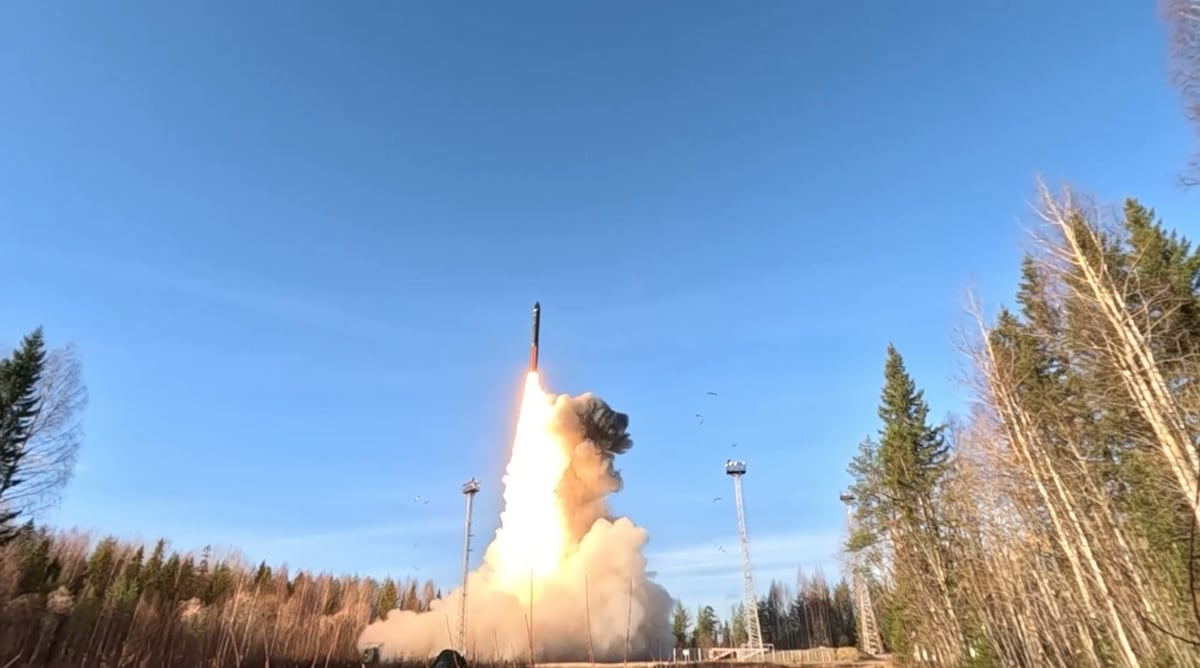
VIENNA — Russia launched its largest nuclear exercises in years on Tuesday, mobilizing nearly 65,000 troops, over 200 missile launchers, 140 aircraft, 73 surface vessels and 13 submarines, including eight strategic nuclear submarines, in a three-day drill that runs through Thursday.
The Russian Defense Ministry announced the maneuvers without prior public notice on May 19, framing them as a rehearsal for “the preparation and use of nuclear forces in the event of a threat of aggression.” The exercises involve the Strategic Missile Forces, the Northern and Pacific Fleets, Long-Range Aviation Command, and units from the Leningrad and Central Military Districts, according to the ministry statement. Live launches of ballistic and cruise missiles at ranges inside Russia are planned as part of the drills.
The timing is conspicuous on multiple fronts. Russia had not previously announced nuclear exercises for May; its annual strategic nuclear drill − informally known as “Grom” − has traditionally been held in October since 2022. The last time Moscow staged a surprise nuclear exercise was in the summer of 2024, when it focused on non-strategic weapons apparently timed to Western debates over supplying long-range missiles to Ukraine. Analysts at the Institute for the Study of War assessed that the current drills are similarly aimed at “influencing NATO decision-making and masking Russia’s own weaknesses,” characterizing them as an information-pressure operation at least as much as a purely operational readiness check.
The exercises kicked off as President Vladimir Putin was en route to Beijing for a two-day visit with Chinese President Xi Jinping, a diplomatic tableau that military expert Dmitry Kornev described to the Russian newspaper Izvestia as deliberately synchronized. The dual messaging − nuclear muscle-flexing at home, high-profile diplomacy abroad − fits a pattern the Kremlin has used repeatedly since the full-scale invasion of Ukraine began in February 2022.
Russia’s strategic weapons ensure it a place among the great powers. Its nuclear arsenal is the world’s largest, with the Federation of American Scientists estimating last week that Russia currently has a total active stockpile of 4,400 nuclear weapons.
A new dimension of these drills is the explicit integration of Belarus. The Belarusian Defense Ministry announced its own parallel exercise on May 18, with units practicing the delivery and preparation of nuclear munitions “from unprepared positions on Belarusian territory” in coordination with Russian forces. Russia has stationed its Oreshnik intermediate-range ballistic missile in Belarus since 2025, following an agreement made two years earlier. It can deliver either conventional or nuclear warheads.
The exercises also follow a successful Sarmat ICBM test launch on May 12, just one week prior, after a series of earlier failures, including a silo-destroying misfire in September 2024. Putin personally confirmed after that test that the Sarmat would be placed on combat duty “at the end of the current year.”
Russia’s Deputy Foreign Minister Sergei Ryabkov escalated the rhetoric in parallel with the drills, warning in an interview with Russian state-owned news agency TASS that “strategic risks are mounting, as is the danger of a head-on clash between NATO and our country, with all the potentially catastrophic consequences that would entail.”
Moscow has pointed to statements by Lithuania’s foreign minister about a potential strike on Kaliningrad, as well as broader European rearmament and debates surrounding nuclear sharing, as justifications for the drills.
Western analysts and Ukrainian officials have taken a more sober view. Ukrainian sources cited by ISW suggest one secondary purpose of the exercises may be to create a threat from the northern direction − via Belarus − thereby drawing Ukrainian reserves away from the front ahead of a planned Russian summer offensive. The Kremlin, for its part, insists the drills are defensive in nature and directed at no specific country.
Linus Höller is Defense News' Europe correspondent and OSINT investigator. He reports on the arms deals, sanctions, and geopolitics shaping Europe and the world. He holds master’s degrees in WMD nonproliferation, terrorism studies, and international relations, and works in four languages: English, German, Russian, and Spanish.
维也纳——俄罗斯周二启动了多年来规模最大的核演习,动员了近65000名士兵、200多个导弹发射器、140架飞机、73艘水面舰艇和13艘潜艇(包括8艘战略核潜艇),进行为期三天的演习,演习将持续到周四。
俄罗斯国防部于5月19日宣布了此次演习,事先并未向公众发出任何通知。国防部称,此次演习旨在“应对侵略威胁时准备和使用核力量”。根据国防部的声明,此次演习涉及战略导弹部队、北方舰队、太平洋舰队、远程航空司令部以及列宁格勒军区和中央军区的部队。演习计划在俄罗斯境内靶场进行弹道导弹和巡航导弹的实弹发射。
此次演习的时机在多个方面都十分引人注目。俄罗斯此前并未宣布将在5月举行核演习;其年度战略核演习——非正式名称为“格罗姆”(Grom)——自2022年以来一直都在10月举行。莫斯科上一次举行突袭式核演习是在2024年夏季,当时演习重点是非战略性武器,显然是为了配合西方就向乌克兰提供远程导弹问题展开的辩论。战争研究所的分析人士评估认为,此次演习的目的同样在于“影响北约决策并掩盖俄罗斯自身的弱点”,并将其描述为至少与纯粹的作战准备检查同等重要的信息施压行动。
此次演习正值俄罗斯总统弗拉基米尔·普京前往北京与中国国家主席习近平进行为期两天的访问之际。军事专家德米特里·科尔涅夫向俄罗斯《消息报》称,这一外交场景是刻意安排的。这种双重信息传递——在国内展示核武,在国外进行高调外交——符合克里姆林宫自2022年2月全面入侵乌克兰以来反复使用的模式。
俄罗斯的战略武器确保了其在世界强国中的地位。其核武库规模居世界首位,美国科学家联盟上周估计,俄罗斯目前拥有4400枚现役核武器。
这些演习的一个新特点是明确地将白俄罗斯纳入其中。白俄罗斯国防部于5月18日宣布举行平行演习,双方部队将与俄罗斯军队协调,演练“从白俄罗斯境内未做好准备的阵地”投放和准备核弹药。根据两年前达成的协议,俄罗斯自2025年起在白俄罗斯部署了“大洋彼岸”(Oreshnik)中程弹道导弹。该导弹可携带常规弹头或核弹头。
此次演习也紧随其后,就在一周前的5月12日,萨尔马特洲际弹道导弹成功试射。此前,该导弹曾多次试射失败,包括2024年9月的一次摧毁发射井的哑弹。普京在那次试射后亲自确认,萨尔马特导弹将在“今年年底”投入作战使用。
俄罗斯副外长谢尔盖·里亚布科夫在军演期间加大了言辞力度,他在接受俄罗斯国家通讯社塔斯社采访时警告说:“战略风险正在增加,北约与我国发生正面冲突的危险也在增加,这可能会带来灾难性的后果。”
莫斯科方面指出,立陶宛外交部长曾发表关于可能对加里宁格勒发动袭击的言论,以及更广泛的欧洲重新武装和围绕核共享的辩论,都是举行此次演习的理由。
西方分析人士和乌克兰官员则持更为冷静的看法。据ISW援引乌克兰消息人士的话称,此次演习的另一个目的可能是从北部方向(经由白俄罗斯)制造威胁,从而在俄罗斯计划于夏季发动攻势前将乌克兰预备队从前线抽调出来。克里姆林宫方面则坚称,此次演习本质上是防御性的,并非针对任何特定国家。
林努斯·霍勒是《防务新闻》的欧洲记者和开源情报调查员。他报道影响欧洲乃至全球的军火交易、制裁和地缘政治。他拥有大规模杀伤性武器不扩散、恐怖主义研究和国际关系三个硕士学位,并精通英语、德语、俄语和西班牙语四种语言。